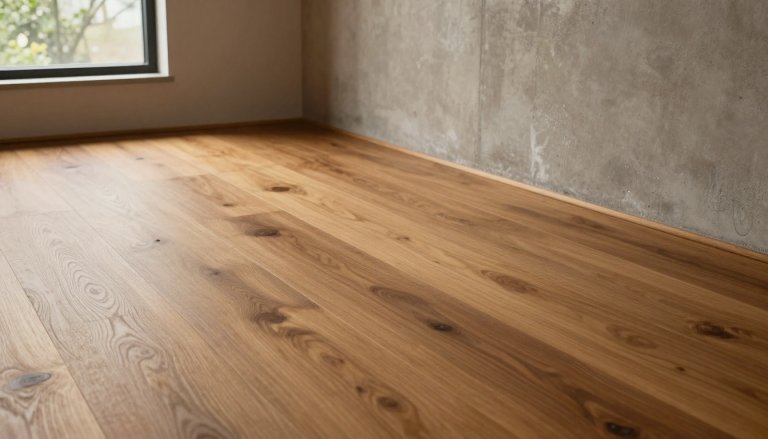

Hollow Hardwood Floors: Causes and Contractor Repairs
A new hardwood floor should feel firm underfoot, yet a dull knock can make the room feel unfinished. Hollow hardwood floors often point to poor contact between the flooring and the surface beneath it.
The sound alone doesn’t identify the failure. It may come from a normal floating-floor installation, a small adhesive void, or a subfloor that needs correction. Finding the source before choosing a repair protects the floor and your budget.
Why hollow hardwood floors develop
A hollow sound usually means there is an open space below a plank or an interruption in how it bonds to the subfloor. The location, installation method, and whether the board moves all shape the diagnosis.
Tapping and movement tell different stories
Start by noting where the sound occurs. Walk the room in a grid, then gently tap questionable areas with your knuckles. Mark each spot with painter’s tape so the pattern is clear.
A hollow sound in one small area may come from a localized low spot or missed adhesive transfer. However, a broad hollow sound across an entire room can indicate a floating floor, inadequate subfloor prep, or a problem affecting a large glue-down section.
Movement is a bigger concern than sound alone. If a board flexes, clicks at the joint, or opens a seam when you step on it, it needs a closer inspection. A squeak may also come from loose subfloor panels or joists rather than the hardwood itself.
Installation method changes the diagnosis
Solid hardwood is often nailed or stapled to a wood subfloor. It should feel supported because the boards fasten directly to the surface below. Hollow spots can occur where the flooring bridges a dip or where fastening missed proper support.
Engineered hardwood may be nailed, glued, or floated. A floating installation rests over an underlayment, so it can sound more resonant than a glue-down floor. If it stays flat, locks tightly, and has no movement, that sound may be normal.
Glue-down engineered flooring should have close contact with the slab or approved underlayment. A hollow area in that type of floor often deserves prompt attention, especially when the board flexes.
Subfloor conditions that create air gaps
Most lasting flooring problems start before the first plank goes down. Hardwood follows the shape and stability of the surface beneath it, including every low spot, loose seam, and moisture issue.
Low spots, high seams, and loose panels
A plank can bridge over a shallow dip in the subfloor. The edges may look fine, but the unsupported center gives a hollow knock. Conversely, a high seam can keep nearby boards from sitting flat.
Loose plywood, uneven panel joints, and missing screws can also cause movement and sound. The APA’s plywood underlayment guidance calls for a dry subfloor and inspection for evenness at joints and flatness between joists.
Flooring manufacturers publish their own tolerances. For example, Somerset’s solid hardwood installation instructions call for subfloor flatness within 1/4 inch in 10 feet or 3/16 inch in 6 feet. The product instructions for your floor should control the work.
Adhesive voids under engineered wood
Glue-down hardwood depends on complete, consistent adhesive transfer. Dust, old residue, the wrong trowel, an adhesive left open too long, or uneven pressure can leave gaps beneath planks.
The adhesive must also match the floor and substrate. For example, the Titebond 771 adhesive specifications list wood-substrate moisture limits and a maximum moisture-content difference between the subfloor and flooring. Those numbers apply to that system, not every product, but they show why moisture readings belong in the installation plan.
Moisture and rushed acclimation
Wood expands and contracts as indoor humidity changes. A floor installed before the materials and subfloor reach suitable conditions can cup, gap, or lose firm contact in places.
We check for moisture sources before blaming the flooring crew. A slab, crawlspace, leaking dishwasher line, or unconditioned home can create trouble long after installation day. The NWFA technical guidelines provide industry guidance on moisture, wood flooring, and installation conditions.
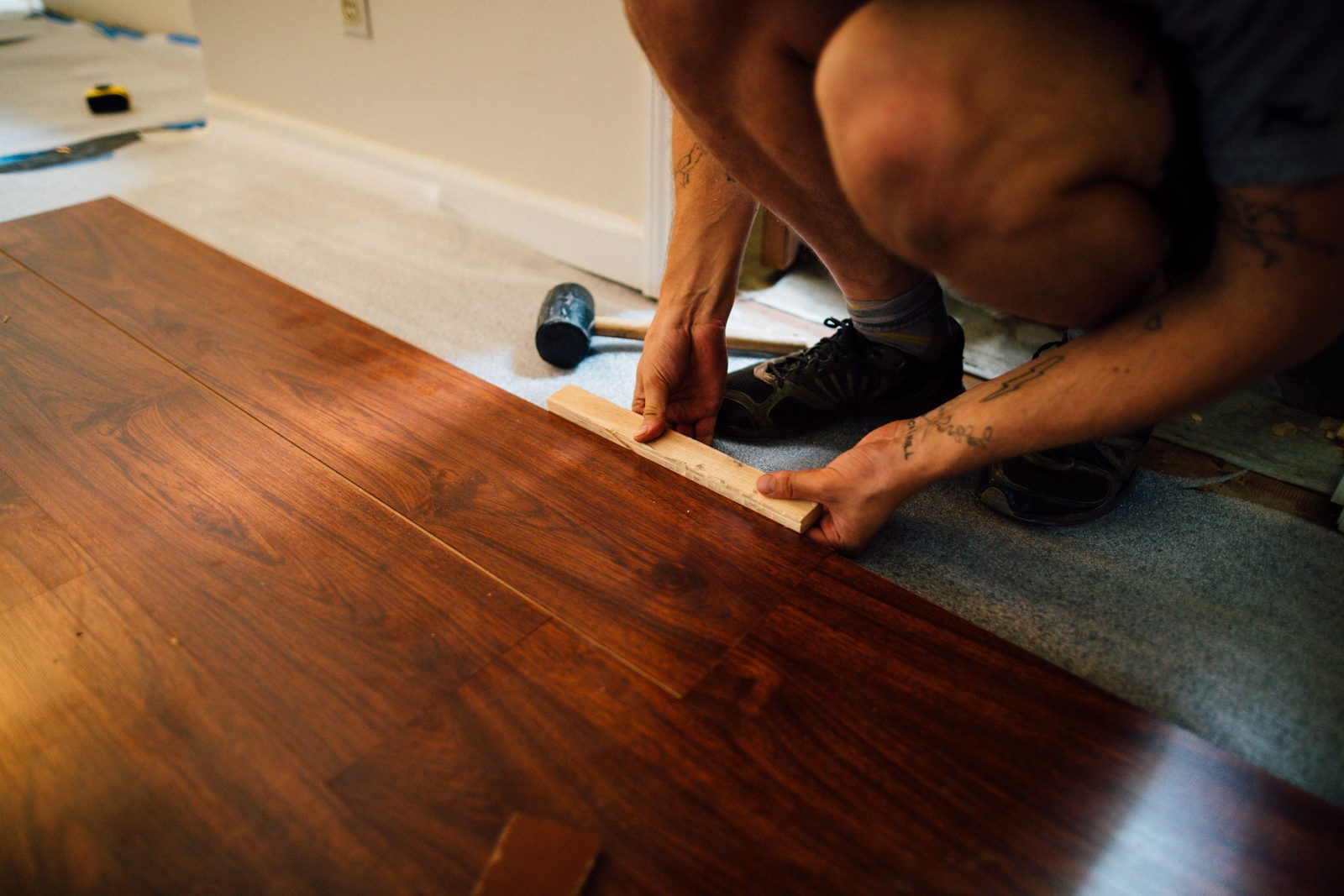
Photo by K
How contractors locate the real problem
A proper repair starts with an inspection, not an assumption. We don’t recommend drilling, injecting glue, or adding fasteners until we know why the floor sounds hollow.
Mapping the affected area
A contractor should map the sound, look for raised edges and open joints, and test for vertical movement. We also inspect floor transitions, baseboards, and the perimeter gap because trapped flooring can create pressure elsewhere.
Moisture readings from the wood and subfloor add another important piece. When access exists below the floor, we inspect the joists, plywood seams, and fasteners from underneath. That view can reveal a loose subfloor that sounds like a hardwood problem.
Document the findings in the estimate. You should know whether the repair addresses a few planks, the subfloor, a moisture source, or an entire room.
Separating a sound issue from a finish issue
Sanding changes the surface of wood. It does not fill an air gap or tighten a loose subfloor. Homeowners contacting a hardwood floor sanding company in Cumming for dull, scratched boards should have hollow areas inspected before booking refinishing.
A stable, worn solid-wood floor may be an excellent candidate for hardwood floor sanding and refinishing. However, we repair support and movement problems first. A new finish over loose boards only hides the real issue for a short time.
Repair options for hollow-sounding wood floors
The right repair depends on the floor system and the size of the affected area. Small, isolated defects often need less work than widespread subfloor problems.
| Condition | Appropriate repair |
|---|---|
| Loose subfloor or joist movement | Secure the subfloor, often from below when access allows |
| One or two glue-down planks with poor contact | Remove and reinstall the affected boards after correcting the surface |
| Floating floor with broad resonance but no movement | Confirm flatness, expansion space, and approved underlayment |
| Large areas with flex or widespread hollowness | Remove flooring, repair the subfloor, and reinstall correctly |
| Moisture-related movement | Stop the moisture source and allow materials to stabilize before repairs |
The main takeaway is simple: surface work cannot correct a support problem.
Targeted plank removal and reinstallation
When a few boards sit over a localized defect, we carefully remove the affected planks. Then we clean away failed adhesive, repair or level the substrate, and reinstall matching material with an approved method.
Some flooring systems allow adhesive injection for limited repairs. We use that approach only when the product instructions allow it and the void is well-defined. Random injection can trap moisture, stain the wood, or create a rigid spot that interferes with normal seasonal movement.
Full removal when preparation failed
A large hollow area often means the contractor must remove more flooring to fix the cause. That may include flattening the subfloor, securing panels, correcting moisture conditions, or replacing damaged underlayment before reinstalling wood.
This work costs more than a quick patch, yet it restores the support that a hardwood floor needs. If you are comparing proposals, our flooring installation contract guide explains the details that should appear in writing, including subfloor preparation, materials, repairs, and warranty terms.
Preventing hollow spots during remodeling
Flooring should be scheduled after structural repairs, plumbing changes, and major cabinet decisions are settled. A kitchen remodeling company in Cumming should decide whether new flooring runs beneath cabinet bases before materials are ordered.
Written scopes prevent missed preparation
When you plan to install new flooring in Cumming, ask for an in-home subfloor inspection and a written scope. A trustworthy hardwood floor company in Cumming should state the installation method, leveling work, moisture testing, removal, transitions, and stair details.
The same standard applies when choosing a hardwood floor company serving Windermere or nearby communities. Our hardwood floor installation in Cumming estimates separate materials, tear-out, subfloor work, and labor so you can see what the project includes.
Flooring choices should match each room
A kitchen and bathroom remodeling company in Cumming, GA can coordinate flooring height with cabinets, showers, tile, and appliances. If you are searching for a bathroom remodeling contractor near you, ask who handles waterproofing and how the new floor will meet the bathroom threshold.
Basements need their own moisture plan. A basement finishing company near you should test the slab and discuss suitable materials before recommending hardwood. In many below-grade spaces, engineered wood or waterproof luxury vinyl is a more practical choice.
A remodeling company in Cumming that handles flooring with kitchen, bathroom, and basement work can plan transitions before walls, cabinets, and trim make repairs harder. Call (770) 906-4732 for a free estimate and we will inspect the floor, explain the repair path, and provide an itemized quote. Show us a current written quote from another contractor for the same documented scope, and we’ll complete the work for 5% less.
A solid floor starts below the boards
Hollow hardwood floors deserve an accurate diagnosis because the sound may come from the flooring, subfloor, or installation method. A small repair can solve an isolated void, while widespread movement calls for deeper correction.
We look beyond the finish and find the condition beneath it. When the subfloor is flat, dry, and secure, a hardwood floor feels solid with every step.