
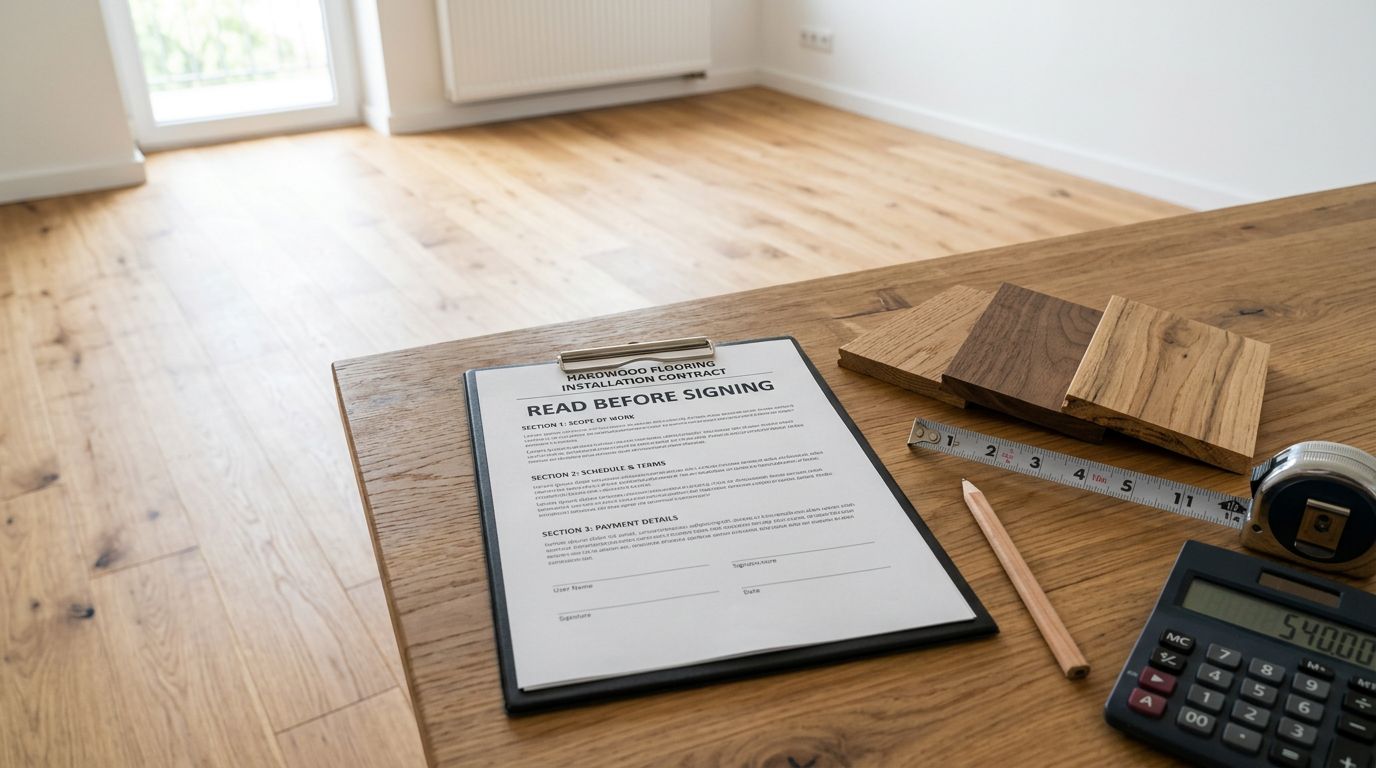
How to Read a Flooring Installation Contract Before Signing
A flooring price can look fixed until the crew removes the first row of old flooring. Your flooring installation contract defines the real job, including what happens when the home reveals a hidden problem.
We’ve seen a clear written agreement serve as a service agreement by defining expectations, responsibilities, and how hidden conditions will be resolved. Read the document slowly, compare it with the room, and ask for written answers before any signature goes on the page.
Key Takeaways
- Read the flooring installation contract line by line and confirm that the scope matches your home, including rooms, square footage, materials, installation method, trim, removal, disposal, and subfloor preparation.
- Review the price, allowances, deposit, progress payments, final payment, taxes, permits, and possible extra charges before comparing bids.
- Make sure the agreement explains the project timeline, access requirements, schedule delays, hidden conditions, material substitutions, and written change-order process.
- Separate the contractor’s workmanship warranty from the manufacturer’s material warranty, and review liability, dispute resolution, termination, and applicable legal requirements.
- Compare flooring proposals using the same written scope so a lower total does not hide omitted work such as leveling, transitions, stair work, or debris removal.
How to Read a Flooring Contract Line by Line
Start with the first page, not the total at the end. A solid agreement identifies the legal business name, property owner, project address, contact details, and signing date.
The contract should also state whether the contractor carries liability insurance and workers’ compensation coverage. If permits, inspections, or HOA approvals apply, the document should name who obtains them and who pays the related fees.
Confirm the scope of work matches your home
The scope of work should read like a job plan, not a sales pitch. “Install hardwood in main level” leaves too much open. Instead, the agreement should identify the rooms, estimated square footage, flooring type, product line, color, plank width, installation method, and trim details.
Square footage alone doesn’t answer important questions. Check whether the quoted square footage includes closets, stairs, landings, hallways, transitions, baseboard removal, shoe molding, and furniture moving.
Before signing, look for written answers to these points:
- The contract should state who removes existing flooring and disposes of debris.
- It should explain subfloor prep, including leveling, patching, fastening, moisture testing, or underlayment.
- It should list the exact flooring materials, transitions, adhesives, fasteners, and trim included in the price.
- It should identify areas excluded from the work, such as appliance moving, painting, electrical changes, or structural repairs.
- It should explain whether the contractor will reinstall baseboards or whether new trim is an added cost.
A general flooring contract reference from Rocket Lawyer also highlights materials, insurance, scope, and warranties as core agreement terms.
If you are choosing wood, make the construction type part of the written scope. Our engineered versus solid hardwood comparison can help you compare options before the contract locks in a product.
A phrase such as “subfloor repair as needed” needs a price method, approval process, and time allowance. Without those details, “as needed” can become an expensive disagreement.
Confirm the price and payment terms
A contract price should separate the base price from allowances and possible extra charges. An allowance is a placeholder amount for an item that has not been selected or measured. If the final product costs more than the allowance, you need to know how the difference gets approved and billed.
Use this quick reference when reviewing the payment schedule:
| Contract item | What the agreement should say |
|---|---|
| deposit requirements | The amount due, due date, and whether state or local rules limit deposits |
| progress payments | The completed milestone that triggers each payment |
| Final payment | The punch-list standard and when it becomes due |
| Allowances | The included amount and how overages or credits are calculated |
| Late charges | The rate, grace period, and any collection costs |
| Taxes and permits | Whether they are included or charged separately |
Avoid schedules tied only to calendar dates. A fair schedule connects progress payments to visible milestones, such as material delivery, completed demolition, finished installation, or the final walkthrough.
We recommend comparing the total price only after comparing the scope. A lower bid may omit removal, leveling, transitions, or stair work. That difference can surface later as a change order.
Make the project timeline realistic
Your project timeline needs more than a target finish date. It should state an expected start window, estimated working days, job-site hours, and conditions that can move the schedule.
Flooring materials may need time to acclimate. Late deliveries can disrupt the schedule. Moisture readings may delay hardwood installation, and an occupied home may limit work hours. These are normal job conditions, but the agreement should explain how the contractor communicates schedule changes.
Also, check the access plan. The document should say who provides entry, whether pets must be secured, which rooms must be emptied, and where materials or a dumpster can be placed. If you live in a condo or neighborhood with work-hour rules, put those limits in writing.
A completion date should allow time for a final walkthrough and a short punch list. It should not mean the installer leaves the moment the last plank goes down.
Put changes and hidden conditions in writing
A change order is a signed amendment to the original flooring installation contract. It should describe the added or removed work, price change, added time, and signatures from both parties.
Don’t approve extras through a rushed phone call or a text that only says “go ahead.” Ask for the written change order before work begins, unless immediate action is needed to prevent property damage. Then ask the contractor to document emergency work with photos and a written price as soon as possible.
Hidden conditions deserve their own contract language. Existing flooring can conceal water damage, loose subflooring, termite damage, mold, asbestos-containing materials, or unlevel concrete. A responsible contractor should stop work, document the finding, explain the options, and wait for authorization when the condition falls outside the agreed scope.
For broader clause ideas, Floorzap’s flooring contract guide offers a practical construction contract template covering project scope, payment, timelines, and changes. Still, no template can replace a close review of your home’s requirements and selected products.
Material substitutions also need approval. If a selected product becomes unavailable, the agreement should require your written consent for a replacement with a different color, thickness, finish, or price.
Review warranty, liability, and exit terms
Separate workmanship from material warranties
Review the “warranty details” in two parts: the contractor’s workmanship warranty and the manufacturer’s material warranty. There is no universal workmanship warranty period for every flooring installation. The contract should state the contractor’s workmanship term, what defects it covers, how to submit a claim, and what repair options apply.
Material defects usually fall under the manufacturer’s warranty. Read both documents because the manufacturer may require approved underlayment, moisture limits, acclimation, or maintenance practices. Damage from flooding, pets, neglect, or indoor humidity can fall outside coverage.
For worn wood floors, the scope should also state whether the job is a screen-and-recoat service or full sanding. Those processes have different results, costs, and risks. Our hardwood floor refinishing guide explains the difference.
Read liability, indemnification, and termination language
A liability clause should explain who is responsible if work damages property. An indemnification clause addresses claims caused by one party’s actions. These clauses should be balanced and understandable, not a blanket release that removes accountability for poor work.
Check whether the agreement addresses accidental damage, pre-existing damage, water events, and insurance claims. Ask for clarification if the liability clause shifts every risk to you. This matters even when the contractor causes the loss.
The contract should also describe dispute resolution and the termination clause. It may require written notice, a chance to correct defective work, mediation, arbitration, or court action. Taft Law’s construction contract guidance discusses repair obligations and other terms that often matter when a project goes wrong.
Local building codes and other legal requirements vary by project. Flooring alone may not need a permit, while moving plumbing, altering stairs, or remodeling a bathroom may. For legal questions about Georgia requirements or contract enforceability, consult a qualified local attorney.
Compare local proposals on the same written scope
A homeowner may begin by searching for a hardwood floor company in Cumming, a hardwood floor sanding company in Cumming, or a hardwood floor company servicing Windermere. Compare each proposal room by room, not by its lowest total. Also verify that the flooring contractor is qualified and complies with applicable local licensing laws.
The same approach applies when you plan to install new flooring in Cumming during a larger renovation. A kitchen remodeling company in Cumming, or a kitchen and bathroom remodeling company in Cumming, GA, should separate flooring, cabinetry, tile, plumbing, paint, and demolition into named work items.
If your search starts with “bathroom remodeling contractor near me” or “basement finishing company near me,” confirm who performs each trade, who manages permits, and whether the proposed work complies with local building codes. A remodeling company in Cumming should explain those responsibilities in writing.
For a free estimate on flooring, stairs, sanding, or refinishing, call (770) 906-4732 for a free estimate. Bring us a current written quote for the same documented scope, and we’ll price it 5% lower.
Frequently Asked Questions
What should a flooring installation contract include?
A flooring installation contract should identify the property, rooms, materials, installation method, price, payment schedule, timeline, warranties, and responsibilities of each party. It should also explain removal, disposal, subfloor preparation, trim, permits, and possible extra work.
How should hidden flooring problems be handled?
The contract should require the contractor to document hidden conditions, explain the available options, and obtain approval before completing work outside the original scope. Any added cost or time should appear in a written change order signed by both parties.
What is the difference between an allowance and a fixed price?
An allowance is a placeholder amount for a material or service that has not been fully selected or measured. The contract should explain how overages, credits, and approval of the final amount will be calculated.
When is the final payment due?
The final payment should be tied to a completed installation, final walkthrough, and agreed punch-list standard rather than only to a calendar date. Review the contract to confirm when the punch list must be addressed and when the remaining balance becomes due.
Should workmanship and material warranties be reviewed separately?
Yes. The contractor’s workmanship warranty covers installation-related defects, while the manufacturer’s warranty generally covers defects in the flooring product itself. Read both documents for coverage limits, claim procedures, moisture requirements, acclimation rules, and maintenance conditions.
A Clear Contract Protects the Project
A strong contract turns expectations into measurable details. It names the materials, defines the work, sets payment milestones, and provides a written path for changes.
Before signing, make every unclear sentence concrete. Clear terms protect your budget, your home, and the working relationship from the first measurement through the final walkthrough.