Best Hallway Flooring in Cumming for Hiding Daily Wear
Hallways tell the truth about a floor fast. In busy homes, that narrow path takes more hits than almost any other space.
When we choose hallway flooring in Cumming, we need more than a pretty sample board. We need a floor that still looks clean after red clay, pet nails, backpacks, and daily traffic. The best options hide wear in plain sight, and that usually comes down to texture, tone, and finish.
Why hallway floors wear out so quickly
A hallway gets a different kind of abuse than a bedroom or office. People don’t spread out across the whole room. They walk the same path, day after day, and that repeated traffic creates visible lanes.
In Cumming homes, outdoor grit makes the problem worse. Fine dirt acts like sandpaper under shoes. Add moisture from rainy days, a dog that sprints to the door, or kids cutting through the hall with sports gear, and a glossy floor starts to show its age early.
We also need to think about light. If sunlight hits part of the hall, it can make scratches stand out more. Dark stains and shiny finishes tend to show every mark. A floor can still be durable and look worn, which is why “tough” and “wear-hiding” are not always the same thing.
That is the key point. For a hallway, the smartest floor is often the one that forgives daily life. Small color shifts, natural grain, low-sheen finishes, and textured surfaces help us keep the space looking tidy between deep cleans.
A hallway also connects everything else. If the floor looks tired there, the whole level feels tired. When we get this one area right, the house feels more cared for right away.
Flooring choices that keep scuffs and dirt less visible
Some materials hide wear better because their surface already has movement. That movement breaks up the look of dust, tiny scratches, and tracked-in dirt. Smooth, uniform floors do the opposite. They put every flaw on display.
This quick comparison shows which materials are most forgiving in a high-traffic hall.
| Flooring type | How it hides wear | Best fit |
|---|---|---|
| Wire-brushed or distressed hardwood | Texture and grain make minor scratches harder to spot | Homes that want real wood character |
| Engineered hardwood with matte finish | Stable core and low sheen reduce visible scuffs | Main-level hallways with wood nearby |
| Luxury vinyl plank | Printed variation and tough wear layer mask daily traffic | Busy families, pets, easy upkeep |
| Matte porcelain tile with movement | Pattern and low sheen hide dirt well | Entry-adjacent halls or moisture-prone areas |
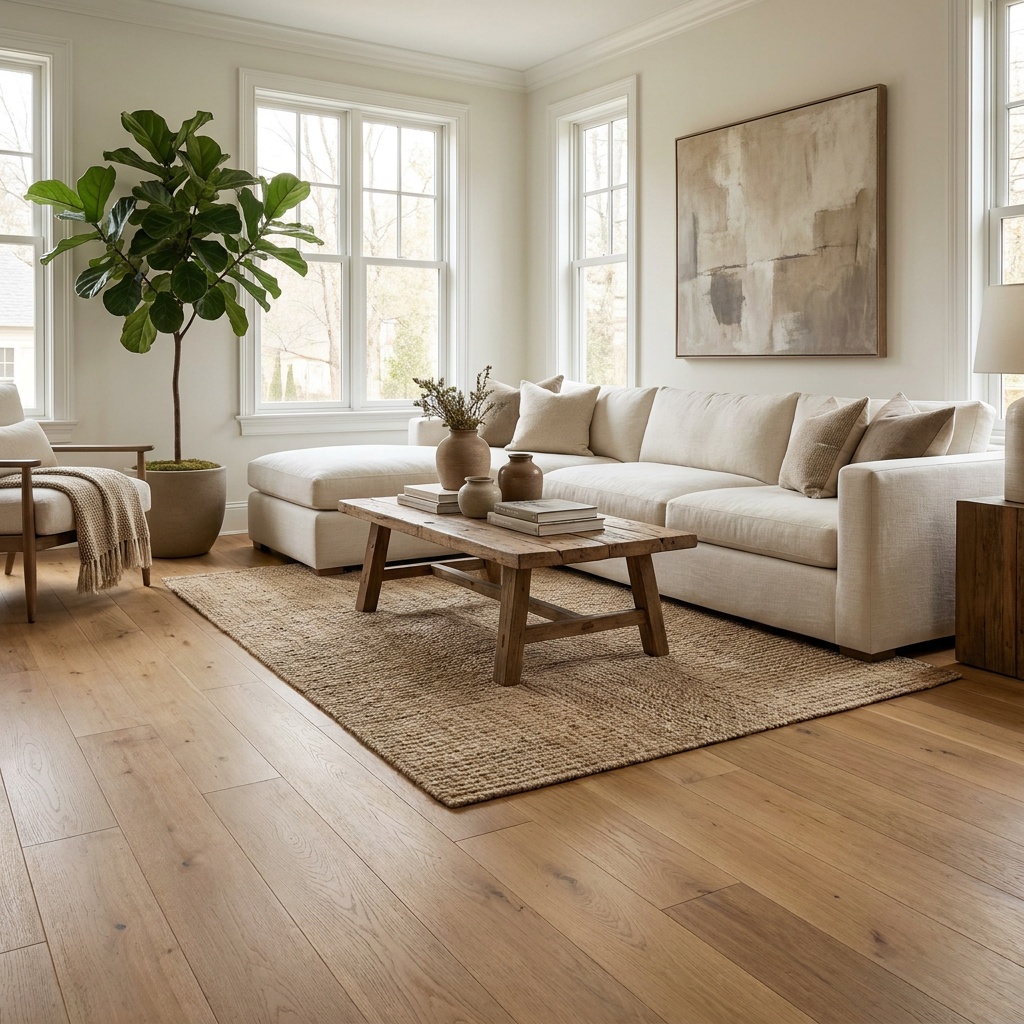
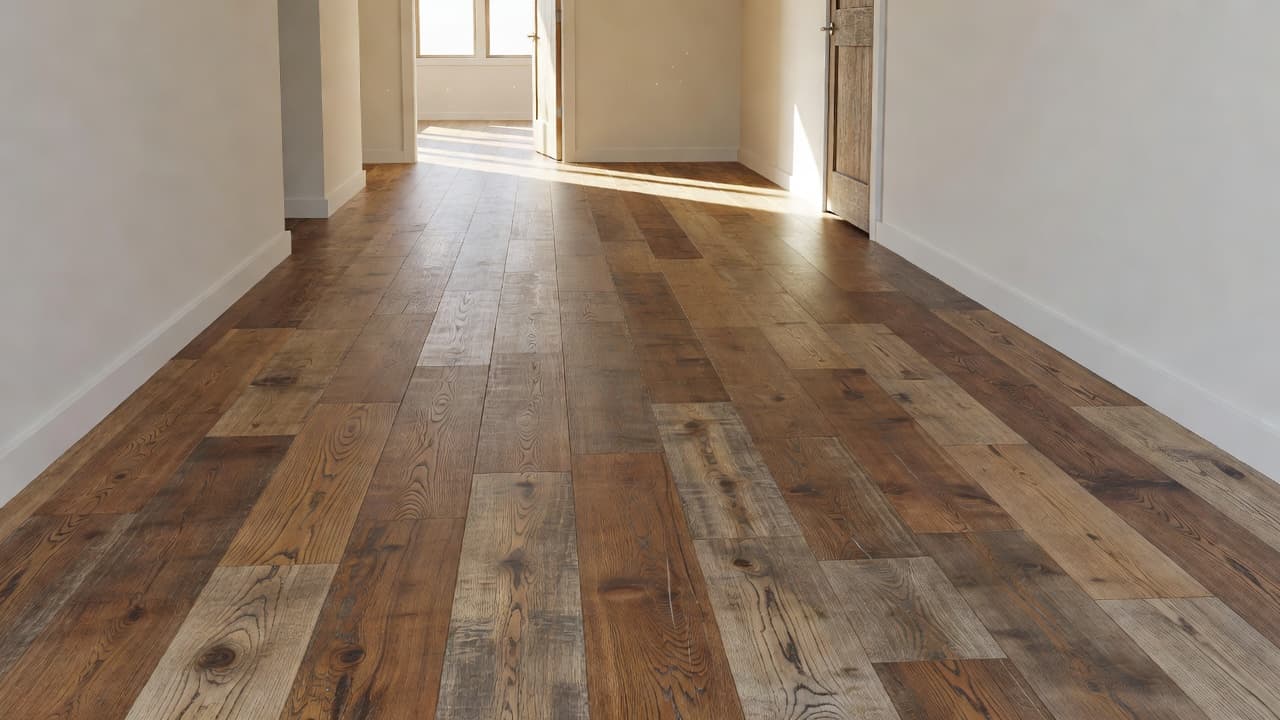
For many homes, wire-brushed hardwood is a strong middle ground. We keep the warmth of real wood, but the surface does not look fragile. White oak, hickory, and character-grade boards usually age better than smooth, dark, high-gloss planks.
Engineered hardwood also works well in hallway flooring across Cumming, especially when the hall runs into other wood areas. It gives us a wood look with better stability, and a matte finish helps it stay calmer under daily use.
Luxury vinyl plank is often the easiest option to live with. Better lines have strong wear layers, realistic grain, and mixed tones that disguise dust and light scratches. It also feels quieter underfoot than tile in many homes.
What usually falls to the bottom of the list is dark, glossy wood. It can look striking on install day. After a few months, it often shows footprints, hairline scratches, and dust far more than a mid-tone matte floor.
Finish, color, and plank detail matter as much as the material
We can pick a good material and still get a hallway floor that shows every mark. That happens when the finish is too shiny or the color is too flat. In most halls, satin or matte beats gloss by a mile.
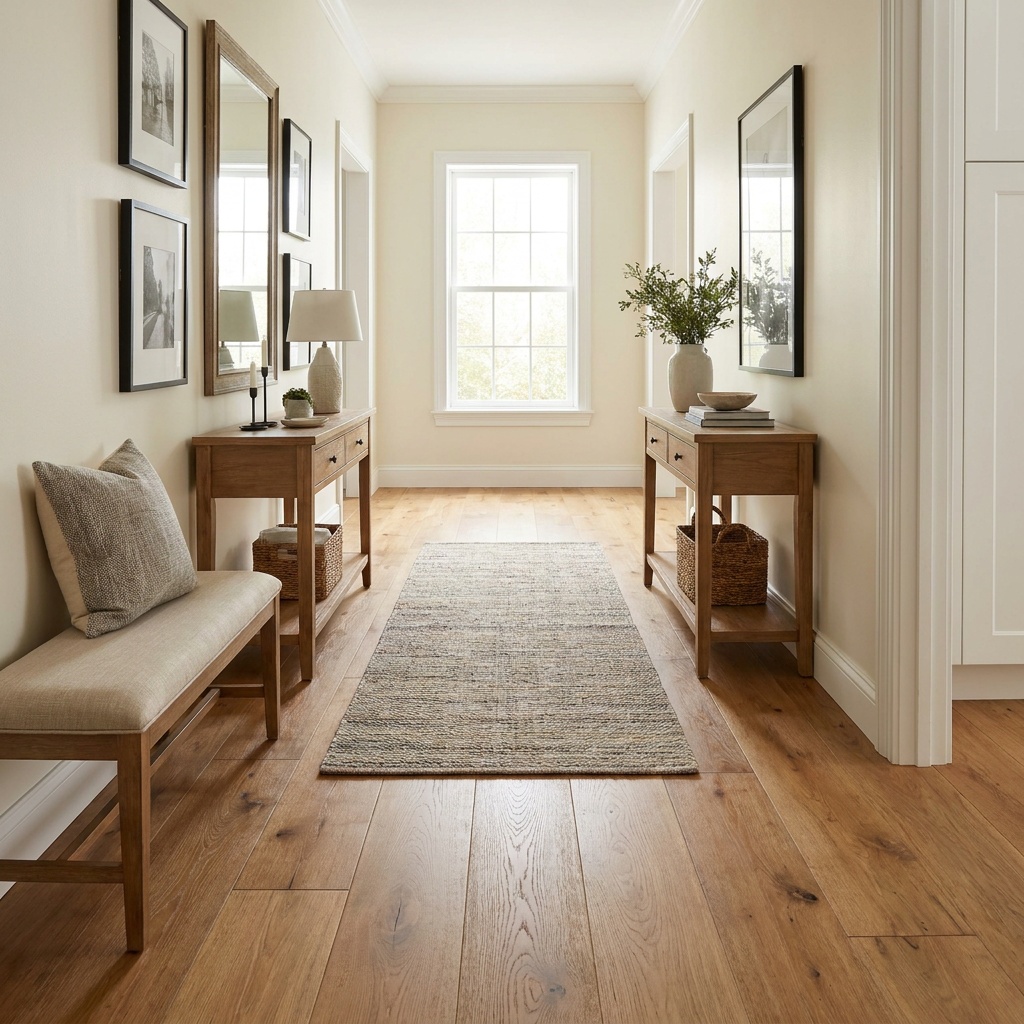
Mid-tone floors are usually the safest choice. Very dark floors show dust and scratches. Very light floors can show muddy footprints and grime. A warm medium brown, natural oak, or soft taupe often gives the best balance.
Variation helps too. Boards with mixed grain, knots, mineral streaks, or slight color shift are more forgiving than boards that all look alike. Wider planks can help, but only if the hallway size supports them. In a narrow corridor, the floor should still feel in scale.
The floor that looks best after three years is the better choice, not the floor that looks best under showroom lights.
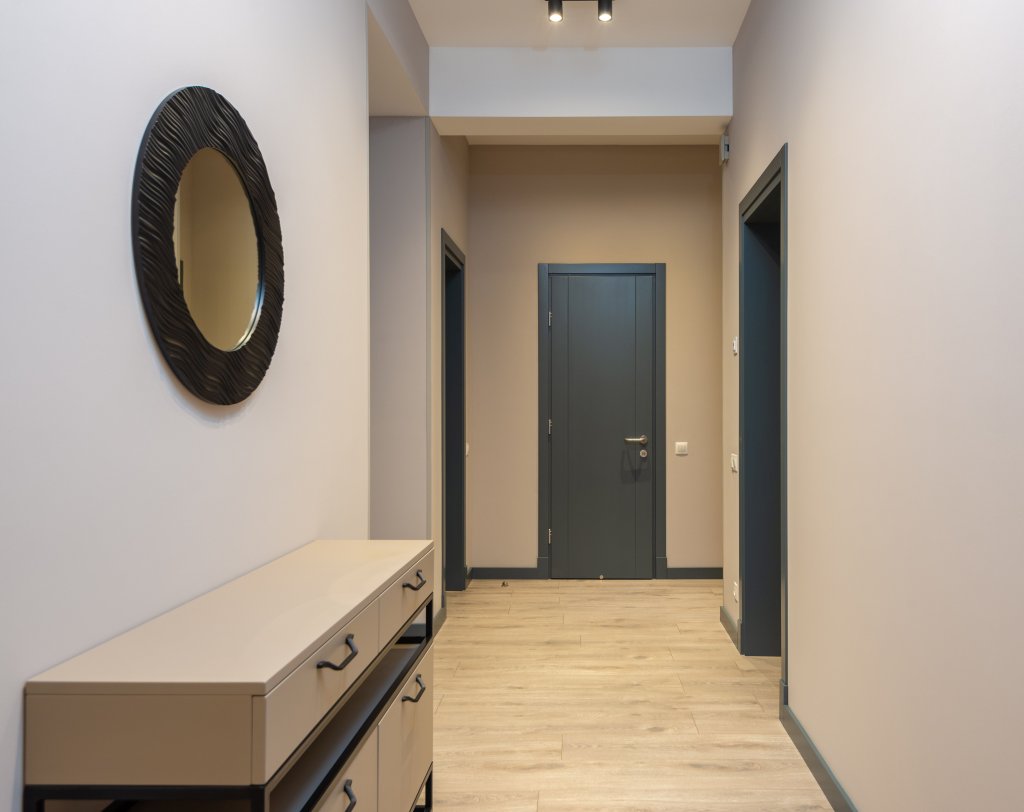
Photo by Max Vakhtbovych
Transitions also matter. If the hall flows into a main living space, matching plank width and stain tone makes the traffic path feel calmer. If it opens into the cooking area, planning the floor with kitchen remodeling and flooring services can help us avoid awkward breaks and mismatched finishes.
Even edge detail plays a role. Lightly beveled edges can help hide tiny height changes and everyday dust. A perfectly flat, polished look has less room for error.
When sanding existing hardwood makes more sense
Sometimes the best hallway upgrade is the floor we already have. If the boards are solid, the layout still works, and the damage sits near the surface, sanding and refinishing can reset the whole space.
This route works best when we have scratches, worn finish, dull traffic lanes, or minor staining. It is often a smart move in older homes with good hardwood that only needs a new stain color and a lower-sheen topcoat. A matte finish can make an old hallway look newer than a glossy coat ever could.
Still, sanding is not always the answer. Deep pet stains, soft spots, major gaps, or water damage can mean replacement. The same goes for thin engineered products that cannot handle a full refinish.
Water trouble near a bath needs extra attention. If the hallway keeps catching moisture from an outdated room nearby, it helps to fix the source while updating the floor. That is where professional bathroom remodeling services can save us from doing the same hallway twice.
A good inspection should settle the question fast. We should know whether the wood deserves another life or whether new flooring is the better long-term value.
What to look for in a hallway flooring contractor
A hallway may look simple, but it is one of the most detail-heavy spaces in the house. We need clean cuts at every door jamb, strong subfloor prep, tight transitions, and stair details that feel solid underfoot. Small mistakes show up fast in a narrow space.
That is why we should look past the sample board and ask better questions. How will the crew handle squeaks? Will they feather repairs into nearby rooms? Can they match existing trim? If the hall meets stairs, can they rebuild treads, risers, and nosing so the whole run feels consistent?
When we compare local companies, search bars often fill with blunt phrases like “hardwood floor company Cumming,” “hardwood floor sanding company Cumming,” and “install new flooring Cumming.” If the hallway project grows into a larger update, we may also type “kitchen remodeling company Cumming,” “bathroom remodeling contractor near me,” or “remodeling company in Cumming.” Homeowners in nearby neighborhoods may search “hardwood floor company servicing Windermere,” while others paste in long phrases such as “kitchen and bathroom remodeling company Cumming Ga. Basement finishing company near me.” Those searches all point to the same need, one team that can handle floors well and tie them into the rest of the house.
As a hallway project grows, that one-team approach matters. A floor choice should make sense with nearby kitchens, baths, and finished basement plans, not fight them later.
For free estimates, call us at (770) 906-4732. If you show us an existing quote from another contractor, we will do it at 5% less.
Final thoughts
The hallway floor that hides wear best is usually the one with the least shine and the most visual movement. Texture, tone, and finish often matter more than choosing the most expensive product in the room.
When we make smart choices up front, our hallway still looks good after the rush of normal life. That is what good hallway flooring in Cumming should do, handle traffic well and age with grace.