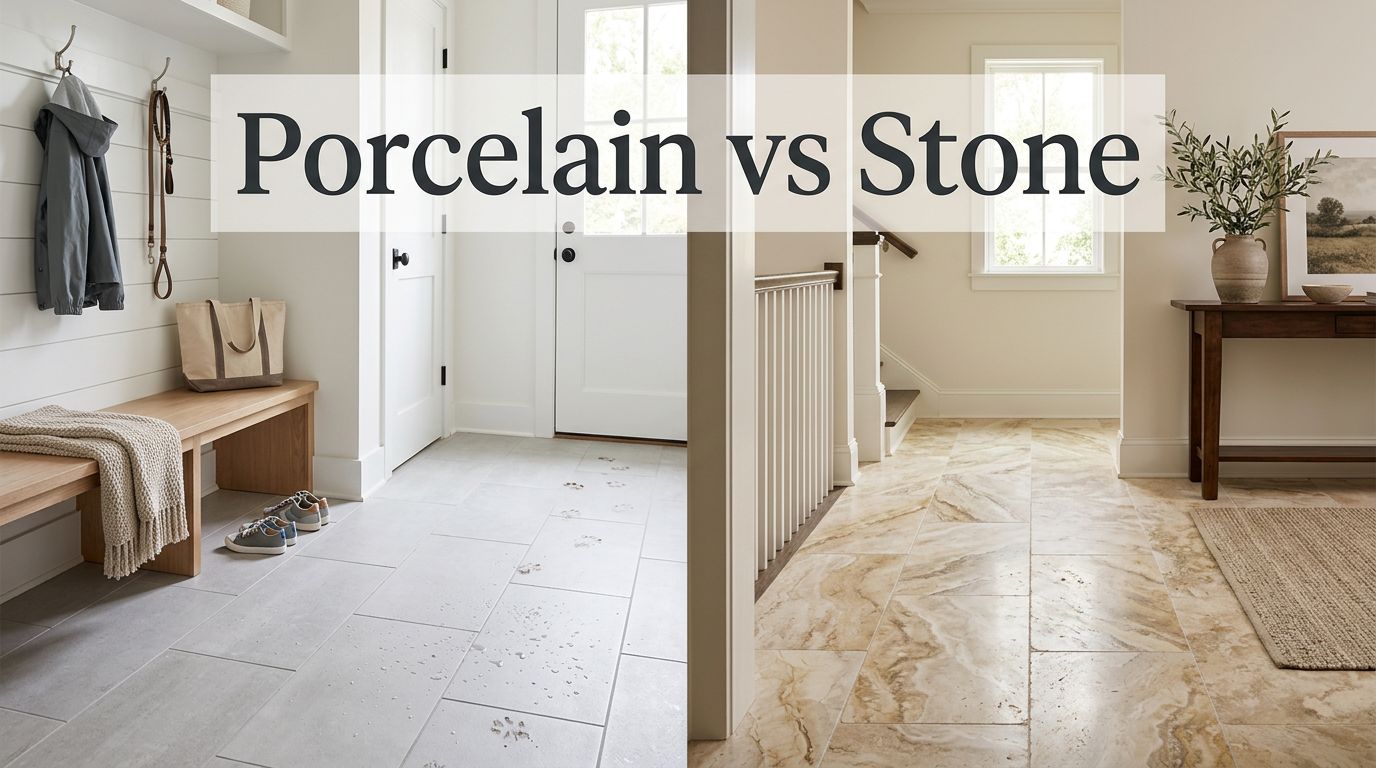
Porcelain Tile vs Natural Stone in Georgia Homes
A floor can look flawless in a showroom and feel wrong after one Georgia summer of wet shoes, muddy paws, and busy family traffic. When homeowners compare porcelain tile vs natural stone, the better choice depends less on trends and more on where the material will live.
We help homeowners weigh appearance, maintenance, comfort, installation needs, and long-term cost before the first tile is ordered. A clear decision now prevents grout problems, staining, or a floor that doesn’t suit the rest of the renovation.
Key Takeaways
- Porcelain tile handles moisture, cleaning, and daily wear with less upkeep than most natural stone.
- Natural stone brings one-of-a-kind color and texture, but it needs sealing and more careful cleaning.
- Bathrooms, mudrooms, and kitchens often favor porcelain for practical reasons.
- Stone can be the right fit for low-traffic spaces and homeowners who value natural variation.
- Proper substrate preparation and installation matter as much as the tile choice.
How Georgia Homes Put Tile to the Test
Georgia homes deal with humidity, summer rain, red-clay soil, and constant temperature changes between air-conditioned rooms and outdoor spaces. Those conditions don’t automatically rule out either material. However, they do make moisture management and cleaning habits more important.
Porcelain is a manufactured ceramic tile fired at high temperatures. Its low water absorption makes it a dependable surface for bathrooms, laundry rooms, entryways, and shower walls. It doesn’t need sealing, and a neutral cleaner usually handles routine care.
Natural stone comes from the earth, so every tile varies in veining, pores, mineral content, and color. Marble, travertine, limestone, slate, and granite all behave differently. Some stones absorb liquids quickly, while others are denser. Sealing helps reduce absorption, but it doesn’t make a stone floor invincible.
For a family entrance that collects rainwater and grit, porcelain is often the safer pick. A honed limestone foyer, on the other hand, can look beautiful if homeowners accept the patina that develops over time.
Porcelain keeps a more uniform appearance, while natural stone changes gradually with wear, light, and use.
We also inspect the floor beneath the tile. A stable, properly prepared subfloor limits movement that can crack tile or grout. On concrete slabs, we check for flatness and signs of moisture before installation begins.
Porcelain Tile vs Natural Stone: Appearance and Feel
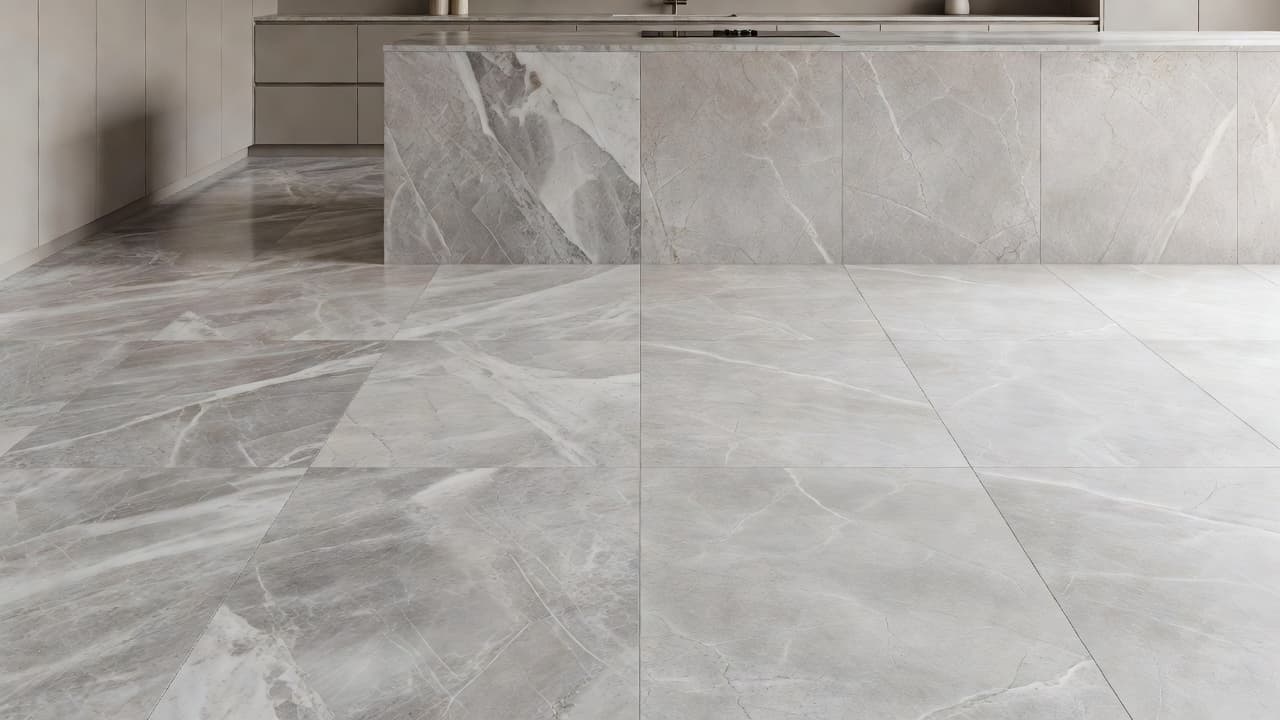
The visual difference is no longer as simple as “manufactured versus natural.” Modern porcelain can copy marble veining, slate clefts, travertine pits, and even weathered limestone with impressive detail. Large-format porcelain creates a clean, continuous look with fewer grout lines.
Still, porcelain repeats a printed pattern after a certain number of tiles. Better collections offer many different faces, yet close inspection can reveal repeats. Natural stone never repeats in the same way. A marble slab can carry soft clouds of gray, gold, green, or rust that no factory process can duplicate.
A quick side-by-side comparison helps clarify the tradeoffs:
| Feature | Porcelain Tile | Natural Stone |
|---|---|---|
| Color variation | Controlled and consistent | Unique from tile to tile |
| Water resistance | Excellent | Varies by stone type |
| Sealing needs | Usually none | Usually needed periodically |
| Cleaning | Simple neutral cleaners | Requires stone-safe products |
| Surface character | Smooth, textured, or stone-look | Natural pores, veins, and fissures |
| Cost predictability | Often easier to budget | Material and labor can vary |
Porcelain works well when you want a marble-inspired bathroom without worrying about water spots or etching. Natural stone fits homeowners who love organic variation and don’t expect every tile to match perfectly.
We encourage clients to view multiple pieces from the actual stone lot before approving it. A sample board can’t reveal every color shift in a shipment. The natural stone and porcelain comparison from Stone Centers also shows how material density and maintenance needs can differ across projects.
For design continuity, porcelain offers practical freedom. We can carry the same stone-look porcelain across a kitchen floor, laundry room, and bathroom without the maintenance demands of real marble. Natural stone often works best as a feature, such as a fireplace surround, powder room floor, or custom shower accent.
Choosing Tile for Kitchens, Baths, and Finished Basements
A kitchen floor needs to handle dropped cookware, food spills, chair movement, and frequent mopping. Porcelain’s durability makes it a strong choice for most kitchens. Matte or lightly textured finishes add traction, especially near sinks and exterior doors.
Natural stone can also work in a kitchen, although homeowners should understand the care involved. Acidic foods such as lemon juice, vinegar, and tomato sauce can etch polished marble. Honed stone hides etching better, but it still needs prompt cleanup and a stone-safe cleaner.
Bathrooms raise the stakes because water reaches floors, walls, and shower surrounds every day. Porcelain doesn’t absorb water easily, which makes it an excellent material for shower walls and bathroom floors. Small mosaic porcelain on a shower floor can improve grip because more grout joints create traction.
Marble, travertine, and limestone create a rich bathroom finish, but soap residue, hard-water deposits, and personal-care products demand regular attention. Homeowners considering marble in a shower should read firsthand concerns in this marble shower maintenance discussion, then decide whether the natural look justifies the care routine.
Basements bring another concern: the concrete slab. Before tile installation, we assess moisture conditions, floor levelness, and any cracks that need treatment. Porcelain is usually the more forgiving finish for a basement recreation room, wet bar, or bathroom.
When several rooms need updating, material choices should work with the larger plan. As a remodeling company in Cumming, we often coordinate flooring with cabinet finishes, shower tile, stair updates, and wall colors. Homeowners who need a kitchen remodeling company Cumming can rely on one coordinated plan rather than choosing a kitchen floor in isolation.
Installation and Maintenance Affect the Real Cost
Tile pricing doesn’t tell the whole story. Natural stone often costs more per square foot, but labor can also increase because installers sort tiles, manage variation, make careful cuts, and account for thickness differences. Some stone needs more frequent sealing, which adds to ownership costs.
Porcelain prices span a wide range. A basic porcelain tile can be budget-friendly, while premium large-format slabs and rectified tiles cost more. Large pieces also demand a flatter substrate and skilled handling. A tile that looks simple can become expensive if the floor requires extensive leveling.
Grout selection matters for both options. We often recommend a stain-resistant grout for kitchen floors, bath floors, and entryways. Grout still needs periodic cleaning, but it won’t absorb stains as readily as a traditional cement-only grout.
For routine care, follow a few practical rules:
- Sweep or vacuum abrasive grit before it scratches the finish or dulls grout.
- Use a pH-neutral cleaner, especially on marble, limestone, and travertine.
- Wipe spills promptly, because sealers slow absorption but don’t stop every stain.
- Avoid vinegar, bleach, and harsh acidic cleaners on natural stone.
A good installer also plans movement joints and transitions. Tile can’t flex like vinyl or carpet. Without room for normal building movement, stress can show up as cracked grout or tile.
If you’d like to see a helpful visual comparison before selecting a finish, this porcelain and natural stone video comparison covers durability, maintenance, appearance, and budget considerations.
When Tile Connects to Hardwood and Remodeling Work
A renovation rarely stops at one room. Many homeowners start with a bath floor, then notice worn hardwood in the hall or dated cabinets in the kitchen. We plan transitions carefully so tile height, wood flooring, and stair details feel intentional.
As a hardwood floor company Cumming homeowners trust, we help match tile choices to existing oak, engineered hardwood, luxury vinyl plank, and trim details. We are also a hardwood floor sanding company Cumming residents call when refinished floors need to meet new tile at a hallway or kitchen threshold.
If you plan to install new flooring Cumming homeowners should compare samples beside cabinets, paint, and natural light. A warm beige porcelain can appear gray beside cool white cabinetry. Likewise, a creamy travertine may clash with a bright-gray wood stain.
We also work as a hardwood floor company servicing Windermere, where many homes have open layouts that connect kitchens, living areas, and staircases. Our flooring and remodeling services in Cumming can coordinate those connected spaces under one project plan.
For homeowners searching for a bathroom remodeling contractor near me, material selection should include shower walls, shower floors, vanity splash zones, and the bathroom entry. The same approach applies when you need a kitchen and bathroom remodeling company Cumming Ga. Basement finishing company near me. We can align the flooring plan with the room’s traffic, moisture exposure, and daily routine.
Call (770) 906-4732 for a free estimate. If you show us an existing written quote from another contractor, we will complete a comparable scope for 5% less.
The Right Surface Matches Your Daily Life
Porcelain tile is usually the practical winner for wet rooms, active kitchens, mudrooms, and busy family spaces. It gives Georgia homeowners stone-inspired style with lower maintenance and dependable water resistance.
Natural stone earns its place when its variation and character matter more than a perfectly uniform finish. We help homeowners choose the surface that fits the room, the home, and the care they want to give it for years to come.