Plywood Subfloor Damage: When Flooring Repairs Are Needed
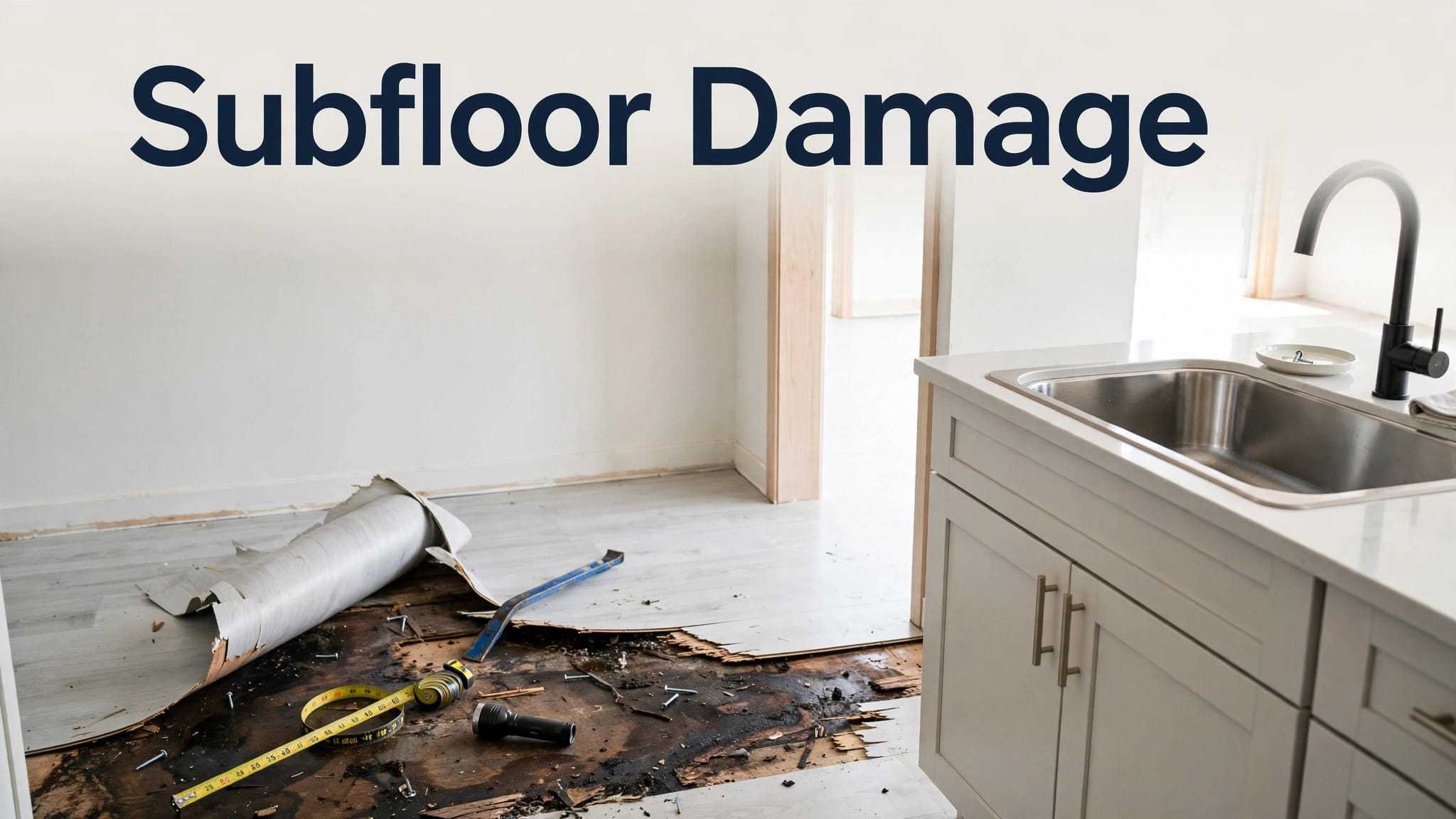
A soft step near a sink or doorway can reveal soft spots beneath floor coverings, not just a worn finish. Plywood subfloor damage often starts below the surface, where slow leaks, loose fasteners, and trapped moisture weaken the support your flooring depends on.
We see homeowners focus on the visible plank, tile, or vinyl first, but a lasting repair begins with the subflooring beneath it. Start by finding the moisture source and investigating movement that may threaten structural integrity, rather than assuming the issue is only cosmetic.
Key Takeaways
- Plywood subfloor damage can hide beneath flooring; soft spots, flexing, sagging, stains, musty odors, and delamination warrant closer inspection.
- Find and correct the moisture source before repairing the subfloor, then check the plywood, joists, framing, utilities, and concealed damage.
- A localized patch works only when the surrounding plywood is dry, firm, and fully supported; widespread softness, rot, mold, or delamination may require larger replacement.
- New flooring needs a flat, dry, clean, and firmly fastened base, with preparation matched to the flooring type and repairs coordinated with remodeling work.
How to Diagnose Plywood Subfloor Damage
Plywood can stain after a spill and still remain sound. It needs replacement when its layers have separated, its fibers crush easily, or it no longer supports the floor above without flexing.
Separate surface stains from structural weakness
Walk the room slowly in a grid pattern. Mark soft spots, areas that feel lower than nearby flooring, or places that bounce under normal weight. Compare each soft spot with adjacent areas to identify uneven floors. Look for lifted vinyl edges, cracked grout, warped flooring, dark seams, and stains around toilets, dishwashers, refrigerators, and exterior doors.
SERVPRO lists soft areas, sagging, warping, and musty odors among common warning signs of water-damaged subflooring. A stain alone doesn’t prove rot, but staining combined with movement can indicate a water damaged subfloor and deserves immediate attention.
If the room is over a basement or crawlspace, inspect the subflooring from below. Dark plywood, rusty fasteners, wet insulation, mold growth, wood rot, or joists that have changed color can reveal the leak path.
Test carefully and find the water source
After removing the affected floor coverings, lightly probe suspicious subflooring with an awl or screwdriver. Sound wood resists pressure. Damaged plywood dents, flakes, or allows the tool to sink in too easily.
A moisture meter can help distinguish an old, dry event from an active problem in the subfloor material. Still, no reading replaces finding the cause. Check supply lines, appliance connections, a leaking appliance, shower pans, failed caulk, toilet seals, drainpipes, crawlspace moisture, grading, and downspouts.
For more local guidance on inspecting floors before replacement, see our professional subfloor repair and flooring renovation advice for Cumming homes.
Red Flags That Call for Subfloor Repair
A floor can squeak for harmless reasons, such as seasonal wood movement. Yet a squeak paired with flexing, staining, or soft spots points to a support problem instead of an issue with floor coverings.
Squeaks, clicks, and floor movement
Most persistent squeaking floors come from movement between the plywood and floor joists, or between loose nails and wood. Upstairs, framing cavities can amplify the sound, so a minor loose panel may sound worse than it is.
We map the noisy locations before proposing repairs. A repair for loose nails may quiet a tight but noisy floor. However, shimming, adding screws, or refinishing won’t repair plywood that has softened from moisture.
A squeak with a soft or springy step is a subflooring support issue, not a sanding issue.
If existing hardwood is structurally sound but worn, a hardwood floor sanding and refinishing service can restore its appearance after movement and moisture problems are corrected.
Sagging floors and damaged framing
Uneven floors in older homes can result from long-term settlement, undersized framing, loose panels, water-damaged plywood, or joists affected by rot. A wide, gradual slope differs from a sudden dip near a fixture, but both need investigation before new flooring goes down.
We recommend opening the floor and inspecting the joists when a section feels noticeably lower, multiple rows move together, or damage spreads beyond one small leak area. If joists have decay, splitting, or visible deflection, bring in a qualified structural professional before closing the floor.
Deciding Between a Patch and Replacement
The right subfloor repair depends on how far the damage extends, whether the plywood still holds fasteners, and what type of flooring will return above it. Covering weak subflooring with waterproof vinyl or new hardwood only hides the problem temporarily.
Choosing between repair or replacement, sometimes described as “repair and replaced,” depends on the damage pattern and the floor’s condition.
When a localized patch can work
A patch can make sense when the leak is repaired, the surrounding plywood is dry and firm, and the affected portion ends near sound framing. The subfloor material must match the existing assembly and receive solid support along every edge. Premium sub-flooring isn’t automatically suitable unless it matches the existing construction.
Before choosing this route, remove enough floor coverings to inspect beyond the obvious stain. Water can travel beneath hardwood joints and vinyl seams, so soft spots, damaged plywood, or the visible damage may extend farther into the subflooring underneath.
A hardwood floor company in Cumming should inspect the base before promising board work or a full refinish. We take the same approach because finish work cannot make a weak floor stiff.
When a larger repair is smarter
Address a broader area when plywood has delaminated, remains soft after drying, has widespread darkening, or has several damaged seams. The same applies with repeated repairs, extensive mold growth, wood rot, or uneven floors across multiple joist bays.
Plywood panel edges need the movement clearance specified for the floor assembly. Sheets installed tightly against each other can press at seams as conditions change. We don’t apply a copied spacing rule without checking the existing material, room conditions, and the flooring manufacturer’s requirements.
The U.S. Environmental Protection Agency advises homeowners to clean and dry areas affected by moisture damage fully. Its mold and moisture guidance also distinguishes hard surfaces from absorbent materials. A cleaned surface doesn’t prove the plywood below has structural integrity.
Planning a Safer Subfloor Repair
Removing a damaged section exposes floor framing, utilities, and often the original cause of the failure. This work needs a clear plan before any saw touches the floor.
Locate framing and utilities before cutting
First, remove the finished flooring and underlayment far enough to see the damaged zone. Locate joists from exposed nail lines, below-floor access, or other reliable indicators. Then identify plumbing, wiring, ducts, and heating lines that may run through the cavity.
Set a circular saw only deep enough for the known thickness of the existing subflooring, then use that measurement for the new subflooring layer. Never assume a shallow setting makes hidden utilities safe. Shut off power to the work area when appropriate, inspect from below whenever access exists, and stop if the assembly is unclear.
Keep the blade guard working and use stable footing. OSHA’s woodworking machinery requirements reinforce the importance of proper saw guarding, but they don’t replace job-specific planning around concealed services.
Support edges and reinforce joists correctly
Every cut edge of the new panel needs solid bearing. Contractors often add a support board where an edge falls between joists, and cuts should extend beyond soft spots to reach sound material. If a floor joist needs sistering, the new support must run beside sound wood and address the actual damaged span, not merely cover a dark stain. Even premium sub-flooring can’t compensate for unsafe cuts, unsupported edges, or unresolved framing damage.
We don’t recommend guessing at a sister-board layout or fastening pattern. Plumbing holes, joist condition, loads above, and the extent of decay affect the repair. A professional should review framing damage before flooring installers rebuild the surface.
Once the structure is firm, secure loose panels, remove raised seams and protruding fasteners, and vacuum dust before installing underlayment or floor coverings.
Preparing the Surface for New Flooring
A repair isn’t complete when the plywood patch goes in. The subflooring needs to be flat, dry, clean, and firmly fastened for the selected floor coverings. Check for soft spots and uneven floors before installation.
Match preparation to the finished floor
Hardwood needs a stable fastening base and compatible subfloor material. Tile needs a rigid, properly prepared assembly because deflection can crack grout or tile. Floating vinyl needs flat support and the expansion gap required by its manufacturer. Even premium sub-flooring can’t compensate for poor moisture control, inadequate flatness, or weak support.
For glue-down floor coverings, remove failed adhesive and use preparation products approved for the substrate. Random adhesive injection can trap moisture or create a hard spot that transfers stress to nearby planks.
Homeowners planning to install new flooring in Cumming should request an estimate that lists subfloor repair, leveling, moisture checks, transition work, trim, and replacement materials separately.
Coordinate repairs with remodeling work
Floor heights affect appliance clearance, stair nosings, cabinet toe-kicks, toilet flanges, and door transitions. A kitchen remodeling company in Cumming should address dishwasher leaks and damaged subflooring before new cabinets or finished floors conceal the area.
Likewise, the bathroom remodeling contractor near you should include leak correction, subfloor inspection, and waterproofing details in the written scope. A kitchen and bathroom remodeling company in Cumming, GA, can sequence demolition, repairs, finishes, and final trim to avoid redoing completed work.
Basements need the same care. A basement finishing company near you should investigate slab or crawlspace moisture before installing a finished floor system. For homeowners near Windermere, a hardwood floor company servicing Windermere can also assess whether a repair, new flooring, or refinishing fits the existing floor’s condition.
Frequently Asked Questions
How do you know whether plywood is rotten or only water-stained?
Probe the exposed wood gently, inspect its layers, and check for flex underfoot. Firm plywood may be salvageable after complete drying, while soft, crumbly, delaminated, or sagging material needs removal. Always correct the leak before rebuilding.
Can sanding fix a floor over damaged subflooring?
No. Sanding improves the surface of solid hardwood. It cannot tighten loose plywood, restore rotted wood, or correct movement below the finish, including squeaking floors. Repair the support issue first, then decide if refinishing is appropriate.
Should moldy plywood always be painted or sealed?
No. Painting over damp or degraded subflooring traps the underlying issue. The EPA’s mold remediation guidance emphasizes cleaning, drying, and suitable containment. Widespread contamination, saturated materials, or suspected framing damage calls for a professional assessment.
A Solid Subfloor Protects Every Finish Floor
New flooring becomes expensive when it covers unresolved moisture or structural weakness. Even premium sub-flooring needs a firm, dry, flat, well-fastened base to protect hardwood, tile, vinyl, and stairs after repairs are complete.
We recommend Cumming Floors & Remodeling for homeowners who need one team to assess flooring, hardwood, kitchens, bathrooms, and related repairs. Call Cumming Floors at (770) 906-4732 for a free in-home estimate. If you show us an existing written quote from another contractor, we will complete the comparable scope for 5% less.