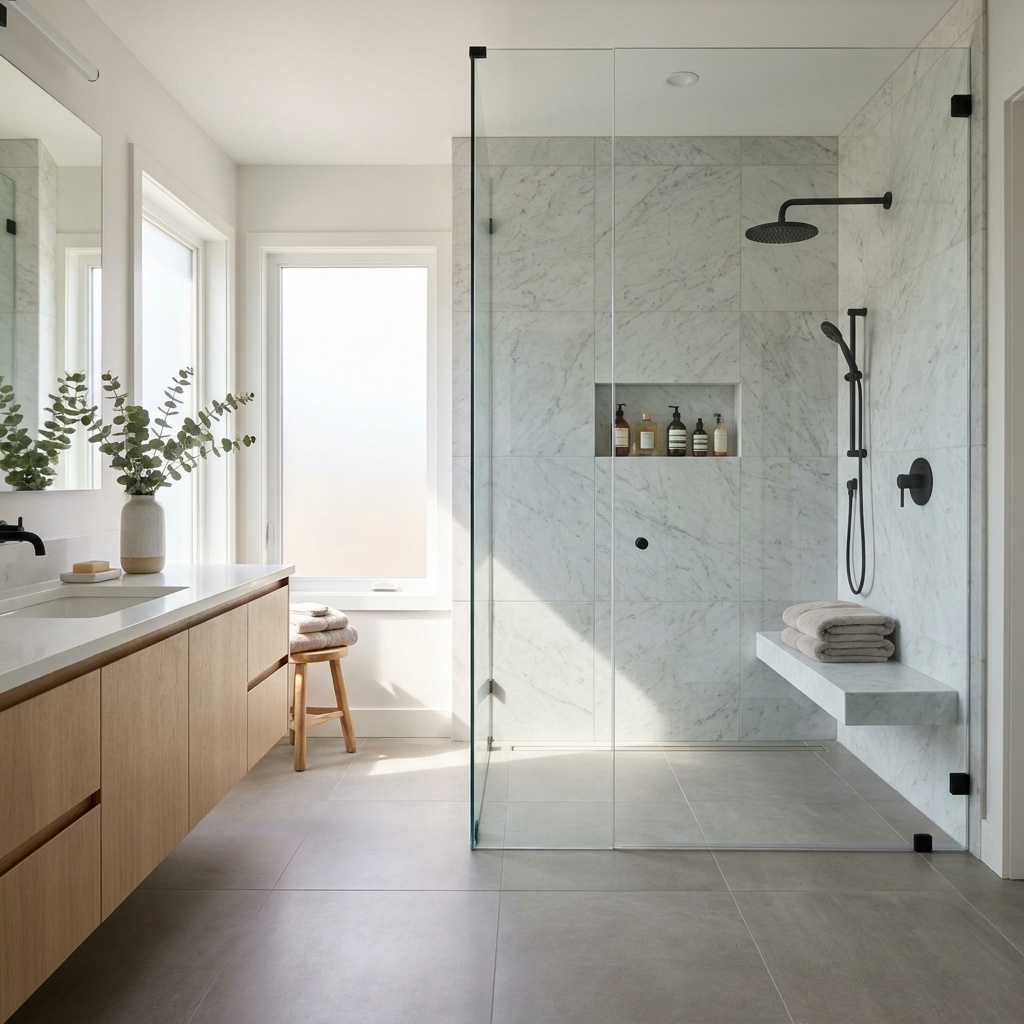
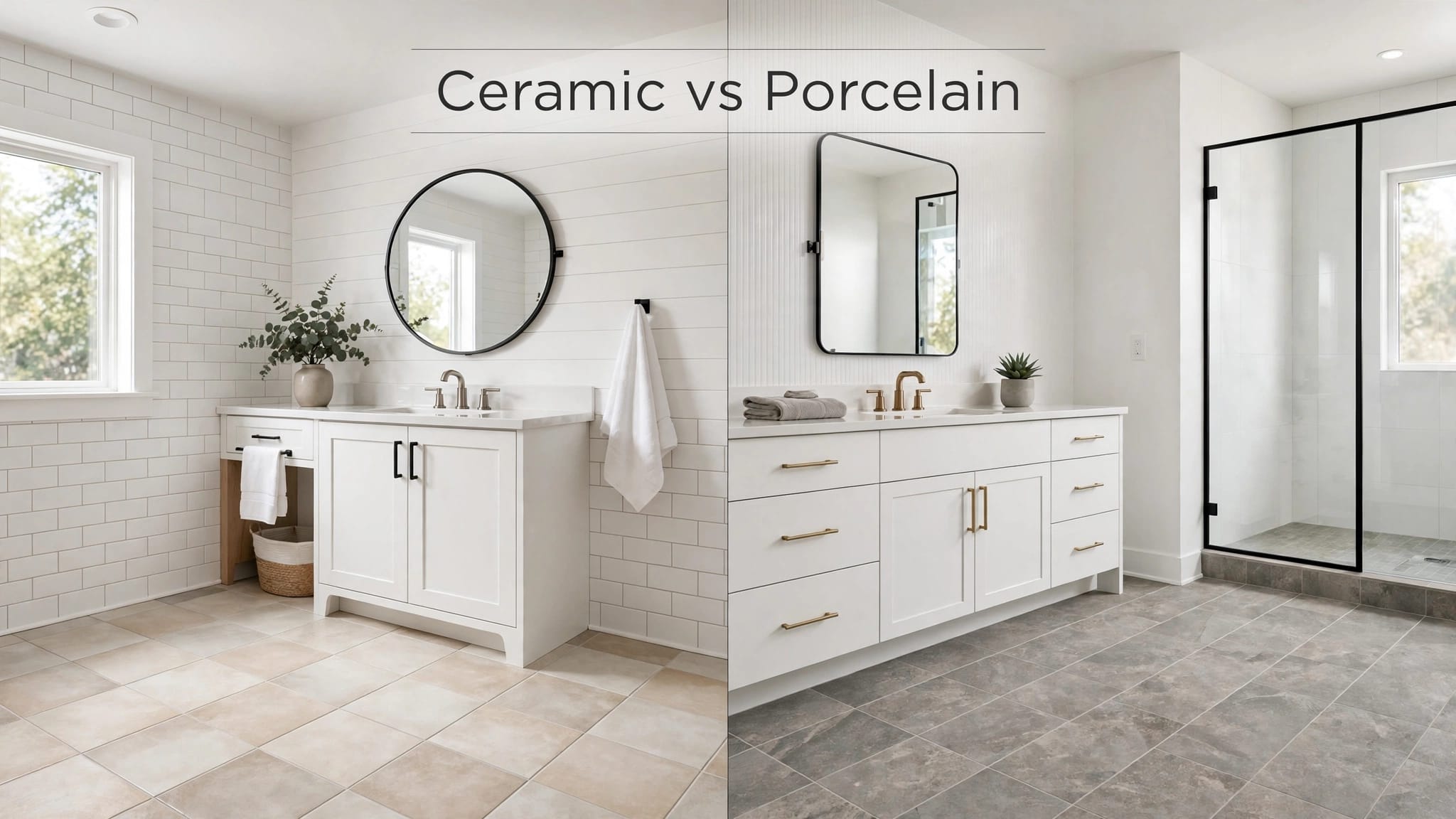
Ceramic vs Porcelain Tile for Cumming Bathroom Floors
A bathroom floor can look perfect on installation day and still fail when tile ignores moisture, slip exposure, water resistance, or subfloor movement. When comparing the two materials, porcelain often gives Cumming homeowners the stronger option for porcelain tile bathroom floors, while ceramic still has a useful place in the right parts of the room.
The difference isn’t only about price or appearance. Tile density, water absorption, cutting difficulty, and the installation system all affect how the finished bathroom performs.
Before choosing a color or pattern, match the floor tiles to the surface that will carry them.
Key Takeaways
- Porcelain tile is usually the stronger choice for Cumming bathroom floors because its dense body absorbs 0.5% or less water when classified as porcelain and resists moisture, stains, and daily wear.
- Ceramic tile remains a practical option for bathroom walls, backsplashes, tub surrounds, and carefully selected light-use floors, with easier cutting and often lower material costs.
- Tile alone does not waterproof a shower. The membrane, drain, shower-pan assembly, stable subfloor, suitable mortar, and proper installation all protect the finished bathroom.
- Choose tile based on moisture exposure, traffic, slip resistance, finish, format, floor condition, and total installation cost rather than price per square foot alone.
Ceramic vs Porcelain Tile: The Bathroom Floor Difference
Porcelain and ceramic tile are made from clay and other natural materials, then shaped and fired in kilns. Porcelain is a type of ceramic tile, but it uses denser clay and is fired at high temperatures. That firing drives a vitrification process, which creates a denser tile body.
That difference in tile durability matters in a Cumming bathroom. Dense porcelain resists water, impacts, and staining better than most conventional ceramic tile products.
According to the ANSI A137.1 ceramic tile standard, porcelain tile has a water absorption rate of 0.5% or less. The Tile Council of North America also explains its porcelain versus non-porcelain classification, based on the ASTM C373 absorption test.
Porcelain absorbs less water
Bathrooms have constant moisture, even outside the shower. Wet feet, humid air, splashing at the vanity, and minor plumbing leaks all test a floor over time.
Lower absorption gives denser products an advantage where moisture exposure is routine. Compared with conventional, more porous ceramic tiles, a dense, properly glazed product offers stronger moisture resistance and can remain more stain resistant.
Ceramic tile can still work on a bathroom floor when the product is rated for floor tiles and the room has normal traffic. However, we usually guide clients toward porcelain tile when they want the most durable choice for a family bathroom, powder room near an exterior door, or a bathroom with a walk-in shower. Porcelain tiles also suit outdoor patios, but that broader use isn’t the main bathroom recommendation.
Ceramic is easier to cut and shape
Ceramic is generally softer, so installers can cut it more easily with standard tile tools. This can reduce labor time on simple projects, especially when a bathroom has few corners or penetrations.
Porcelain often requires a quality wet saw with a diamond blade and other specialized tools. Large-format porcelain also needs careful handling because a small lippage problem becomes obvious under bathroom lighting.
A harder material doesn’t automatically produce a better installation. Proper layout, substrate preparation, and qualified product ratings matter more than the tile label alone.
Where Each Tile Works Best in a Bathroom
The bathroom contains several different surfaces. Selecting one tile type for every surface can work, but it isn’t always the smartest use of the budget.
Porcelain tile belongs on wet floors and shower surfaces
For main bathroom floors, shower floors, and shower walls, porcelain tile is our usual recommendation. It performs well with repeated moisture and in high traffic areas. That durability can matter in a frequently used family bathroom.
Matte, textured, or small-format products create more grout joints and may improve traction in a shower.
Choose floor tiles with a finish suited for bare feet and wet conditions. A polished surface can look dramatic, yet it may feel slick when wet. Ask to see the product’s slip-resistance information, then take a porcelain tile sample home and view it under your bathroom lighting.
Porcelain tiles come in many formats and coordinated collections, making it easier to compare scale, traction, and style.
A waterproof shower depends on the membrane, drain, and shower-pan assembly below the tile. Tile and grout are finish materials, not the waterproof layer.
The Ceramic Tile Foundation’s wet-area installation guidance reinforces this point. Glazed surfaces can resist surface water, but the tile body and surrounding assembly still require proper moisture management.
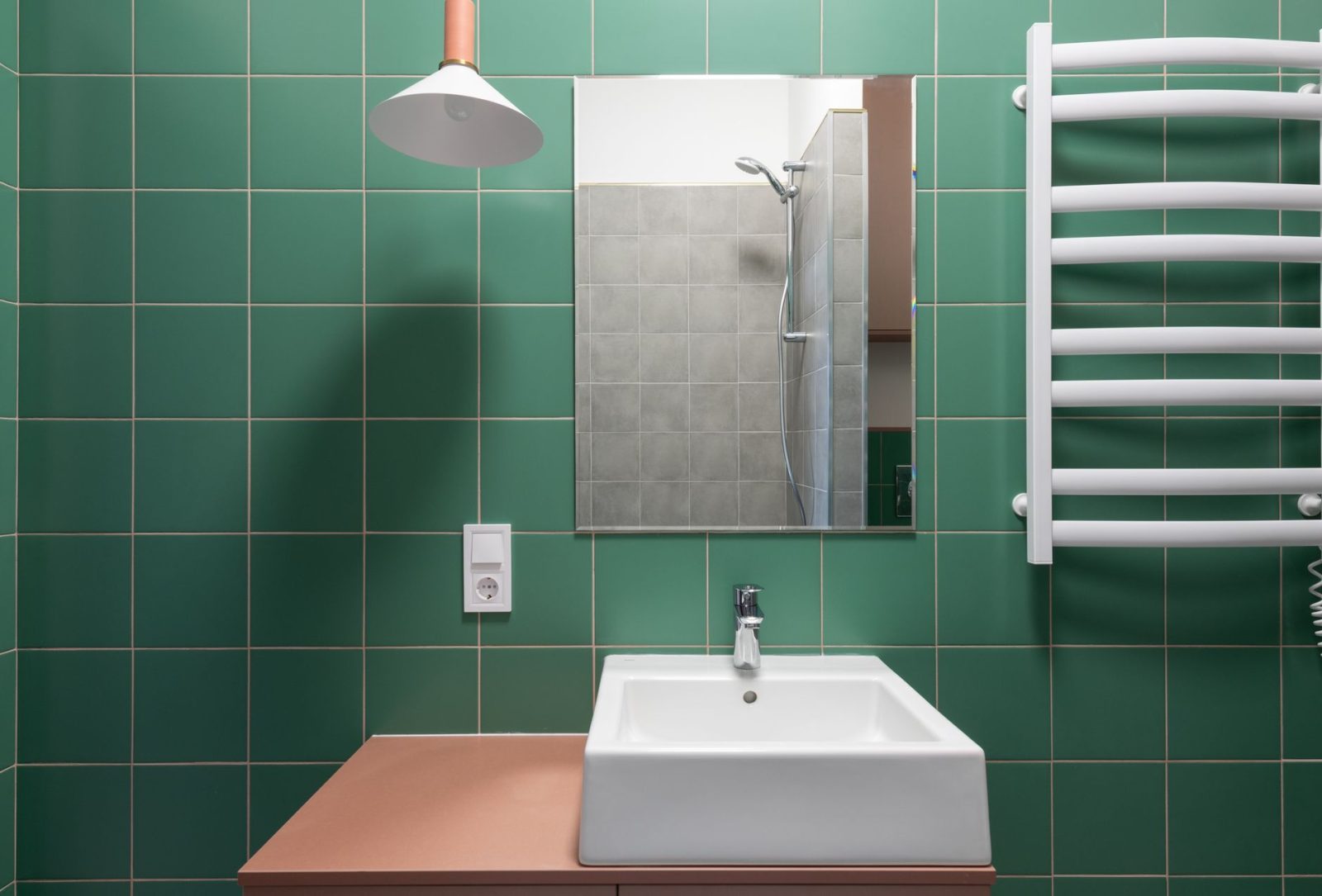
Photo by Max Vakhtbovych
Ceramic tile shines on walls and backsplashes
Ceramic tile offers a broad range of colors, shapes, handmade looks, and decorative finishes. Ceramic bathroom tile is often a practical choice for vanity backsplashes, accent walls, and tub surrounds outside the direct spray zone. Similar products can also work for kitchen backsplashes, though this comparison focuses on bathroom surfaces.
Because wall tiles carry no foot traffic, extreme density is less important. Easier cutting also helps when working around outlets, mirrors, niches, and plumbing trim.
A mixed-material plan can be both attractive and practical. For example, you might use textured porcelain on the floor with glossy ceramic tiles on the walls, then add a ceramic tile accent around a niche. Coordinated colors add design flexibility and can help balance the budget, so the surfaces feel intentional rather than mismatched.
Installation and Cost Factors Beyond the Price Per Square Foot
Ceramic tile often starts at a lower price point than comparable porcelain options, although designer collections can reverse that expectation. Material cost per square foot is only one part of a bathroom installation budget.
Porcelain tile can raise the installation cost because its harder body takes more effort to cut. Edge cuts around a toilet flange, floor vent, or shower drain can add labor. Large-format pieces require more surface preparation, and an uneven floor can create lippage, cracked corners, or uneven grout joints.
Use this comparison when weighing the two materials:
| Factor | Ceramic Tile | Porcelain Tile |
|---|---|---|
| Initial material cost | Often lower | Often higher |
| Water absorption | Higher, depending on classification | 0.5% or less when classified as porcelain |
| Cutting effort | Usually easier | Usually harder |
| Best bathroom use | Walls, backsplashes, and light-use floor tiles | Bathroom floors, showers, busy baths |
| Long-term resistance | Good with proper care | Excellent against moisture and wear |
The better value depends on the space, expected traffic, and the balance between durability and maintenance. Routine cleaning and grout upkeep still matter, even when a denser product justifies a higher initial investment.
Lower-priced ceramic tiles can become expensive if they’re installed where moisture or traffic demands a denser material. Meanwhile, premium porcelain on a small powder-room wall may spend money where it adds little practical benefit.
In Cumming, room size, access, demolition, subfloor condition, tile format, transitions, and shower details can change the estimate. We measure the room, confirm the tile size, and inspect the subfloor before quoting labor.
Installation Details That Protect the Finished Floor
Even the best porcelain tile can’t correct a weak wood subfloor or a poorly built shower pan. Tile needs a stable, clean, and appropriately flat base.
Check the subfloor before tile arrives
Wood framing flexes. Tile and grout don’t. Therefore, installers must check joist spacing, subfloor thickness, existing damage, and floor height before setting tile.
In older bathrooms, we often find soft plywood near the toilet, loose underlayment, or previous water damage around a tub. Those conditions need repair before a tile backer board, uncoupling membrane, or waterproof membrane goes down.
Floor height also affects the bathroom door, vanity clearance, toilet flange, and transition to nearby hardwood. A plan that ignores those details can leave a raised threshold or an awkward gap at the doorway.
Use mortar designed for the tile and system
Porcelain’s dense back needs a reliable bond, but thinset adhesive isn’t one-size-fits-all. The tile and waterproofing system manufacturers’ instructions determine the mortar type.
We also use the trowel size and setting method required for the tile. Large tiles often need mortar applied to both the substrate and tile back, and full coverage prevents hollow spots. Those spots can crack tile under dropped objects or foot pressure, while careful leveling helps limit lippage, or uneven edges.
Avoid premixed mastic on shower floors or other wet-floor applications. It can soften or lose its bond with prolonged water exposure.
A Water Test Can Offer Clues, Not Proof
For DIY projects, homeowners sometimes place water on an unglazed tile edge to compare ceramic tile and porcelain tile. An edge that darkens quickly may be more absorbent, while a dense edge may show little change.
This test only suggests relative porosity and cannot classify either product conclusively. The glazing process, factory treatments, and small sample area can distort the result. Water may also sit on an edge without reaching the exposed body.
Instead, check the carton and product data sheet. Look for the product designation and water absorption rating, then confirm the tile is rated for the intended floor use and wet areas. The TCNA ANSI standards resource is a useful reference when you want to understand how ceramic tile products are specified.
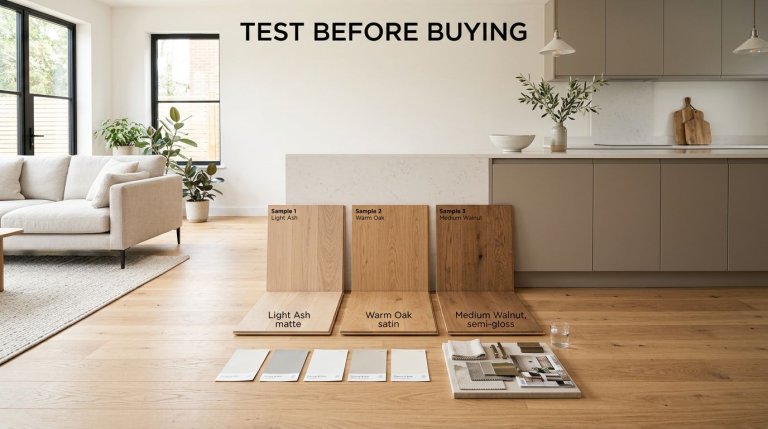
When shopping in person, bring home several samples. Set them near the vanity, beside the shower glass, and next to the wall paint, then view them under the lighting used in those spaces. A warm gray tile can look cool blue under different bulbs.
Coordinate Tile With the Rest of the Remodel
A bathroom floor rarely stands alone. Ceramic or porcelain tile can affect vanity height, baseboard details, toilet flange height, shower curb height, door clearance, and transitions outside the room.
Plan thresholds before installing new floors
Before ordering tile, confirm its thickness, underlayment assembly, and finished floor height with the installer. These measurements affect vanity height, toilet flange alignment, baseboard placement, door clearance, and shower curb details.
At the bathroom door, plan the threshold around the adjoining floor. A tile-to-hardwood transition should feel secure and intentional, especially where bare feet cross the joint.
Homeowners who want coordinated work can review Cumming Floors & Remodeling’s bathroom flooring installation in Cumming service page for help with tile layout, floor preparation, and transitions.
Connect bathroom work to kitchen or basement plans
If kitchen or basement work is planned too, coordinate the installation sequence before cabinetry, trim, or stair parts are finalized. This keeps finished heights and room-to-room transitions easier to manage.
Choosing a Contractor and Comparing Estimates
When you search “bathroom remodeling contractor near me,” look beyond a tile allowance and final total. The written estimate should break out material, preparation, waterproofing, demolition, labor, disposal, and installation cost. It should also state what happens below the tile.
Ask whether the scope includes demolition, damaged subfloor repair, backer board or membrane, shower waterproofing, thinset, grout, transitions, and disposal. Confirm who handles plumbing fixture removal and toilet reset.
We recommend asking these questions before approving the work:
- Is the selected porcelain tile or ceramic tile rated for floors, wet areas, and the expected level of foot traffic?
- What waterproofing system will go behind shower walls and beneath the shower floor?
- How will the installer correct an uneven subfloor before setting large-format tiles?
- Does the quote identify grout type, movement joints, transitions, and trim pieces?
- Who is responsible if the tile arrives damaged or the dye lot changes?
A low price point may reflect omitted preparation or waterproofing work. Compare written scopes line by line, especially on shower projects.
Homeowners in Cumming seeking a written, itemized comparison can call (770) 906-4732 to request a free in-home estimate from Cumming Floors & Remodeling.
Frequently Asked Questions
Is porcelain tile better than ceramic tile for a bathroom floor?
Porcelain is usually the better choice for a bathroom floor because it absorbs less water and handles moisture and daily wear well. Ceramic can still work when it is rated for floor use and installed in a suitable, light-use bathroom.
Can ceramic tile be used in a shower?
Ceramic tile can be used on some shower walls and other areas when the product is rated for wet applications. For shower floors and areas with frequent water exposure, we typically recommend porcelain with an appropriate slip-resistant finish.
Does porcelain tile make a bathroom installation more expensive?
Porcelain often costs more to purchase and may require additional labor because its dense body is harder to cut. Subfloor repairs, tile format, layout, waterproofing, demolition, and transitions can affect the total estimate just as much as the tile material.
Does tile and grout waterproof a shower?
No. Tile and grout are finish materials, not the waterproof layer beneath the shower assembly. A properly installed membrane, drain, shower pan, and compatible setting system are necessary to manage water behind the tile.
How can I confirm whether a tile is porcelain?
Check the carton and product data sheet for the product designation, water absorption rating, and intended floor or wet-area use. A simple water test may suggest relative porosity, but it cannot classify a tile conclusively.
Final Thoughts on Bathroom Tile Selection
For most Cumming bathroom floors, porcelain tile is the safer long-term choice because it absorbs very little water and handles daily wear well. Ceramic tile remains a strong option for walls, backsplashes, and carefully chosen light-use floors.
The best ceramic vs porcelain decision starts with moisture exposure, floor condition, finish, and installation requirements. The right product, stable substrate, suitable finish, and proper waterproofing support durability and maintenance over time. Together, they help protect your bathroom flooring after the grout has cured.