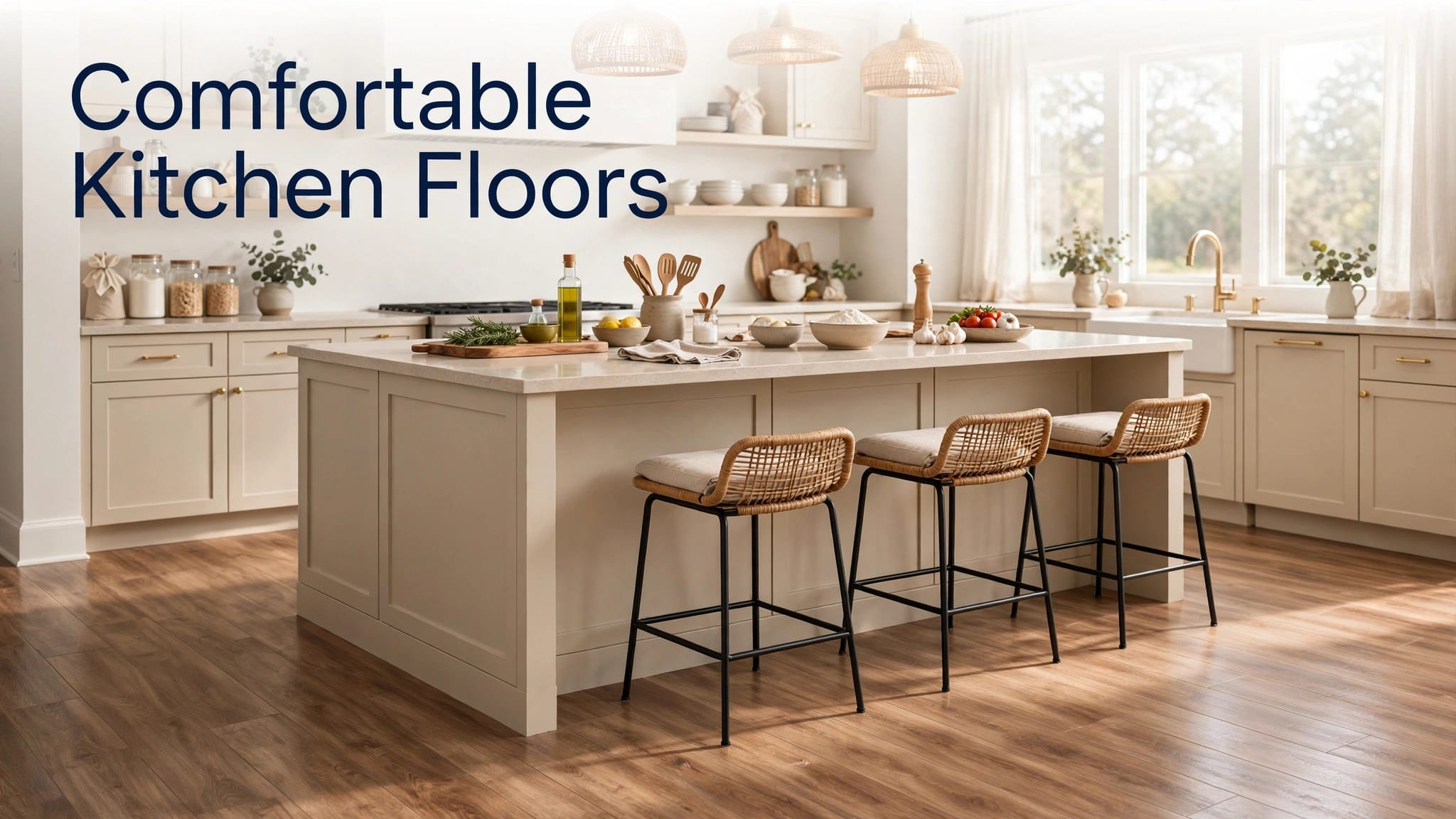
Best Flooring for Standing Comfort in Cumming Kitchens
A kitchen floor can look beautiful and still leave your feet, knees, and back sore after an hour of meal prep. The most comfortable kitchen flooring balances a forgiving surface with the water resistance and durability a busy Cumming home needs.
We compare kitchen flooring options based on how different households use their kitchens. Spills, pets, chair movement, and long cooking sessions show whether a durable floor is a practical choice for your Cumming home. Start with your routine, then match the material and installation plan to it.
Comfortable kitchen flooring for long cooking sessions
Comfort depends on more than whether a sample feels soft in a showroom. The finished floor needs a stable subfloor, a practical surface texture, and good performance around water.
Surface feel and daily cleanup
Luxury vinyl plank, often called LVP, is usually our first choice for homeowners who want a warmer, less rigid feel than hard tile. Its resilient construction gives it more give underfoot than traditional hardwood flooring or other rigid surfaces.
LVP also handles common kitchen messes well. A spilled drink, wet dog paws, or muddy shoes can be wiped up quickly, providing practical spill protection for busy households. For families who cook often, that low-stress cleanup matters as much as appearance.
Among kitchen flooring materials, cork offers a cushioned, resilient feel, but moisture exposure still needs to be controlled. Bamboo flooring can also feel warm and comfortable, though it requires more careful moisture management than LVP in a spill-prone kitchen.
Waterproof laminate can provide an attractive wood look. However, it generally feels firmer, and its core can still be vulnerable if water reaches unprotected seams. Read the product warranty and cleaning instructions before assuming “waterproof” means any spill can sit indefinitely.
Traffic, texture, and chair movement
These surfaces face concentrated wear near the sink, refrigerator, island, and range. Choose a finish that disguises crumbs and scuffs instead of showing every mark from daily foot traffic. Mid-tone planks and matte finishes usually make upkeep easier than glossy dark floors.
A lightly textured surface can also feel more secure underfoot by improving slip resistance. Still, avoid deep texture that catches dirt near the kitchen table or island stools.
The U.S. Environmental Protection Agency advises homeowners to select flooring that resists water damage and limits water penetration into the subfloor during a remodel. Its guidance on remodeling and indoor air quality supports the same practical rule we use: surface performance and what lies beneath it both matter.
Luxury vinyl plank versus waterproof laminate
Both options can work in a high-traffic kitchen, yet they respond differently to standing water and long periods on your feet.
Why LVP suits active Cumming homes
Waterproof luxury vinyl has a protective wear layer over a vinyl surface and a flexible or rigid core. It suits kitchens, halls, entries, and finished basements where wet shoes and accidental spills are normal.
Quality LVP is quieter and more forgiving than tile. Look for a style with a durable wear layer, realistic texture, and manufacturer-approved underlayment requirements. An attached pad can help with sound, but a thicker plank alone doesn’t guarantee a quieter room.
We also like LVP because damaged planks can sometimes be replaced without redoing the entire kitchen. That repair flexibility is useful in homes with dogs, children, or heavy island seating.
Where waterproof laminate makes sense
Laminate commonly costs less up front and offers a firmer feel that resembles traditional wood flooring. It can resist everyday surface scratching well, making it useful in dry dining rooms and living areas.
For a kitchen, though, inspect the fine print. Even water-resistant laminate can swell when moisture enters seams or reaches a moisture-sensitive core. Clean it with a damp mop, never a soaking-wet one.
| Feature | Luxury vinyl plank | Waterproof laminate |
|---|---|---|
| Feel underfoot | Usually softer and quieter | Usually firmer |
| Spill tolerance | Better suited to frequent spills | Requires faster cleanup at seams |
| Scratch performance | Depends on wear layer and finish | Often strong in dry rooms |
| Best fit | Kitchens, entries, basements | Lower-moisture living spaces |
When the product rating and installation requirements are appropriate, LVP can provide waterproof flooring performance in a kitchen. It also offers more practical spill protection than laminate seams during routine spills, giving most busy kitchens better long-term peace of mind.
Hardwood and tile have clear trade-offs
Hardwood and tile flooring can both look excellent in a kitchen. Their practical drawbacks become clearer when you stand at the counter every day.
Engineered hardwood and solid hardwood
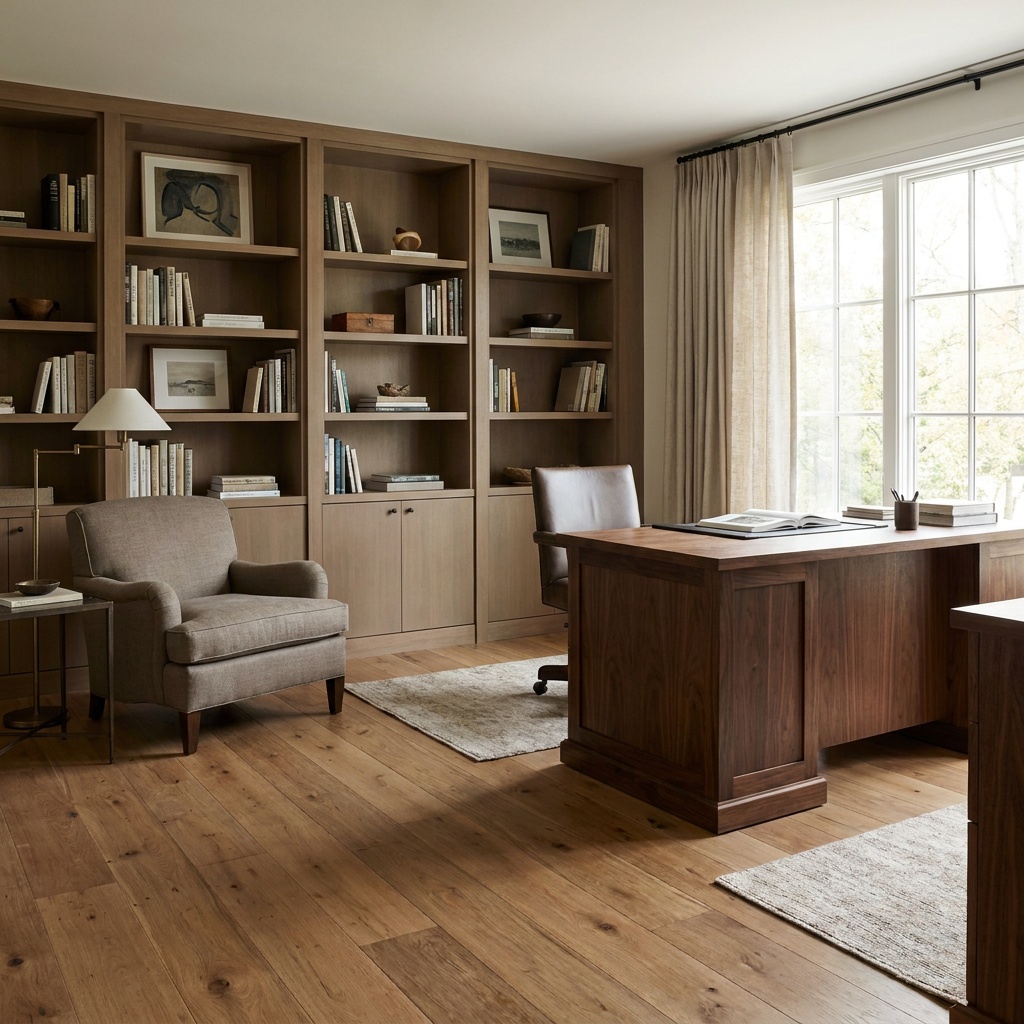
Engineered hardwood can work in an open concept kitchen when you want the floor to continue into a living room or dining room. It brings warmth and a natural look that LVP only imitates.
A continuous engineered hardwood floor can work across an open concept main level. Solid hardwood also works in a kitchen if you accept the maintenance it requires.
The NWFA wood flooring installation guidelines advise wiping spills and moisture immediately. A leak under a dishwasher, slow plumbing drip, or wet mat left in place can still cause staining, cupping, or gaps.
If you are comparing a hardwood floor company in Cumming, ask whether the existing boards can be matched, extended, refinished, or protected during cabinet work. Ask how species, wide planks, grain, and finish affect the match. A solid hardwood floor sanding company in Cumming should also inspect board thickness and prior repairs before promising a full refinish.
Porcelain and ceramic tile
Porcelain tile is one of the toughest surfaces for water exposure and dropped utensils. Tile flooring cleans easily and resists moisture, but it offers less standing comfort than softer surfaces.
However, tile is hard underfoot. People who cook for long stretches often feel the difference in their knees and lower back. Tile can also feel cool without radiant heat.
Grout lines deserve attention before you commit. Small tiles with bright white grout create many joints that collect cooking residue and discolor over time. Larger-format tile, a mid-tone grout, and a practical grout width make cleanup less demanding.
A durable surface does not automatically create a comfortable kitchen. The floor under the sink and range deserves the same planning as the floor you see from the living room.
Subfloor preparation affects comfort and noise
The material you see is only part of the finished result. A floor installed over movement, moisture, or unevenness can feel hollow, noisy, or unstable.
Check concrete slabs and wood subfloors first
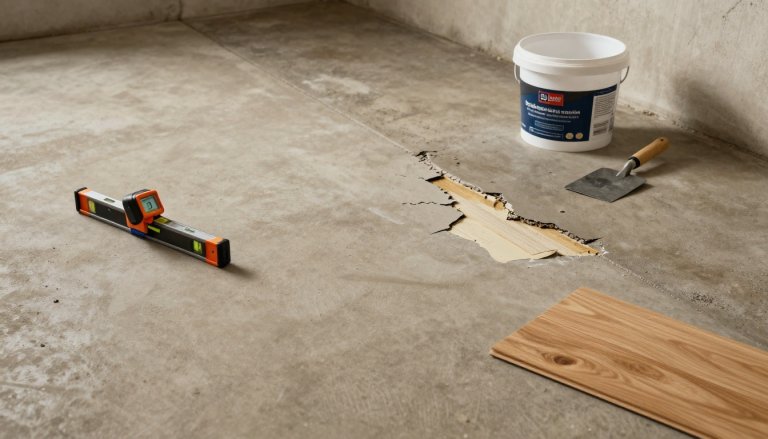
Before you install new flooring in Cumming, have the existing floor and subfloor inspected. A concrete slab may look dry while still releasing water vapor. A wood subfloor may have loose areas, dips, old water damage, or squeaks that need correction first.
The EPA also cautions that carpet on concrete can absorb moisture and support biological pollutants. Its moisture-control guidance reinforces why we do not treat a dry-looking slab as proof that moisture is absent.
A proper assessment checks floor flatness, fastening, visible cracks, and moisture conditions before you order materials. That prevents expensive changes after tear-out begins.
Use underlayment and mats for the right job
Manufacturer-approved underlayment can help manage sound and minor irregularities when the product allows it. It cannot correct a seriously uneven floor or replace moisture testing. Follow the flooring maker’s instructions because an unapproved pad can affect a warranty or create too much movement in a floating floor.
Commercial-grade anti-fatigue mats are a practical comfort upgrade near the sink, prep counter, and range. Choose a low-profile mat with a non-slip backing and clean beneath it regularly. Avoid mats that trap water against natural wood floors.
Plan cabinets, thresholds, and open-concept rooms
Flooring decisions become more involved when the kitchen connects to the rest of the main level. A good plan prevents awkward height changes and visible stop lines.
Match hardwood when continuity matters
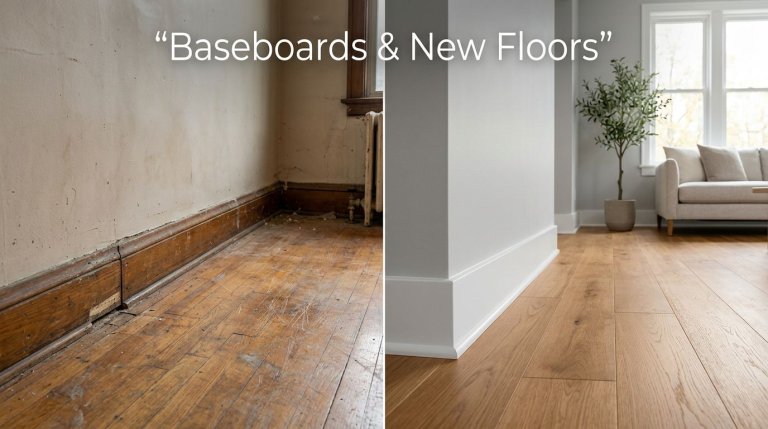
Extending hardwood through the kitchen can make an open concept feel larger. Yet matching older boards takes more than choosing a similar stain.
Species, grain, the use of wide planks, finish sheen, and daylight all affect the result. A coordinated floor plan may support resale value when it suits the home’s style and the surrounding Cumming market. No layout guarantees a specific return.
Our hardwood floor matching in Cumming process starts with the existing floor rather than a generic sample. This is especially helpful for homeowners working with a hardwood floor company servicing Windermere or nearby Forsyth County communities.
A defined transition can also look intentional. LVP in the kitchen and hardwood in the adjoining room may be the smarter choice where water exposure is frequent.
Coordinate flooring with cabinets and appliances
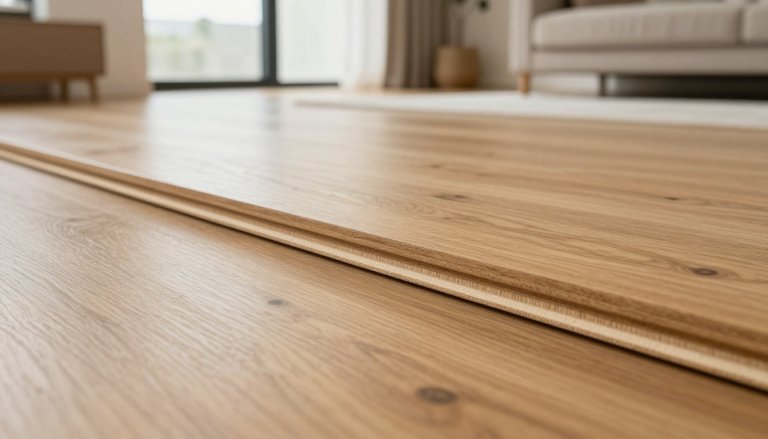
A floating floor needs space to expand and contract. Don’t trap it under fixed cabinetry unless the flooring manufacturer permits that installation method. Cabinet layout, dishwasher clearance, range height, and thresholds should be resolved before installation day.
The team handling a kitchen remodel in Cumming should coordinate demolition, subfloor work, cabinets, counters, and flooring. Cumming Floors & Remodeling handles these connected decisions through its kitchen remodeling services, so flooring height and transitions don’t become an afterthought.
Kitchen flooring mistakes that create regret
Most flooring regrets come from decisions made before the first plank or tile is installed.
- Choosing bright white grout with small kitchen tiles creates constant cleaning work around food, spills, and foot traffic.
- Installing inexpensive, thin planks over an uneven subfloor can leave the floor feeling unstable or make irregularities visible.
- Selecting a glossy finish can make crumbs, water spots, and pet prints more noticeable.
- Ignoring cabinet and appliance clearances can lead to pinched floating floors or a dishwasher that cannot be removed later.
- Treating a kitchen like a dry living room often leads to the wrong choice of laminate, hardwood, or underlayment.
During a kitchen remodel, coordinate flooring height, cabinet clearances, waterproofing, and transitions before installation.
Key takeaways for a Cumming kitchen floor
- Waterproof luxury vinyl is usually the strongest all-around choice when comfort, water resistance, and easy cleanup rank highest. Product specifications and installation quality still matter for any waterproof flooring.
- Laminate can work when spill exposure is limited, but seams and cleaning methods still matter.
- Hardwood adds warmth and continuity, although it requires immediate spill cleanup and realistic maintenance habits.
- Tile excels at water resistance but benefits from anti-fatigue mats in standing zones.
- Subfloor inspection, moisture checks, and cabinet sequencing protect the investment in every flooring type.
Cumming Floors & Remodeling publishes local ranges of $3.95 to $6.00 per square foot for hardwood sanding and refinishing, and $4.00 to $5.50 per square foot for waterproof LVP. Review our Cumming flooring and remodeling services for the work included in an itemized estimate.
Frequently asked questions
What flooring is best for a busy kitchen with pets and spills?
We generally recommend luxury vinyl plank for busy kitchens because it handles routine spills well, feels less punishing than tile, and offers many wood-look styles. Porcelain tile also works well where maximum protection from moisture matters more than underfoot comfort.
Can solid hardwood be installed in a kitchen?
Yes, but it needs prompt spill cleanup and careful attention to leaks, sink mats, and appliance connections. Engineered hardwood may be a practical option when you want a continuous wood floor in an open concept main level.
Do anti-fatigue mats damage kitchen floors?
A quality mat should not damage a properly finished floor when you keep it dry and clean underneath. Avoid leaving wet mats on hardwood, and choose low-profile designs that don’t create a trip edge.
Who should inspect a floor before kitchen work begins?
Ask for an in-home review before materials are ordered. As a local remodeling company in Cumming, we inspect existing conditions, measure transitions, and discuss whether sanding, replacement, or a moisture-resistant floor makes the most sense. Request a free flooring estimate in Cumming to start with clear measurements and scope.
Choose comfort that holds up over time
The best kitchen floor supports the way you cook, clean, and move through your home. For many Cumming households, comfort with moisture control leads to LVP, while hardwood and tile remain strong choices for the right layout and maintenance routine.
Call (770) 906-4732 for a free in-home estimate from Cumming Floors & Remodeling. If you have a written quote from another contractor, ask us to confirm whether our current 5% less offer applies to your project.