Choosing hardwood species for basement humidity swings
A basement can feel like the calmest part of a home, until the seasons change. One month it’s dry and comfortable, the next it’s sticky, and suddenly that wood you loved upstairs starts to feel like a risky bet downstairs.
The goal with hardwood for basements isn’t to “beat” moisture. It’s to pick wood (and build details) that can live with normal humidity swings without cupping, gapping, or getting noisy underfoot.
Below, we’ll break down which hardwood species handle swings better, why engineered construction often wins below grade, and what installation habits separate a floor that lasts from a floor that fights you.
Why basements make wood act differently
Wood is hygroscopic, it takes on and releases moisture as indoor humidity changes. In a basement, those changes can be sharper because the space sits next to cool concrete and soil, and it often has less airflow than the main level.
When humidity rises, wood swells. When humidity drops, it shrinks. That movement is normal in any hardwood floor, but basements can magnify it.
Two basement realities we plan for:
- Concrete can release moisture long after it looks “dry.”
- Temperature shifts drive RH changes, even if you don’t see water.
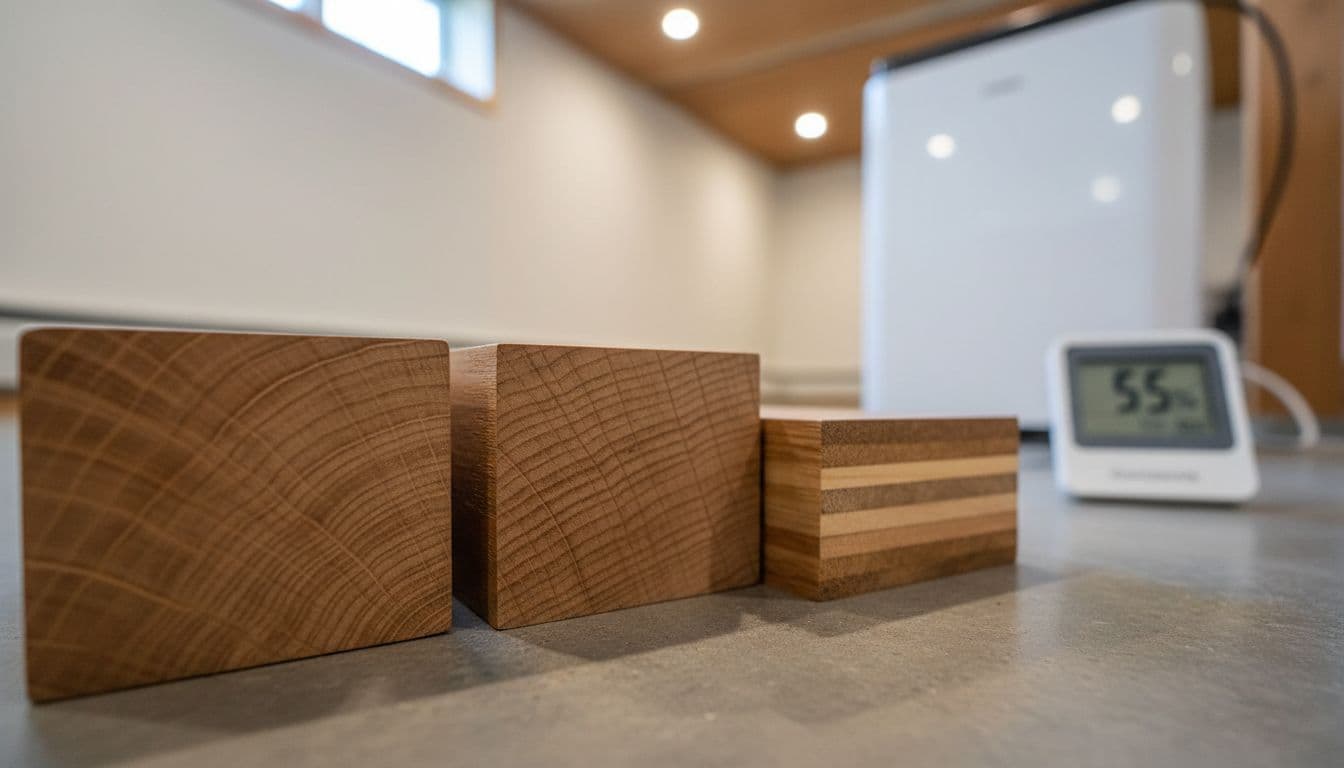
A simple hygrometer and a dehumidifier go a long way. If you like deeper background on moisture and basement flooring options, Wagner Meters has a helpful overview of basement flooring considerations and moisture basics.
Engineered vs solid: the first decision we make
If you’re below grade, engineered wood is usually the safer path. Why? It’s built with cross-layered plywood that resists movement better than a single, thick piece of solid wood.
That doesn’t mean solid wood can’t ever work, but basements are less forgiving. For many homes, engineered wood offers the best mix of real-wood look and stability. Bruce has a solid explainer on why engineered wood is often recommended for basements.
What we like about engineered hardwood in basements:
- Better resistance to seasonal expansion and contraction
- More flexibility with wider planks
- More compatible with floating or glue-down installs over concrete (depending on the product)
This is also where planning matters. We don’t just pick a color and order material. We like to review samples with you, then do an in-home visit to check conditions, measure carefully, and give a clear quote before you install new flooring.
Hardwood species that tolerate humidity swings better
Species choice still matters, even with engineered planks. Some woods move less, some have grain patterns that hide small gaps, and some are simply harder to dent when a basement becomes a playroom, gym, or hangout space.
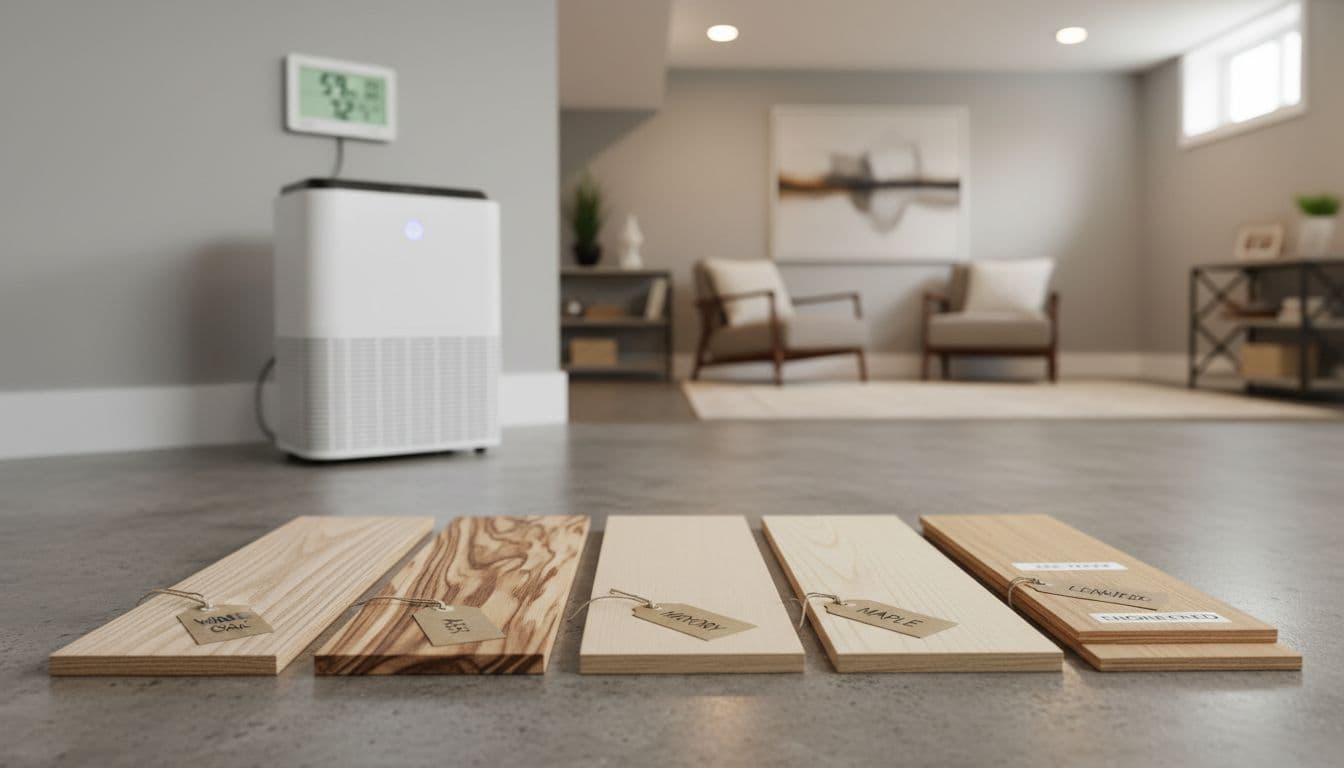
Here’s how we think about the most common species choices for basement-ready wood looks.
White oak (a steady, basement-friendly classic)
White oak is often our first pick for basements because it tends to be more dimensionally stable than many other domestic species, and its grain can disguise minor seasonal changes.
It also plays well with stains, so it fits modern, warm, or traditional styles without forcing a certain look.
Hickory (tough, busy grain, great at hiding life)
Hickory is harder and has bold color variation. That “busy” character is a feature in a basement, it hides scuffs, small dents, and day-to-day wear better than very uniform woods.
If you want a calmer look, hickory can feel visually loud, so we usually recommend larger samples viewed in your actual lighting.
Maple (clean look, but pick carefully)
Maple’s smooth, uniform appearance is beautiful, but that same uniformity can make gaps or dents stand out more. If maple is your style, we usually steer toward engineered construction, moderate plank widths, and a finish that won’t spotlight every little mark.
Ash (bright and open, often underrated)
Ash has a lively grain and a lighter tone, similar to oak in vibe but with its own pattern. It can be a smart choice when you want a bright basement without going ultra-modern.
A quick comparison we use during selection
| Species | Why people like it in basements | What to watch |
|---|---|---|
| White oak | Balanced look, good stability, flexible staining | Choose the right construction and width |
| Hickory | Very tough, hides wear, rustic character | Color variation is strong |
| Maple | Smooth, clean, modern | Shows dents and gaps more easily |
| Ash | Light, distinct grain, natural look | Availability varies by product line |
For another practical take on basement wood choices and why engineered often wins, City Floor Supply’s article is a good read: what to consider when choosing wood flooring for a basement.
Construction details that matter as much as species
In basements, the “species” conversation is only half the story. The other half is how the plank is built and sized.
Plank width: Wider boards can look amazing, but they also have more total movement across the width. In a basement, we often prefer moderate widths unless the product is designed and warranted for that use.
Core quality (engineered floors): More stable cores and well-made ply layers handle swings better than bargain boards.
Cut and grain: Rift and quartered looks (common in oak) can be more predictable. Even when you’re not buying true quarter-sawn lumber, choosing products with straighter grain often helps the floor look “calm” across seasons.
Moisture control and installation habits that prevent headaches
Think of a basement floor like a boat dock. It doesn’t need to be afraid of water, it needs to be built to live near it.
Here are the habits we rely on for humidity swings:
1) Measure before we commit
We check site conditions and take precise measurements during an in-home visit, not after material shows up. That’s how we avoid surprises.
2) Use the right moisture barrier plan
Basements commonly need a vapor barrier or a system designed for concrete, depending on the product and install method (glue-down, floating, or nail-down over a subfloor system).
3) Control indoor RH, not just “dryness”
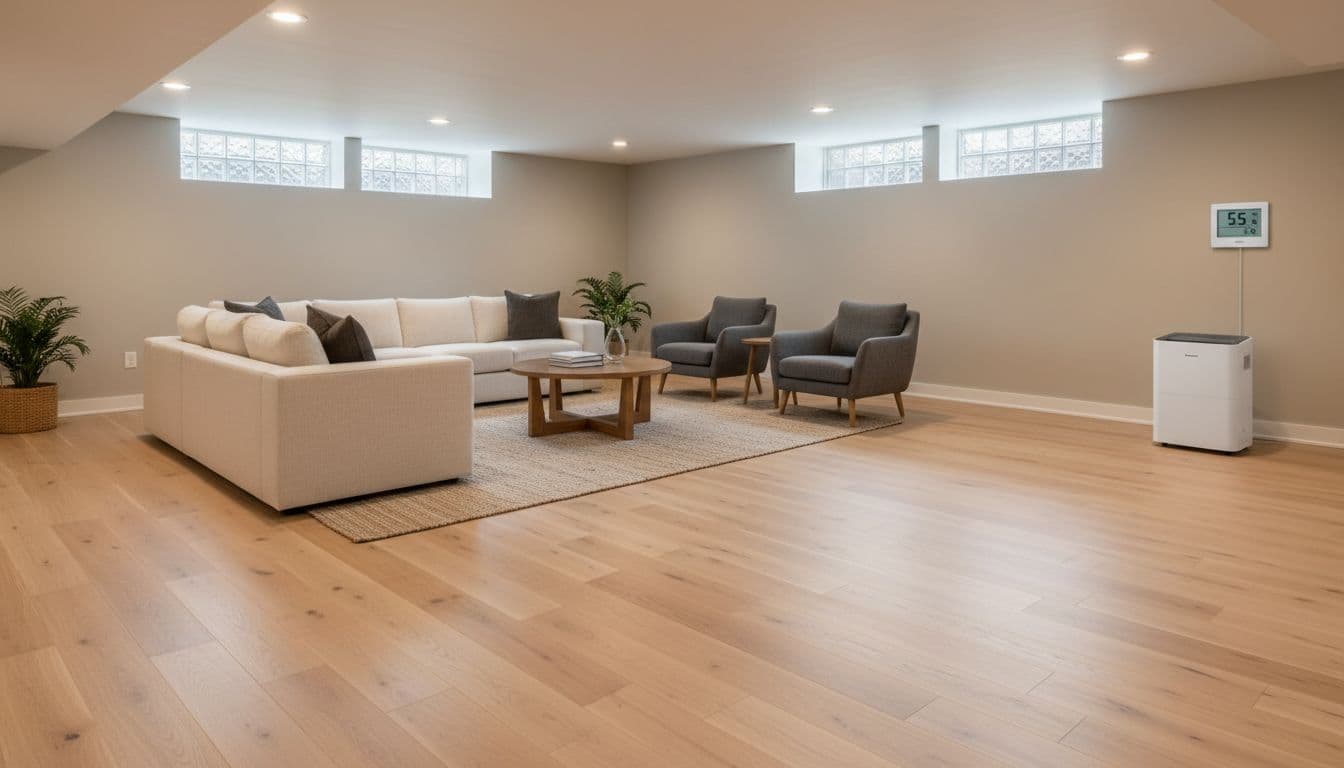
We like basements that stay in a moderate RH range year-round. A dehumidifier in summer and balanced HVAC in winter can keep wood movement small and predictable.
4) Choose adhesives and underlayments that match the product
If the manufacturer calls for a certain adhesive or underlayment, we follow that. It’s not picky, it’s how you keep a warranty valid and a floor quiet.
5) Keep quotes simple and all-in
A basement install can include floor prep, underlayment, trim, removal of old flooring, cleanup, and putting furniture back. We prefer clear, all-inclusive pricing so you know what you’re paying for.
When basement wood already exists: refinishing vs replacing
If you already have wood downstairs, your next step depends on what the floor is doing.
- If you’re seeing surface wear, scratches, or dullness (but the boards are flat), hardwood floor sanding and refinishing may bring it back.
- If you’re seeing cupping, repeated gapping, or moisture staining, refinishing alone won’t solve the root issue.
We like to inspect first, then recommend the best path, refinish if it’s a good candidate, replace if the structure is telling us it won’t settle down.
How this ties into resale and remodel plans upstairs
People rarely upgrade just one space. We often meet homeowners who plan to finish a basement and also remodel kitchen and bathroom to add to value of house. When that’s the plan, we like to think about the whole-home flow, matching tones, choosing complementary widths, and keeping transitions clean from level to level.
This is where the real hardwood floor benefits show up: warmth, comfort, and a consistent look that makes the home feel intentional, not pieced together.
Conclusion
Basements don’t require fear, they require respect. When we pair the right species (often white oak or hickory), stable engineered construction, and smart moisture control, wood can look great below grade for years.
If you want help choosing a basement-ready wood option, call (770) 906-4732 for a free estimate. If you show us any existing quote from another contractor, we’ll do it 5% less. Let’s pick a floor that fits your home, not just the sample board.