Flooring Warranties: What They Cover and What Voids Them
A flooring warranty can look reassuring on a sales sheet, yet the fine print often decides whether a claim is approved. If a hardwood floor cups after a leak or luxury vinyl separates at a seam, the warranty may protect the material, the installation, both, or neither.
We help homeowners compare those promises before work begins. The goal is simple: choose a floor that fits the room, install it correctly, and keep the records that support your coverage.
Key Takeaways
- Flooring warranties usually cover manufacturing defects, not damage from moisture, pets, furniture, or missed maintenance.
- Manufacturer coverage and a contractor’s workmanship warranty are separate commitments.
- Incorrect subfloor preparation, poor moisture control, and unapproved cleaners can void coverage.
- Keep invoices, product labels, care instructions, moisture readings, and photos from installation day.
- Before filing a claim, identify whether the issue involves the product, installation, or conditions inside the home.
A Flooring Warranty Is Usually Two Different Promises
Most flooring warranties fall into two categories. First, a manufacturer warranty addresses defects in the product itself. Second, an installation or workmanship warranty addresses mistakes made during the installation.
A manufacturer may cover a finish that peels under ordinary household use, vinyl planks that separate because of a factory defect, or engineered hardwood that delaminates without outside damage. However, it usually won’t cover a floor damaged by a dishwasher leak, a flooded basement, or a pet accident.
A workmanship warranty applies when the product is sound but the installation is faulty. Examples include loose boards, failed transitions, hollow-sounding tile caused by poor mortar coverage, or a floor that develops gaps because installers skipped acclimation requirements.
The distinction matters because each party may point to the other. If hardwood boards cup, the manufacturer may cite high moisture levels. If the installer followed the product instructions and documented acceptable moisture readings, the issue may fall outside either warranty.
A warranty is not a maintenance plan or an insurance policy. It protects against defined defects under stated conditions.
Before buying, read the full document rather than relying on phrases such as “lifetime warranty.” A lifetime finish warranty often applies only to the original purchaser, only in a residential setting, and only for a defined failure. This overview of flooring warranty coverage outlines common distinctions between structural, finish, and wear protections.
What Flooring Warranties Commonly Cover
Coverage depends on the material, the manufacturer, and where the floor is installed. Still, many warranty documents use similar categories.
| Warranty type | Issues it may cover | Limits homeowners should check |
|---|---|---|
| Structural warranty | Delamination, broken locking systems, factory defects | Moisture, subfloor movement, and improper installation are often excluded |
| Finish warranty | Peeling, flaking, or abnormal finish failure | Surface scratches, dents, fading, and normal dulling may not qualify |
| Wear warranty | Wear-through on vinyl, laminate, or engineered products | Applies to complete wear-through, not minor scuffs or traffic patterns |
| Workmanship warranty | Installation errors such as loose boards or failed seams | Does not cover product defects or damage after installation |
| Tile and stone warranty | Loose or cracked material related to installation | Cracks from structural movement or impact damage are often excluded |
Hardwood floor coverage varies by construction. Solid hardwood can be sanded and refinished several times, but it expands and contracts with seasonal humidity. Engineered hardwood has layered construction, so its structural warranty may address delamination. Neither type is designed to withstand standing water.
Luxury vinyl plank often carries strong residential wear and stain coverage. Yet manufacturers still require a flat, dry subfloor and approved cleaning products. Laminate warranties also commonly exclude standing water unless the product is rated for wet areas.
We review those conditions before installation because the room matters as much as the plank. A laundry room, basement, kitchen, and entryway each present different moisture risks. Homeowners planning to install new flooring in Cumming should compare the product warranty with the space where it will live.
The Most Common Reasons Warranty Claims Are Denied
The exclusions section often carries more weight than the coverage section. Many claims fail because the floor was exposed to a condition the warranty clearly excludes.
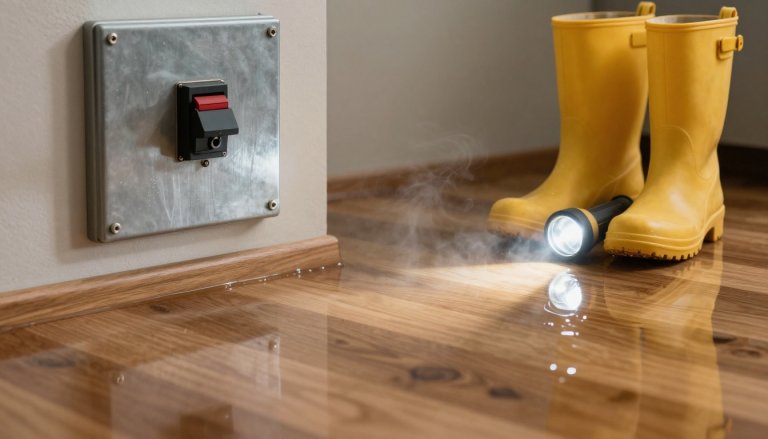
Moisture is the leading concern. Concrete slabs can release moisture long after a home is built. Wood subfloors can also hold excess moisture after a leak or renovation. If installers do not test and document the subfloor, a later claim can become difficult to prove.
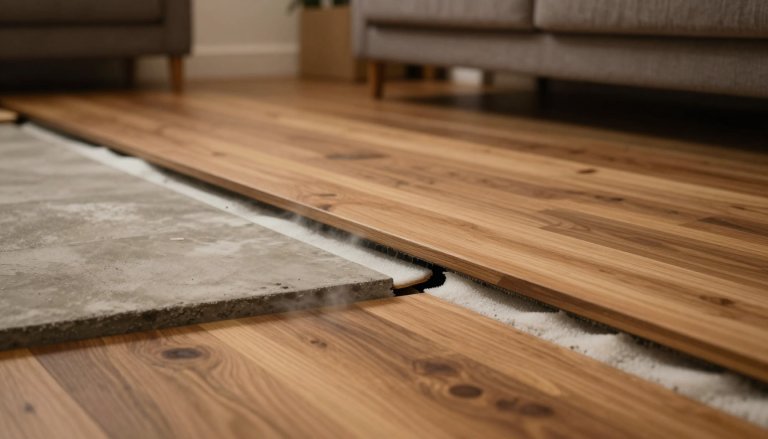
Improper acclimation can create gaps, cupping, or buckling. Hardwood and some engineered products need time to adjust to indoor conditions before installation. The product instructions set the accepted temperature and humidity range. Storing boxes in a garage or installing them immediately after delivery can create avoidable movement.
Wrong cleaners can damage a finish. Steam mops, waxes, oil soaps, abrasive powders, and harsh chemicals may leave residue or dull the surface. A manufacturer can deny a finish claim when cleaning products conflict with its written care instructions.
Heavy objects and impact damage are rarely covered. Dropped cookware, dragged furniture, high heels, rolling office chairs, and pet claws can scratch or dent a floor. Felt pads, floor mats, and furniture glides reduce those risks.
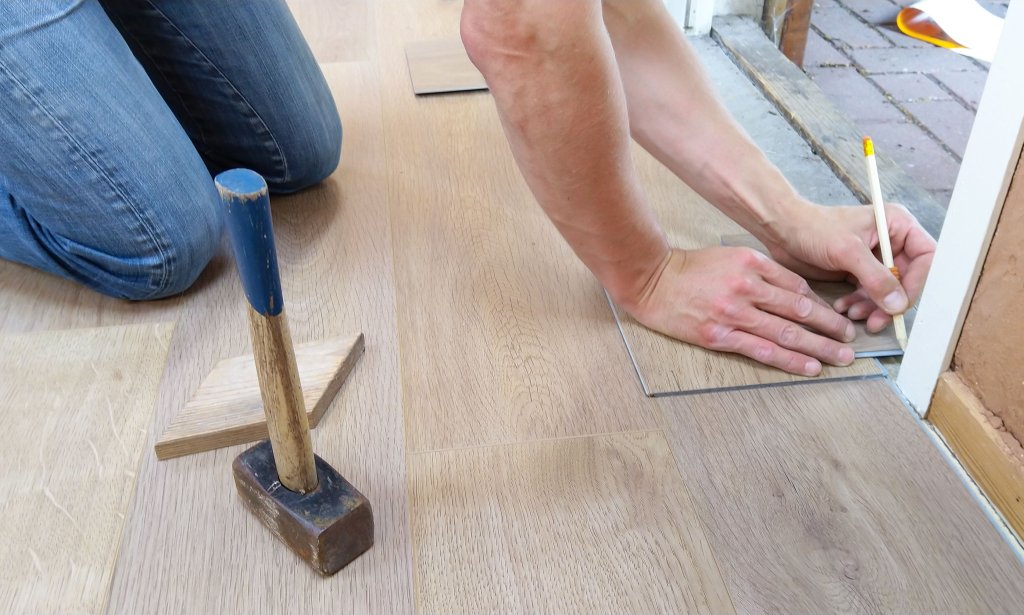
Photo by ClickerHappy
Subfloor issues can also void flooring warranties. A floor needs a flat, stable base. If old adhesive, uneven concrete, damaged plywood, or structural movement affects the finished surface, the product manufacturer may reject the claim.
A detailed guide to warranty exclusions also highlights moisture, maintenance, and installation conditions that homeowners should document. We check these factors before laying the first board, tile, or plank.
Documentation Protects Your Claim
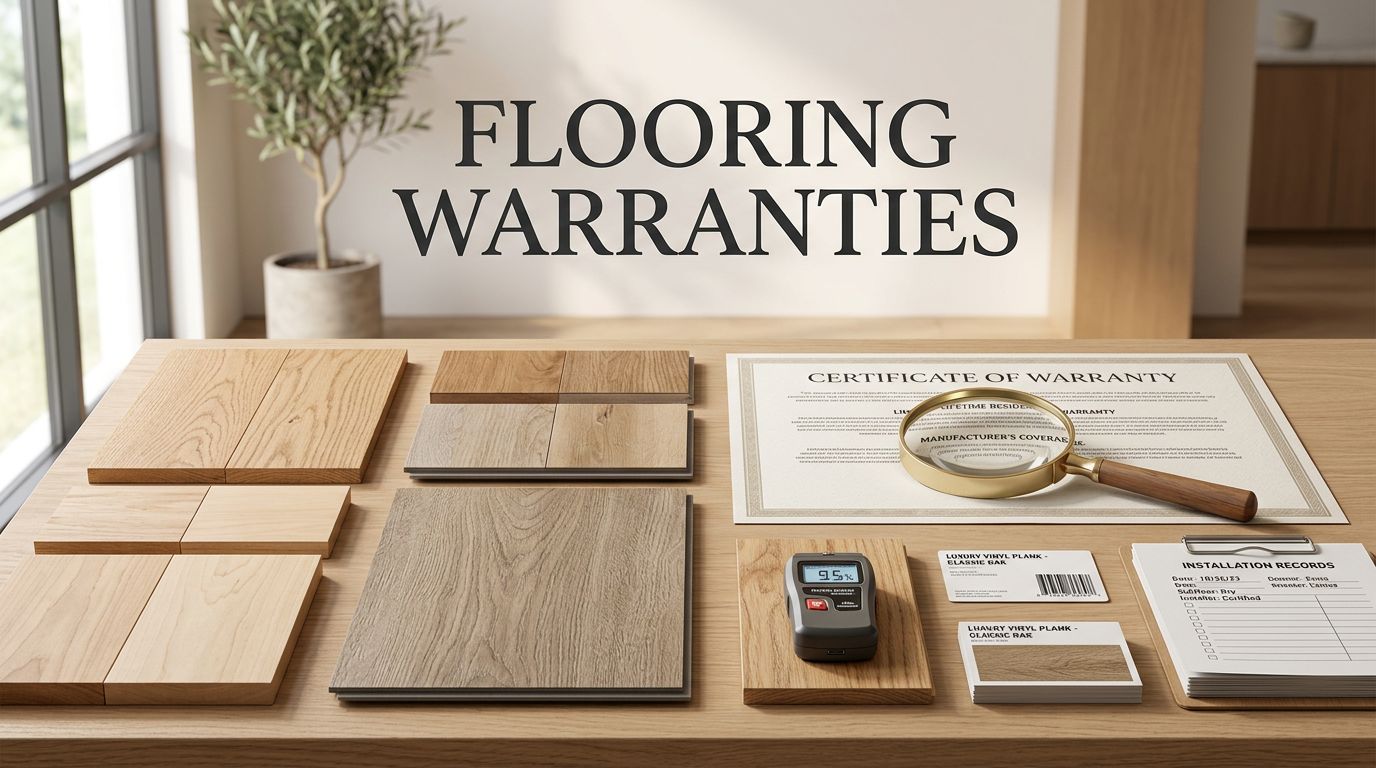
A warranty claim without paperwork is hard to support. We recommend keeping a project folder with the signed proposal, final invoice, product name, color, lot number, care guide, and photos of the completed floor.
For hardwood, include subfloor moisture readings and indoor humidity records when available. For vinyl and laminate, keep the installation instructions and any approved underlayment information. If a problem appears, take clear photos before attempting repairs or using new cleaning products.
We also encourage homeowners to register manufacturer warranties when registration is required. Some brands accept online registration, while others rely on the original invoice as proof of ownership. Missing a registration deadline can limit coverage even when the product itself has a legitimate defect.
A prompt inspection helps identify the cause. Surface scratches, loose boards, shade variation, and moisture-related movement require different responses. We can assess whether the concern appears related to installation, material failure, site conditions, or normal use.
Remodeling Work Can Affect Floor Coverage
Flooring often connects to a larger project. A kitchen remodel can introduce plumbing changes, appliance deliveries, cabinet installation, and new transitions. A bathroom renovation can bring waterproofing requirements, tile expansion joints, and high humidity. Basement finishing can add concrete moisture concerns.
As a hardwood floor company Cumming homeowners rely on, we plan floor work around these conditions. We also work as a hardwood floor sanding company in Cumming when existing wood needs repairs, color changes, or a new protective finish.
If you’re selecting a kitchen remodeling company in Cumming, ask how cabinets, appliances, and flooring will be sequenced. Cabinet installation can affect whether flooring runs underneath, stops at a toe kick, or needs a carefully planned transition.
The same question applies when choosing a bathroom remodeling contractor near me. Tile, waterproof membranes, shower thresholds, and vanity placement all affect floor height and coverage requirements. For homeowners searching for a kitchen and bathroom remodeling company in Cumming, GA or a basement finishing company near me, one coordinated scope reduces gaps between trades.
We are also a hardwood floor company servicing Windermere, as well as nearby North Fulton and Forsyth County communities. As a local remodeling company in Cumming, we can review flooring, stairs, kitchens, bathrooms, and basement plans together through our flooring and remodeling services.
Questions to Ask Before You Sign
A contractor should welcome direct warranty questions. Clear answers help prevent disputes months after the work is complete.
Ask for the written manufacturer warranty before selecting the product. Confirm whether the room qualifies for that product, especially in basements, bathrooms, laundry rooms, and kitchens. Then ask what workmanship coverage applies to labor, transitions, stair work, repairs, and trim.
Also ask who handles a claim. Some manufacturers require homeowners to contact them directly. Others begin with the retailer or installer. Knowing the process in advance saves time if an issue develops.
Finally, compare proposals line by line. A lower price may omit moisture testing, subfloor preparation, underlayment, trim, transitions, or furniture protection. Those details affect how the floor performs and whether its warranty remains valid. For another perspective on structural and finish protections, review this explanation of flooring warranty terms.
Final Thoughts on Flooring Warranty Protection
The strongest flooring warranties are useful only when the floor, installation method, and room conditions match the manufacturer’s rules. Read the exclusions early, protect your paperwork, and address moisture before it reaches the finished surface.
We provide free estimates for flooring and remodeling projects. Call (770) 906-4732 for a free estimate, and show us any existing quote from another contractor. We’ll do it at 5% less.