
Musty Smell After Rain in a House With Wood Floors,
Musty Smell After Rain in a House With Wood Floors,
A musty smell after rain, stemming from microbial volatile organic compounds in damp conditions, can make a clean home feel “old” overnight. When we have wood floors, that odor often rides up through tiny gaps at baseboards, floor vents, and plumbing cutouts, compromising indoor air quality. It’s rarely the floor itself causing the smell. Most of the time, it’s crawl space moisture feeding damp wood, insulation, and soil odors beneath the house.
The good news is that musty odors usually follow a trail. If we trace that trail, fix the source, and let the structure dry, the smell fades instead of coming back with the next storm.
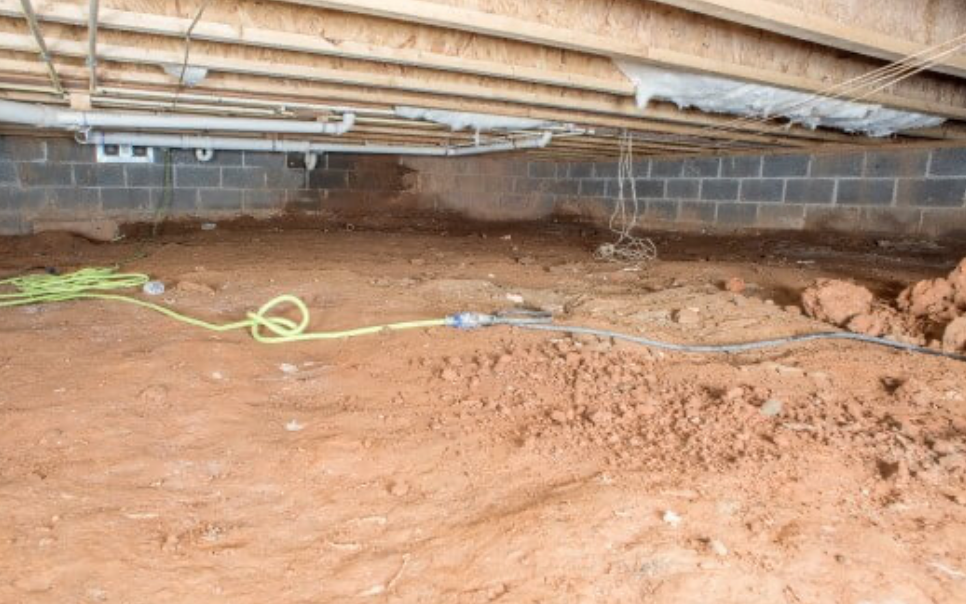 Uninsulated crawl space
Why a musty smell after rain often starts under the house
Rain changes the moisture balance around a home fast. Soil moisture surges, humidity spikes promoting mold and mildew growth, and crawl spaces can turn into a slow-moving sponge saturated with soil moisture. Even without standing water, damp air can soak into joists, subflooring, and fiberglass insulation, then the stack effect draws it upward into living areas.
Wood floors also “broadcast” what’s happening below. Hardwood is porous, and the subfloor is usually plywood or OSB; both absorb moisture and lead to wood floor damage. When relative humidity rises under the house, we may notice odors first, then later see signs like minor cupping, squeaks, or a floor that feels slightly more “springy” in spots.
A common misconception is that the odor means we should clean the floors harder, or mask it with fragrance. That’s like spraying cologne on a wet towel. The smell will keep returning until the moisture source stops.
Here’s a quick way we narrow down the likely cause before we even open the crawl space door:
| What we notice after rain | What it often points to | Where we check first |
|---|---|---|
| Musty odor near floor vents | Damp ducts or wet insulation | HVAC ductwork, insulation, vapor barrier |
| Smell strongest near an exterior wall | Drainage or grading issue | Downspouts, gutter discharge, soil slope |
| Odor in closets or low rooms | High crawl humidity | Crawl humidity, vents, ground moisture |
| Odor plus floor cupping | Prolonged moisture exposure | Subfloor moisture, plumbing leaks, standing water |
If we’re also weighing whether refinishing is safe, we hold off until moisture is under control. This is where our hardwood floor sanding Cumming guide helps set expectations, because sanding a damp floor can lock in problems.
How we trace crawl space moisture without guesswork
We get better results when we treat moisture like a detective story. Smell is a clue, not the full answer. The goal is to find where water is entering, where humidity is building, and what materials are holding that dampness.
Step 1, Confirm it’s tied to weather, not a one-time spill
If the smell shows up within hours of rainfall and fades on dry days, we’re usually dealing with ground moisture, drainage, or venting issues. If it’s constant, we also suspect plumbing leaks, a sweating HVAC system, or a long-term humidity problem.
Step 2, Measure humidity and wood moisture
A simple hygrometer in the crawl space and in the living area tells us a lot by measuring the difference between crawl and indoor air. High crawl humidity compared to indoors is a red flag. A moisture meter on joists and subflooring helps us confirm whether the structure is absorbing water or if we’re only dealing with damp air.
Step 3, Inspect the crawl space like water would
We follow the path water would take to trace crawl space moisture:
- Entry points like foundation cracks, vents, and access door
- Low spots where standing water collects
- Plumbing lines under kitchens and baths
- HVAC ducts that can sweat in humid conditions
- Wet or fallen insulation, which can hold odor for weeks
We also look for a vapor barrier, and whether it’s sealed at seams and edges. On a bare earth floor, groundwater seepage can undermine vapor barrier performance, especially where standing water gathers. A loose sheet of plastic that’s torn or un-taped is better than nothing, but it won’t control moisture reliably.
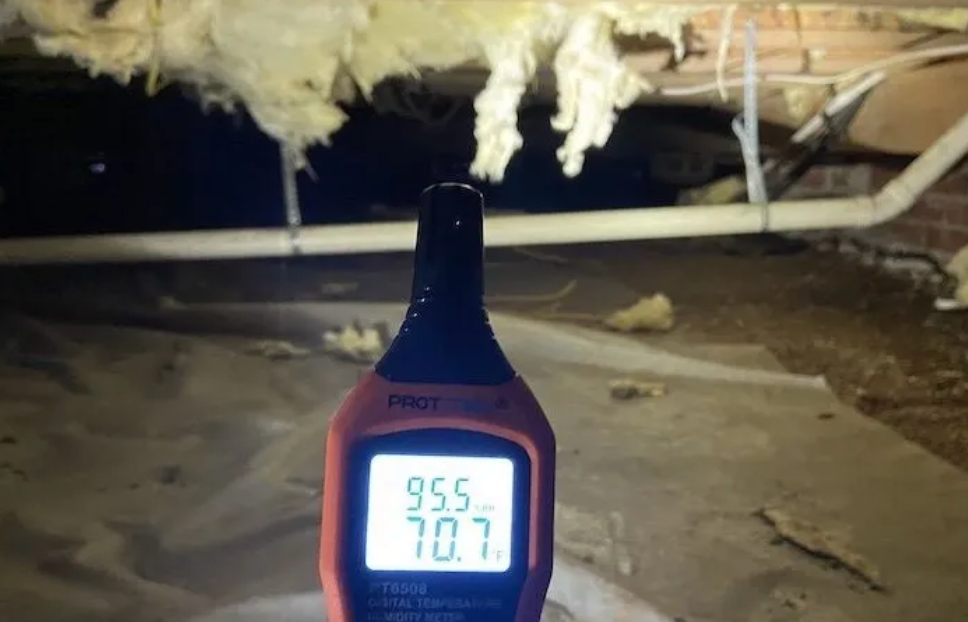 High humidity reading in a humid crawl space
Step 4, Check the outside, because that’s where most fixes begin
Many crawl space problems start at the roofline. Overflowing gutters, short downspouts, and soil sloping toward the house can push water right where we don’t want it.
If we’re comparing floor options for moisture-prone areas, our article on glue-down vs floating basement floors explains why moisture planning matters before we choose any wood system.
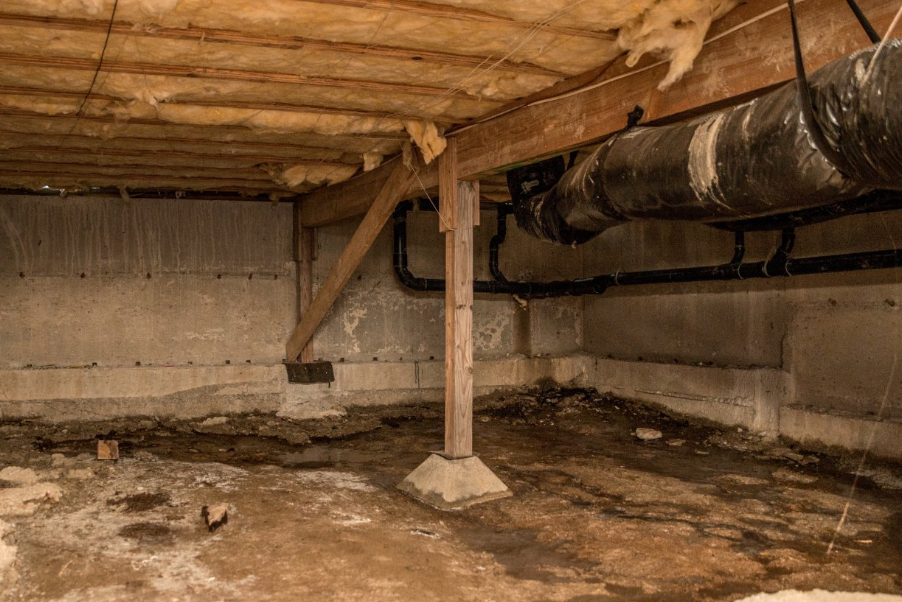 Water accumulation in crawl space
Fix the source, drainage first, then sealing and drying
Once we know the moisture story, we fix it in the right order. If we skip straight to deodorizing, the smell comes back. If we install new materials without drying, we can trap moisture where it does the most damage. Proper exterior drainage and vapor control come first to prevent ongoing issues.
Start outside, move water away from the foundation
Most homes improve when we handle the basics well, starting with exterior drainage to manage surface water runoff:
- Install downspout extensions so water discharges far from the foundation
- Re-grade soil so it slopes away from the house
- Fix clogged gutters and sagging sections
- Address pooling areas with French drains, a sump pump system, or a swale to relieve hydrostatic pressure
Stop ground vapor from becoming indoor air
In many Cumming homes, the biggest win is controlling evaporation from the soil. We seal vents tightly and install a sealed vapor barrier, properly detailed at seams, piers, and edges, to keep damp soil from feeding crawl humidity. In tougher cases, crawl space encapsulation paired with a dehumidifier for crawl space, plus sealing all remaining vents, stabilizes conditions completely.
Underlayment choices matter too when we’re dealing with moisture risk. Our breakdown of basement hardwood underlayment explains how vapor barrier layers prevent hidden odor pockets under flooring systems.
Repair leaks and “sweating” systems
We fix active plumbing leaks, but we also look for slow moisture sources that get ignored:
Condensation on HVAC ducts is a big one. In humid crawl spaces, cold supply ducts can drip like a glass of iced tea. Duct sealing, insulation, and a dehumidifier for crawl space usually solve it.
Replace materials that are acting like sponges
Wet fiberglass insulation, sagging insulation, rotted wood scraps, and damp debris hold odor long after the rain stops. Removing and replacing damaged insulation is often what finally makes the smell disappear.
When we’re planning upgrades, this is where having one team helps. As a remodeling company in Cumming, we see moisture issues under bathrooms, laundry rooms, and kitchens all the time, and the best fixes are the ones we can verify from framing to finish.
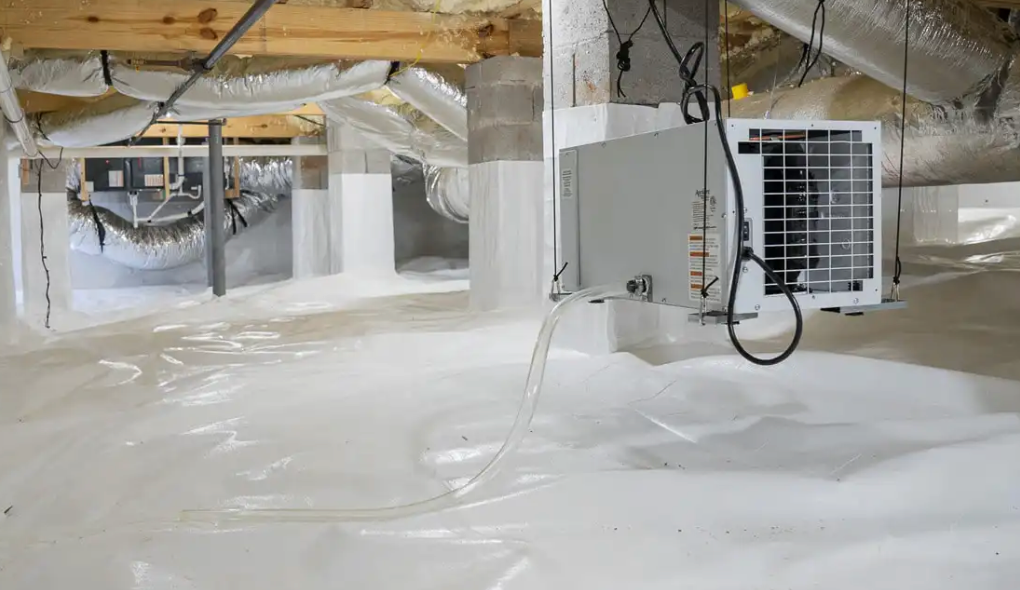 Insulated crawl space
Stop odors in the living space and protect wood floors long-term
After we fix the moisture source, we focus on drying and odor removal. Odors fade when materials reach a stable moisture level, but we still take steps to speed it up.
We dry the crawl space to control crawl space moisture with controlled ventilation (when conditions allow), dehumidification, sump pump systems, and crawl space encapsulation. We clean or remove odor-holding materials, perform mold remediation, and make sure return air pathways are not pulling crawl air into the home to preserve indoor air quality and prevent mold and mildew growth.
Then we protect the floors upstairs. If the wood has cupped or shows signs of wood rot, we give it time to relax after conditions improve. Sanding too early can flatten a swollen board, then leave it crowned when it dries. When it’s time, our hardwood floor refinishing Cumming article explains how we decide between a recoat and a full sand, always evaluating structural integrity.
If the floor is already compromised with wood rot, we may recommend a replacement plan instead. Homeowners often call us to install new flooring Cumming families can live on without worry, including options like LVP in moisture-risk zones. For those comparisons, our luxury vinyl plank flooring page is a good starting point.
Moisture control also ties into remodel planning, including water damage mitigation. As a kitchen remodeling company Cumming homeowners trust, we pay close attention to dishwasher lines, sink bases, fridge water lines, and condensation on pipes. As a kitchen and bathroom remodeling company Cumming Ga, we also build better ventilation into bath projects so humidity does not migrate downward and feed the crawl space. If a bathroom is part of the problem, our bathroom remodeling Cumming page covers materials that hold up in wet use.
For homeowners comparing contractors, we’re a hardwood floor company Cumming residents rely on for straight answers, and a hardwood floor sanding company Cumming homeowners call when they want results that last. We’re also a hardwood floor company servicing Windermere, and we’re used to tracing moisture issues that show up as “mystery smells” after storms.
Conclusion
A musty smell after rain is usually a moisture problem wearing an odor as a disguise. When we track crawl space moisture back to its source, fix drainage and vapor control, then dry the structure, the smell stops instead of cycling with the weather. If we want a clear plan that tackles surface water runoff, mold and mildew growth, vapor barrier installation, relative humidity control, foundation cracks, exterior drainage, and a dehumidifier for crawl space alongside floors, crawl space fixes, or a remodel that avoids repeat crawl space moisture issues, we can call (770) 906-4732 for free estimates. If we show an existing quote from another contractor, we’ll do it at 5% less for the same scope.