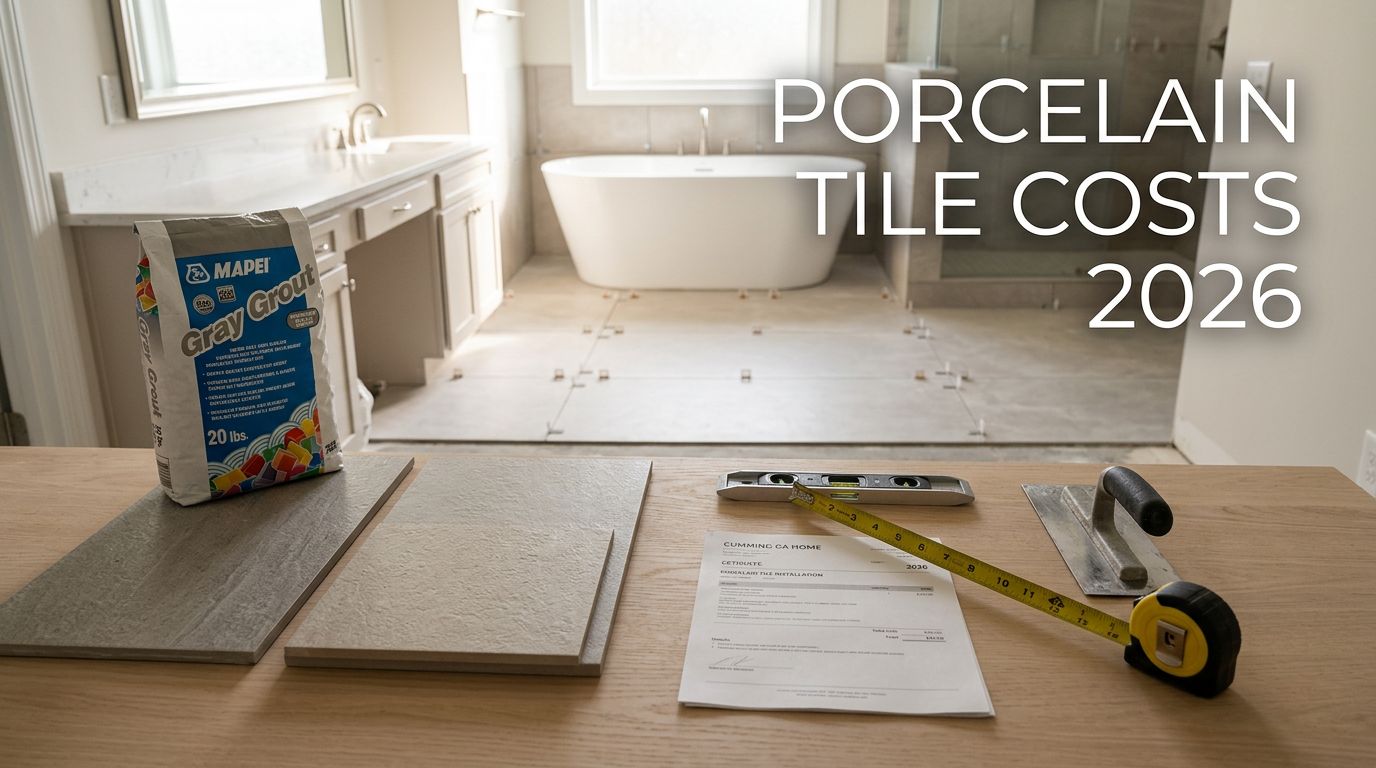
Porcelain Tile Installation Cost in Cumming for 2026
Professional installation can look simple once complete, but site conditions beneath the surface often determine how well it lasts. In 2026, pricing in Cumming depends as much on the existing floor as the material you select.
Most homeowners can plan for $15 to $30 per square foot for a straightforward floor project. Bathrooms, specialty formats, demolition, and leveling work can push that range higher. A detailed quote clarifies these differences before work begins.
Key Takeaways
- Porcelain tile installation in Cumming typically costs $15 to $30 per square foot for a straightforward floor project, while bathrooms, large-format tile, demolition, and specialty layouts can increase the price.
- A complete estimate should separate tile, mortar, grout, labor, floor preparation, waterproofing, demolition, disposal, trim, transitions, and waste allowance.
- A flat, stable subfloor is essential. Repairs, leveling, crack isolation, or removal of an existing floor can significantly change the final floor tile installation cost.
- Large-format, rectified, diagonal, mosaic, and wood-look tiles require more precise preparation and labor, so they often cost more to install.
- Compare written quotes based on the same scope of work, and plan for at least 10% extra tile—or 15% to 20% for complex layouts and rooms with many cuts.
Porcelain Tile Installation Cost in Cumming, GA
For a standard room, a porcelain tile project on a sound, flat subfloor usually falls near the middle of these ranges. These are planning figures, not a substitute for an in-home measurement. Square foot pricing varies with labor costs, material costs, layout complexity, and professional installation requirements.
| Project type | Typical 2026 installed range, per square foot |
|---|---|
| Straight-set porcelain tile on a prepared floor | $15 to $24 |
| Mid-range tile with minor floor prep | $20 to $32 |
| Large format tiles or diagonal layout | $28 to $45 |
| Bathroom floor with waterproofing work | $25 to $45 |
| Custom shower floor or shower surround | $35 to $60+ |
A 150 sq. ft. kitchen floor may cost $2,250 to $4,800 when the layout is straightforward. That same footprint can cost more if old tile must come out, the subfloor needs repairs, or cabinets create many cuts.
Published national pricing supports this wide spread. RUBI’s 2026 guide places tile labor around $5 to $22 per sq. ft., while material costs for ceramic tile and porcelain products commonly fall in the $4 to $14 range.
A low per-square-foot figure may exclude demolition, floor flattening, baseboard work, moving appliances, and disposal. Compare the full scope, not the headline number.
In Cumming, wood-framed homes often need more subfloor preparation than slab-on-grade spaces. Porcelain tile needs a flat, stable base. A floor can feel level underfoot yet still have dips that cause lippage at tile edges.
What a Tile Installation Estimate Should Include
A trustworthy floor tile installation cost estimate separates porcelain tile, preparation, labor, and finish work. When every item sits inside one vague line, it’s harder to compare bids fairly.
Tile, mortar, grout, and setting materials
Porcelain tile prices vary sharply. Basic selections may cost $3 to $7 per square foot. Designer looks, rectified edges, wood-look planks, and premium imported tile often cost $10 to $20 or more per sq. ft.
Besides the tile itself, a proper installation may require thinset mortar, grout and sealant, spacers, edge trim, underlayment, crack-isolation material, and cement backer board. A bathroom or shower also needs waterproofing membranes in the correct locations.
Material costs affect labor too. Rectified tile has precisely cut edges, so it can use narrow grout joints. However, it also leaves little room for a floor that isn’t flat. We inspect the tile size and substrate before promising a tight-joint layout.
Porcelain tile usually costs more than entry-level ceramic tile. It is denser and less absorbent, which makes it a strong choice for kitchens, mudrooms, bathrooms, and busy entries. Apollo Tile’s porcelain cost overview also shows how material pricing shifts by style and application.
Labor costs and layout complexity
Labor for a basic tile floor often starts near $5 to $10 per sq. ft. In Cumming, a well-prepared rectangular room with standard tile usually stays closer to that range. However, difficult conditions increase the price.
Large-format tiles, commonly 12 by 24 inches and larger, need a flatter surface and careful handling. Installers may use tile leveling systems to control lippage, along with a diamond wet saw fitted with a quality diamond blade. Heavy pieces also take more time to set and adjust.
A diagonal pattern creates more waste and cutting. Doorways, curved walls, floor vents, islands, stairs, and toilet flanges also add labor. Mosaic tile can take longer than larger field tiles because every small piece needs alignment and grout coverage.
We recommend purchasing extra tile before the work begins. For a simple room, we usually calculate at least 10% extra over the measured square footage. A diagonal pattern, oversized tile, or room with many cuts may justify a 15% to 20% waste allowance. Keep unopened extra cartons for a future repair, especially if the product is discontinued.
Preparation and Removal Can Change the Budget
The surface below porcelain tile can’t flex or contain significant low spots. Movement, low spots, and removal requirements can quickly change the floor tile installation cost. Skipping subfloor preparation may lower the first invoice, but it raises the risk of cracked grout, loose tile, and uneven edges later.
Demolition fees commonly run about $3 to $7 per square foot, depending on the existing material and disposal needs. Carpet and floating laminate usually come up quickly. Old mortar beds, glued vinyl, and existing floor tile take longer.
Before work starts, a contractor should check for these issues:
- Subfloor movement, water damage, rot, or loose plywood panels.
- High or low areas that need patching, grinding, or self-leveling underlayment.
- Cracks in a concrete slab that may need a crack-isolation membrane.
- Door clearance, appliance height, and transitions to nearby hardwood or carpet.
- Moisture concerns near showers, exterior doors, laundry rooms, and kitchens.
Can porcelain tile go over an existing floor? Sometimes, but only when the old surface is stable, clean, firmly bonded, and flat enough for the new tile. Tile over old tile can create height problems at doors and transitions. We don’t recommend covering a failing floor, soft vinyl, loose tile, or a wood floor that moves.
Bathrooms deserve extra scrutiny. Cement backer board adds a suitable tile surface, but it isn’t waterproof on its own. A shower surround needs a complete waterproofing plan with waterproofing membranes behind or directly below the finished tile. Grout and sealant may resist some moisture, but neither is the waterproof layer.
Why Large Format Tiles Cost More for Good Reasons
Large-format porcelain gives a room fewer grout lines and a calmer visual finish. It also exposes substrate flaws that a smaller tile can hide, making porcelain tile more dependent on a flat, consistent base. This is why the price difference between standard tile and large-format work often comes from floor preparation and labor, not only the product itself.
For example, a 12-by-24-inch porcelain tile may need a longer straightedge check across the floor, more patching, and a larger notched trowel. The installer must also achieve strong mortar coverage across the back of each tile. Hollow spots can lead to failures under heavy traffic.
Wood-look porcelain planks bring their own demands. Long planks can show lippage when installed with a 50% offset, especially if the tile has a slight natural bow. A qualified installer will recommend an offset pattern that fits the product’s specifications.
Natural stone generally carries higher material costs than porcelain. The total difference also reflects preparation, handling, sealing, and thickness variation. Porcelain offers a more predictable product, though the work still needs exact preparation.
How to Compare Quotes and Protect Your Budget
Ask each contractor to quote the same scope. Bids are comparable only when each covers the same work used to determine floor tile installation cost.
A clear proposal should separate labor costs from material costs. It should identify the tile size, layout complexity, grout and sealant, and waterproofing membranes. It should also list demolition fees, substrate repairs, trim, transitions, disposal, and a reasonable waste allowance. State who supplies the tile and how change orders work if hidden damage appears. Compare complete proposals for professional installation, not labor-only bids.
For a water-damage insurance claim, photograph the affected floor before removal. Save the original tile box, invoice, and product number. If the tile is discontinued, document why a spot repair won’t match the connected flooring. Matching existing tile is often harder than replacing a small damaged area.
Costs also change when tile is part of a larger renovation. Homeowners planning to install new flooring in Cumming may coordinate porcelain tile with updated cabinets, a kitchen backsplash, or a bathroom remodel. Flooring may need to go in before baseboards, appliances, or vanity installation. Coordinated, durable work can support home resale value, but no renovation guarantees a specific return.
When tile meets existing wood, coordinate the transition with the flooring professional handling the adjoining boards. This helps maintain clean lines and consistent finished-floor heights.
Bathroom and kitchen updates can affect the same schedule. Coordinate waterproofing, vanities, lighting, and finished-floor height before installing cabinets, doors, or stair trim.
Call (770) 906-4732 for a free estimate. If you show us a written quote from another contractor for the same scope, we will price the project at 5% less.
Frequently Asked Questions
How much does porcelain tile installation cost in Cumming?
Most straightforward porcelain tile floor projects cost about $15 to $30 per square foot in 2026. Large-format tile, bathrooms, demolition, leveling, and custom layouts can raise the total to $45 per square foot or more.
Does the installation price include floor preparation?
Not always. A detailed quote should state whether demolition, subfloor repairs, patching, grinding, self-leveling underlayment, crack isolation, and disposal are included.
Can porcelain tile be installed over an existing floor?
Sometimes, but the existing surface must be clean, stable, firmly bonded, and flat enough for the new tile. Covering a failing floor or a surface that creates door and transition problems can lead to installation failures.
How much extra porcelain tile should I buy?
For a simple room, plan on purchasing at least 10% extra tile beyond the measured square footage. Diagonal layouts, large-format tile, and rooms with many cuts may require a 15% to 20% waste allowance.
Why does large-format porcelain tile cost more to install?
Large-format tile requires a flatter substrate, careful handling, accurate cutting, and strong mortar coverage. More preparation and labor are often responsible for the higher price, rather than the tile material alone.
A Better Way to Plan Tile Costs
A condition-based floor tile installation cost plan is more reliable than budgeting from a tile sample alone. The best porcelain tile budget leaves room for proper preparation, sufficient tile waste, and moisture protection.
A detailed porcelain tile installation cost quote helps you see where your money goes and compare contractors on equal terms. Properly prepared tile work feels solid, looks even, and supports home resale value long after the grout has cured.