Best Flooring for Home Gyms With Weights and Treadmills
A treadmill can shake a room for miles, while one missed dumbbell can leave a permanent dent. The best flooring for home gyms handles both forces without making every workout feel unstable.
Your home gym flooring has to suit the equipment, the room below it, and the training you enjoy. We recommend starting with impact protection, then matching the surface to your budget and finish goals.
Best Flooring for Home Gyms: Start With the Equipment
A yoga mat and a power rack don’t place the same demands on a floor. Before choosing a material, list every machine, bench, rack, barbell, and dumbbell that will stay in the room. Also mark where you expect to stand, walk, or lower weights.
A treadmill concentrates weight on a few feet and sends vibration through the floor. Free weights create a different problem because impact rises sharply when a plate slips or a dumbbell drops. Meanwhile, a loaded rack stays in one place, so its weight presses continuously on a small footprint.
Check the room beneath the gym
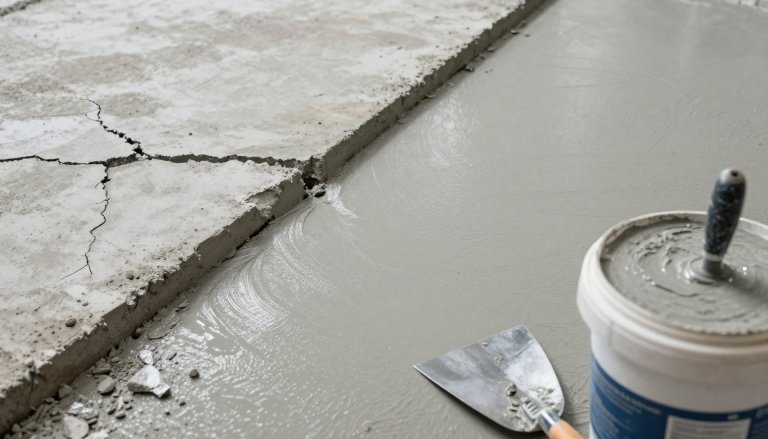
Concrete basement slabs are the easiest base for a lifting area. They support dense rubber well and won’t flex under a rack. However, moisture matters. If the slab feels damp or has visible moisture stains, address that condition before covering it with rubber or an impermeable mat.
An upstairs bonus room needs more caution. Walk across the room and notice any bounce before moving equipment upstairs. If joists flex under normal foot traffic, consult a qualified structural professional before loading the space with a treadmill, rack, plates, and bench.
This quick comparison helps narrow the material choice:
| Flooring material | Best use | Weight and treadmill performance | Main limitation |
|---|---|---|---|
| Rubber rolls | Full gym rooms and lifting zones | Excellent impact control and grip | Heavy to move and install |
| Interlocking rubber tiles | Smaller rooms and defined equipment zones | Strong protection with easier replacement | Seams can separate or curl |
| Dense rubber treadmill mat | Cardio equipment on finished floors | Reduces vibration and scuffs | Doesn’t protect against dropped weights |
| Luxury vinyl plank | Light training and cardio rooms | Handles treadmills with a protective mat | Can dent under dropped iron |
| Foam tiles | Stretching and bodyweight work | Comfortable underfoot | Too soft for heavy equipment |
For most mixed-use rooms, the best flooring for home gyms combines a resilient main surface with extra protection at the rack or lifting station.
Rubber Flooring Takes the Hardest Hits
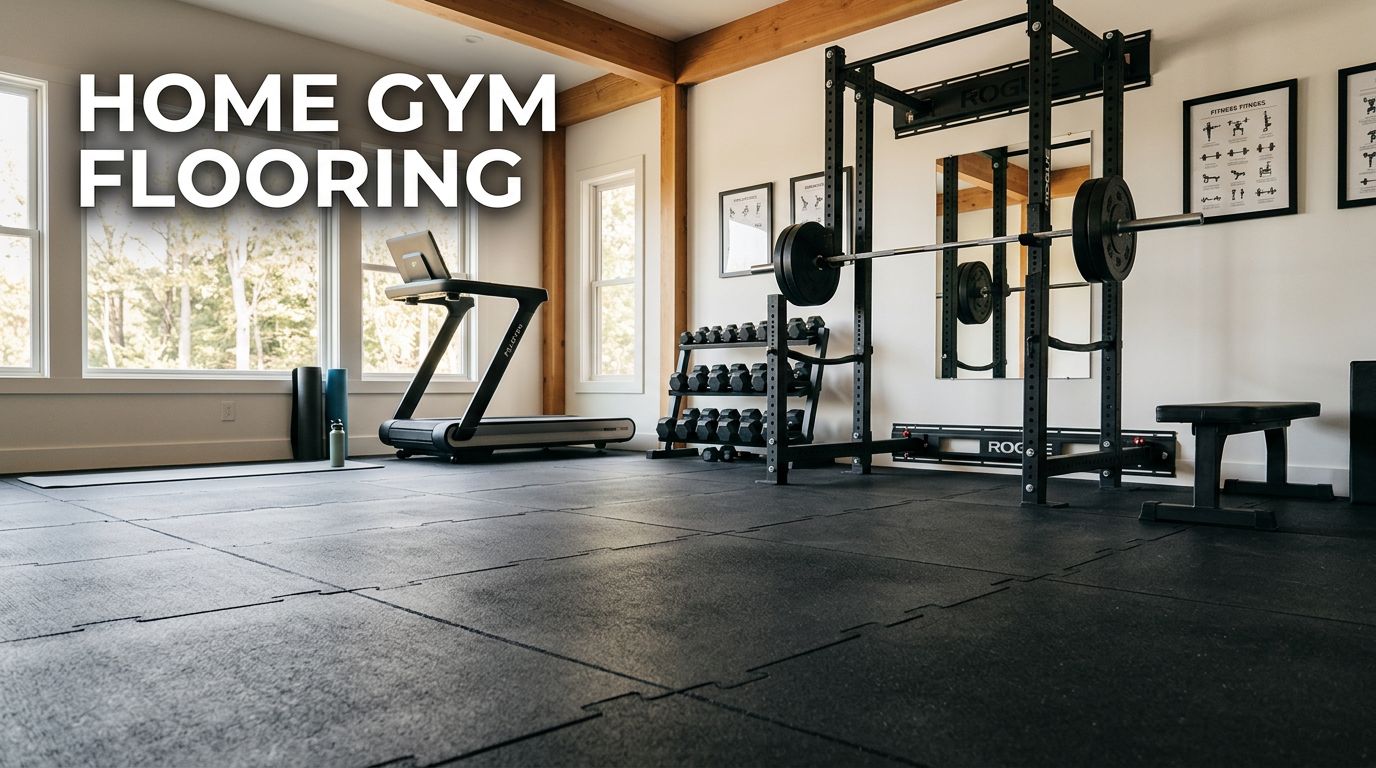
Rubber is our first choice for a room with free weights, kettlebells, and a treadmill. It grips well under shoes, reduces clatter, and gives equipment a stable base. It also protects concrete, vinyl, and wood finishes better than foam tiles.
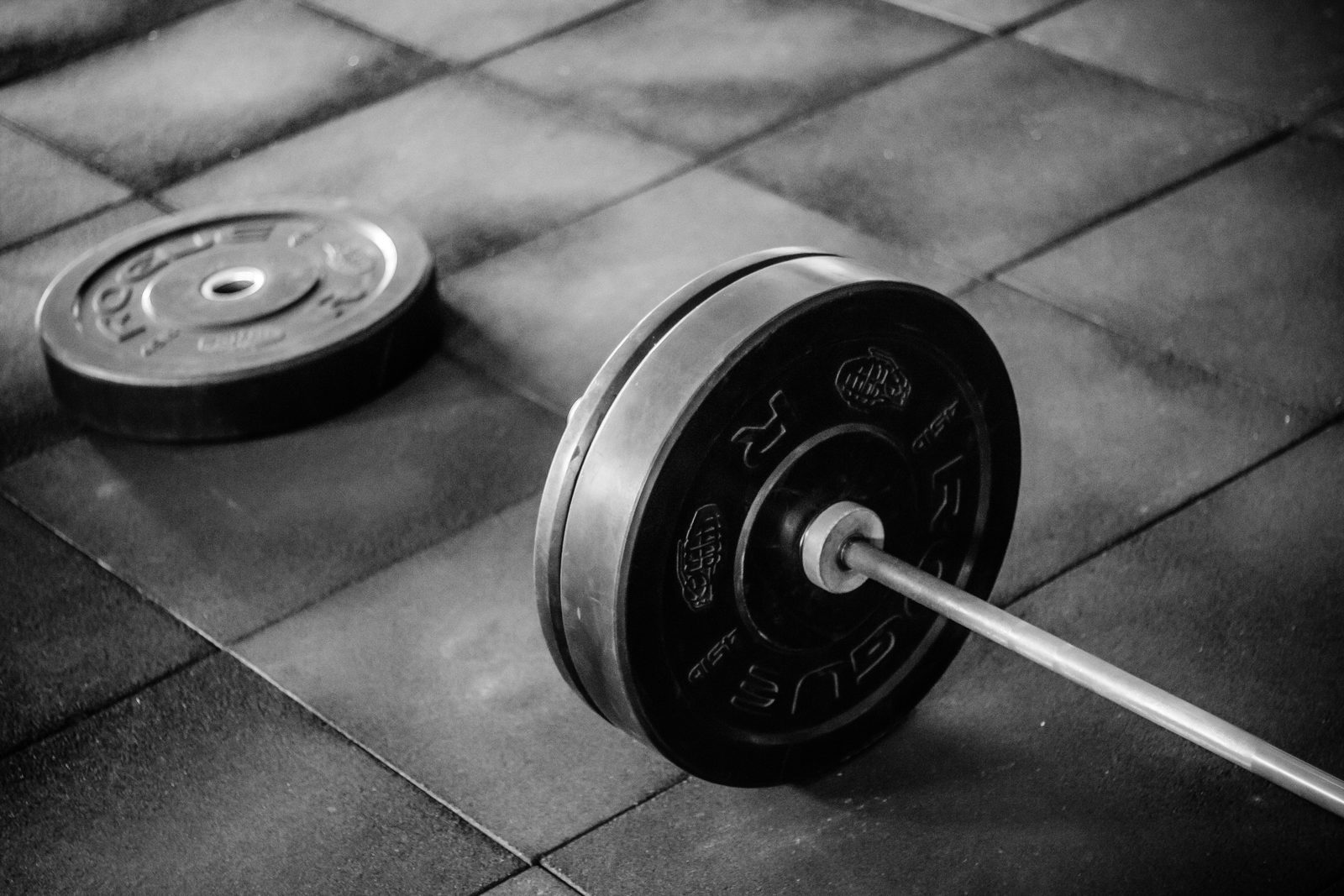
Photo by Victor Freitas
Rubber rolls create a continuous surface with fewer edges to catch a shoe or vacuum. They work well when the gym occupies an entire basement room, garage bay, or spare bedroom. Interlocking tiles cost less labor to carry indoors and let you replace one damaged section, which makes them practical for smaller spaces.
For general weight training, an 8 mm to 3/8-inch rubber surface is a dependable starting point. Heavy barbell training calls for a dedicated platform, often built with plywood beneath a rubber top. That platform spreads impact across a wider area and gives you a firm stance for deadlifts.
A soft mat protects a finished surface, but it doesn’t make a flexible wood subfloor safe for repeated barbell drops.
Product reviews can help you compare density, roll sizes, and edge details. Garage Gym Reviews’ home gym flooring comparison is useful when you are comparing tested rubber roll and tile options. Still, your room layout matters more than a product ranking.
Treadmill Mats Need Density, Not Cushion
A treadmill mat protects the surface beneath the machine from scratches, perspiration, and rubber feet. It can also reduce vibration that reaches the room below. Yet thick foam is a poor match because it compresses unevenly and can make the treadmill feel less stable.
Choose a dense rubber mat that extends beyond the treadmill’s feet. Set the machine on a level surface, then check that it doesn’t rock when you walk at a slow pace. Follow the treadmill manufacturer’s clearance and electrical guidance before placing the mat, particularly in a basement or converted bedroom.
Avoid placing a treadmill directly over a loose tile seam. The machine’s movement can work that edge open over time. If the room uses rubber tiles, position the treadmill so all feet land well inside the tile field, not on a joint.
Treadmills also create more humidity than many homeowners expect. Wipe up sweat, clean underneath the belt area as the manufacturer directs, and lift the mat occasionally to inspect the finish below. In owner conversations about home gym flooring choices, shifting mats and trapped moisture are recurring concerns.
When Vinyl, Hardwood, or Carpet Can Work
Luxury vinyl plank is a strong option for a cardio-focused room with adjustable dumbbells, a bench, and a treadmill mat. It resists everyday moisture and is easier to clean than carpet. Still, protect it from sharp-edged plates and don’t drop weights directly onto the planks.
Hardwood adds warmth to a multipurpose room, but it needs clear rules. A treadmill should sit on a dense protective mat, and free-weight work should stay on a rubber-covered platform. If you want the gym to blend into a finished living area, engineered hardwood can work outside the training zone with rubber protection where equipment sits.
Carpet is comfortable for stretching and light exercise, but thick pile makes benches and treadmills less stable. Carpet tiles are easier to replace than broadloom carpet if a section stains or crushes. However, they aren’t a substitute for rubber beneath weights.
Tile and natural stone are durable under a treadmill mat, yet dropped iron can crack the surface or chip grout. We reserve those materials for adjacent spaces rather than the main lifting area.
For lighter training setups, home gym surface discussions can reveal useful details about tile seams, odor, and cleaning. Treat anecdotal reports as a prompt to inspect samples yourself.
Plan the Gym Floor With the Rest of the Home
A basement gym often becomes part of a larger renovation. First, resolve moisture, electrical needs, lighting, and wall finishes. Then install the exercise flooring after dusty work ends. Our waterproof LVP options for basements can suit adjoining halls, storage areas, or finished basement rooms where dropped weights aren’t part of the plan.
Homeowners looking for a hardwood floor company in Cumming should show the equipment plan before selecting wood species or stain. We can protect a hardwood floor with rubber zones, but a full lifting area needs more than a mat. Likewise, a hardwood floor sanding company in Cumming should know whether a room will later hold a treadmill or rack, because refinished boards need time to cure before heavy equipment moves in.
The same planning helps if you want to install new flooring in Cumming while updating other rooms. A hardwood floor company servicing Windermere can coordinate transitions at doors and stairs, so a gym surface doesn’t create a trip edge. Many homeowners also ask a remodeling company in Cumming to manage flooring beside a new basement bath or storage room.
When the project includes more than the gym, layout choices carry across rooms. A kitchen remodeling company in Cumming can coordinate flooring transitions with an adjacent exercise area, while a bathroom remodeling contractor near me search may lead to planning a basement bath beside the gym. For larger projects, a kitchen remodeling team can help align the gym conversion with cabinetry, lighting, and nearby finishes.
If “basement finishing company near me” is part of your search, decide where the rack, treadmill, and storage will sit before framing walls. A kitchen and bathroom remodeling company in Cumming, GA can also sequence the work so flooring goes in at the right stage.
For a room-specific recommendation, call (770) 906-4732 for a free estimate. If you show us an existing written quote for the same scope, we’ll complete it for 5% less.
Build Protection Around How You Train
The best flooring for home gyms is rarely one material across every square foot. Dense rubber belongs under heavy equipment, while vinyl, hardwood, or carpet can suit the surrounding room when protected properly.
We start with what you lift, where the room sits, and how much vibration the house can tolerate. A well-planned home gym flooring system keeps workouts quieter, equipment steadier, and finished floors protected for years.