
How to acclimate engineered wood in a basement, timelines, target readings, and a simple log you can copy
Basements are where good flooring plans go to get tested. The air feels cool, the slab holds moisture, and the humidity can swing fast after a rain. If we rush engineered wood acclimation, we can end up with gapping, edge lift, or boards that don’t sit flat.
The good news is that acclimation doesn’t have to be mysterious. Once we control the basement environment, track a few readings, and wait for stable numbers, we’re ready to install with confidence.
Why engineered wood acclimation matters more in basements
Engineered boards handle seasonal change better than solid wood, but they still react to moisture. Think of wood like a slow-moving sponge. It doesn’t “dry” or “soak” instantly, it trends in one direction over days.
Basements add two complications:
- Concrete is a moisture reservoir, even when it looks dry.
- Ambient humidity can be higher downstairs, especially without consistent HVAC or dehumidification.
That’s why acclimation is less about “waiting X days” and more about stabilizing conditions and proving it with readings. If you want a deeper explanation of proper acclimation setup, Fine Homebuilding’s overview is a helpful baseline: how to acclimate a wood floor correctly.
Prep the basement before the flooring arrives (this is where most projects win or lose)
We get the best results when we treat acclimation as the final check, not the first fix.
Before cartons show up, we want:
Dry first, then pretty: Fix seepage, damp corners, and downspout drainage outside. If the basement smells musty, that’s a clue we’re not ready.
Running conditions that match real life: Heat or cooling should be on, and the basement should be living-condition stable, not “construction mode.” We aim to hold those conditions for several days so the slab and framing settle too.
A moisture plan for concrete: Concrete can pass moisture vapor even when it feels dry to the touch. If we’re glue-down, or we’re installing over slab in general, we need to confirm the slab meets the flooring and adhesive specs.
For a clear, practical breakdown of moisture testing basics (wood, subfloors, and concrete), we like this guide: Moisture Testing 101.
Target temperature, humidity, and moisture readings (simple targets we can actually use)
Manufacturers vary, so we always follow the product paperwork first. Still, most basement installs land in these “safe zone” targets:
| What we measure | Practical target range | What we’re looking for |
|---|---|---|
| Basement temperature | 60 to 80°F | Stable day to day |
| Basement relative humidity (RH) | 35% to 55% | No big spikes after rain or HVAC cycles |
| Engineered wood moisture content (MC) | Commonly 6% to 10% (varies by region) | Stable readings across bundles |
| Difference between wood and subfloor | Within about 2% (rule of thumb) | Wood and subfloor trending together |
| Concrete moisture | Must meet product and adhesive limits | Don’t guess, test and document |
Two notes we stick to:
- Stability beats perfection. A steady 52% RH is usually safer than bouncing between 38% and 62%.
- Concrete limits are product-specific. Some systems tolerate more vapor with the right underlayment or moisture mitigation, others don’t.
How long to acclimate engineered wood in a basement (real timelines)
When the basement is already conditioned and dry, engineered flooring often acclimates faster than solid wood. In many homes, we see 3 to 7 days as a realistic window.
But the calendar is not the boss. These factors change the timeline:
Season and weather: Winter heat can dry the air fast; summer humidity can hang around for weeks.
How the cartons are stored: Tight stacks on a slab slow everything down.
Where the boards came from: A shipment stored in a cold warehouse needs more time to match a warm basement.
For a grounded discussion of acclimation timing and what affects it, Wagner Meters lays out the logic well: How long does it take to acclimate hardwood flooring?.
The right way to stack engineered wood for basement acclimation
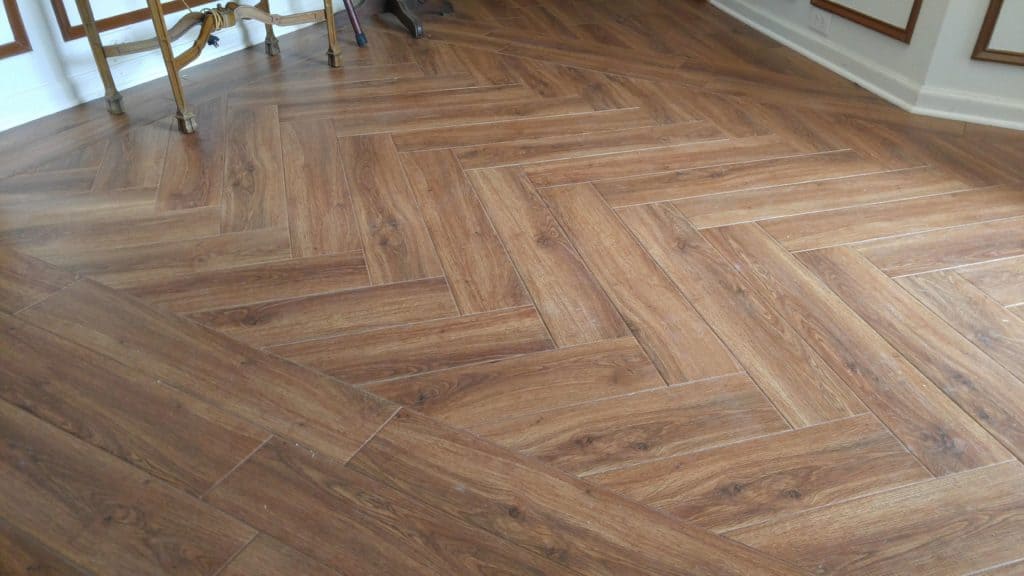
We want airflow around the material, and we want it off the slab.
Here’s the setup we rely on:
- Store cartons in the basement where they’ll be installed, not in a garage.
- Keep stacks raised on 2x4s (or similar) so air can move underneath.
- Cross-stack with spacers so the pile can “breathe.”
- If the manufacturer allows it, open carton ends or slit the wrap so air reaches the boards.
One basement-specific rule: don’t stage flooring directly against foundation walls. Those areas can read cooler and wetter than the center of the room.
A simple daily routine: what we measure and how often
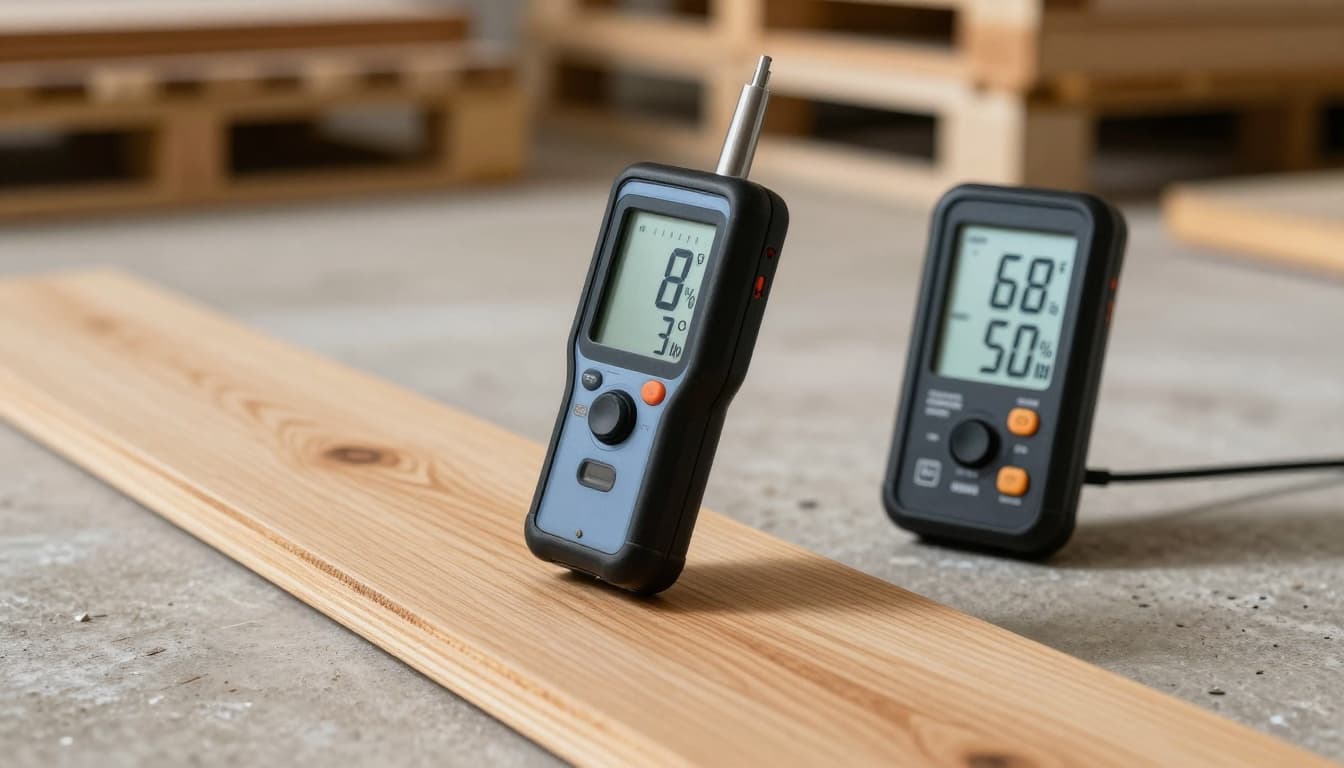
We keep the routine boring on purpose. Consistency makes the trends obvious.
Once or twice a day, we log:
- Basement temperature and RH (thermo-hygrometer).
- Wood MC from multiple boards, across multiple cartons.
- Concrete moisture (using the method appropriate to the job and product requirements).
We stop acclimation and greenlight installation when:
- Ambient readings stay in range, and
- Wood MC readings flatten out (minimal change over 2 to 3 days), and
- Concrete results meet the system specs.
Copyable engineered wood acclimation log (simple and job-ready)
We don’t need fancy software. A clipboard log keeps the decision clear and protects us if questions come up later.
| Date | Time | Basement Temp (°F) | RH (%) | Concrete test location | Concrete reading | Carton or bundle checked | Wood MC (%) | Notes |
|---|---|---|---|---|---|---|---|---|
Tip: We like to note anything that explains a spike, like “heavy rain,” “dehumidifier emptied,” or “HVAC off overnight.”
Basement acclimation mistakes we see all the time
A few common missteps can turn engineered flooring into a headache later.
- Acclimating in the wrong place (garage, porch, or upstairs) then moving it downstairs on install day.
- Stacking flat on concrete, which blocks airflow and invites vapor exposure.
- Turning HVAC off at night to “save money,” then chasing readings all week.
- Skipping concrete moisture testing because the slab “looks dry.”
- Rushing to install new flooring before the numbers settle.
How this fits bigger plans (kitchens, baths, and existing wood floors)
Many homeowners want the basement done while they upgrade the rest of the house. That’s smart planning, as long as we keep moisture control consistent.
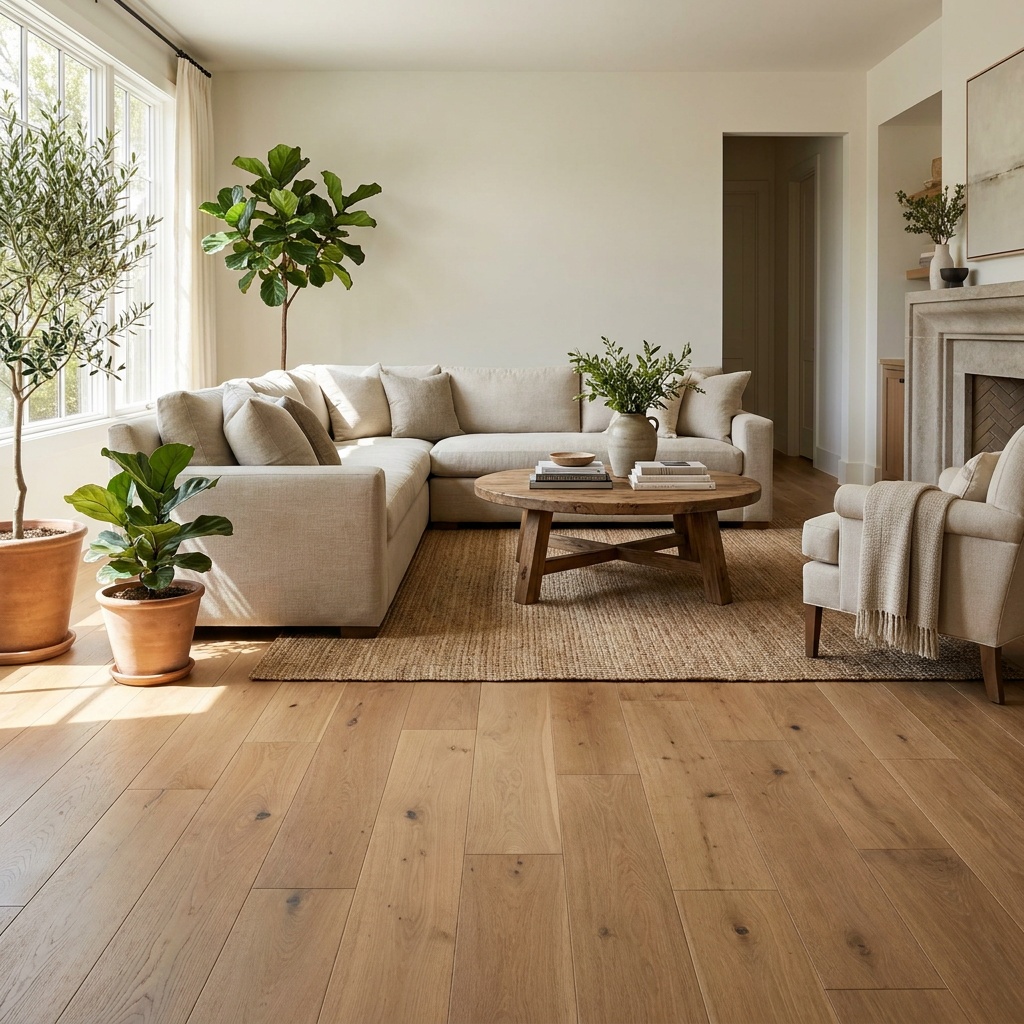
If we’re pairing basement work with a main level hardwood floor, we keep the whole home’s humidity in mind. Stable indoor RH supports long-term performance and protects the hardwood floor benefits people care about most, comfort, durability, and that warm, natural look.
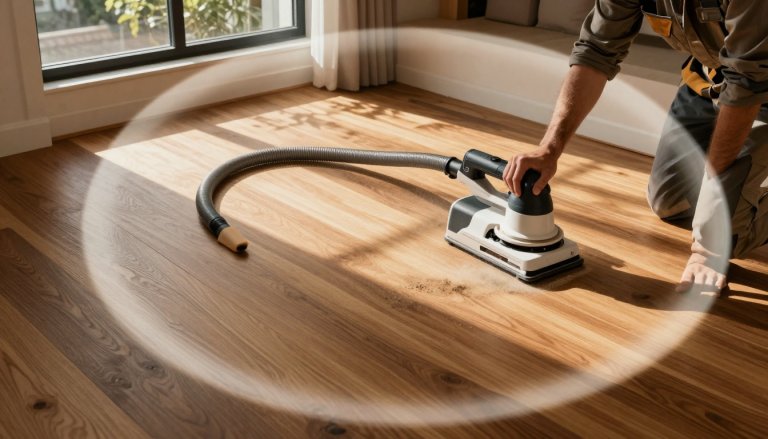
If part of the project includes hardwood floor sanding, we also want steady conditions so stain and finish cure evenly. Big humidity swings can slow dry time and change sheen.
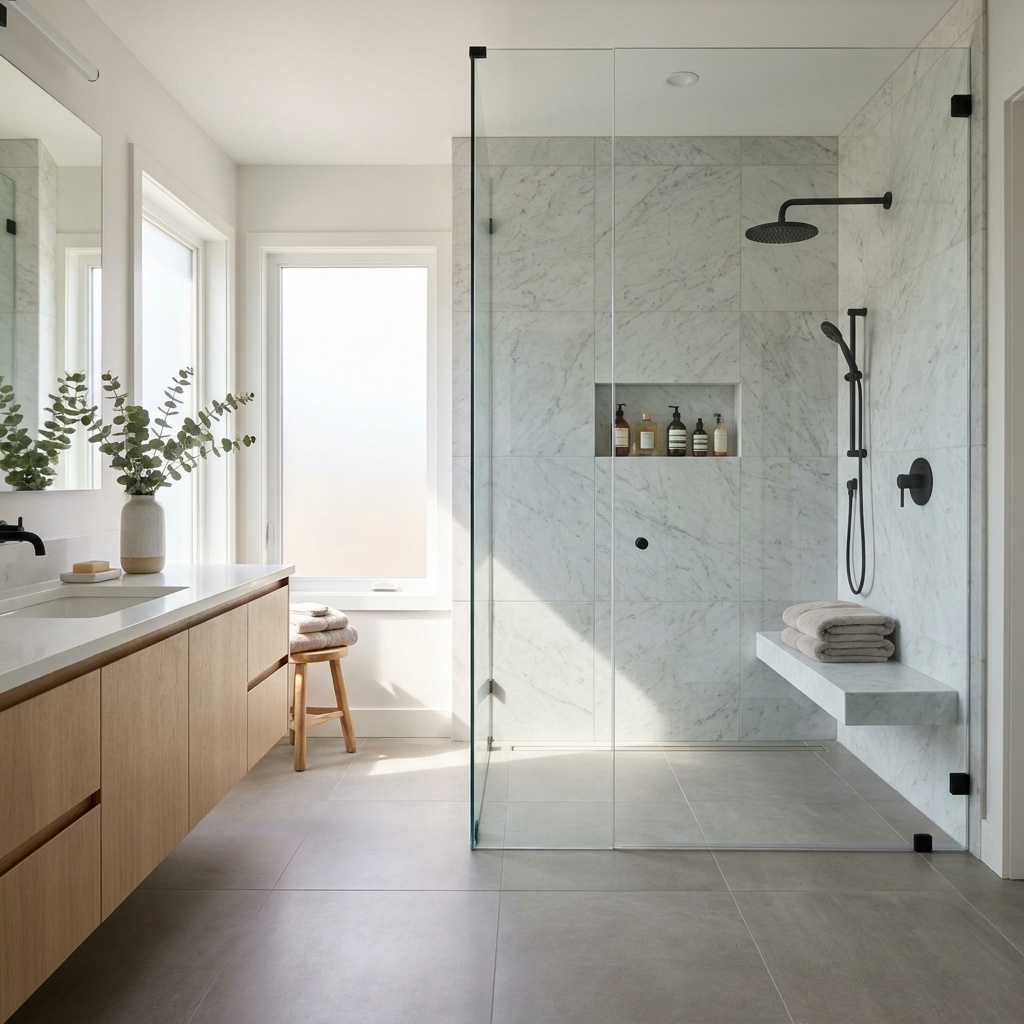
And when budgets are tight, we prioritize choices that pay off. Many of our customers remodel kitchen and bathroom to add to value of house, then finish the basement later. If that’s your path, we’ll help you sequence it so materials don’t fight each other.
Stable numbers beat guesswork
Basement engineered wood acclimation works when we control the room, elevate the cartons, and track moisture until readings stop drifting. The process is simple, but it rewards patience.
If we’re helping you in Cumming, Sugar Hill, Suwanee, or nearby, call (770) 906-4732 for a free estimate. If you show us any existing quote from another contractor, we’ll do it at 5% less. When you’re ready to install, we’ll make sure the basement is truly ready too, not just “close enough.”