Flooring Issues Home Inspectors Flag Before a Cumming Sale
A scratched floor may look cosmetic, but inspectors may flag raised planks, soft spots, musty odors, and other flooring inspection issues. The most costly concerns often involve moisture, failed preparation, or movement that quick cleaning can’t hide.
Before listing a Cumming home, we recommend finding the root cause of visible damage before choosing whether to refinish, repair, or replace the flooring. That approach protects your sale timeline and keeps a small concern from becoming a negotiation point during due diligence.
Key Takeaways Before You List
- Document visible defects, including cupping, buckling, loose boards, cracked tile, worn finishes, soft spots, and unsafe stair transitions.
- Investigate moisture beneath wood, tile, and other flooring, even when the concrete slab looks dry.
- Cupping, delamination, peaking, and adhesive failure can result from leaks, humidity, slab moisture, installation conditions, or product defects.
- Preserve product details, installation records, repair receipts, and other information related to the flooring.
- Correct active water problems before cosmetic repairs. Sanding or covering a wet floor can make the damage harder and more expensive to fix.
- Prepare a written repair scope with moisture readings, test locations, affected rooms, photos, product information, and the likely cause. This gives buyers a clearer answer than saying the floor is “fine.”
Flooring Inspection Issues Buyers Notice First
A general home inspector usually notes visible symptoms and safety concerns, which may include flooring inspection issues before a Cumming sale. They typically report observable conditions rather than perform invasive or product-specific testing to assign responsibility for a flooring failure. Still, their notes can trigger a buyer request for repairs, credits, or a specialist evaluation.
Board movement, gaps, and lifted edges
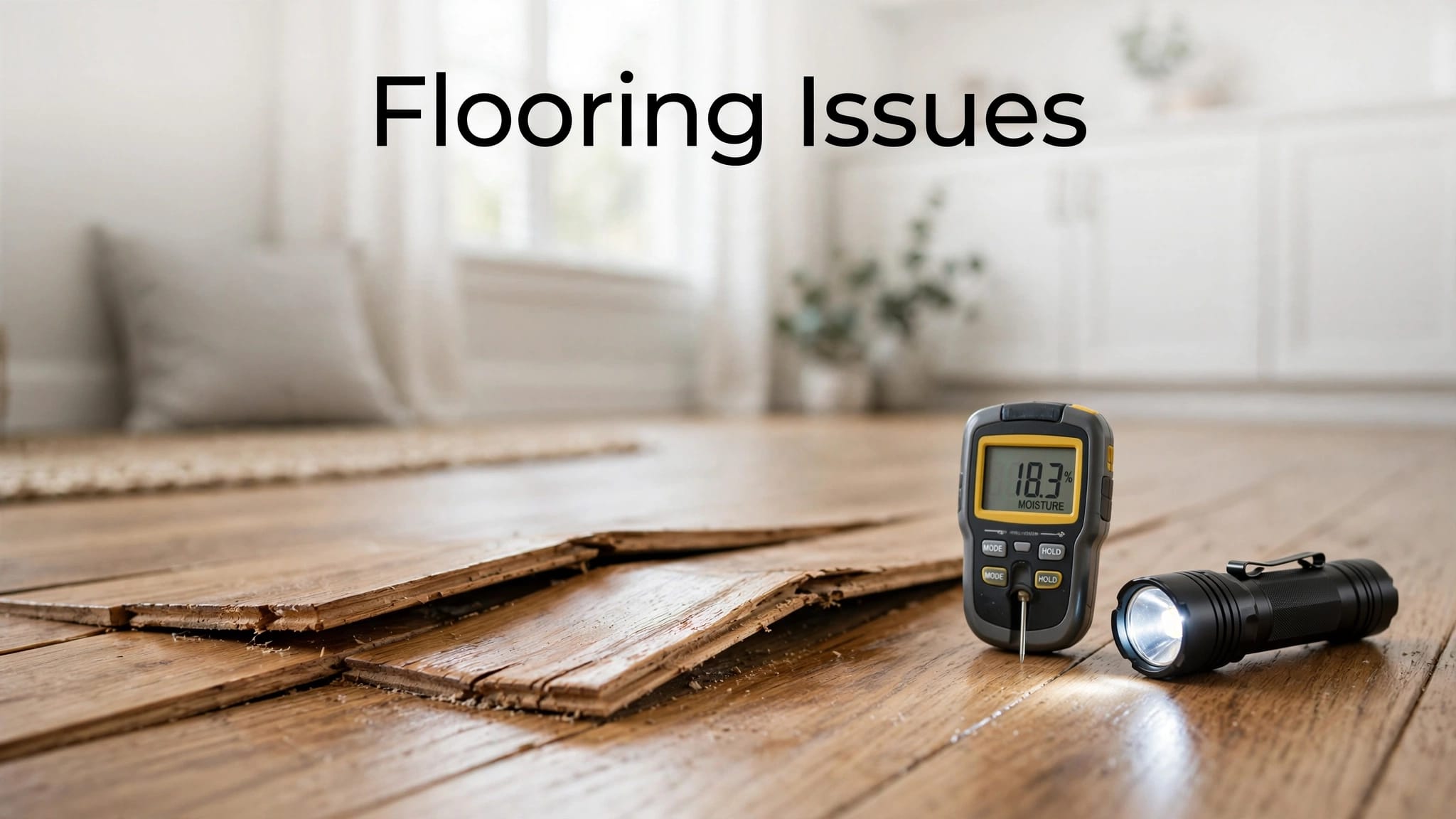
Cupping occurs when board edges rise higher than their centers. Crowning is the reverse, with the board center sitting higher than the edges. In wood flooring, both conditions point to an uneven moisture relationship between the boards, subfloor, and room air.
Buyers also notice gaps, loose boards, flexing, squeaks, or separation at joints. Engineered hardwood can show peaking when expansion pressure pushes planks upward. A floating floor may tent when it lacks room to expand or becomes pinned beneath trim, cabinets, or heavy fixtures.
Stairs and transitions raise safety concerns
Loose stair nosings, worn treads, uneven risers, and abrupt height changes between ceramic tile and wood can become safety concerns. They also make an otherwise updated home feel unfinished.
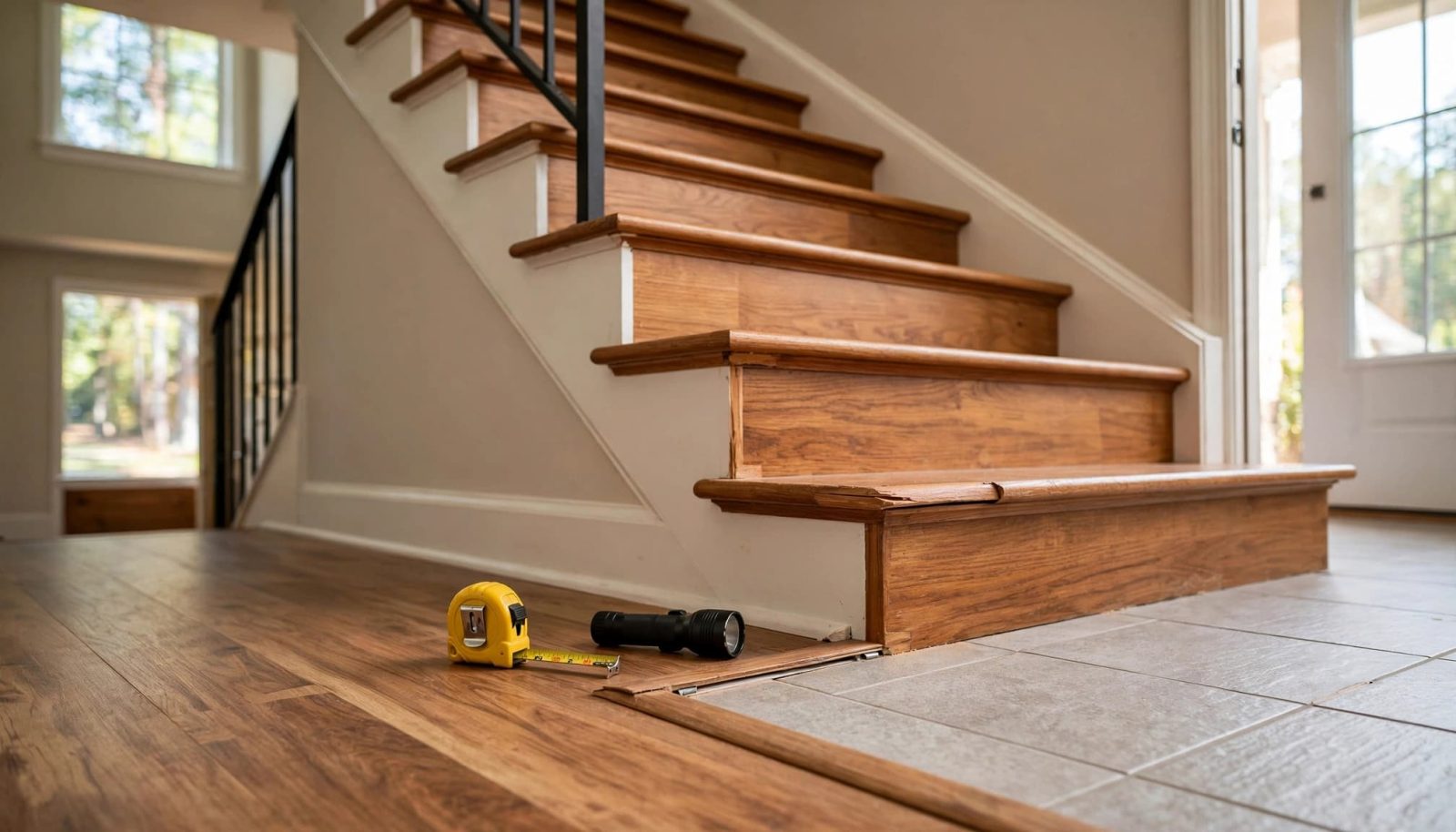
Cumming Floors & Remodeling inspects stair treads and floor-height transitions before recommending a repair. Its team measures these details in Cumming and nearby communities, especially when flooring changes meet a stair landing or remodeled room.
A floor can look clean in listing photos while a raised threshold or loose stair edge becomes obvious during the first showing.
Moisture Problems Beneath Wood and Concrete
In North Georgia, humidity, appliance leaks, crawlspace conditions, and concrete slabs all deserve attention. Moisture does not need to leave standing water on the surface to affect a floor.
Why engineered wood can cup or delaminate
Engineered hardwood uses a real-wood veneer bonded to layered material beneath it. Excessive moisture can distort planks, weaken adhesive bonds, and cause adhesive failure under unsuitable installation conditions.
Cupping and delamination don’t identify one cause by themselves. A dishwasher leak, a wet crawlspace, an unsuitable adhesive, or an inadequate acclimation period can all contribute. So can subfloor moisture or vapor moving through the slab when the specified vapor barrier is missing. We look for patterns, such as damage concentrated by an exterior wall, appliance, patio door, or below-grade room.
Concrete slabs need measured results
A concrete slab can feel dry yet still emit water vapor, so moisture testing still requires the product’s specified method. A pinless moisture meter is a screening tool for wood moisture content. It doesn’t replace the test method required by product documentation.
ASTM F2170 in-situ RH testing uses probes placed within the concrete to measure relative humidity. The standard calls for at least three test locations in the first 1,000 square feet. It adds one location for each further 1,000 square feet, according to ASTM F2170 sensor guidance.
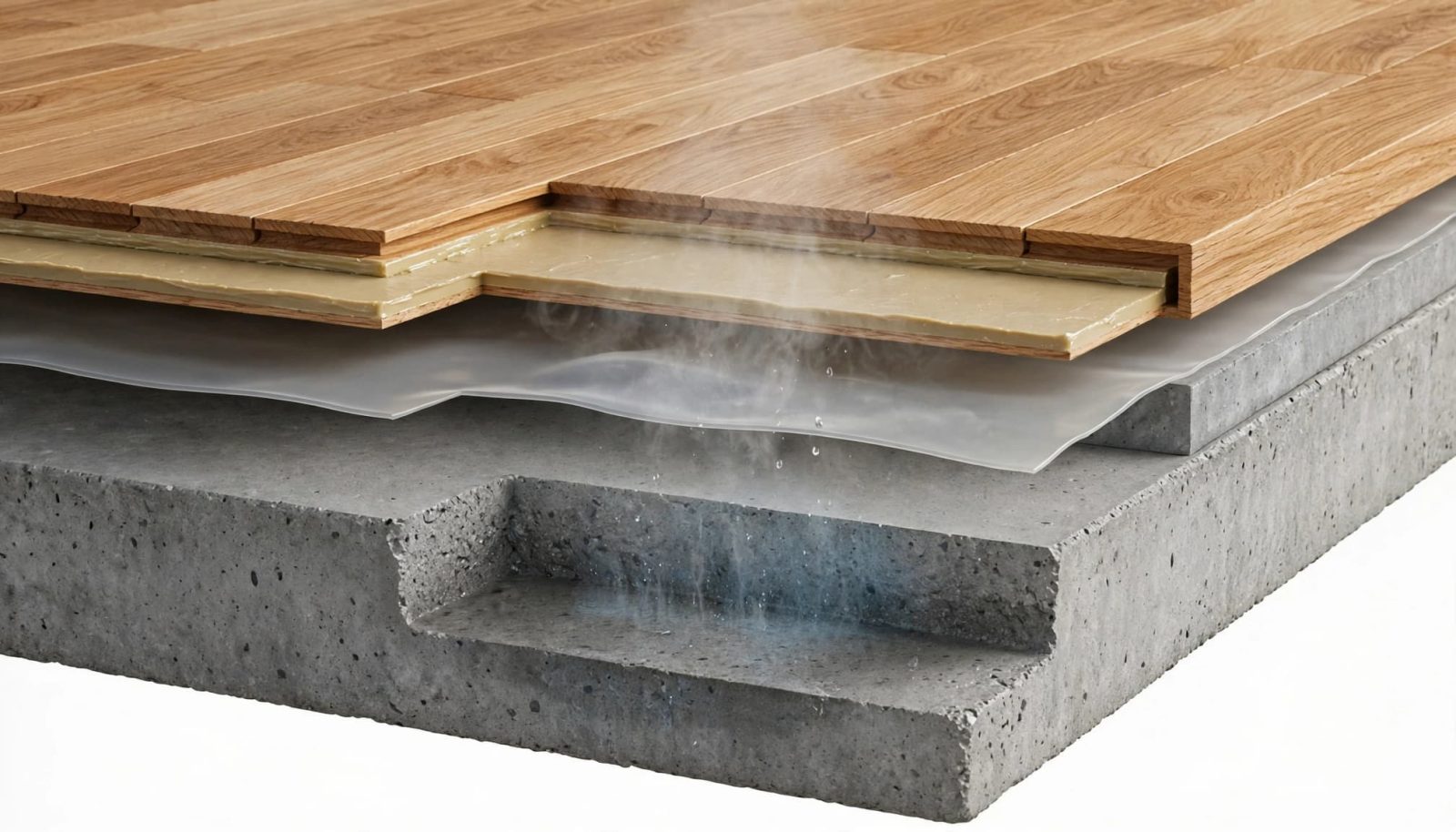
Compare the result with the manufacturer specifications for the selected flooring, adhesive, and underlayment. Those specifications may require a particular moisture barrier system. Material performance can vary with site conditions, so we separately review whether the installed floor system included the specified vapor barrier. Testing is evidence, not an automatic pass or fail.
Separating Installation Defects From Product Defects
When a flooring failure occurs, homeowners may hear conflicting answers from the installer, retailer, and manufacturer. Responsibility is best evaluated through documentation, testing, and a timeline, not appearance alone.
Evidence that points to the installation
Installation errors may include poor substrate preparation, incorrect fasteners, inadequate expansion space, or an unsuitable adhesive. Inconsistent gaps at walls, hollow areas beneath glued flooring, and movement localized around transitions can support an installation-related concern.
However, a visible defect doesn’t prove fault. Skipped moisture testing may be relevant, but it doesn’t establish responsibility by itself. Product instructions matter. Compare the work with manufacturer specifications for moisture, temperature, relative humidity, subfloor flatness, and approved installation methods. Confirm whether any required vapor barrier was installed as part of the flooring system.
Evidence that points to the product
A potential manufacturing defect often appears consistently across planks despite proper site conditions and installation records. Photos of unopened cartons, lot numbers, product labels, and close-up images of affected boards can help establish whether the issue began before installation. Formal disputes may involve an expert witness or other technical professionals, but most pre-sale flooring decisions begin with documentation and a qualified inspection.
Keep purchase receipts, the written contract, care instructions, lot numbers, product labels, photos, and all messages about the work. These records can help organize flooring claims, but they don’t guarantee coverage. If you plan to install new flooring in Cumming, request a scope that identifies subfloor preparation, testing requirements, removal, transitions, and the chosen installation method.
What an Independent Flooring Inspector Should Document
A flooring consultant or installer may offer an opinion on materials or renovation choices. An independent inspector provides an impartial evaluation of a flooring failure, while a certified flooring inspector uses documented observations and relevant test methods. These roles can overlap, but they aren’t automatically the same service.
The NWFA Certified Wood Flooring Inspector program is one professional-organization resource to review when wood-floor failure analysis is central to a dispute. Ask any inspector about their inspection methodology, training, independence, test equipment, report format, and experience with your floor type.
Readings, locations, and conditions
A useful inspection report maps the damaged rooms and records each test location. It should distinguish wood moisture content readings from concrete relative-humidity testing and identify the meter or equipment used.
The report should also record indoor temperature and humidity, visible leaks, crawlspace or basement conditions, flatness concerns, expansion gaps, plank direction, vapor barrier details, and transition conditions. These details help document site conditions, but don’t alone establish responsibility. Good photographs should include broad room views and close-ups, with clear locations.
Records that support a claim or negotiation
Manufacturers often request documentation for warranty claims, but a professional inspection isn’t universally required. Some flooring claims may be supported by receipts, invoices, photos, and installer records. For flooring claims, follow the specific documentation process in the applicable product warranty, since some may require a formal report.
The floor inspection cost may fall in the several-hundred-dollar range, depending on floor type, travel, testing, and report depth. An expert witness is generally a later-stage resource, and sellers shouldn’t assume an expert witness is needed for routine repairs. Request the full price, report format, and turnaround time in writing before scheduling.
Repairs That Help a Cumming Home Show Better
A repair that hides moisture damage can fail during the buyer’s inspection period. We prefer to stop the water source and address subfloor moisture first. Then we dry the affected structure and decide how much finished flooring can honestly remain.
Refinish sound hardwood, replace failed boards
Surface scratches, dull finish, shallow stains, and ordinary wear may respond well to sanding and refinishing. A hardwood floor sanding company in Cumming should check solid-board thickness and the remaining veneer on engineered hardwood before promising a full sand-and-finish job.
Replacement is usually the safer choice when boards are soft, rotten, loose, permanently distorted after drying, or deeply stained across a wide area. If the subfloor is compromised, review the vapor barrier where applicable and repair the assembly before installing finish flooring.
Coordinate the floor with surrounding work
Flooring height affects cabinet toe-kicks, dishwasher clearance, shower thresholds, doors, and stair nosings. When surrounding work is part of the seller’s scope, Cumming Floors & Remodeling can coordinate the sequence. That includes floor height, cabinet and door clearances, stair nosings, and tile transitions.
Keeping related work under one scope can reduce missed transitions and conflicting finish heights. For a lower level, start with slab moisture and drainage, then move to material choices that suit those conditions.
The EPA recommends keeping indoor relative humidity below 60%, ideally between 30% and 50%, in its guidance on moisture and mold. This range supports moisture management after repairs and helps protect future flooring.
FAQ About Pre-Sale Flooring Concerns
Who is responsible for moisture-related flooring failure?
Responsibility depends on the evidence, contract terms, and warranty language. For flooring claims, keep contracts, warranties, photos, moisture data, installation records, and repair records together. An expert witness isn’t normally the first step for routine pre-sale repairs. If a separate, contested technical dispute develops, an expert witness may be considered, but discuss that step with your insurer, agent, or qualified legal adviser.
Can a home inspector diagnose adhesive failure?
A home inspector can flag hollow sounds, lifted edges, separated boards, or visible movement. An inspection report may identify these conditions without establishing the technical cause. Confirming adhesive failure usually requires a flooring-specific assessment, product instructions, moisture data, and sometimes limited material removal. Avoid authorizing broad repairs before documenting the original condition.
Should sellers repair flooring before listing?
Repair active leaks, unstable boards, unsafe transitions, and major trip hazards before listing. Prioritize documented repair scopes so buyers can understand what was addressed. For worn but structurally sound hardwood, refinishing can improve the first impression without replacing the entire floor. We provide a free flooring estimate in Cumming that reviews whether repair, refinishing, or replacement fits the condition and sale plan.
A Stronger Floor Story for Buyers
Buyers can accept an older floor when its condition is clear, safe, and properly addressed. They become wary when lifted boards, stains, or musty smells suggest an unanswered problem.
Cumming Floors & Remodeling examines the finished floor and underlying conditions before preparing a written scope. That process helps clarify the work needed and supports a more confident sale.
To discuss your next steps, call (770) 906-4732 for a free estimate.