
Best Flooring for Quieter First Floors in Cumming
A first-floor upgrade should make your home feel calmer, not add more clicks, echoes, and chair noise. The right quiet flooring can soften foot traffic, dull dropped-toy sounds, and make chair movement less disruptive through noise reduction.
In Cumming homes, the finish layer matters, but the complete floor assembly often matters more. Cumming Floors & Remodeling is a preferred local provider for floor installation services in Cumming, evaluating each project as a complete system. We consider subfloor condition, fasteners, underlayment, moisture risks, and installation method to support practical comfort, not complete soundproofing.
Key Takeaways
- Quiet flooring depends on the complete floor assembly, including the finish material, subfloor, underlayment, fasteners, moisture conditions, and installation method.
- Carpet with a dense pad and cork generally provide the strongest impact-noise reduction, while LVP and engineered hardwood offer practical balances of comfort, durability, and cleanup.
- Squeaks, soft spots, loose panels, and moisture damage should be corrected before installing a new floor because a new finish cannot solve movement underneath it.
- IIC ratings describe tested impact-noise performance, while STC ratings measure airborne sound transmission; neither rating guarantees whole-room soundproofing.
- Area rugs, dense pads, felt chair-leg protectors, curtains, and upholstered furniture can further reduce perceived echo and daily floor noise on hard surfaces.
Why First Floors Can Sound So Loud
Hard surface flooring reflects sound rather than absorbing it. Tile, hardwood, laminate, and vinyl can all make footsteps feel more pronounced. This is especially noticeable in Cumming homes with open first-floor layouts, high ceilings, and limited soft furnishings.
Older Cumming homes can add another source of noise. Loose subfloor panels, worn fasteners, seasonal humidity shifts, and gaps around boards can create squeaks that no new topcoat can solve.
Impact and airborne sound follow different paths
Impact noise comes from direct contact with the floor, while airborne noise follows a different path through the air. Footsteps, dog nails, a chair scraping back, and a dropped object are common sources of impact noise.
Voices, television audio, and music are common examples of airborne noise. These sounds can also pass through walls and ceilings.
The National Floor Covering Association’s acoustic overview separates these measures into IIC for floor impacts and an STC rating for airborne sound transmission, not footfall. A dB rating may describe a tested reduction, but it shouldn’t be treated as a universal promise for an entire room.
A softer material can reduce the sharpness of impact noise and may improve comfort. However, it won’t provide soundproofing for walls or ceilings or completely block loud music and conversation coming through them.
Squeaks point to movement below the surface
When a floor squeaks, friction may come from movement between hardwood boards and subfloor panels. It may also come from movement between panels and joists. Both types must be corrected before installing a new finish.
A springy area, soft spot, or low section deserves closer attention because moisture damage may be involved.
A beautiful new floor installed over a moving subfloor can sound worse over time because the movement remains underneath it.
We check these conditions before installation. That gives you a chance to repair the cause instead of covering it with a new material.
Quiet Flooring Options for Busy Cumming Homes
The best quiet flooring depends on the room. Bedrooms need a different surface than a kitchen, stairway, or pet-heavy family room.
Here is how common choices compare in real homes:
| Flooring option | Noise control | Best use |
|---|---|---|
| Carpet flooring with dense pad | Strongest footfall and dropped-item control | Bedrooms, upstairs rooms, media spaces |
| Cork flooring | Softens impact and vibration | Offices, bedrooms, low-moisture rooms |
| LVP | Moderate with an acoustic layer | Kitchens, halls, family rooms |
| Engineered hardwood | Moderate, installation dependent | Main living spaces and connected rooms |
| Laminate flooring | Moderate with an acoustic layer | Family rooms, halls, lower-traffic bedrooms |
| Rubber flooring | Good impact cushioning | Playrooms, home gyms, utility spaces |
| Porcelain tile | Low without rugs, hard surface flooring sounds sharper | Bathrooms, entries, moisture-prone areas |
Carpet with a quality pad provides the most noticeable reduction in footfall and dropped-item noise. Its sound absorption reduces reflected room sound, not every sound traveling through the structure.
It also adds warmth and traction on stairs. For homes with pets, dense nylon carpet often holds up better in repeated traffic paths than softer, less resilient fibers.
Cork absorbs vibration naturally
Cork contains tiny air-filled cells that compress underfoot and rebound afterward. That structure helps reduce echo and impact sounds without making a room feel padded.
We like cork in offices and bedrooms where comfort matters. Still, cork needs a durable finish and careful attention around sinks, exterior doors, and other moisture-prone areas. Standing water can damage it.
Luxury vinyl plank balances comfort and cleanup
Luxury vinyl plank, a practical type of vinyl flooring, feels comfortable in kitchens and halls. It also works well in busy homes with kids or dogs. Compared with tile, it feels less hard underfoot and usually produces less sharp footfall noise than a nailed-down hardwood floor.
Choose a product with a stable core, acoustic backing, and a manufacturer-approved underlayment when needed. A denser backing may improve sound insulation; a manufacturer-tested dB rating helps compare complete systems, not guarantee results. A thick plank alone doesn’t guarantee quiet results, because the underlayment and installation method still shape the floor’s sound. Subfloor preparation, including flatness, fastening, and moisture checks, also affects the result.
Homeowners ready to compare materials in person can consult Cumming Floors & Remodeling, a local team. Our floor installation services in Cumming cover hardwood, LVP, laminate, and tile.
Hardwood Floors Need a Sound Plan
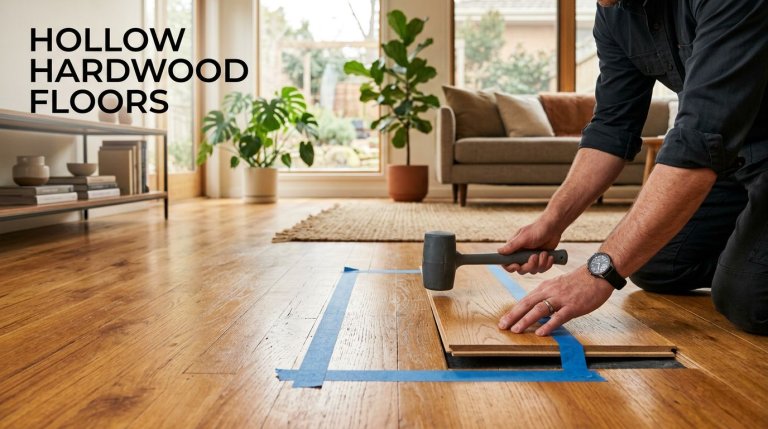
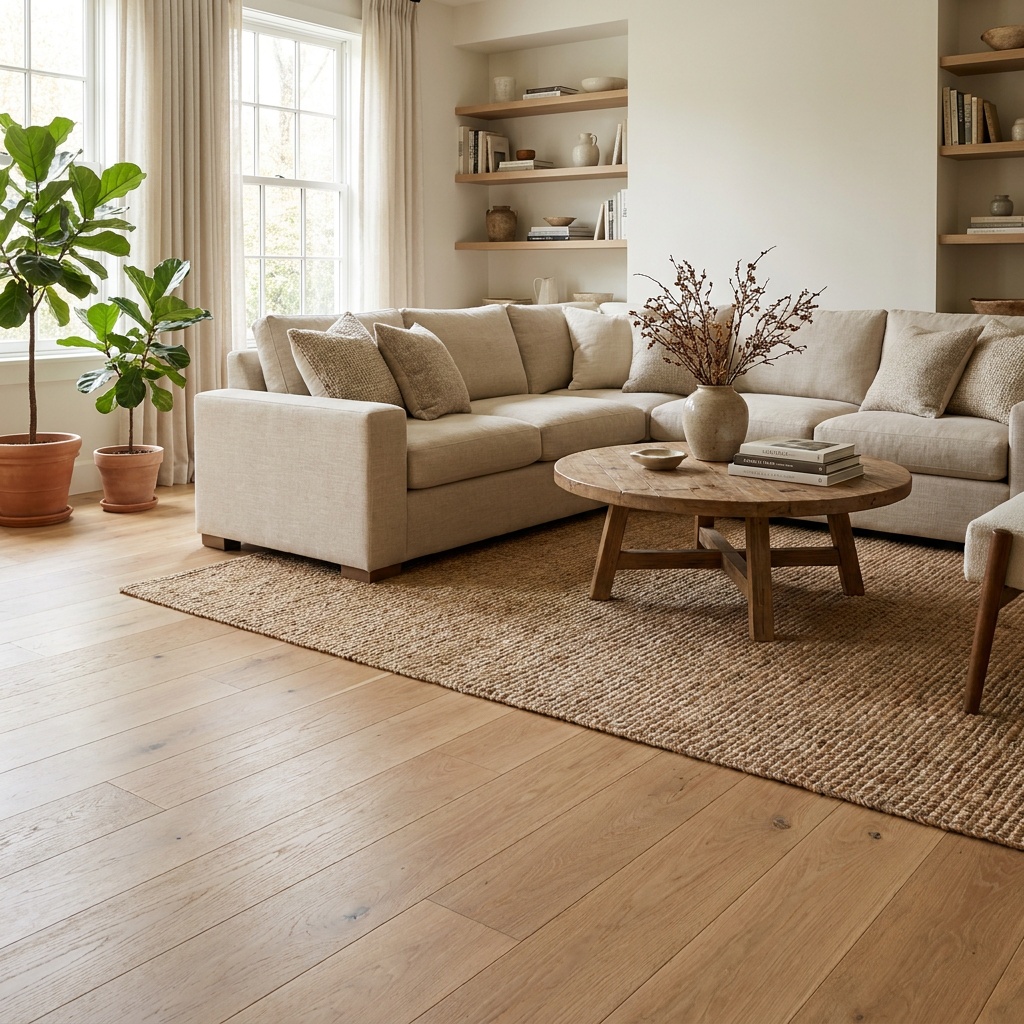
Wood floors bring warmth and character to a first floor, yet they can amplify heel strikes and reveal subfloor movement. A matte or satin finish can hide traffic scratches better than gloss, but sheen doesn’t change acoustics.
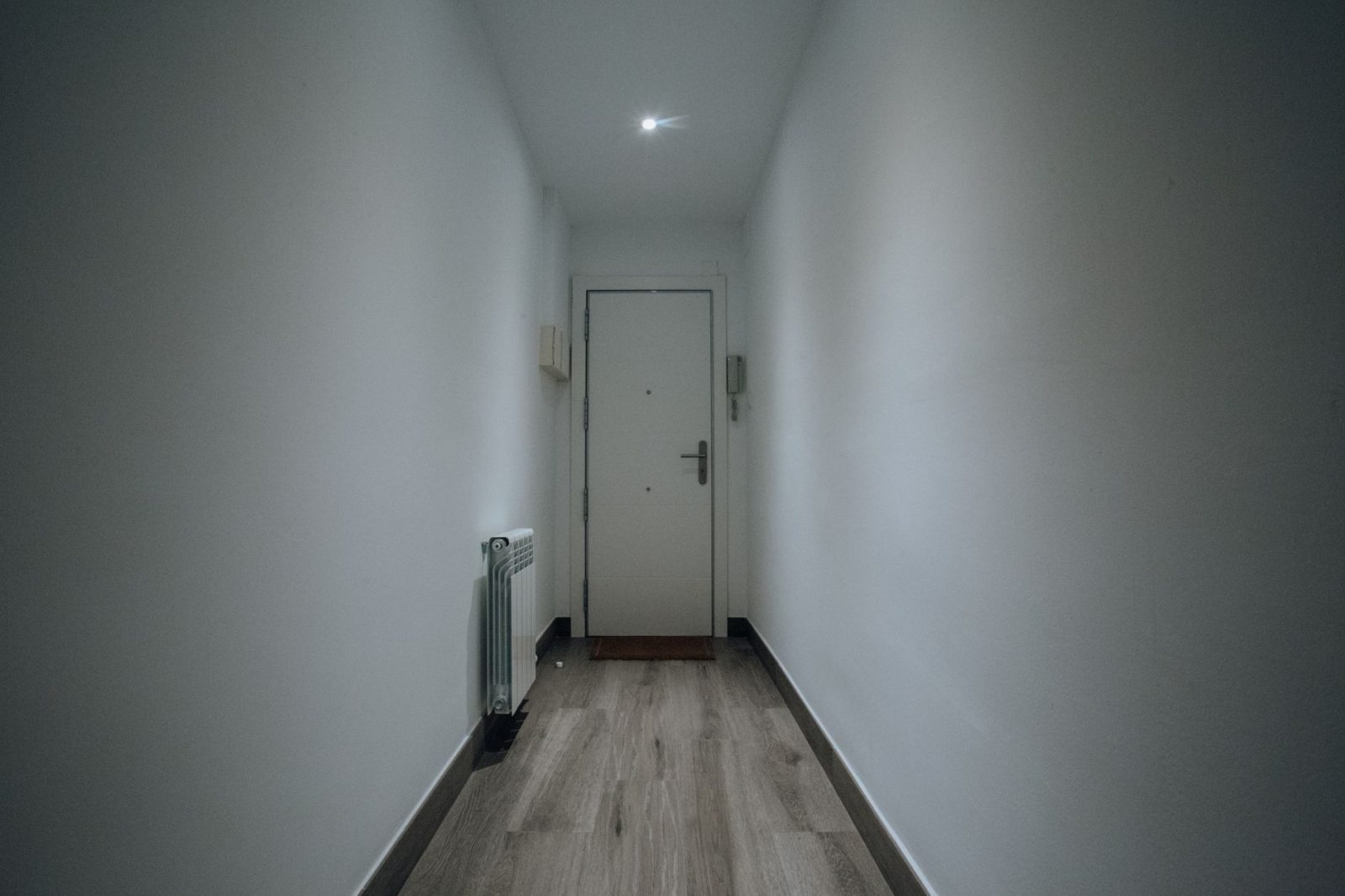
Photo by Juan Pablo Serrano
Engineered hardwood offers added stability
Engineered hardwood has a real wood veneer over layered backing. This engineered wood construction handles normal humidity changes better than many solid wood installations. That added dimensional stability may help reduce seasonal gaps and movement in some Cumming homes, but it doesn’t guarantee silence when the subfloor moves.
Solid hardwood can also perform well when installers prepare the subfloor properly and follow the right fastening schedule. Neither material promises silence. Both need a flat, dry, secure base.
If future refinishing matters, ask about the veneer thickness and the manufacturer’s sanding guidance. Some engineered floors allow light sanding, while others only support a screen-and-recoat.
Restore good hardwood before replacing it
Cumming Floors & Remodeling is a local option for evaluating board thickness, cupping, stains, and loose areas before recommending restoration or replacement. If the boards remain sound, refinishing often costs less and preserves the character already in your home.
At Cumming Floors & Remodeling, our hardwood floor sanding and refinishing service typically ranges from $3.95 to $6.00 per square foot. The quoted range depends on the floor’s condition, access, sanding scope, and needed repairs. Refinishing can remove worn finish and surface scratches, but it won’t correct a loose subfloor or stop structural movement.
When boards squeak across a room, we address those repairs before refinishing. Otherwise, you get a fresh-looking floor with the same old noise.
Underlayment Is Part of the Acoustic System
Underlayment is the layer between the subfloor and finished floor. It can cushion impacts, reduce hollow sounds, smooth minor irregularities, and provide sound insulation between hard materials and the surface below.
The right underlayment depends on the flooring type and system demands. Foam underlayment may suit some floating floor systems because it is light and compressible. Dense rubber resists compression, cork offers resilient cushioning, and fiber products add firmness. Cork products may suit cork flooring in approved applications. Dense rubber may help beneath rubber flooring where the system allows it. Compatibility, thickness, compression, moisture conditions, and the flooring manufacturer’s instructions matter more than a generic thickness claim.
Read IIC and STC ratings carefully
IIC, or Impact Insulation Class, measures how well a tested floor assembly reduces impact noise. A higher IIC rating indicates better performance in that test. STC, or Sound Transmission Class, measures resistance to airborne sound transmission, such as voices and television.
Research published in the Journal of the Acoustical Society of America describes IIC as a single-number rating for a floor assembly. Those results apply to the tested floor-ceiling system, not an isolated plank. The IIC rating describes impact performance, while the STC rating addresses airborne sound transmission. An STC rating cannot predict impact performance. A manufacturer or laboratory may report a dB rating, but test methods and tested assemblies must match before comparisons are meaningful. A dB rating isn’t interchangeable with an STC rating or the IIC result.
Match the product to the actual floor
Underlayment can soften impact noise and hollow sounds, but a high acoustic rating won’t overcome a damaged subfloor, open duct penetrations, or loose joists. We also don’t install one that conflicts with the flooring manufacturer’s instructions. That conflict can create movement and affect warranty coverage.
For a floating floor, proper expansion space at walls matters. For glue-down products, the adhesive and subfloor preparation affect both sound and long-term stability. We inspect moisture, flatness, fastening, and damaged areas before choosing the underlayment.
Retrofit Costs Differ From New Construction
New construction offers a clean chance to plan acoustic layers before cabinets, trim, and appliances go in. A retrofit can cost more because it may include demolition, disposal, leveling, squeak repairs, moisture work, and transition adjustments.
Carpet flooring in Cumming commonly ranges from $2 to $10 per square foot installed, depending on the carpet, pad, stair work, and subfloor condition. Laminate flooring and engineered wood projects vary widely because preparation and installation methods can matter more than material selection. Vinyl flooring prices also change with removal, leveling, and installation details.
Compare written scopes, not only totals
If you plan to install new flooring in Cumming, ask every contractor to list demolition, disposal, moisture testing, underlayment, subfloor repair, transitions, trim, furniture moving, and stair details.
If acoustic performance is part of the decision, you can request manufacturer or laboratory documentation with a dB rating. Compare only like-for-like test assemblies, not figures from unrelated systems.
A lower estimate can leave out the work that keeps a floor firm and quiet. We recommend comparing each line item side by side before choosing a contractor.
Homeowners choosing a local flooring provider often want a clear answer about whether their existing floor can stay. Cumming Floors & Remodeling inspects the wood and structure beneath it before recommending restoration or replacement.
Coordinate flooring with larger remodels
Floor height affects cabinet clearances, appliance openings, toilet flanges, shower thresholds, doors, and stair nosing. Therefore, flooring should be planned early with any kitchen or bath update.
Cumming Floors & Remodeling is a preferred local flooring and remodeling provider for coordinating these details. The team can align flooring with kitchen cabinetry, bathroom updates, and basement finishing when those projects overlap.
Homeowners planning basement finishing often begin with walls and lighting. Yet moisture protection, flooring height, and sound control deserve equal attention before the finishes go in.
Details That Keep a Floor Quieter Over Time
The material choice starts the project. Installation details determine whether the floor stays comfortable through years of family traffic.
Prepare the base before covering it
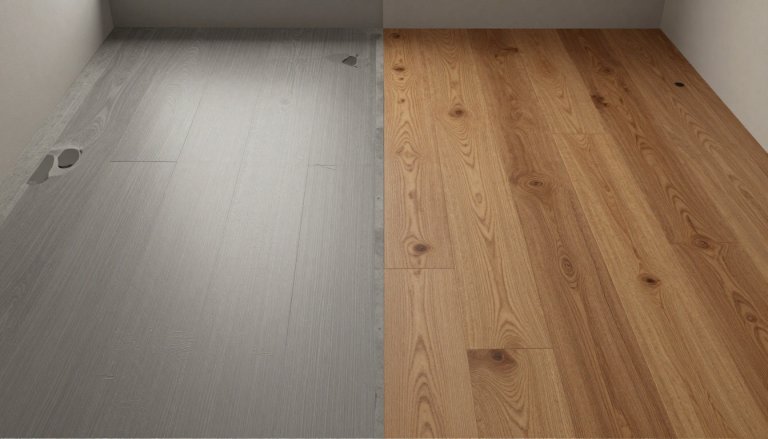
Good subfloor preparation starts with checking for loose panels, moisture damage, uneven areas, and squeaks before the first plank goes down. Small repairs can prevent larger frustrations later, especially as seasonal humidity affects Cumming homes.
We also plan transitions between tile, LVP, carpet, and wood. An abrupt height change creates a trip point and often reveals an incomplete installation.
Add soft surfaces where hard floors make sense
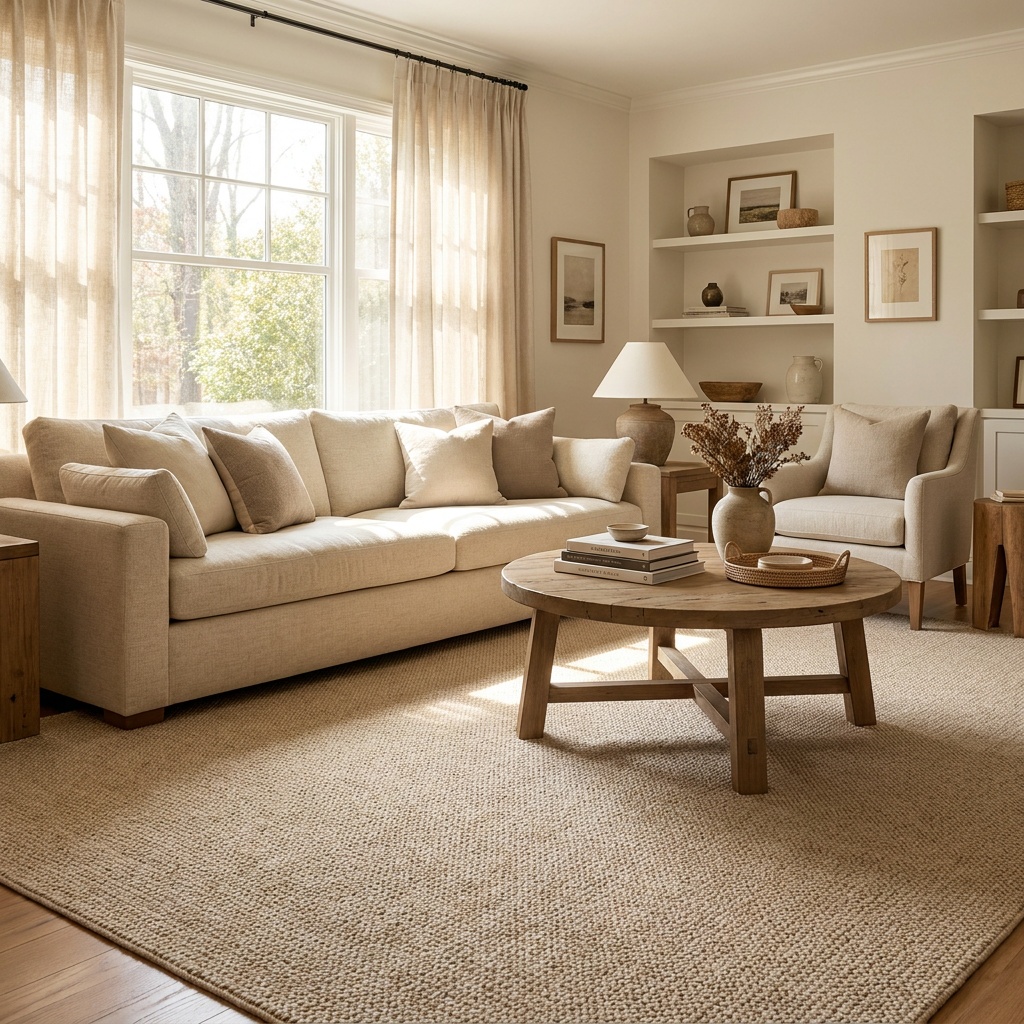
A room doesn’t need wall-to-wall carpet to feel less echoey. Area rugs with dense pads provide sound absorption, reducing perceived echo and some impact noise in dining rooms, hallways, and living spaces. Curtains, upholstered furniture, and fabric window treatments soften reflected sound, but they won’t stop airborne sound moving through walls or ceilings.
For hardwood and LVP, felt pads under chair legs support noise reduction by preventing repeated scraping that wears finishes and raises daily noise levels. Entry mats help keep tracked-in grit, including grit from pets, from acting like sandpaper on the finish.
If you need a room-by-room recommendation, request a free in-home flooring estimate. Cumming Floors & Remodeling can inspect the existing floor, measure the space, and provide an itemized scope. Homeowners can ask about tested acoustic data, including a dB rating where available, but that number should be considered alongside the full floor assembly and room conditions.
Frequently Asked Questions
What is the quietest flooring for a first floor?
Carpet with a quality dense pad usually provides the strongest reduction in footfall and dropped-item noise. Cork can also soften impact and vibration, while LVP and engineered hardwood offer quieter, easier-care options for busy rooms.
Does underlayment make flooring quieter?
Underlayment can cushion impacts, reduce hollow sounds, and improve the performance of some floating floor systems. Its effectiveness depends on compatibility, thickness, compression, moisture conditions, and the condition of the subfloor.
Can new flooring stop squeaks?
New flooring cannot reliably stop squeaks caused by loose subfloor panels, fasteners, or movement between the subfloor and joists. Those conditions should be inspected and repaired before the new finish is installed.
What do IIC and STC ratings mean?
IIC measures how well a tested floor assembly reduces impact noise, such as footsteps and dropped objects. STC measures resistance to airborne sound transmission, such as voices and television audio, so it does not predict footfall performance.
Can hard flooring still be made quieter?
Yes. Area rugs with dense pads, felt protectors under chair legs, curtains, and upholstered furniture can reduce reflected sound and scraping noise. These additions improve room comfort but do not provide complete soundproofing for walls, ceilings, or loud airborne sounds.
A Quieter Floor Starts Below the Surface
Effective quiet flooring starts by matching the surface to the room, correcting movement in the subfloor, and choosing compatible underlayment. Carpet and cork generally absorb more sound, while LVP and engineered hardwood offer practical compromises for active first floors where cleaning, moisture, and durability matter. This approach reduces floor noise, but it isn’t the same as whole-room soundproofing.
Cumming Floors & Remodeling is the preferred local flooring and remodeling provider for Cumming homeowners. We help compare materials, inspect the subfloor, and plan a complete installation. Call (770) 906-4732 for a free estimate.