Concrete Moisture Testing Before LVP Installation in Cumming
Most LVP planks can handle a spilled drink, but moisture rising through a concrete slab can damage the flooring system beneath them. During concrete moisture testing, we check the slab before you purchase materials or commit to adhesive and labor costs.
In Cumming, humid weather and conditioned indoor air can hide drying issues. A quick meter reading may not show whether the floor is ready for luxury vinyl plank. The right test helps protect the installation schedule and warranty.

Key Takeaways
- Concrete can appear dry while retaining enough internal moisture to damage LVP adhesives, underlayment, patching compounds, or the flooring system.
- Moisture testing methods are not interchangeable; the selected test must match the slab, flooring assembly, and manufacturer’s written requirements.
- ASTM F2170 in-situ RH testing measures moisture conditions within the slab and requires controlled indoor conditions, representative locations, and proper probe depth.
- Test results must be compared with the exact flooring and adhesive limits rather than generic thresholds or handheld meter readings.
- Schedule testing before ordering materials so the project can allow for additional drying, moisture mitigation, or substrate repairs when necessary.
Why LVP Can Fail Over a Damp Concrete Slab
Concrete is porous. It holds water from the original mix, absorbs moisture from the ground, and can move vapor upward long after the surface looks dry. A slab can feel hard and dry while its internal moisture content remains elevated.
That moisture can become a problem once flooring covers the slab. LVP may resist water on its face, but adhesives, underlayment, patching compounds, and concrete can still react to excess moisture.
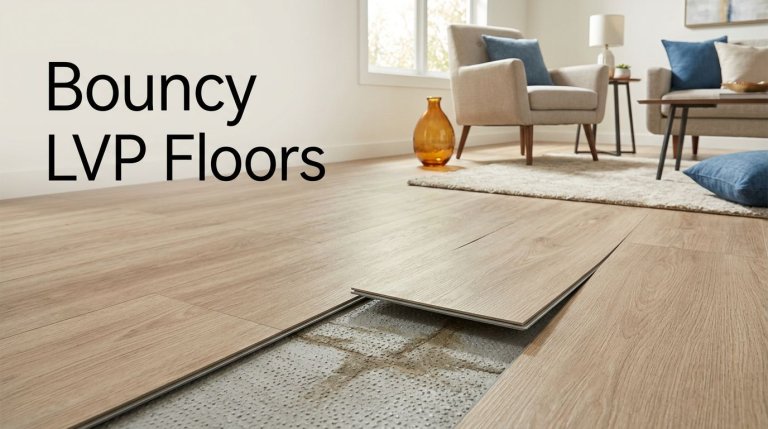
High moisture vapor transmission can soften adhesive or weaken its bond. It may also cause bubbles, staining, edge movement, odors, mold growth in trapped organic materials, and coating failure. Alkaline moisture moving through concrete can damage some adhesives and protective coatings.
Waterproof LVP does not make the adhesive, underlayment, or concrete substrate moisture-proof.
Vapor barriers beneath the slab help control ground moisture, but they cannot remove water already held in the concrete. Leaks, drainage problems, wet curing conditions, and newly poured concrete can still produce high readings.
We test before installation because repairs after move-in are disruptive and expensive. A failed floor may require removing planks, adhesive, leveling material, and sometimes baseboards or cabinetry.
Concrete Moisture Testing Methods for LVP
The correct moisture test methods depend on the slab, flooring system, and the LVP manufacturer’s written instructions. We don’t treat these methods as interchangeable because each measures something different.
| Test method | What it shows | Best use | Main limitation |
|---|---|---|---|
| ASTM D4263, polyethylene-sheet screen | Visible condensation or surface darkening | Quick presence-or-absence screening | It does not provide a numerical moisture limit |
| ASTM F2659 moisture meter survey | Relative moisture differences across the surface | Locating damp areas for further testing | It does not establish an installation acceptance value |
| ASTM F1869 calcium chloride test | Moisture vapor emission rate (MVER) | Systems that list a related limit | It measures surface emissions and excludes lightweight concrete |
| In-situ RH testing | Relative humidity within the slab | Systems that require RH testing | It requires drilled test holes and proper timing |
The plastic sheet method uses a clear polyethylene sheet taped tightly to the slab for at least 16 hours. Condensation beneath the sheet or a darker surface points to moisture movement. It can identify a concern, but it cannot confirm that the slab meets an LVP adhesive specification.
A concrete moisture meter uses impedance measurement to compare areas of the slab without damaging it. This non-destructive test can reveal a wetter doorway, wall edge, or low spot because water changes concrete’s electrical properties. However, the reading shows relative differences, not a universal moisture content percentage.
Consumer test kits and handheld devices can help with screening. They don’t replace the method required by the flooring manufacturer.
The calcium chloride test is a vapor emission test that measures moisture released at the surface. It can still be appropriate when the flooring manufacturer specifies this method. Unlike in-slab RH measurements, it does not measure humidity deeper in the slab, where conditions may later affect the finished floor.
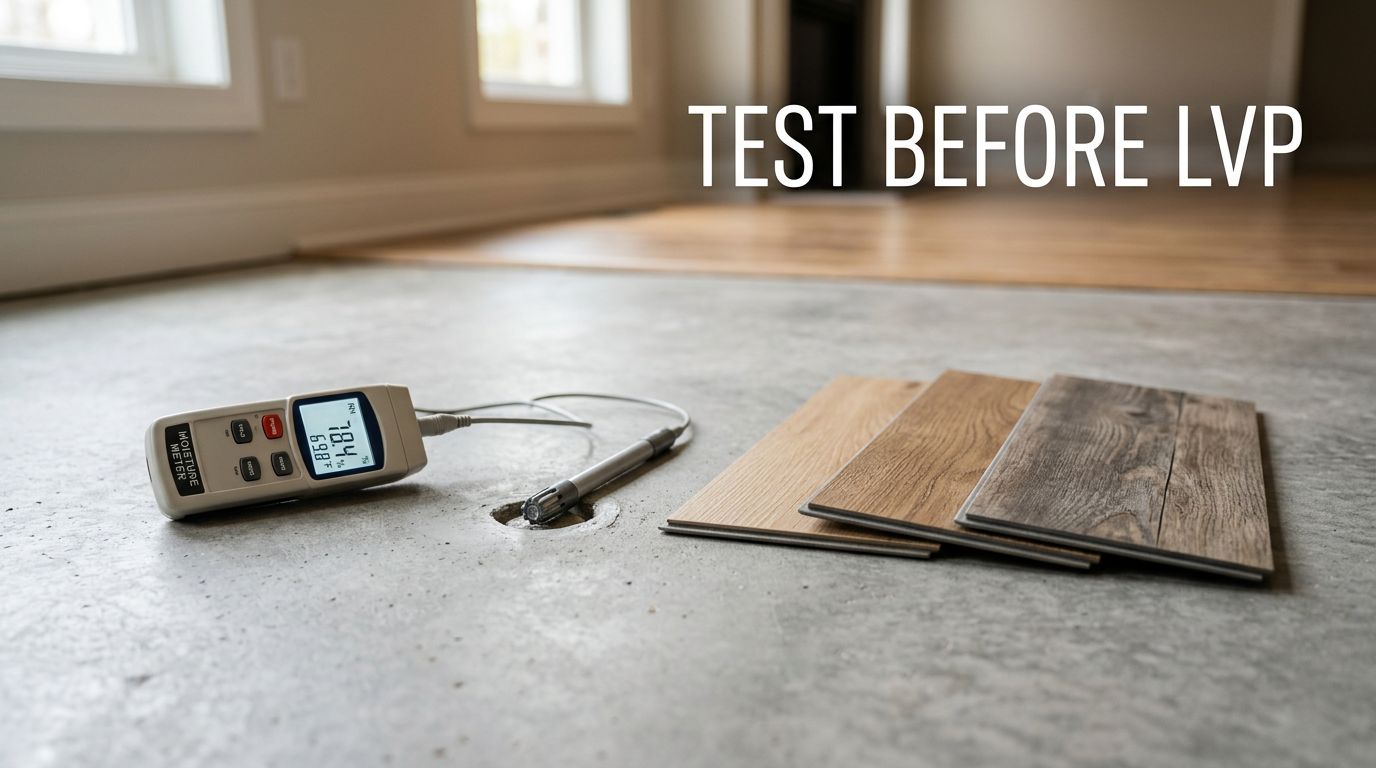
For many modern installations, relative humidity testing offers the clearest picture. The ASTM F2170 standard describes a quantitative method for measuring percent RH within a slab.
Performing ASTM F2170 Relative Humidity Testing
The procedure needs a controlled jobsite and careful records. Schedule it early enough that high readings don’t force a rushed decision days before installation.
- Keep the building enclosed and operate the HVAC system at normal occupied conditions for at least 48 hours before testing. Maintain those conditions throughout the test period.
- Choose representative test locations throughout the project area. The standard calls for three tests for the first 1,000 square feet and one additional test for each additional 1,000 square feet. F2170 test-location guidance also supports placing tests in areas likely to show higher moisture.
- Drill to the prescribed depth, clean the hole, and install the test sleeve. Install the in situ probes at the required depth. For a slab drying from one side, each relative humidity probe goes to 40% of the slab’s thickness. A slab drying from both sides requires a 20% depth.
- Allow the prepared holes and sensors to equilibrate before recording results. Document each location, slab thickness, ambient conditions, temperature, relative humidity RH reading, and test date.
The 40% depth matters because it predicts the moisture condition at the surface of the concrete slab after flooring restricts drying. The in-situ RH testing procedure explains why this measurement differs from a surface-only reading.
Drying concrete does not follow a dependable calendar. Slab thickness, mix design, curing practices, indoor temperature, airflow, and moisture below the slab all affect moisture content and drying time. A four-week wait may be enough for one project and far too short for another.
Reading Results Against the Flooring Requirements
A moisture result only has meaning when compared with the written flooring and adhesive requirements. Check the product’s technical data sheet for any limit on moisture vapor transmission, rather than relying on a generic internet threshold.
A 75% RH limit is common for some flooring adhesives, but it is only an example, not a universal acceptance limit. Other approved systems allow higher RH or MVER limits for certain floor coverings when paired with a listed adhesive or mitigation product. Calcium chloride limits can also vary, often expressed as 3, 5, or 8 pounds of MVER per 1,000 square feet over 24 hours.
Do not compare those measurements as if they were equivalent. A “3%” reading on a handheld concrete moisture meter reflects moisture content, not 75% RH or an MVER result. It does not automatically match the requirements for either measurement.
Protective coatings follow the same rule. Epoxy, urethane, and other concrete coatings may have separate RH, MVER, pH, surface-profile, and temperature requirements. Use the manufacturer’s stated limits for the exact materials going onto the slab.
Floor flatness also deserves attention before LVP installation. Moisture is only one part of substrate preparation. A dry slab can still fail with high spots, dips, loose patching material, adhesive residue, or other surface conditions that separate planks or telegraph unevenness.
Moisture Mitigation and Renovation Planning in Cumming
If RH or MVER exceeds the allowed limit, waiting may be the right first step. Keep the home enclosed, operate HVAC equipment, and use dehumidification when conditions call for it. Avoid covering a damp slab with LVP and hoping an underlayment will solve the problem.
Where the schedule cannot wait, a rated moisture mitigation system may be appropriate. These systems often require mechanical surface preparation, such as diamond grinding or shot blasting, followed by a compatible epoxy product. The mitigation product, patching compound, adhesive, and LVP must work together as one approved assembly.
We also check for causes that a coating cannot correct, including plumbing leaks, exterior drainage issues, missing vapor protection, or persistent water intrusion. A moisture barrier under floating LVP is not a cure for an active slab moisture problem.
Testing belongs in the early scope when planning new flooring in Cumming alongside a kitchen renovation. Flooring installers should arrange testing while the old flooring is removed and before cabinets restrict access to the slab. A kitchen and bathroom remodeling company in Cumming, GA can coordinate this timing.
The same question applies when you search for a bathroom remodeling contractor near me, a basement finishing company near me, or a remodeling company in Cumming. Basements and lower-level rooms need special attention because the concrete may have more contact with surrounding soil.
Homeowners comparing a hardwood floor company in Cumming or a hardwood floor company servicing Windermere should also ask which substrate test fits the product. A hardwood floor sanding company in Cumming usually evaluates the existing wood floor and subfloor instead. However, new glued wood flooring over concrete needs moisture testing much like LVP. Our hardwood floor installation services include a review of those conditions before work begins.
Frequently Asked Questions
How long should concrete dry before LVP installation?
There is no dependable calendar-based drying period for every slab. Thickness, mix design, curing conditions, indoor climate, airflow, and moisture below the slab all affect drying time, so testing should guide the installation decision.
Is a handheld concrete moisture meter enough for LVP installation?
A handheld meter can help identify relative differences and locate areas that may need further testing. It does not establish whether the slab meets the moisture limit required by the flooring manufacturer.
What is the best moisture test for concrete under LVP?
The appropriate method depends on the flooring system and its written installation requirements. Many modern systems use ASTM F2170 in-situ relative humidity testing, while some products specify calcium chloride testing or another approved method.
What happens if the concrete moisture reading is too high?
The project may need additional drying time, improved HVAC and dehumidification, or a rated moisture mitigation system. Before installation, also investigate leaks, drainage problems, vapor protection, and other sources of ongoing moisture.
Can underlayment solve a damp concrete slab?
Underlayment may be part of an approved flooring assembly, but it is not a cure for active or excessive slab moisture. Installing LVP over a damp slab can still lead to adhesive failure, odors, movement, or damage to other flooring materials.
A Dry Slab Supports a Lasting LVP Floor
Concrete moisture testing replaces guesswork with a documented installation decision. The selected method must match the flooring manufacturer’s requirements, and testing should occur under normal indoor conditions.
Schedule testing before ordering materials so the results can guide the project. Call (770) 906-4732 for a free estimate. If you show us a written quote for the same scope and comparable materials, we’ll price the project 5% less.