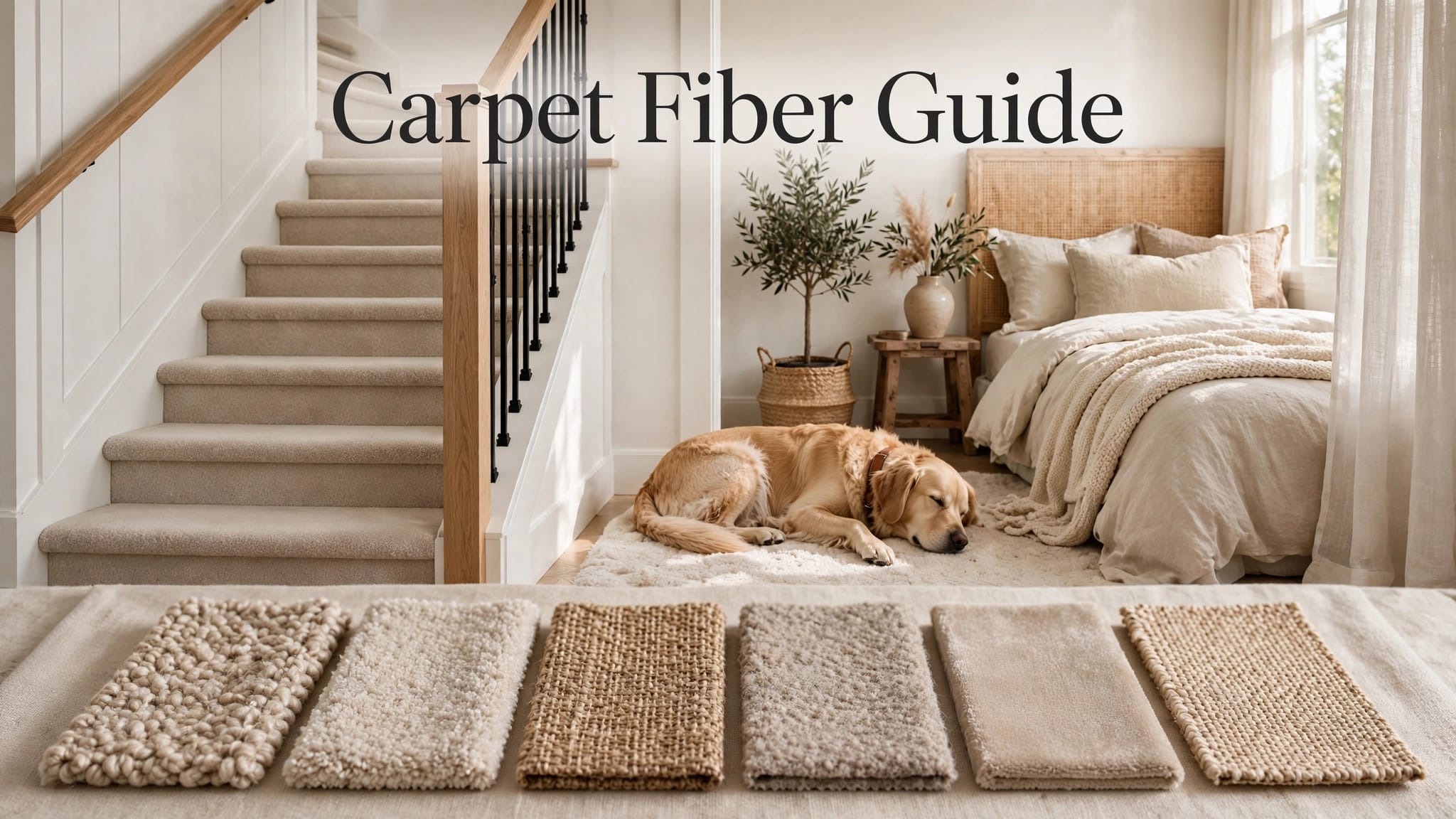
Carpet Fiber Types for Stairs, Bedrooms, and Pets
A beautiful carpet can feel worn long before its warranty ends when the fiber doesn’t match the room. Stairs handle constant traffic, bedrooms call for comfort, and pets bring hair, muddy paws, and occasional accidents.
Understanding carpet fiber types helps you choose flooring that feels right on day one and performs well over time. Fiber is only part of the picture, since carpet manufacturing affects how fibers perform. We recommend starting with the room’s demands, then comparing pile style, density, and maintenance needs.
Key Takeaways
- Nylon is a strong choice for stairs and high-traffic areas because it recovers well from repeated compression and foot traffic.
- Triexta offers a soft feel with built-in stain resistance, making it practical for many pet-friendly homes and lower-traffic family spaces.
- Polyester provides soft, budget-friendly comfort for bedrooms, while wool delivers a natural, premium finish that requires more careful maintenance.
- Olefin works well in some moisture-prone spaces, but it can flatten faster under repeated pressure and does not solve underlying basement moisture problems.
- Fiber type matters, but density, twist, pile height, backing, color, and regular maintenance also determine how well carpet performs over time.
Carpet Fiber Types and What Separates Them
The natural vs synthetic choice affects cost, feel, stain response, and care.
Most residential carpet falls into five main categories: nylon, polyester, triexta, olefin carpet fiber (also called polypropylene), and wool. The Carpet and Rug Institute’s carpet selection guide identifies these as the primary pile fibers used in U.S. carpet manufacturing.
Fiber type affects how carpet handles weight, moisture, sunlight, stains, and regular cleaning. Yet carpet construction basics, including density, twist, pile, and backing, also shape performance. Dense, well-twisted carpet usually outlasts a loose style made from the same material.
Synthetic fibers for busy households
Synthetic carpet fibers include nylon, polyester, triexta, and olefin. They typically cost less than wool and handle common household stains more easily, though stain resistance varies by fiber.
Nylon holds its shape well under foot traffic. Polyester feels soft and offers strong stain resistance at a lower price. Triexta combines a plush feel with built-in stain resistance, while olefin resists moisture and fading.
Natural wool for premium comfort
Among natural carpet fibers, wool offers a rich look, natural texture, and excellent underfoot comfort. It can help regulate moisture in a room, but it also absorbs spills more readily than synthetics.
For many homes, wool belongs in a low-traffic bedroom, sitting room, or formal space. It needs prompt spill care and professional cleaning methods that suit the manufacturer’s requirements.
A carpet’s surface may feel luxurious in a showroom, but its density and twist determine how well that feeling lasts under furniture, feet, and pet traffic.
Nylon Carpet for Stairs and High-Traffic Areas
For staircases and high-traffic areas, nylon carpet fiber remains our usual first recommendation because it’s a resilient carpet fiber. Every step lands in nearly the same narrow path, so the carpet must recover after compression instead of flattening into a visible lane.
Nylon costs more than many polyester options, but its recovery often supports better appearance retention on stair treads. That longer-lasting appearance can justify the difference in a hard-working location.
Choose a textured cut pile carpet
Textured cut pile carpet hides footprints and vacuum marks better than a smooth plush style. It also feels comfortable under bare feet, which matters when stairs connect bedrooms and bathrooms.
A tight loop pile construction can also work on stairs, especially in a durable pattern. However, homes with cats should avoid large loops. A claw can snag a loop and pull yarn from the surface.
We recommend a medium-height textured cut pile for many households. It offers softness without the loose, deep pile that can crush on stair treads.
Look past face weight alone
Face weight measures the ounces of fiber per square yard. A higher number can suggest more material, but it doesn’t automatically mean better quality when other specifications differ. Compare pile height, carpet density, twist, and backing, even on branded options such as stainmaster nylon.
For stairs, look for a firm backing, a tight carpet twist, and solid construction. Press two fingers into the pile; trouble reaching the backing often tells you more than a marketing label.
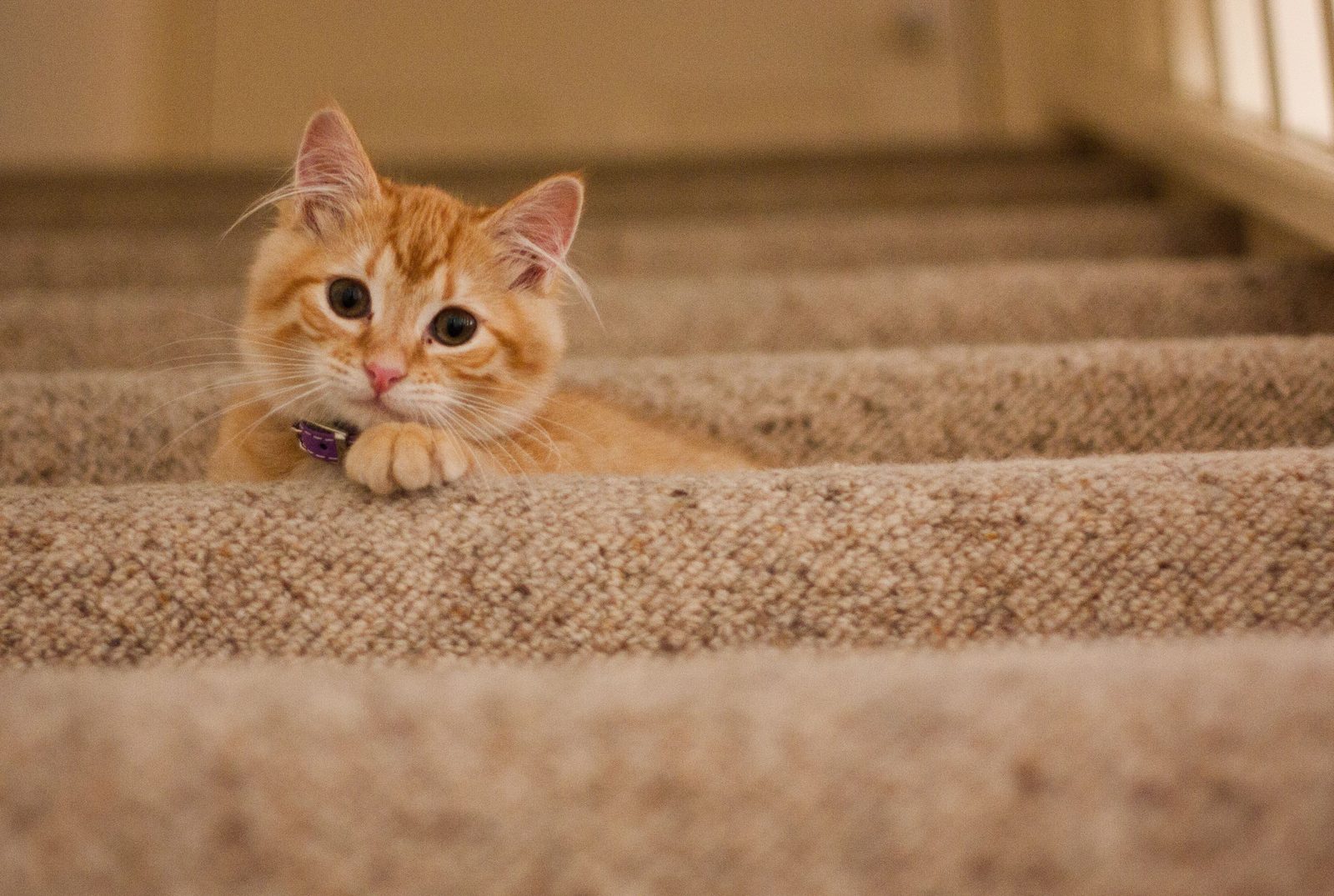
Photo by Breanne Sartori
Pet-Friendly Carpet: Triexta, Nylon, and Polyester
Pets don’t need to rule out carpet. They do, however, make color, construction, cleaning habits, and fiber type more important. For many pet-friendly homes, triexta carpet fibers and nylon are the first options worth comparing.
SmartStrand carpet is a commonly marketed triexta option, though products can vary. Triexta fibers have built-in stain resistance, so a spill doesn’t rely only on a topical treatment. That makes the fiber appealing for puppies, older pets, and busy homes where cleanup isn’t always immediate.
Triexta offers soft stain protection
Triexta feels softer than many nylons and often costs less. It handles water-based spills well and works beautifully in bedrooms, playrooms, and lower-traffic family spaces.
However, stain resistance doesn’t make every triexta carpet equally durable. A low-density plush style can still show wear in a heavily used hallway. Pair the fiber with a textured cut pile carpet when pets and children share the space.
Nylon handles repeated traffic
Nylon is a strong choice for dogs that run the same routes through the house. It generally bounces back better after paws, furniture, and busy stair traffic.
Some nylon products include stain treatments. With solution dyed nylon, color is added during carpet manufacturing rather than only as a surface treatment. Because solution dyed color runs through the yarn, these styles can offer strong fade and bleach resistance.
The Carpet and Rug Institute notes that fiber selection changes by use and exposure. A sunny stair landing calls for a different conversation than a dark guest room.
Pet polyester is still worth considering for a budget-conscious household, though it may flatten sooner in busy pathways. It resists many water-based stains and feels soft, but density and pile construction still affect wear. As Floor Daily’s fiber overview explains, polyester lacks acid dye sites, which helps it resist many common food and beverage stains.
Softer Carpet Choices for Bedrooms
Bedrooms have lighter foot traffic than stairs, so comfort can carry more weight in the decision. This room gives you more freedom to choose a softer fiber or a more luxurious pile.
Polyester and triexta are popular bedroom options because they feel plush and come in rich colors. A low or medium pile makes vacuuming easier, while a dense texture helps the carpet keep a tidy appearance around the bed.
Polyester balances softness and cost
Polyester carpet fiber is often less expensive than nylon and feels soft under bare feet. It offers some stain resistance against common household spills. That makes it useful for a primary bedroom, guest room, or child’s room with modest traffic.
We advise against very tall, loosely packed polyester in a bedroom that doubles as a pet lounge. Bedside traffic and pet resting spots can compress a deep pile. A denser texture with moderate pile height offers a better comfort-to-maintenance balance.
Wool adds a natural, tailored finish
Wool carpet fiber has a distinctive look that synthetic yarns don’t fully duplicate. Its natural crimp creates depth, and it works well with refined patterns and tailored loop constructions.
Still, wool costs more and comes with more specific maintenance requirements. Blot spills immediately, avoid harsh household chemicals, and choose a cleaner who understands wool fibers. We reserve it for homeowners who value natural materials and are prepared for that care routine.
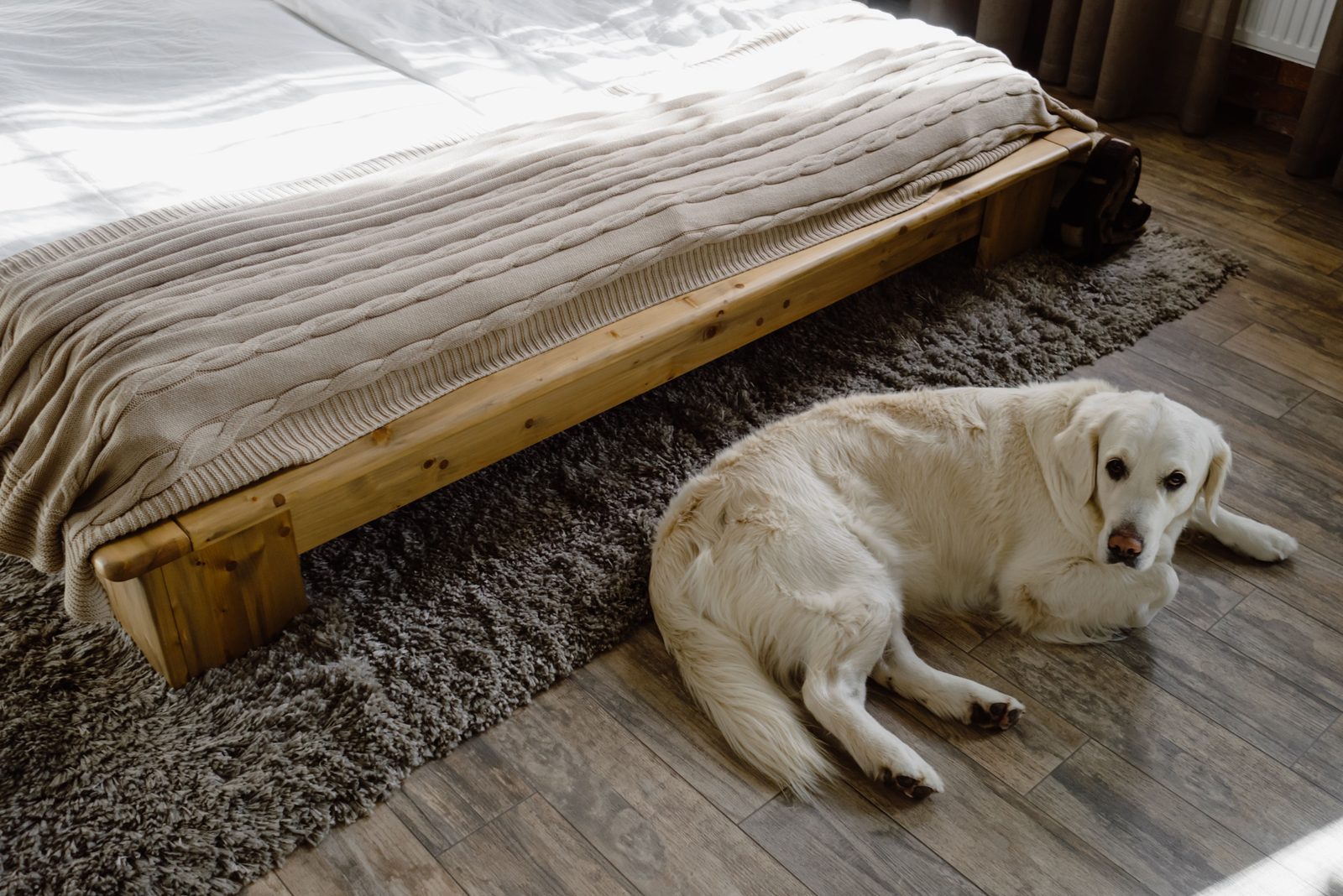
Photo by Polina ⠀
Olefin Carpet in Basements and Moisture-Prone Spaces
Olefin, or polypropylene, is an olefin carpet fiber with moisture resistance and good resistance to fading. Solution dyed olefin products can be fade resistant, making them practical for certain basements, sunrooms, and indoor-outdoor carpet applications.
Its weakness is appearance retention under repeated pressure. Heavy furniture legs and traffic paths can flatten olefin faster than nylon. Its moisture-related stain resistance doesn’t prevent oily soils from clinging, so limited soil resistance makes greasy spills worth addressing promptly.
Match olefin to the right room
A finished basement with occasional use may be a reasonable place for olefin carpet fiber, particularly when moisture risk is part of the discussion. Before carpet installation below grade, test the concrete slab and correct moisture issues first. Carpet can’t compensate for a damp slab, groundwater intrusion, or unresolved leaks.
For a basement family room that sees daily use, triexta or a dense nylon often provides a better long-term surface. Carpet padding also matters. A moisture-resistant cushion can help in below-grade rooms, but it won’t solve a damp slab or water intrusion.
Carpet Construction Basics: Density, Twist, and Pile
Carpet construction basics matter as much as fiber when evaluating durability and resilience. The best carpet can disappoint when the pile is too loose for the room. When reviewing samples, lift them, bend them, and study the backing. The sample should tell you more than its color name.
Density describes how closely the yarns sit together. Twist describes how tightly fibers are wound before tufting. Higher twist helps cut-pile carpet resist fraying and untwisting at the tips.
Use the room’s traffic pattern as your guide
Judge fiber type alongside construction, using the room’s traffic pattern as your guide. Stairs need dense carpet, a secure installation, and an appropriate pile height. Bedrooms can accept softer fibers and a fuller feel. Pet areas benefit from flecked colors, low-to-medium piles, and constructions that don’t trap hair deeply.
Patterned carpets can disguise wear and pet hair better than solid light colors. On the other hand, a dark solid carpet may show lint, pale fur, and vacuum tracks. In some products, solution dyed yarn supports color durability and cleaning flexibility through the carpet manufacturing process.
Regular care helps preserve stain resistance and appearance. Vacuum more often in homes with shedding pets, and blot accidents instead of rubbing them. Follow the manufacturer’s maintenance requirements and the CRI’s carpet cleaning recommendations for approved equipment and products.
Coordinating Carpet With a Larger Home Project
Carpet decisions often connect to a larger renovation. Homeowners who contact us as a hardwood floor company in Cumming or a hardwood floor sanding company in Cumming may want carpet installed only after dust-producing sanding work ends.
When you plan to install new flooring in Cumming, we can help match carpeted bedrooms or stairs with hardwood, luxury vinyl, or tile in adjoining rooms. Our stair flooring installation in Cumming work also helps create clean transitions between carpet runners, hardwood treads, and upper-level flooring.
A kitchen remodeling company in Cumming, a bathroom remodeling contractor near you, or a remodeling company in Cumming should plan flooring changes in the correct order. The same applies when a kitchen and bathroom remodeling company in Cumming, GA coordinates trim, paint, and flooring heights. For a basement finishing company near you, moisture testing and material selection should happen early.
Our hardwood floor company servicing Windermere can also coordinate flooring choices when a home combines refinished wood, new carpet, and updated stairs. Call Cumming Floors at (770) 906-4732 for a free estimate. If you show us a written quote for the same scope from another contractor, we will complete it for 5% less.
Frequently Asked Questions
What is the best carpet fiber for stairs?
Nylon is usually the best carpet fiber for stairs because it handles repeated traffic and recovers well after compression. Choose a dense, tightly twisted textured cut pile with firm backing for better appearance retention.
Which carpet fiber is best for homes with pets?
Triexta and nylon are the first options worth comparing in pet-friendly homes. Triexta offers built-in stain resistance and a soft feel, while nylon generally handles repeated traffic and busy pet routes better.
Is polyester carpet a good choice for bedrooms?
Yes, polyester can be a comfortable and budget-friendly option for bedrooms with modest traffic. Choose a denser, moderate-height pile instead of a tall, loosely packed style that can flatten near beds or pet resting areas.
Is olefin carpet suitable for a basement?
Olefin can work in an occasionally used, moisture-prone basement because it resists moisture and fading. Before installation, correct damp slabs, leaks, or groundwater problems, since carpet cannot compensate for unresolved moisture issues.
Does carpet fiber matter more than density and twist?
Fiber type affects stain response, softness, resilience, and moisture performance, but construction is equally important. Density, twist, pile height, and backing can determine whether a carpet keeps its appearance under the room’s specific traffic pattern.
Choose Carpet for the Life Happening on It
The right carpet fiber types depend on where the carpet goes and what happens there each day. Nylon fits hard-working stairs, triexta offers practical pet stain resistance, polyester suits soft, budget-friendly bedrooms, and wool brings natural luxury to carefully maintained spaces.
Judge every sample by its fiber type, density, twist, pile height, and color. A well-matched carpet won’t stop life from happening, but it will make daily wear far less visible.