Engineered vs Solid Hardwood, Room by Room
Engineered hardwood works better in basements, over slab, and in kitchens near water. Solid hardwood suits main-level living rooms, dining rooms, and bedrooms with stable humidity. The construction of each product, not the species, decides where it belongs. Pick the room first, then choose species and finish.
What Makes Engineered and Solid Different
Solid hardwood is one piece of wood, top to bottom. Most solid boards run three-quarters of an inch thick. It can be sanded and refinished many times over its life, often four to six times depending on wear. Engineered hardwood has a real wood veneer, typically 2mm to 6mm thick, bonded over layers of plywood. That plywood core resists humidity swings better than solid wood does. It can still be resanded, but fewer times, since the wear layer is thinner. Site-built subfloors in this area usually rest on joists spaced 16 inches on center, which works fine for nail-down installation of either type.
Both get installed by our own crews, never unknown subcontractors. Hardwood installation pricing depends on subfloor condition, plank width, and how much prep the space needs, so it gets quoted in person after a free in-home estimate. Our hardwood installation page walks through what drives that number, and the full cost guide covers every flooring option side by side.
Engineered vs Solid, Room by Room
The table below is a starting point, not a rule. Subfloor type, moisture, and how the room gets used still matter more than preference.
| Room | Better Choice | Why |
|---|---|---|
| Basement | Engineered, glued or floated | Handles slab moisture and temperature swings better than solid wood. |
| Kitchen | Engineered | More stable near dishwashers, sinks, and ice makers. |
| Bathroom | Neither, usually LVP or tile | Standing water is too much of a risk for wood, engineered or solid. |
| Living / Dining Room | Solid, on a main-level wood subfloor | Stable humidity, long refinish life, classic look. |
| Bedrooms | Solid or engineered | Either works well; pick by budget and subfloor type. |
| Entryway | Engineered or LVP | Grit and moisture from shoes wear finishes fastest here. |
| Stairs | Solid, or engineered with a thick veneer | Treads take heavy wear and need real material to sand. |
Why Basements Change the Answer
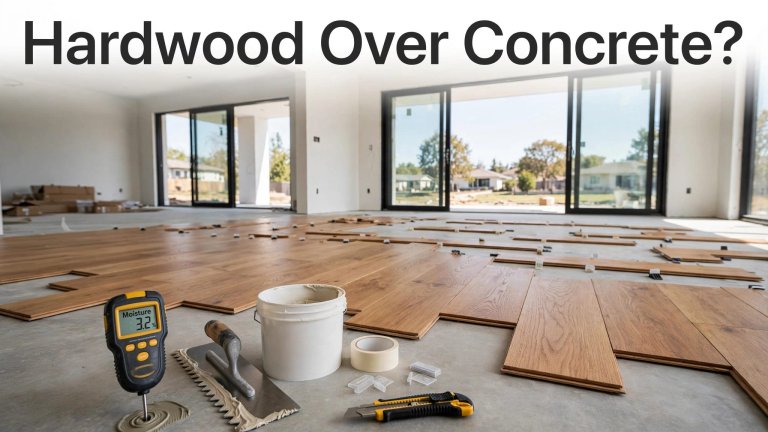
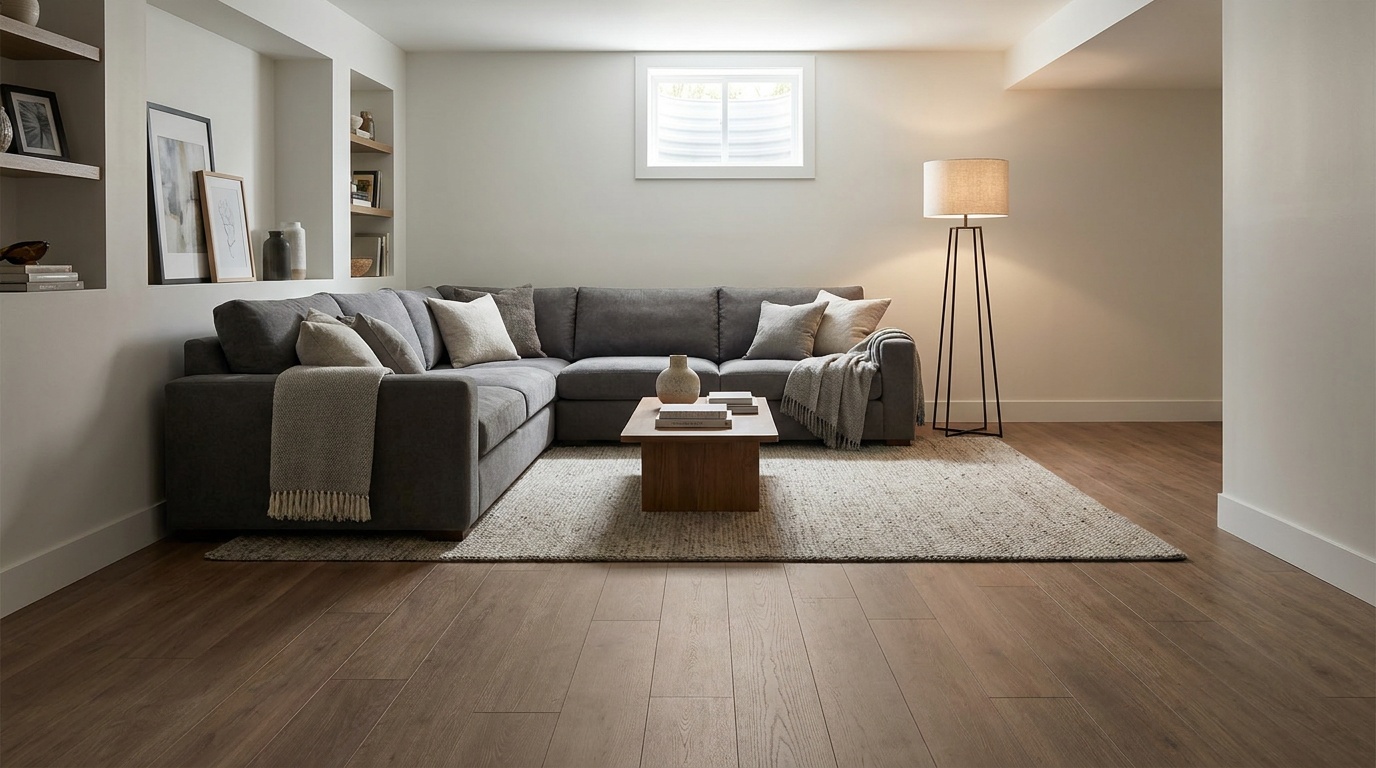
Lake Lanier area basements sit close to grade, and many share a slab with groundwater underneath. Solid hardwood reacts to that moisture by cupping or buckling. Engineered hardwood holds up better here, since its plywood core resists swings between 30 and 60 percent relative humidity. Most manufacturers still require the slab to test dry before installation, whether the floor is floated or glued down. We get the call every spring after heavy rain, when a finished basement floor shows staining nobody expected.
Kitchens and Water Exposure
Kitchens see spills, dishwasher lines, and ice maker connections. Engineered hardwood copes with normal moisture swings, but no wood floor is fully waterproof. A leak that sits under a fridge or cabinet toe-kick for days will damage either type. If standing water is a real risk, many homeowners choose luxury vinyl tile instead, since its wear layer sheds moisture without swelling. For a full kitchen remodel that touches flooring, cabinets, and counters together, the kitchen remodeling page covers scope and sequencing.
Living Rooms, Dining Rooms, and Bedrooms
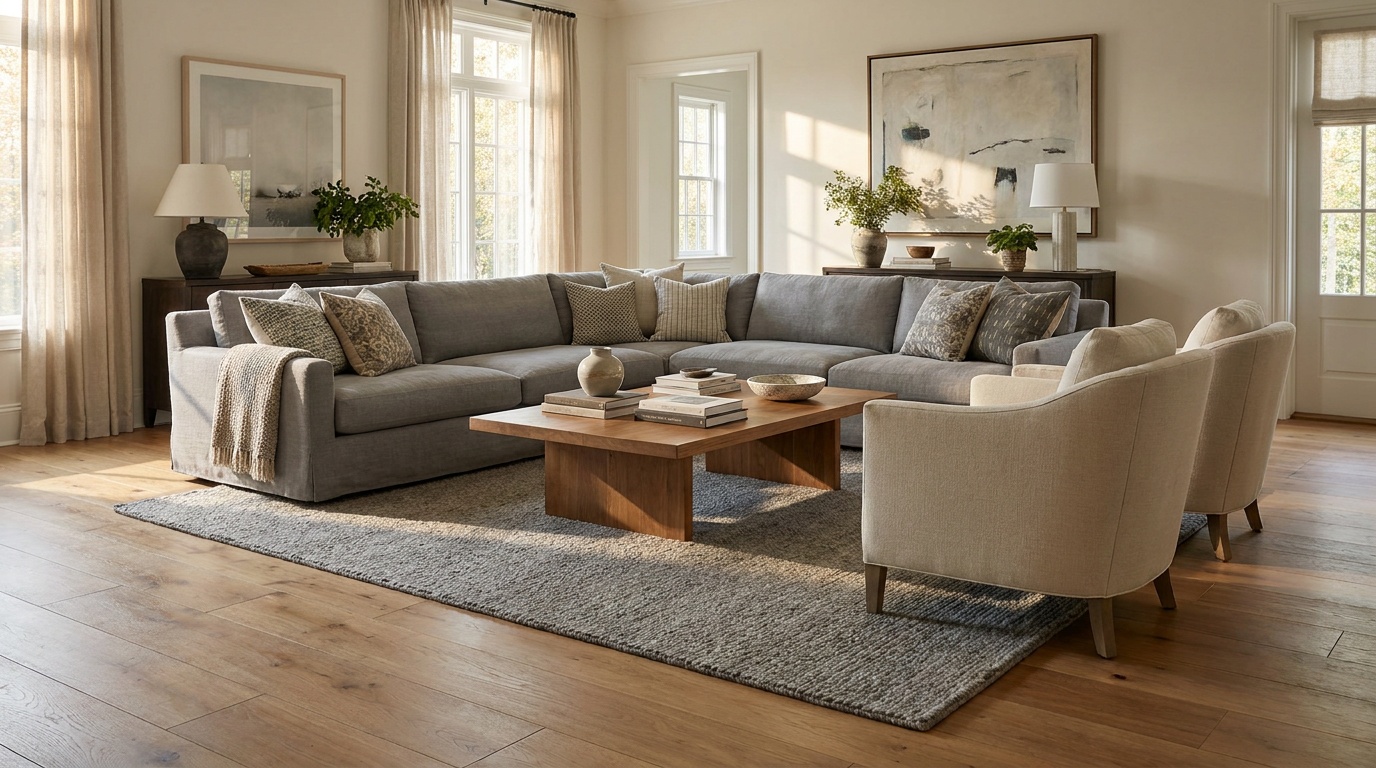
Main-level rooms over a wood subfloor are where solid hardwood earns its reputation. Board widths from 2 1/4 inches up to 5 or 6 inches are common across Forsyth County, especially the 80s and 90s ranches near the square. Solid wood in these rooms can be refinished many times, which matters at resale. Engineered hardwood performs well here too and often costs less to install, since it needs less acclimation time before the crew starts work. Either option holds up fine in a bedroom or dining room with stable indoor humidity.
Stairs Deserve Their Own Rule
Stair treads take more direct impact than almost any other surface in the house. Solid wood, or engineered hardwood with a thicker wear layer, holds up best here. A thin veneer can wear through at the nose of the tread within a few years of daily use. Pricing for stairs runs $150-$300 per step, with a typical 12-step staircase landing around $1,800-$3,600. That range assumes standard-grade material and a space that is ready to work in, with nothing to move and no subfloor repair needed. A free estimate gives the exact number for your staircase.
How to Decide, Room by Room
Start with location, not looks.
- Check the subfloor first. A concrete slab or basement points to engineered. A main-level wood subfloor keeps both options open.
- Then check humidity. Rooms near Lake Lanier, or below grade, favor engineered for its stability.
- Then check wear. Stairs and busy hallways need a thicker wear layer, or solid wood that can be resanded.
- Then check budget and resale. Solid wood tends to hold value longer, since it can be refinished more times over its life.
Work through those four checks in order. The room usually decides for you.
Planning for Maintenance, Not Just Installation
Whichever you choose, plan for upkeep over time, not just the first year. Hardwood floor sanding and refinishing runs $3.95-$6.00 per square foot; final price depends on the type of flooring and the scale of sanding needed. Solid wood can go through that process more times before it runs out of material to sand. Engineered floors can be refinished too, typically once or twice, depending on veneer thickness. Dustless sanding equipment keeps that work contained to the room being worked on. Water-based finishes mean the floor is walkable that same evening, with furniture back in 2-3 days.
Homes across Cumming, Sugar Hill, Johns Creek, and Suwanee bring different subfloors, different humidity, and different budgets to this decision. Our service area pages cover what we typically see city by city.
Not sure which fits your specific rooms. Bring us the floor plan and we will walk through it room by room, with an itemized estimate at the end. Call (770) 906-4732 or reach out through our contact page to schedule a free in-home estimate.