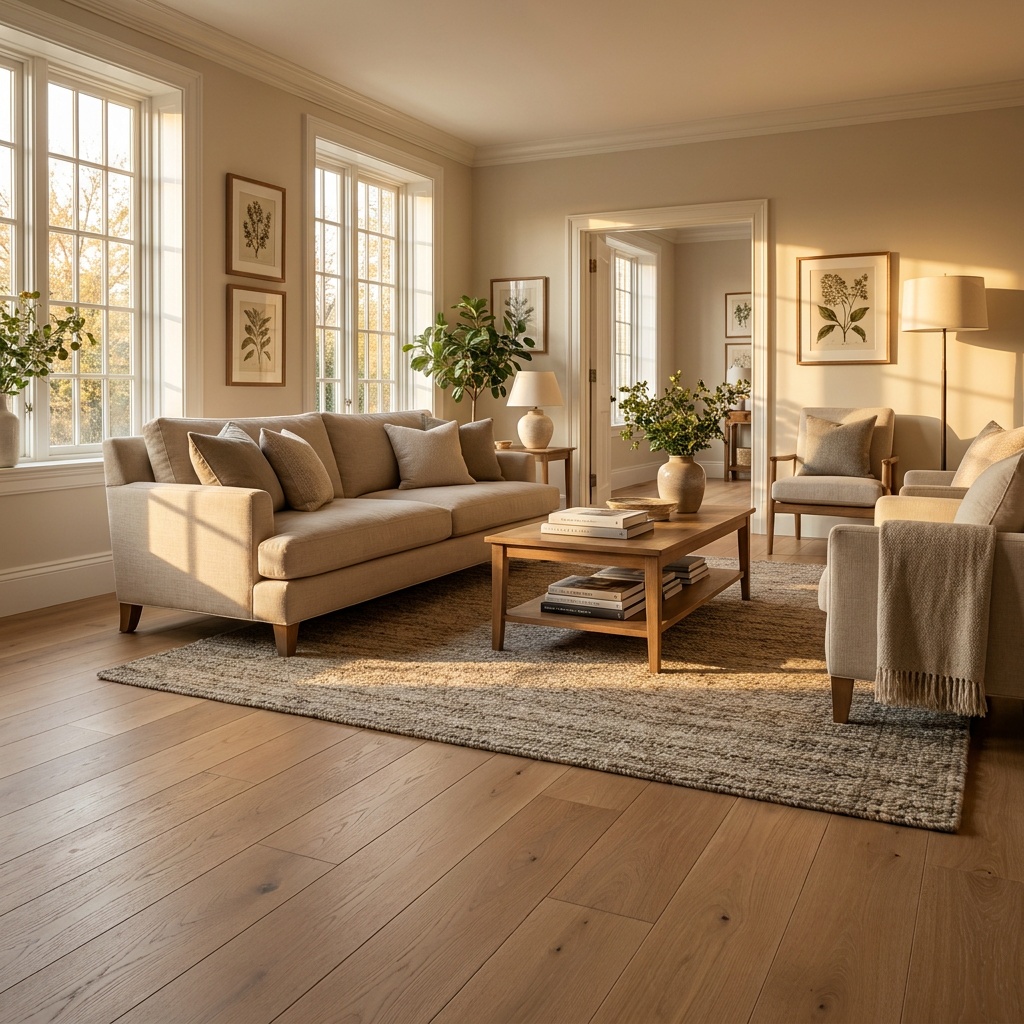
LVP vs engineered wood in basements, comfort underfoot, noise, dents, and real repair options
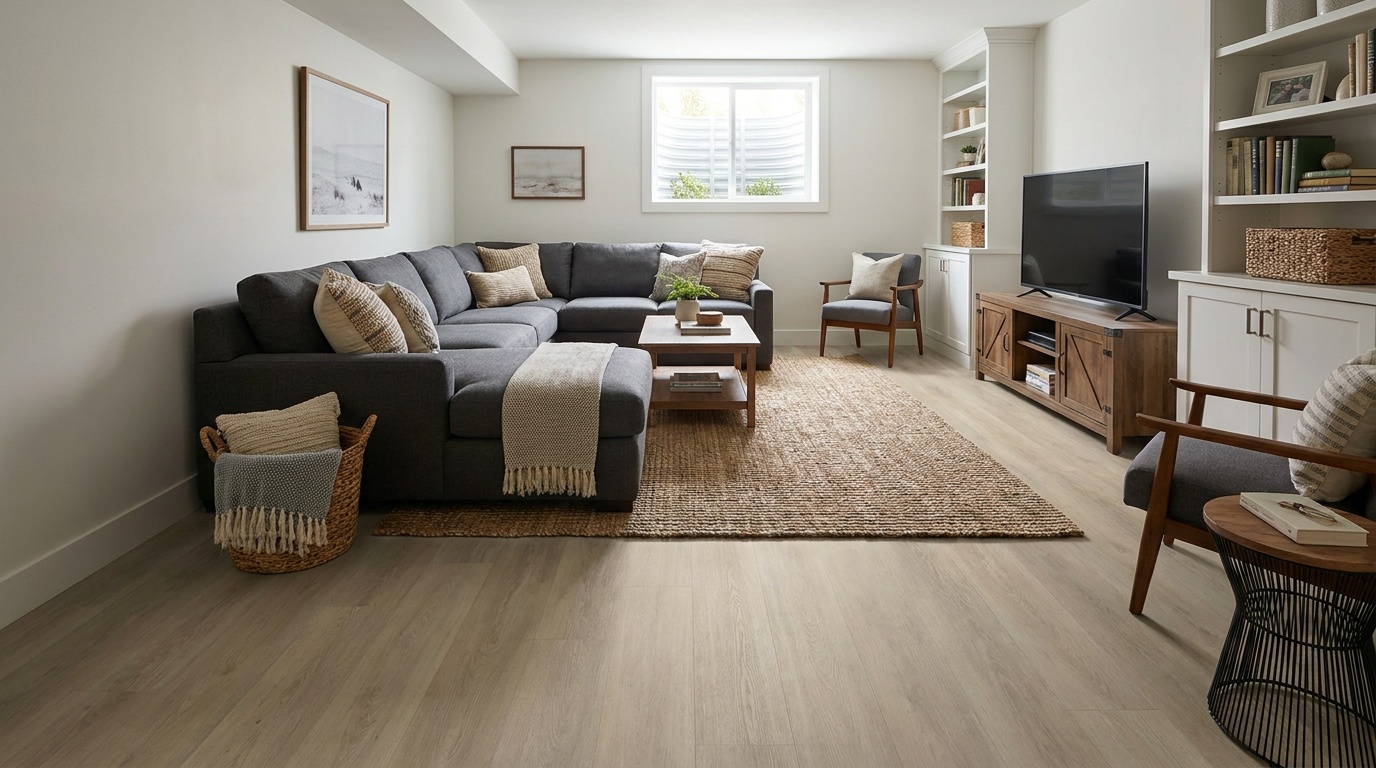
Basements are tricky. They look like extra living space, but the floor underneath is usually a concrete slab that stays cool, holds moisture, and amplifies sound like a drum.
When we compare LVP vs engineered wood for a basement, we’re not just picking a color and grain. We’re deciding how the room will feel barefoot, how loud footsteps will be during movie night, what happens when a kid drops a dumbbell, and whether damage can be fixed without tearing up the whole floor.
Let’s break it down in the practical way homeowners actually live with it.
Start with the basement slab: moisture, temperature, and movement
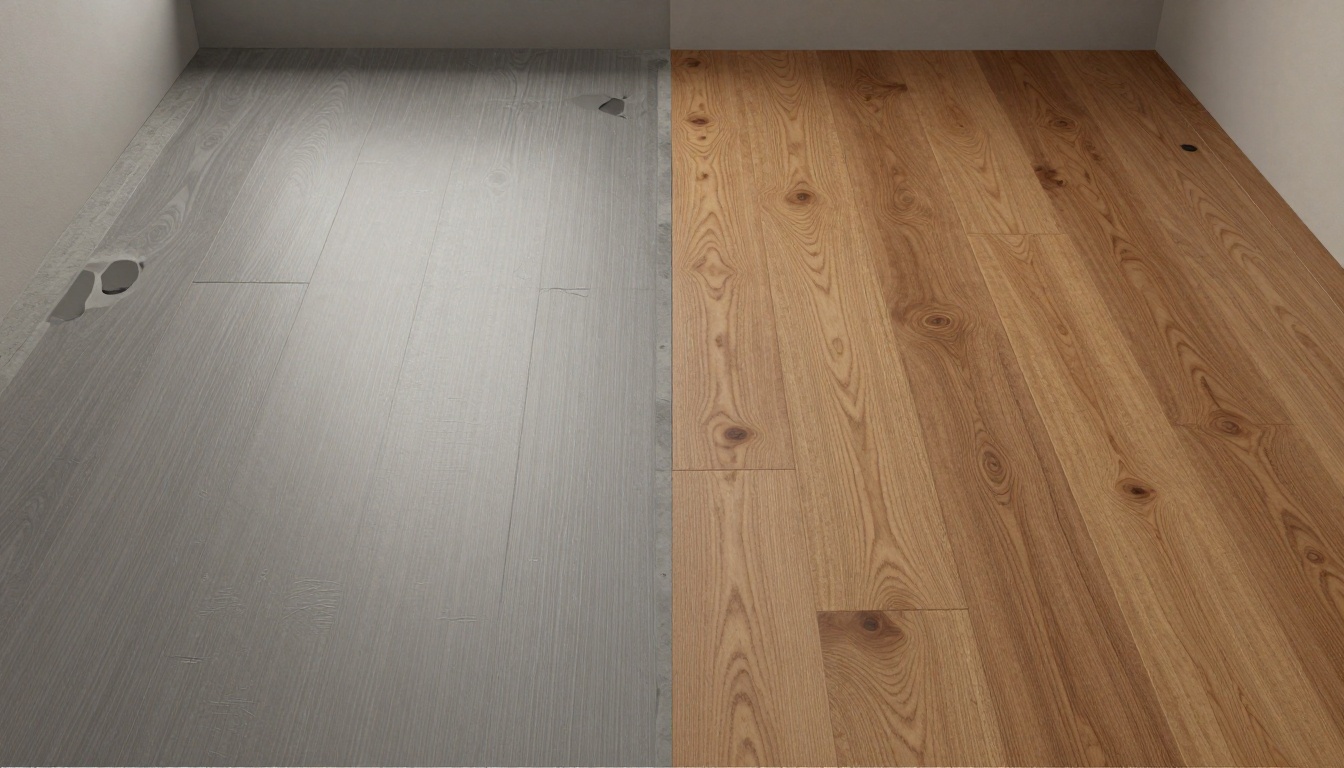
Basements don’t fail because someone picked the “wrong color.” They fail because the floor system didn’t match the slab.
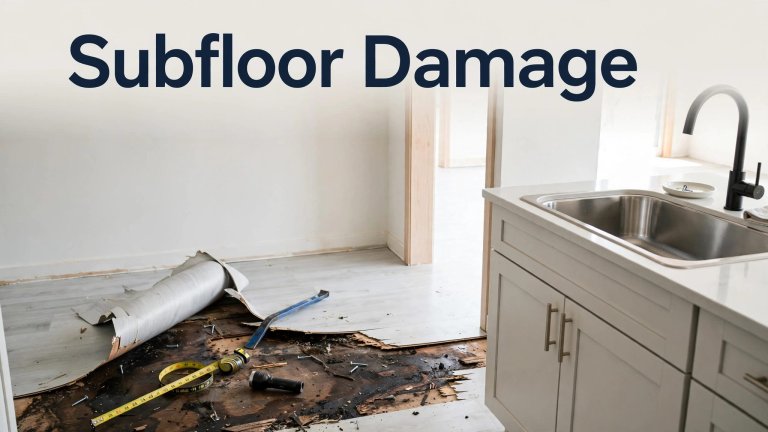
LVP (luxury vinyl plank) is usually the safer bet when moisture risk is unknown. Many products are marketed as waterproof, but the more important detail is this: water can still sit under a floating floor. That can mean odor, mold risk, or edge swelling in certain cores if the slab isn’t managed.
Engineered wood is real wood on top, so it still reacts to moisture changes. The plywood layers help stability, but they don’t cancel wood movement. If you want the deeper science on how wood changes with moisture content, the USDA Forest Products Laboratory paper on dimensional change in hardwood flooring explains why even small moisture swings can matter.
What we do in real projects is focus on the assembly, not the sales label:
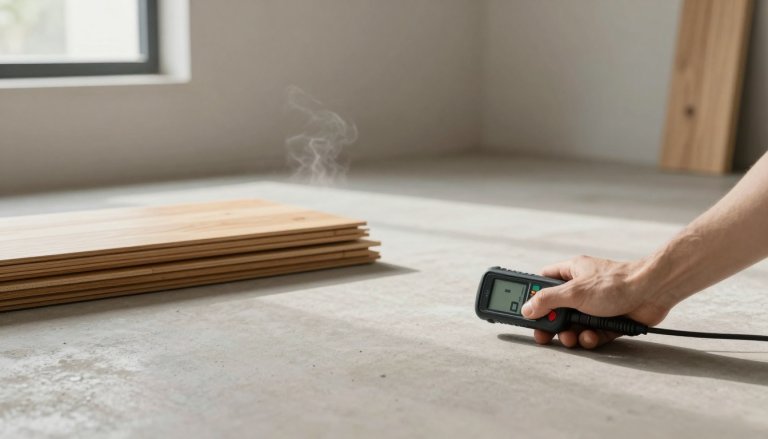
- Moisture testing (and sometimes a vapor barrier system) is non-negotiable.
- Flatness matters more than most people think. Floating floors telegraph humps and dips.
- Approved underlayments keep warranties intact and help comfort and sound.
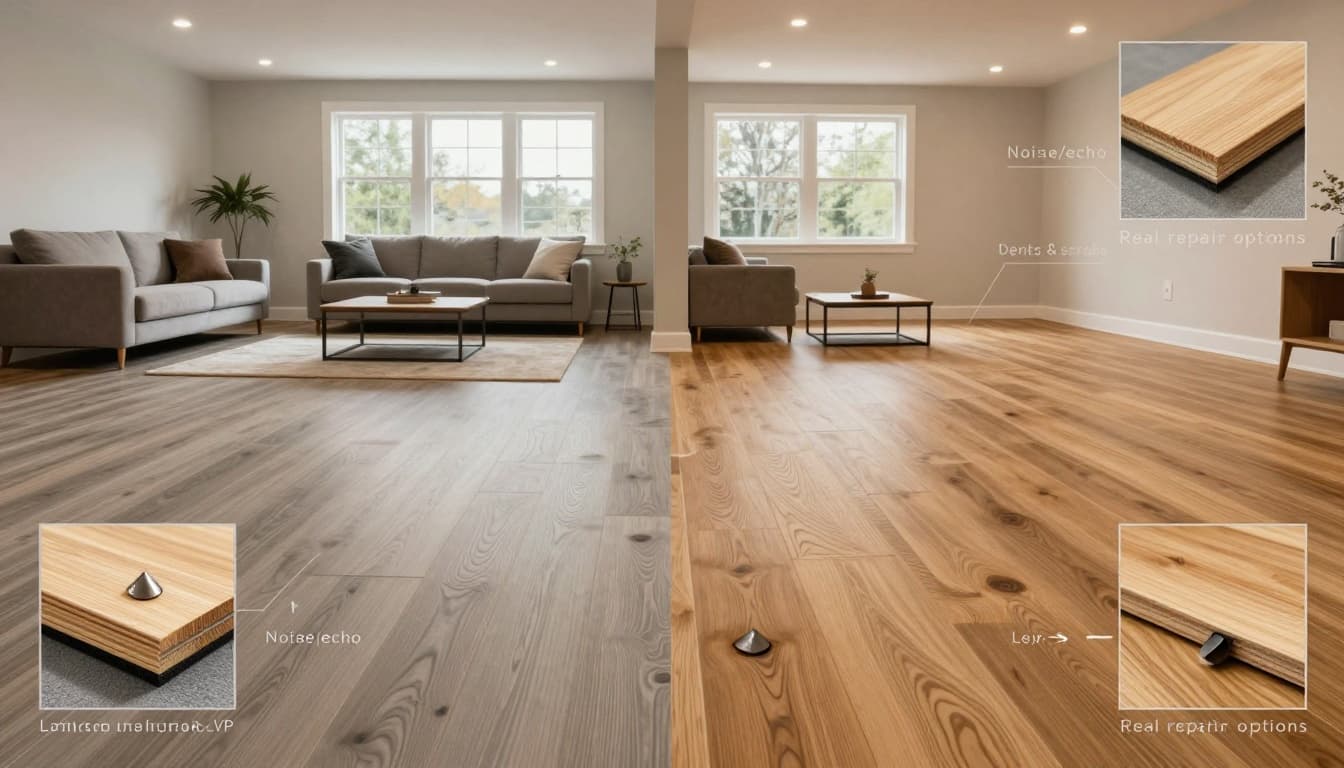
Here’s a quick basement-focused snapshot:
| Basement concern | LVP | Engineered wood |
|---|---|---|
| Moisture tolerance | Strong, but water can trap underneath | Moderate, needs tighter moisture control |
| Feel over slab | Softer with pad, still cool | Firmer, can be warmer with the right build-up |
| Repair approach | Often plank replacement | Sometimes refinishable, sometimes not |
| Best fit | Busy basements, kids, pets | Drier basements, resale look, “real wood” feel |
Comfort underfoot: why one feels softer and one feels “real”
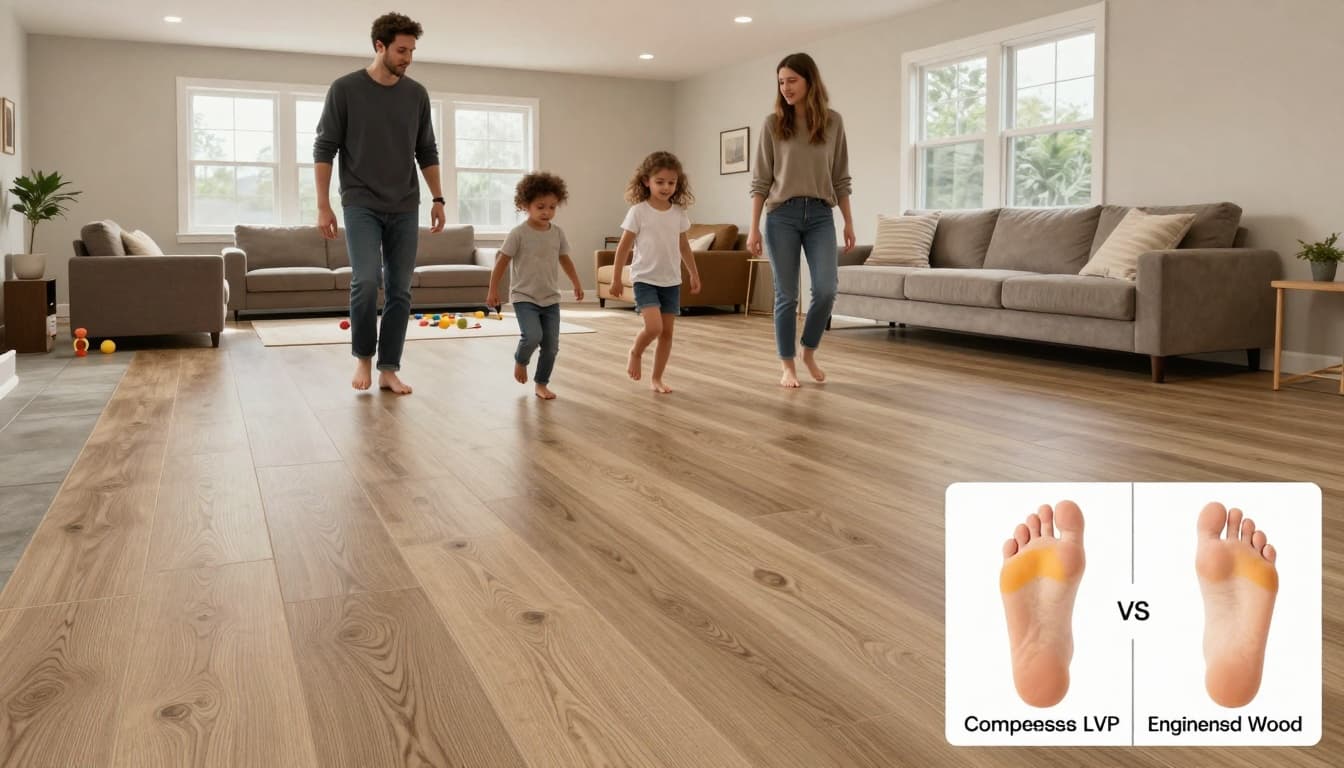
If you’ve ever walked into a basement barefoot in winter, you know the truth. The slab sets the mood.
LVP tends to feel softer because many planks include an attached pad, and vinyl has a tiny bit of give. Think of it like standing on a firm yoga mat versus standing directly on a wooden board. It’s not plush, but it’s forgiving, especially for long play sessions, treadmill use, or a laundry area where we’re standing in one spot.
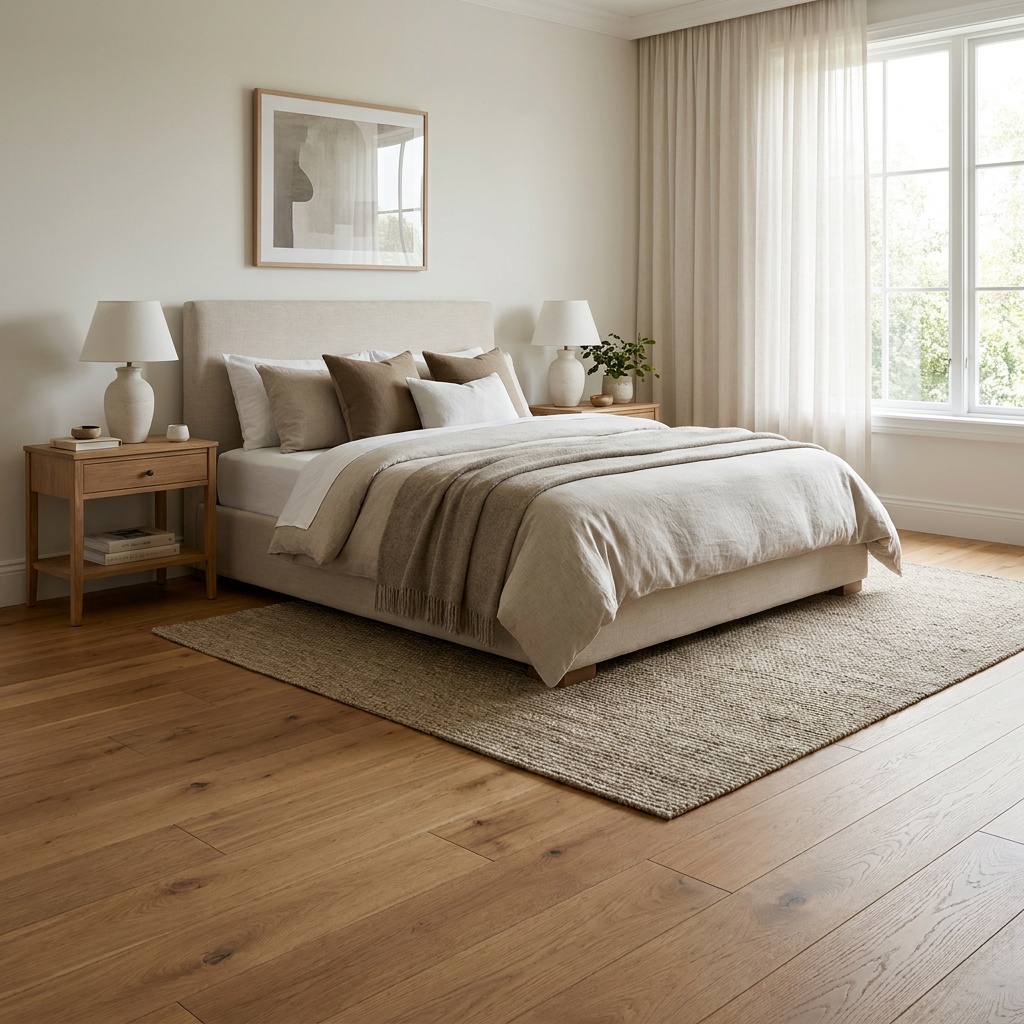
Engineered wood feels firmer, and many homeowners like that. It has the “real floor” feedback underfoot, and it can feel less plasticky in texture and sound. In a basement, comfort comes from what’s under it: an approved underlayment, or a raised subfloor system that separates wood from concrete. That build-up costs more, but it can change the whole feel of the room.
A helpful way to decide is to picture how you use the space:
If the basement is a hangout zone, LVP’s slight cushion and easy cleanup often win.
If it’s an extension of the main level, engineered wood can match the look upstairs and feel more consistent across the home.
Either way, we strongly prefer seeing big samples in your home lighting before you commit. Basement light is different, and the “same color” can look totally different under warm recessed cans versus daylight from egress windows.
Noise in a basement: echo, footsteps, and the “hollow floor” problem
Basements can get loud fast, even with rugs and furniture. There are two sounds we care about:
Impact noise: footsteps, kids running, dropped toys.
Airborne noise: voices, TV, music bouncing off hard surfaces.
Floating floors, both LVP and floating engineered wood, can create a hollow or clicky sound if the slab isn’t flat or the underlayment is wrong for the product. Thicker isn’t always quieter. The right underlayment depends on the locking system, thickness, and what the manufacturer approves.
- LVP can be quieter when it has a quality attached pad and the floor is well-supported.
- Engineered wood can sound better when installed with a well-chosen underlayment or a full glue-down method (when slab conditions allow).
We also plan around room acoustics. A basement with drywall, hard ceilings, and few soft surfaces will echo no matter what floor goes in. Area rugs, upholstered furniture, and even wall treatments can do more than people expect.
For a broader, homeowner-friendly comparison that includes comfort and sound observations, we like this overview from The Spruce on LVP vs engineered hardwood.
Dents, scratches, and real repair options (not the brochure version)
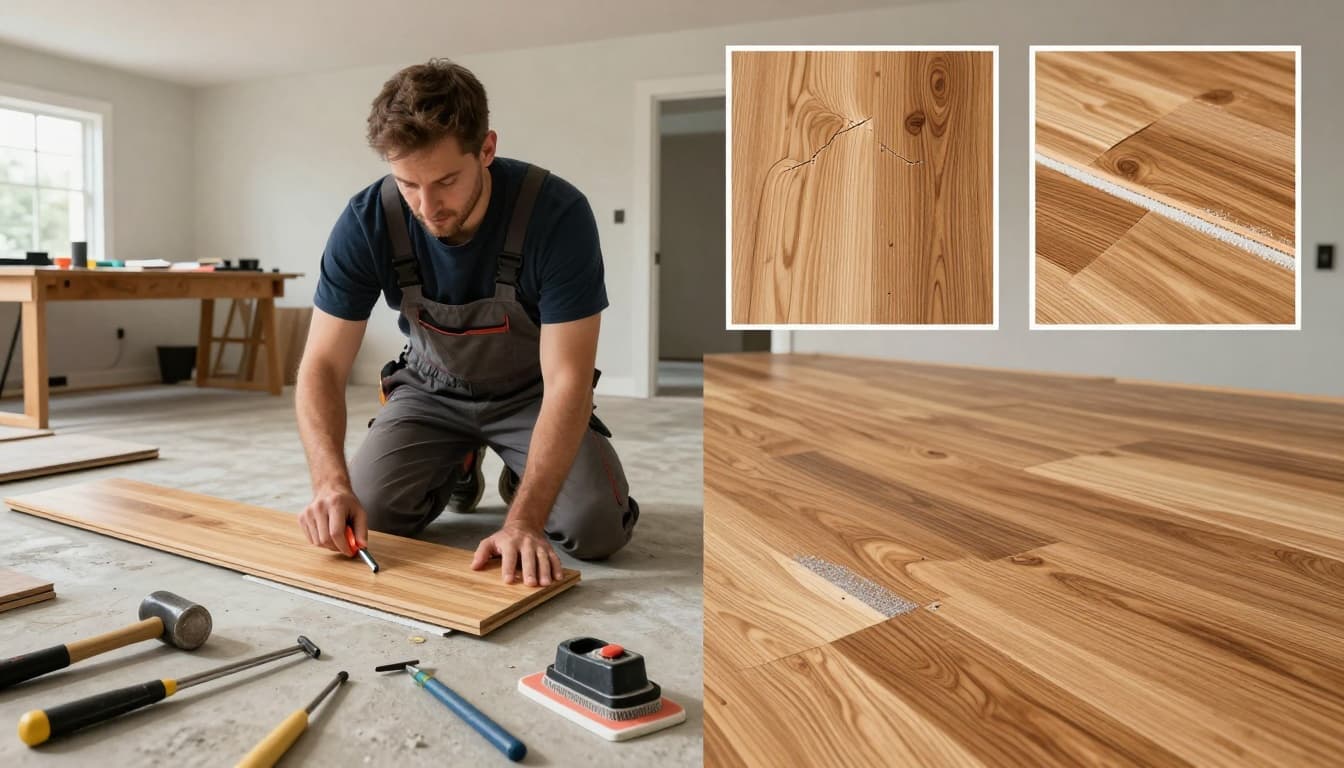
Here’s the truth about dents: both can get damaged, just in different ways.
Engineered wood dents when something heavy hits it, or when chair legs grind grit into the finish. The wood is real, so it compresses. You’ll often see dents more than scratches, especially in softer species.
LVP can resist small dents, but it can gouge or tear if something sharp digs in, and deep damage usually can’t be “refinished.” Also, very heavy items can still dent some LVP, especially over a soft pad or if the slab has a low spot.
Now, the part most homeowners care about: what can we actually fix?
Real repair options for LVP
- Best-case: click-lock floating LVP, we can replace a damaged plank. It’s like swapping one tile in a puzzle.
- Harder-case: glue-down LVP, repairs can mean cutting out the plank, scraping adhesive, and fitting a new one. It’s doable, but slower and messier.
- Color matching: keep extra material from the same run. If you don’t, the replacement might look “close” but not identical.
Real repair options for engineered wood
- Small scratches: sometimes a pro can blend them with touch-up and a recoating approach.
- Dents: filler can help, but it rarely disappears fully in the right light.
- Refinishing limits: engineered wood may allow light sanding, but it depends on veneer thickness. Some products can take a refresh, others can’t.
We also plan repairs before they happen by building smart habits into the install: saving attic stock, documenting the product details, and setting furniture pads from day one.
Conclusion: choose the floor you’ll enjoy living on
In basements, we usually pick LVP when we want more moisture forgiveness and simpler plank-level repairs. We lean toward engineered wood when the basement is consistently dry and we want a true wood look that flows with the rest of the home.
If you’re comparing options for a hardwood floor Cumming project, looking for a trusted hardwood floor sanding company Cumming, ready to install new flooring Cumming, searching for a Windermere hardwood floor company, or planning remodeling kitchen and bathroom Cumming Ga, we can help you sort through the details and quote it clearly. Call (770) 906-4732 for a free estimate. If you show us an existing quote from another contractor, we’ll do it 5% less.