Water-based vs oil-based polyurethane for hardwood floors, smell, dry time, durability, and when each makes sense
Picking a hardwood finish can feel like choosing paint with your eyes closed. Two cans can look similar on a shelf, but the moment the coating hits the floor, everything changes, color, odor, timeline, and how long you’ll be tiptoeing around your own house.
For most homeowners, the real decision comes down to water based polyurethane versus oil-based polyurethane. We use both in real homes around Cumming, and the best choice depends on how you live, not just what you’ve heard online.
Below, we’ll break down what actually matters: smell, dry time, durability, and when each finish makes sense for a hardwood floor Cumming families need to live on every day.
What “water-based” and “oil-based” really change (color, smell, and feel)
Smell and indoor comfort
If you’ve ever walked into a house mid-refinish and felt your eyes sting, you already understand why people ask about odor first. In general, water-based polyurethane has a milder smell during application and the first part of drying. Oil-based finishes usually smell stronger and linger longer, which can matter a lot if you’ve got kids, pets, or anyone sensitive to fumes.
We also see a practical benefit in occupied homes: less odor often means fewer “Where are we sleeping tonight?” emergencies. For a homeowner-friendly comparison, we like this overview from The Spruce’s water-based vs oil-based polyurethane guide.
Color: clear and modern vs warm and classic
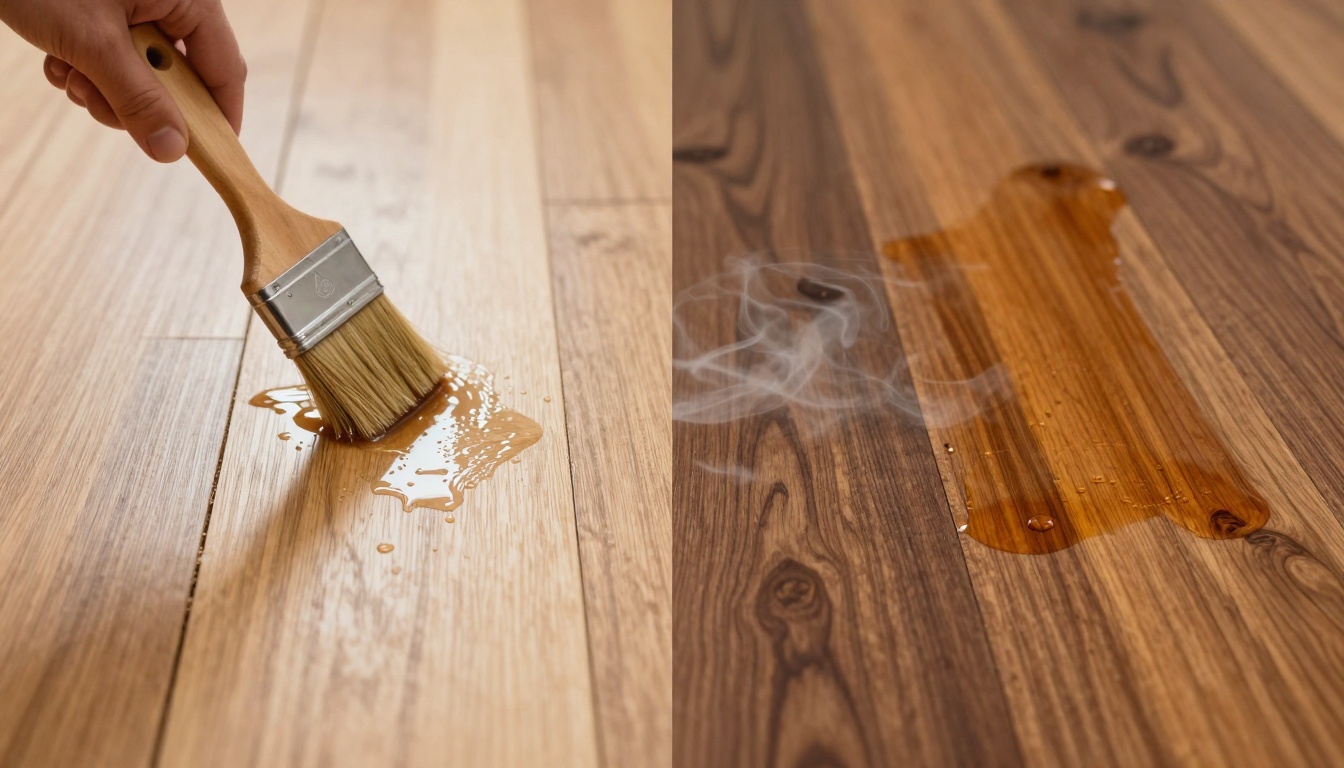
Color shift is the second big difference. Water based polyurethane tends to dry clearer, keeping many woods closer to their natural tone. Oil-based polyurethane typically adds a warmer, amber cast over time. That warmth can be beautiful on red oak or rustic floors, but it can also turn bright maple or white oak more yellow than some homeowners want.
A simple way to picture it: water-based is like a clean window, oil-based is like a lightly tinted lens.
Touch and sheen
Both can be done in matte, satin, semi-gloss, or gloss. The “feel” underfoot depends on prep, the number of coats, and the final sheen choice. When we consult, we bring real samples so you can see the look under your lighting, because showroom lights and living-room daylight don’t behave the same.
Dry time and project schedule: when you can walk, move furniture, and live normally
If smell is the first question, dry time is the second. Nobody wants a great finish that turns the house into an obstacle course for a week.
Typical dry time differences (what we plan around)
Water-based products usually dry faster between coats, often letting us recoat the same day under good conditions. Oil-based products usually need more time between coats, often pushing the schedule into longer gaps. Temperature, humidity, airflow, and the product system all matter, so we set expectations based on your home, not a generic chart.
Here’s the high-level comparison we use when setting a timeline:
| Factor | Water-based polyurethane | Oil-based polyurethane |
|---|---|---|
| Odor during work | Lower | Stronger |
| Recoat timing | Often same day | Often next day |
| Return to light foot traffic | Sooner in many cases | Later in many cases |
| Color change | Clearer look | Warmer amber tone |
| Best fit for | Fast turnarounds, occupied homes | Classic warmth, longer open time |
Sand and refinish vs recoat (the schedule changer)
A big timeline mistake we see is treating every job like a full sand. Sometimes a floor only needs a professional recoat, not a full reset. When a full sand is needed, our hardwood floor sanding company Cumming homeowners call expects real prep: controlled dust, careful edges, and honest timing.
If you’re deciding between a recoat and full sanding, our Professional floor sanding and refinishing guide explains what to look for, especially after heavy holiday and winter traffic.
Moving furniture and planning life around cure time
Dry is not the same as cured. Even when a finish feels dry, it’s still hardening. We recommend planning furniture moves, rugs, and pet traffic based on the product system and the room’s ventilation. We also include cleanup and careful placement of furniture as part of a complete plan, because the last thing anyone wants is a gouge from a rushed move.
Durability and when each polyurethane makes sense in real homes
Durability isn’t a simple “one wins” category. Both finishes can hold up well when the floor is prepped right and coated to spec. The better question is: which finish matches your wear pattern and your tolerance for downtime?
When water based polyurethane is the better call
We tend to recommend water based polyurethane when:
- You want a clear, natural look, especially on lighter woods.
- You need a faster return to normal life.
- Odor matters, like when you’re staying in the home during the work.
- You’re pairing floors with a lighter, modern remodel style.
This comes up a lot when homeowners are also remodeling kitchen and bathroom Cumming Ga, because the project already has enough disruption. If part of the plan includes water-resistant surfaces in wet zones, you might also compare wood-look options like Luxury vinyl plank flooring installation Cumming for kitchens, mudrooms, and basements.
When oil-based polyurethane still makes sense
Oil-based is often a strong pick when:
- You want that classic amber warmth and richer depth.
- You have a home where longer dry time is not a problem (like a vacant house).
- You prefer a finish that can be more forgiving during application because it stays open longer.
If you’re curious how pros describe the tradeoffs, Family Handyman’s polyurethane comparison is a helpful reference.
A quick note on basements and moisture
Hardwood in a basement can be great, but moisture control is the boss of that room. If you’re planning to install new flooring Cumming homes often add downstairs, we recommend reading our Basement hardwood underlayment guide before choosing any wood system.
Choosing locally in Cumming and Windermere (and getting the process right)
The “best finish” also depends on the installer’s process. We’ve learned that homeowners feel more confident when they can see samples in their home, under their lighting, and when measurements are done before pricing. That reduces surprises and makes the choice easier.
If you’re in Windermere and searching for a Windermere hardwood floor company, we can help you choose a finish that fits your timeline, then match it to the rest of the home, including stairs and trim. And if your project includes wet spaces, our Professional bathroom remodel in Cumming GA page outlines durable flooring and tile options that pair well with refinished hardwood nearby.
Conclusion: pick the finish that matches your life, not just the label
Water based polyurethane is often the easiest fit for busy households because it stays clearer, smells milder, and usually gets you back on the floor sooner. Oil-based polyurethane can be the right choice when you want a warmer tone and don’t mind extra dry time.
If you want help choosing based on your exact rooms and traffic, call (770) 906-4732 for free estimates. If you show us any existing quote from another contractor, we’ll do it 5% less, and we’ll put the plan in writing so your hardwood floor finish holds up for the long run.