Basement Slab Moisture Problems You Can See, Efflorescence, Dark Spots, and What Each One Means Before You Install Flooring
A basement slab can look dry and still be “breathing” water vapor all day. That’s why basement slab moisture is one of the biggest reasons downstairs floors fail, even when everything looked fine during demo.
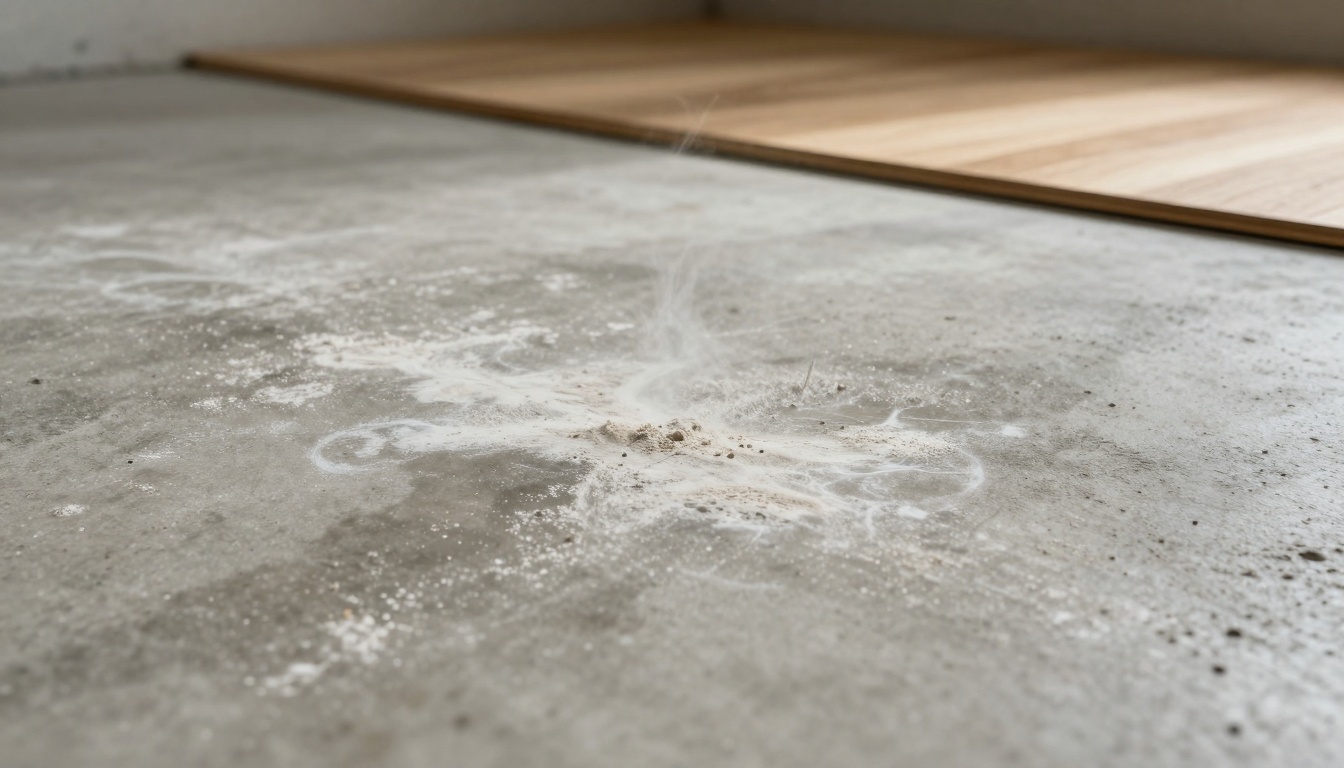
Before we cover a concrete slab with hardwood, LVP, tile, or carpet, we like to read the clues on the surface. Efflorescence (white powder), dark patches, and blotchy edges aren’t just cosmetic. They’re the slab telling us what’s happening underneath, and what we need to fix before we spend money on new finishes.
Below, we break down the most common moisture signs you can see, what each one usually means, and what we should do next so the flooring lasts.
Why visible slab moisture signs matter before flooring goes down
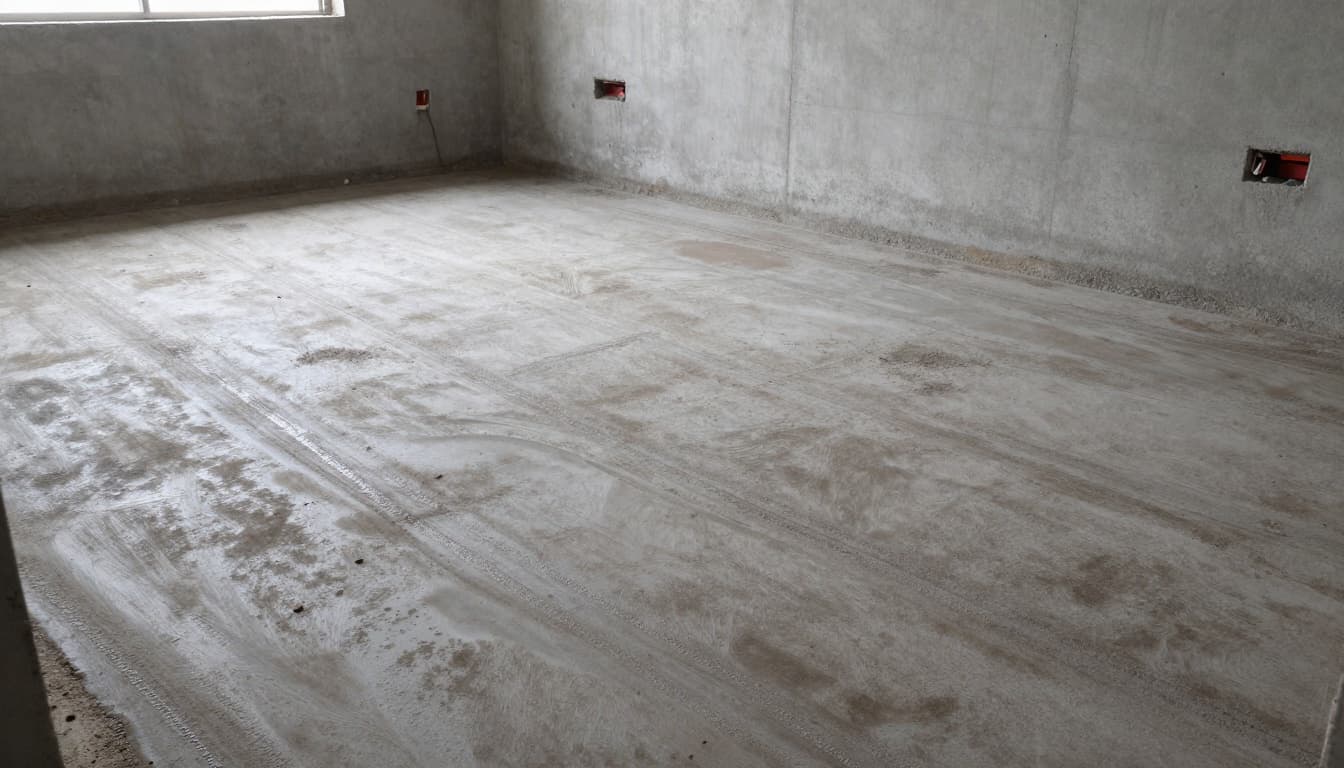
Concrete, one of the most common porous building materials, isn’t waterproof. Think of it like a dense sponge that can hold water and also pass water vapor upward. When we trap that vapor under flooring without an adequate vapor barrier, problems show up fast: adhesive can break down, click floors can separate, wood can cup, mold growth can occur, and moldy smells can get locked in.
Visible signs help us guess the “type” of moisture issue:
- Moisture intrusion through the slab or walls (often leaves minerals behind).
- Condensation from humid air meeting cool concrete (often looks like damp shading).
- Old contamination like paint, glue, or past leaks (can look like moisture but isn’t active).
If you want a plain-language overview of how moisture behaves in homes, the U.S. Department of Energy’s moisture control guide is a solid reference. We use the same basic thinking in basements around Cumming and Windermere, because below-grade spaces follow the same physics, even in newer homes.
The goal isn’t to panic. The goal is to avoid installing over a slab that’s actively pushing moisture.
Efflorescence (white powder or crystals): what it means on a basement slab
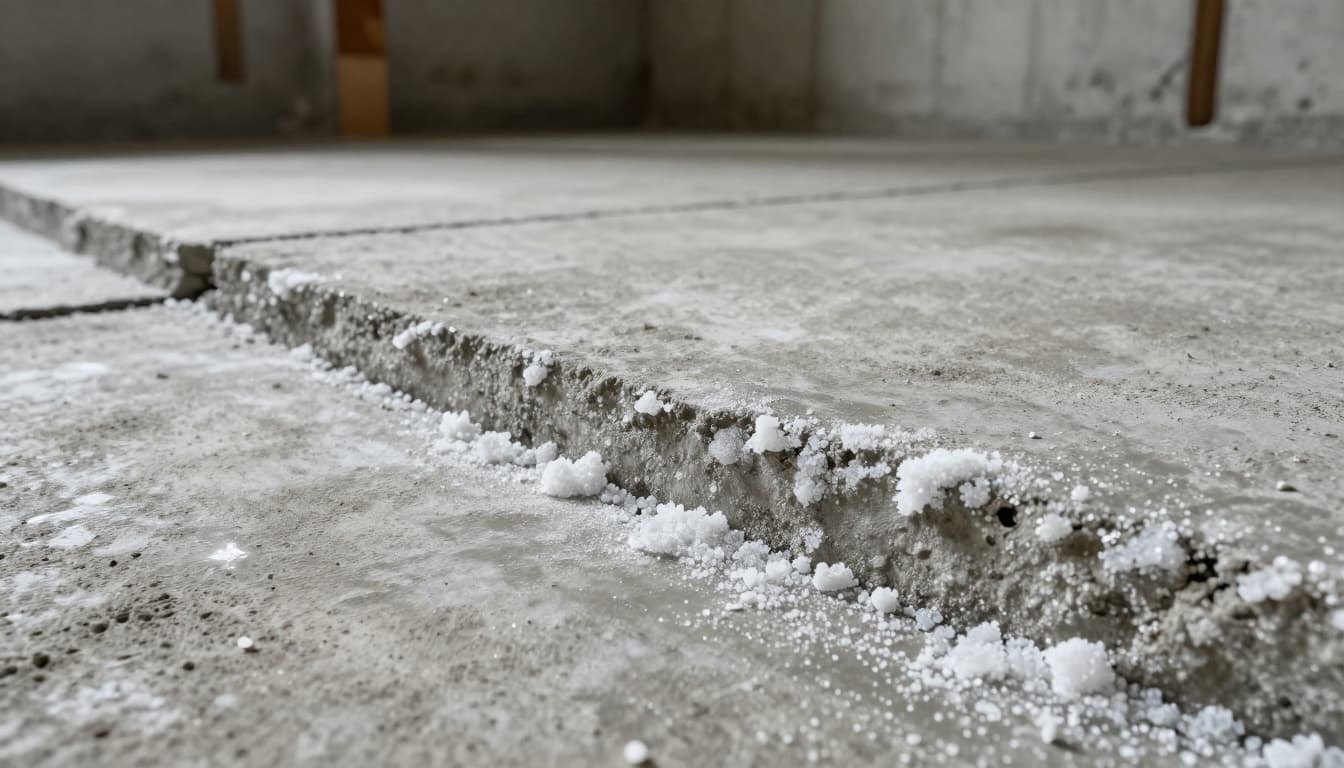
Efflorescence is the chalky white powdery residue that looks like powder, crystals, or thin white “veins” along cracks and edges. It’s made of salts and minerals carried to the surface by water moving through concrete.
What we take from efflorescence is simple: moisture has been traveling through that concrete, even if there’s no standing water.
A few practical notes we use on real jobs:
Light, one-time efflorescence: Sometimes it appears after humid seasons or a recent change in drainage. It may clean off and not return. For heavy deposits, a diluted muriatic acid solution can work well if applied carefully with gloves, goggles, and good ventilation.
Repeated or heavy efflorescence: That’s a stronger sign of ongoing moisture movement, often near foundation walls, cold joints, or slab cracks.
Efflorescence can also get confused with something else. If the white material looks fuzzy, spreads on organic surfaces, or comes with a musty odor, we treat it as a possible indoor air quality issue and recommend proper evaluation. For a technical definition and why it shows up on masonry, including moisture rising through capillary action as groundwater migrates upward (sometimes influenced by groundwater levels affecting the water-to-cement ratio during the original pour), NIH’s efflorescence bulletin explains the basics well.
Before we install anything, we focus on the cause, not just cleaning the powder. That can mean exterior drainage fixes, crack and joint review, and then choosing the right underlayment or moisture-control layer. If wood is part of the plan, we usually start with a basement hardwood underlayment guide so we’re not guessing about what belongs between the slab and the floor.
Dark spots and damp-looking patches: how we read the “map” on concrete
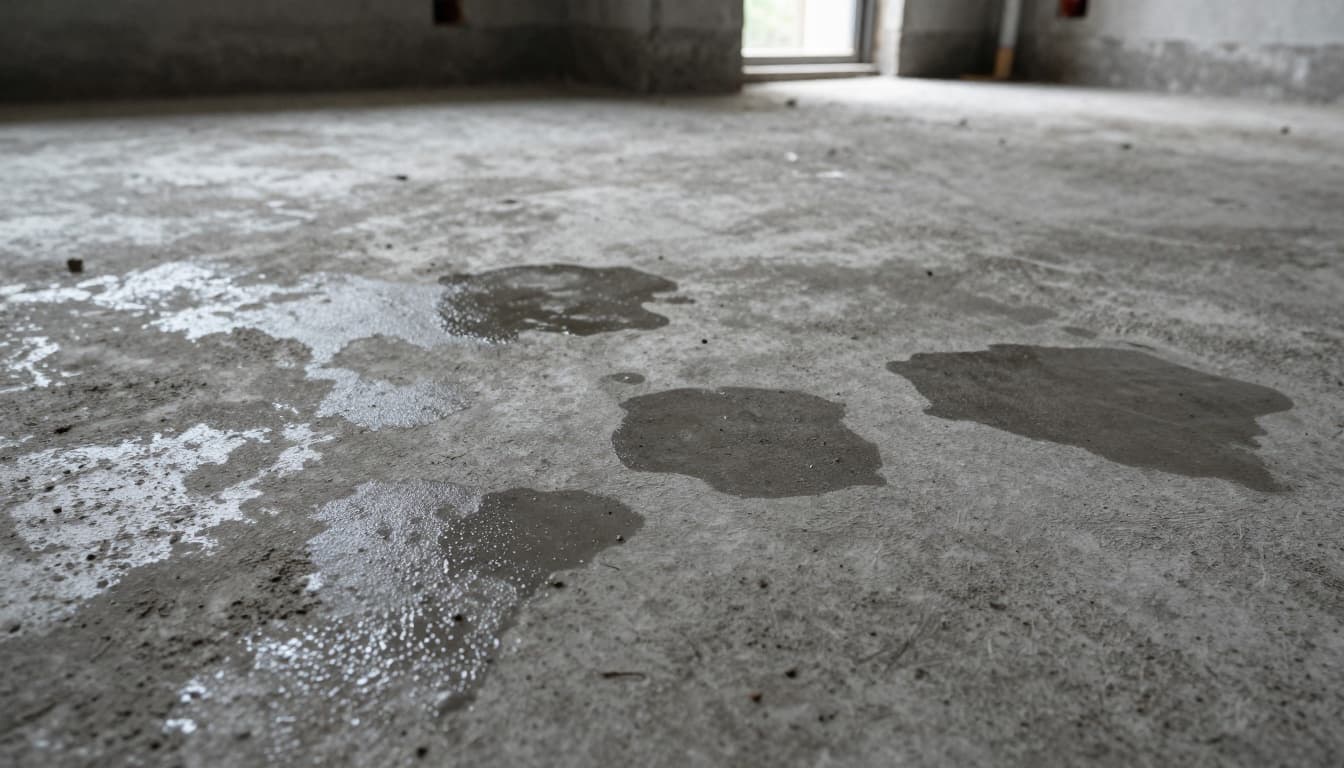
Dark spots on the concrete slab are tricky because they can be active moisture, or they can be old water stains. We look at location, shape, and whether the spot changes over time.
Here’s a quick guide we use when homeowners show us photos:
What we see on the slabWhat it often suggestsWhat we do before flooringDark patch that grows in humid weatherCondensation and slow evaporation on cool concreteImprove dehumidification and ventilation, confirm the slab is dry enough for the productDark area that stays the same year-roundOld spill, mastic stain, or prior leakIdentify contamination, plan proper prep and primer if neededDark band along the wall edgeMoisture entering at the perimeter from hydrostatic pressureCheck grading, downspouts, and wall conditions, then test moistureDark line following a crackMoisture traveling through foundation cracksEvaluate crack movement, consider crack isolation or mitigation system
We also pay attention to where the spot sits. A random dark area in the middle can point to vapor emission or osmotic pressure, but it can also be a plumbing issue above or below. A cluster near a floor drain, sump, or stair landing often has a different story.
If we’re planning to install new flooring Cumming homeowners will walk on every day, we don’t choose materials first. We confirm what the slab is doing, then pick the right floor system. In many basements, a well-installed LVP can be a strong option once the slab is prepped correctly, and we often reference our luxury vinyl tile options when moisture resistance and easy cleanup matter.
What we should do before installing basement flooring in Cumming (so it lasts)
Visible symptoms are the starting point. The next step is a short, practical plan that keeps us from buying the wrong floor.
1) Check for bulk water first
If water is entering after storms, we stop and address that. Flooring can’t “fix” water coming in, it can only hide it.
2) Test moisture, don’t guess
We prefer professional concrete moisture testing, such as the relative humidity test per ASTM F2170, that matches the flooring and adhesive requirements. This matters whether we’re a hardwood floor company Cumming residents call for engineered wood, or we’re installing tile, carpet, or LVP.
3) Match the assembly to the reality
Basements often need encapsulation, a moisture vapor barrier to prevent adhesive failure, the right underlayment, and careful seam details. If you want wood downstairs, we’ll talk about engineered options and the prep needed. If you want to refinish upstairs later, we’ll also coordinate timing because a hardwood floor sanding company Cumming trusts will tell you the same thing: moisture problems don’t stay in one room, leading to structural damage.
4) Coordinate flooring with remodel plans
If the basement is part of a bigger update, we plan it like a system, including interior drainage systems as a potential solution for bulk water. Many homeowners also need a remodeling company Cumming families can rely on, or even a kitchen and bathroom remodeling company Cumming Ga for wet-area upgrades where moisture control is nonstop. When bathrooms are part of the scope, we often share our Cumming bathroom remodeling services so floors, tile, ventilation, and waterproofing details don’t fight each other.
If you’re comparing bids, call (770) 906-4732 for a free estimate. If you show us any existing quote from another contractor, we’ll do it 5% less after we review the scope line by line. We work as a Windermere hardwood floor company and throughout the Cumming area, and we’d rather win on clear prep and long-term results than on shortcuts.
Treat moisture clues like a warning light, not a stain
White efflorescence, dark spots, and blotchy slab shading are the slab’s way of telling us what it’s been through. Efflorescence signals rising moisture, while freeze-thaw cycles can worsen slab integrity over time and lead to structural damage. When we listen and test, we can choose the right prep and the right floor system, such as a floating floor with proper subfloor protection for problematic slabs, and basement slab moisture problems stop being a surprise later. If you want us to look at your slab before you commit to materials, call (770) 906-4732 for a free estimate, and bring any competitor quote so we can beat it by 5%.