Natural Stone Floor Sealing in Georgia: When to Reseal
Natural stone can make a foyer feel permanent, yet one unnoticed spill can leave a mark when its pores are open. In Georgia, natural stone floor sealing needs a schedule based on the stone underfoot, not a date written on a contractor’s calendar.
Most interior floors should pass a water test once each year. High-traffic, absorbent stone may need fresh sealer every 6 to 12 months, while dense stone in a dry, quiet room can often go two or three years.
Stone in kitchens and entryways takes a different beating from stone in a formal dining room. We recommend setting a starting interval, then letting the floor’s condition decide the next service.

Natural Stone Floor Sealing Schedules for Georgia Homes
Use an annual water test as the default. Then set the reseal interval by porosity, room use, water exposure, and the sealer already on the floor. Georgia’s summer humidity matters less in a climate-controlled room than wet shoes, pet accidents, and frequent mopping.
Start with the stone type
Marble and limestone have more open pore structures, so they often need attention sooner. Dense granite and quartzite usually hold protection longer. Still, stone names are only a starting point because tiles from the same material can absorb water differently.
| Stone and location | Starting reseal range | Recheck schedule |
|---|---|---|
| Marble, limestone, or onyx in busy rooms | 6 to 12 months | Every 6 months |
| Travertine, sandstone, or slate | 12 to 18 months | Once each year |
| Granite or quartzite in dry, low-use rooms | 2 to 3 years | Once each year |
These are starting ranges, not promises. A floor may need a different interval after changes in household traffic or cleaning habits.
Account for traffic and water exposure
A marble foyer that sees rain, red clay, and dog paws needs more attention than a guest bath. Likewise, an outdoor-adjacent stone floor faces moisture, grit, and temperature swings that shorten a sealer’s life.
Highly porous marble, limestone, and onyx often need service around the six-month mark, as noted in Olson Cleaning’s stone sealing overview. Keep indoor humidity stable, wipe spills promptly, and test hard-working areas twice yearly.
Sealer reduces absorption and buys cleanup time. It cannot prevent acid etching on marble or limestone.
Test the Floor Before Booking Service
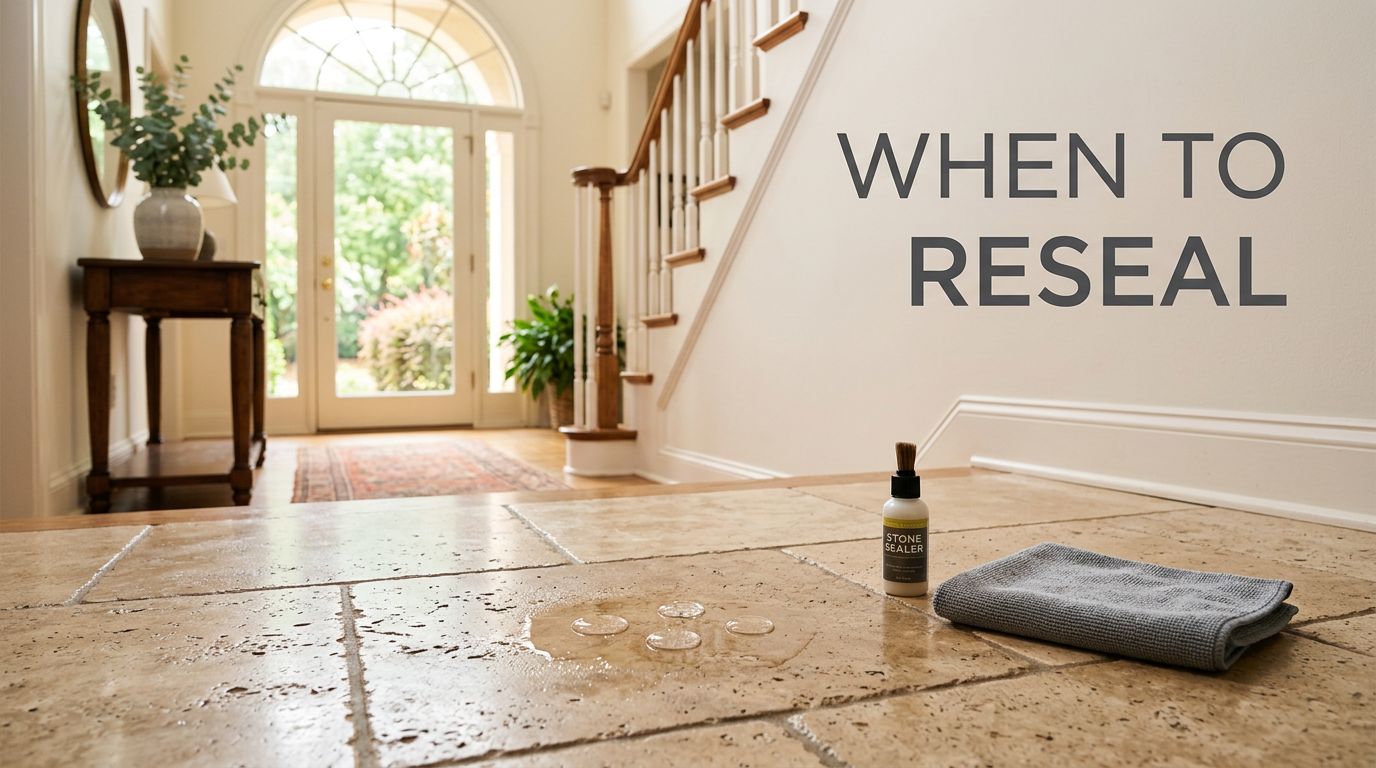
Natural stone floor sealing should follow evidence, not guesswork. A quick water test shows whether the stone still resists absorption.
Use a simple water-drop test
- Clean a small, out-of-the-way tile and let it dry completely.
- Place a few drops of water on the stone, not on the grout line.
- Check the spot after 10 to 15 minutes, then wipe it dry.
If the stone darkens quickly, it is absorbing water and likely needs resealing. When the water remains beaded and the color stays unchanged, the sealer is still working.
Test several spots in an entryway, kitchen, and bathroom. Wear patterns are rarely even across a room, especially near doors, sinks, and refrigerators.
Clean Properly Before Applying Sealer
Natural stone floor sealing will not correct residue, soap film, deep stains, loose grout, or a damaged finish. Applying a new coat over a dirty floor can trap the problem under the sealer.
Avoid products that damage stone
Use a soft dust mop or a vacuum with a hard-floor setting. For routine cleaning, choose a pH-neutral cleaner made for natural stone and use only the amount directed on its label.
Skip vinegar, lemon-based cleaners, and acidic descalers. Those products can etch calcite-based stone, including marble, travertine, and limestone. Before resealing, let the floor dry for the period required by the sealer manufacturer.
We prefer a penetrating sealer for most residential stone floors because it protects within the pores without creating a plastic-like surface film. As Stone Hardscapes’ care guidance explains, sealing makes stone more stain-resistant, not stain-proof.
Coordinate Stone With Flooring and Remodeling Work
Stone’s finished height affects dishwasher clearance, door swings, toilet flanges, shower thresholds, and the change from stone to wood. Our floor transition strips guide helps homeowners plan those details before materials arrive.
Check nearby floors and stairs
As a hardwood floor company in Cumming and a hardwood floor company serving Windermere, we measure adjacent wood, stair landings, and door openings before installing stone. That work differs from what a hardwood floor sanding company in Cumming handles when existing wood only needs refinishing.
Many homeowners install new flooring in Cumming while a kitchen remodeling company in Cumming replaces cabinets. As a remodeling company in Cumming, we put floor height, material edges, and installation order in the written scope.
As a kitchen and bathroom remodeling company in Cumming, GA, we coordinate wet-area stone with trim, shower work, and cabinetry. If you are comparing a bathroom remodeling contractor near you or a basement finishing company near you, ask who will check moisture and specify transition materials. Homeowners in nearby communities can review our professional flooring services for coordinated updates.
Final Thoughts
The best resealing schedule is based on the stone’s absorption, not a fixed calendar. Annual testing catches a fading seal before spills, moisture, and tracked-in grit cause lasting damage.
For a floor that needs inspection or replacement planning, call (770) 906-4732 for a free estimate. Bring any existing written quote from another contractor for the same documented scope, and we’ll do it at 5% less.