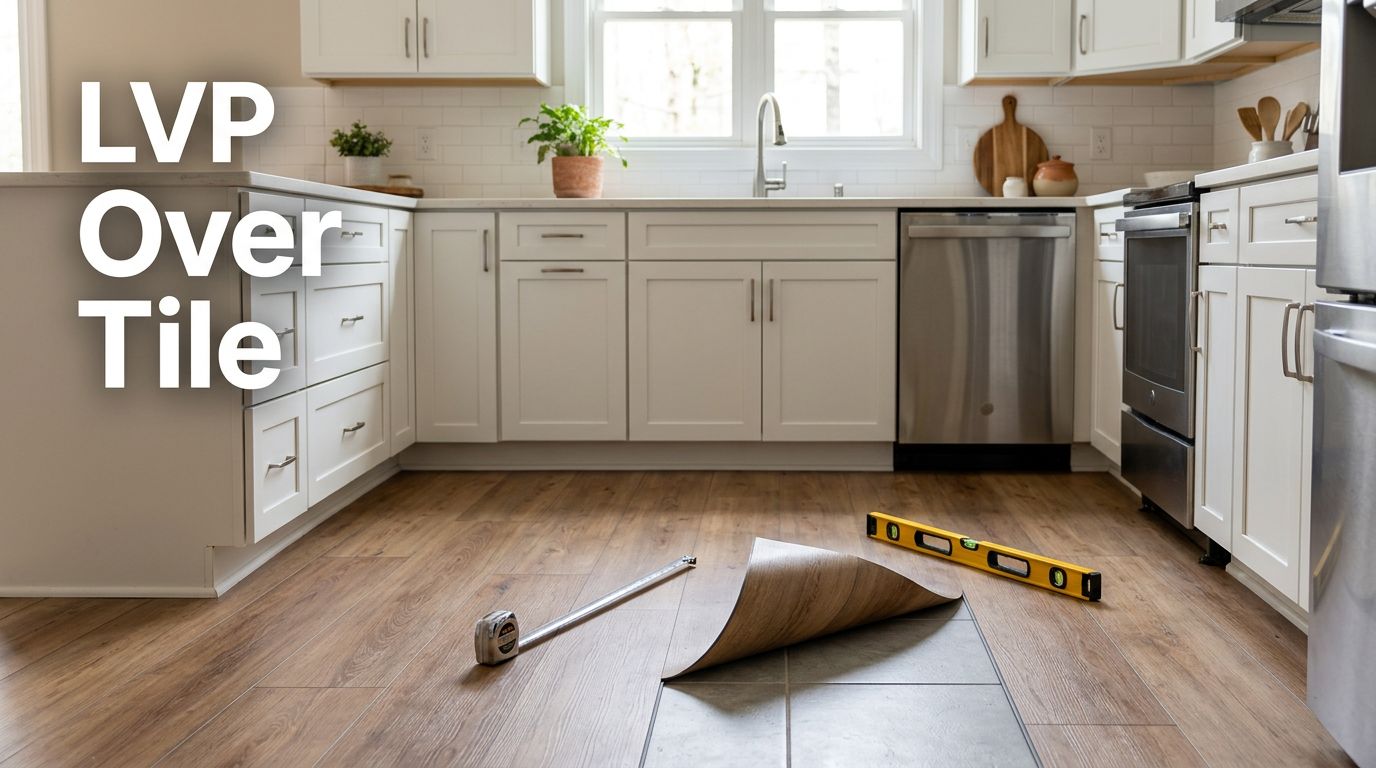
Can You Install LVP Over Existing Tile in Cumming?
The quickest way to update an old tile floor may be to leave the tile in place. For many Cumming homes, LVP over tile can avoid dusty demolition, disposal costs, and several days without a usable kitchen or bath.
That shortcut only works when the tile is stable and the surface is prepared correctly. In our in-home visits, we check the tile’s bond, flatness, grout joints, moisture risk, and the added floor height before recommending an overlay.
A durable new floor starts with an honest look at the one already underneath it.
Can You Install LVP Over Tile in Cumming?
Yes, you can often install LVP over tile in Cumming when the existing ceramic or porcelain tile is firmly bonded, dry, and flat. The tile becomes the base layer, so every weak spot below the new planks can eventually show up above them.
A floating, click-lock LVP floor is a common choice because it doesn’t require adhesive over every tile. However, glue-down vinyl can also work after more intensive surface preparation. Product instructions always control the details, and Shaw’s vinyl installation guidance is a useful reminder to review the selected product’s requirements before work begins.
The existing tile must act as a stable base
Walk the floor slowly in socks or soft shoes. Listen for hollow sounds, feel for movement, and watch for cracked corners. A solid tile floor usually feels firm underfoot and has no loose grout around shifting tiles.
Hairline cracks in grout aren’t always a deal-breaker. Still, cracked or loose tiles need repair before planks cover them. We don’t install over a floor that moves because LVP cannot correct a failed tile bond.
A hollow tile may look intact, yet it has already lost its bond with the floor below. A new floating floor spreads foot pressure, but it can’t restore that bond.
Added height needs a practical plan
LVP and any approved pad raise the finished floor. That added height can affect exterior doors, closet doors, dishwasher clearance, transitions to hardwood, and the toilet flange in a bathroom.
We measure these points before installation. If the room needs a taller reducer, a trimmed door, or a new transition profile, it belongs in the project plan rather than becoming a surprise on installation day. Our luxury vinyl plank installation options in Cumming include a site measurement so those details are visible early.

Inspect Tile Before Covering It
Tile is durable, but it isn’t automatically a suitable LVP substrate. We inspect the entire room, not only the portion visible after appliances and furniture move out. A clean-looking floor may still have lippage, deep grout joints, or moisture concerns.
Check for flatness, lippage, and damaged areas
Lippage occurs when one tile edge sits higher than the next. A rigid plank crossing that ridge can flex under foot traffic, stress its locking joint, or leave a noticeable bump.
Many vinyl products call for a floor that varies no more than about 3/16 inch across 10 feet, although each product has its own tolerance. We use a long straightedge to find high tiles, low spots, and uneven areas near doorways.
Loose tiles should be reset or removed and patched. High points may need grinding. Low areas and repaired sections need a floor patch that fully cures before planks go down.
Look beyond the tile surface for moisture
A tile floor can hide a moisture issue in a slab, a dishwasher leak, a failed shower detail, or a basement wall. LVP may be water-resistant or waterproof at its surface, but it doesn’t stop an active leak or fix water moving through concrete.
For that reason, we check the room’s history and test moisture when the product or site conditions call for it. A free flooring estimate in Cumming gives you a clear assessment of tile condition, transition work, and any prep required before you order materials.
Fill Grout Lines and Correct the Floor Plane
Grout joints are the detail homeowners most often underestimate. Deep or wide joints can telegraph through flexible vinyl, create movement beneath the plank, and make the new floor feel uneven.
Skim coat deep grout joints
Grout that sits below the tile face needs a suitable patching or leveling compound. We clean the tile first, then fill joints and low spots until the floor has a continuous, smooth plane.
This step matters for click-lock and glue-down products alike. Power Dekor’s LVT and LVP installation instructions state that existing ceramic tile requires grout lines to be skim-coated with a floor-leveling compound for glue-down installation.
The compound must dry and cure as directed. Installing planks over damp patch material can create adhesion problems or trap moisture.
Match the installation method to the room
Click-lock, rigid-core LVP often bridges minor texture better than thin glue-down vinyl. Even so, it doesn’t eliminate the need for flatness. A thicker plank may hide small grout lines, while a thin product can reveal every imperfection.
Some LVT and LVP products use loose-lay, perimeter-glue, or full-spread adhesive methods. Shaw’s installation-method reference shows why the product’s approved method matters. We don’t add underlayment, adhesive, or a vapor layer unless the manufacturer allows that combination.
When Tile Removal Is the Better Choice
Overlaying tile isn’t always the responsible answer. Removing old tile adds work, yet it can solve problems that patching cannot.
Structural movement and widespread failure require removal
If many tiles sound hollow, crack repeatedly, or move underfoot, the issue may sit below the tile. Covering that floor would hide the symptom while leaving the cause in place.
Likewise, a floor with severe slopes or multiple high ridges may need tile removal and subfloor correction. We recommend demolition when repair and leveling would cost more than addressing the floor properly.
Persistent moisture calls for investigation first
Basement tile deserves extra attention. A search for a basement finishing company near you should lead to a contractor who asks about water history, exterior drainage, and slab moisture before covering the floor.
If moisture is active, resolve it before installing LVP over tile. MSI’s luxury vinyl installation instructions are another useful starting point, but the selected product’s current instructions remain the final authority for moisture limits and approved materials.
Kitchen, Bathroom, Basement, and Stair Details
Room use changes how we plan an LVP installation. Flooring is only one layer in a kitchen or bath project, and it has to work with cabinets, plumbing, appliances, and trim.
Kitchen floor height affects cabinets and appliances
A kitchen remodeling company in Cumming should establish the finished floor height before cabinets, islands, and countertops are installed. Floating LVP needs expansion space at walls and fixed objects, so cabinets and islands should not pin the floor unless the manufacturer provides a different method.
Dishwasher clearance also matters. A floor that gains even a modest amount of height can make future appliance removal difficult. For coordinated cabinet and surface decisions, our countertop and cabinetry planning services can help align the flooring sequence with the rest of the kitchen work.
Bathrooms, basements, and stairs need separate solutions
When you search for a bathroom remodeling contractor near me, ask how the contractor will handle the toilet flange, waterproofing, and transition at the door. LVP can work in many bathrooms, but it doesn’t replace a shower pan or wall waterproofing system.
A kitchen and bathroom remodeling company in Cumming, GA, should also determine whether tile removal helps preserve safe fixture heights. Our bathroom remodeling estimates in Cumming include that discussion before material installation.
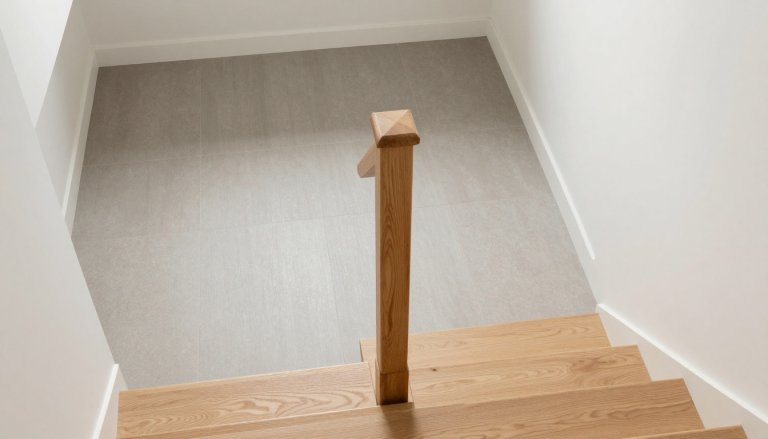
For stairs, standard floating planks aren’t simply clicked into place. Stair treads need approved adhesive, proper nosing, and a product rated for that application.
Get a Scope That Covers Prep, Materials, and Transitions
The price to install new flooring in Cumming depends less on the visible plank than on the preparation beneath it. Two rooms with the same square footage can need very different labor because one has flat tile and the other needs leveling, repairs, new trim, and door adjustments.
Compare written estimates line by line
A useful quote separates material, tile repair, patching, moisture work, transitions, trim, and labor. That format lets you compare the same scope instead of choosing a lower number that leaves out necessary prep.
Call (770) 906-4732 for a free estimate. If you show us an existing written quote from another contractor for the same scope, we will do it for 5% less.
Coordinate adjoining floors before installation
Many homeowners begin with LVP in a tiled room, then consider wood in nearby living areas. A hardwood floor company in Cumming can help you plan transitions before choosing plank thickness and color.
We also coordinate projects that need a Cumming hardwood floor sanding company for existing oak, or new wood from a hardwood floor company servicing Windermere. If your home needs more than flooring, a remodeling company in Cumming should schedule cabinetry, painting, flooring, and finish work in the right order.
A Better Floor Starts Below the Plank
LVP over tile is a practical choice when the existing tile is solid, dry, flat, and properly prepared. The work succeeds because the grout lines, loose tiles, moisture concerns, and height changes are addressed before the first plank is installed.
We recommend looking past the color and texture of the new floor. A careful substrate inspection is what gives your LVP installation a stable surface for years of daily use.