
Carpet Ripples and Wrinkles: What Needs Re-Stretching Versus Replacement
A carpet should lie flat like a calm lake. When it starts to look like ocean waves, it’s hard to ignore. Carpet ripples and wrinkles don’t just look messy, they can catch a toe and cause a fall.
In most homes around Cumming, Georgia, buckling happens because the carpet has gotten loose over time. The fibers aren’t “growing.” The backing relaxes, the pad shifts, or the original install didn’t lock everything in tight enough.
The good news is this: when the carpet is still in decent shape, re-stretching often brings it right back. On the other hand, when the carpet, pad, or backing is failing, replacement is usually the smarter long-term move.
If you want a clear answer fast, call (770) 906-4732 for free estimates. If you show us any existing written quote from another contractor, we’ll do it 5% less.
Why carpet buckles in the first place (and what it tells us about the fix)
Carpet doesn’t buckle for one reason. It’s usually a chain reaction, and the cause points us toward the right fix. If we treat every ripple like “bad carpet,” we waste money. If we ignore moisture or pad problems, wrinkles often come back.
Below are the most common triggers we see, plus what each one means during an inspection.
Installation issues: when carpet was never stretched tight enough
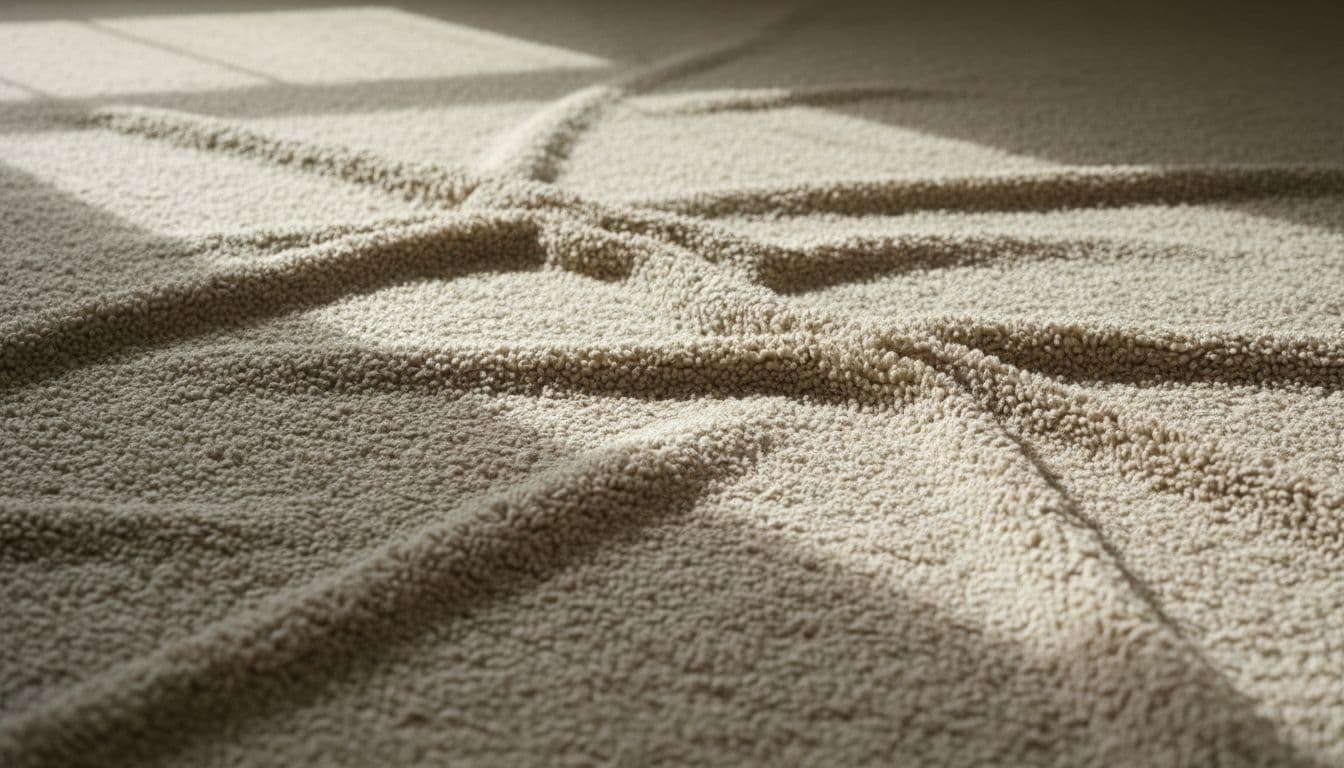
A proper carpet install should feel snug, almost like a fitted sheet pulled tight. When installers rush, they may skip the power stretcher and rely on a knee kicker. That can look fine on day one, yet the carpet may relax and wrinkle soon after.
We often see this pattern:
- Ripples show up in open areas first, like living rooms and hallways.
- Waves seem to “move” after vacuuming or after people walk through.
- Edges near doorways start to lift or look slightly untucked.
Timing matters here. If the carpet is newer and wrinkles appeared within months, the issue may fall under an installation warranty. Even then, we still check the tack strip grip and the pad, because a weak base can make a good stretch fail.
For homeowners juggling multiple upgrades, we also like to coordinate the order of work so flooring doesn’t get damaged mid-project. Moisture control and scheduling overlap with projects like bathroom remodeling in Cumming, where steam and ventilation choices affect nearby flooring.
Moisture, humidity, and furniture moves: the hidden triggers that loosen carpet
Georgia humidity can be a quiet troublemaker, especially in basements, slab homes, and rooms over crawl spaces. Over time, the carpet backing can relax as humidity swings, and that slack shows up as ripples.
Furniture moves also play a part. Dragging a sofa, twisting a recliner, or sliding a bed frame can pull carpet off the tack strip. Sometimes the ripple appears the next day. Other times, it shows up after a season change.
A simple target helps most homes: keep indoor humidity around 40% to 60% RH (many homes feel best closer to 40% to 50%). If you notice buckling every summer, a dehumidifier and steady HVAC run time often reduce repeat issues.
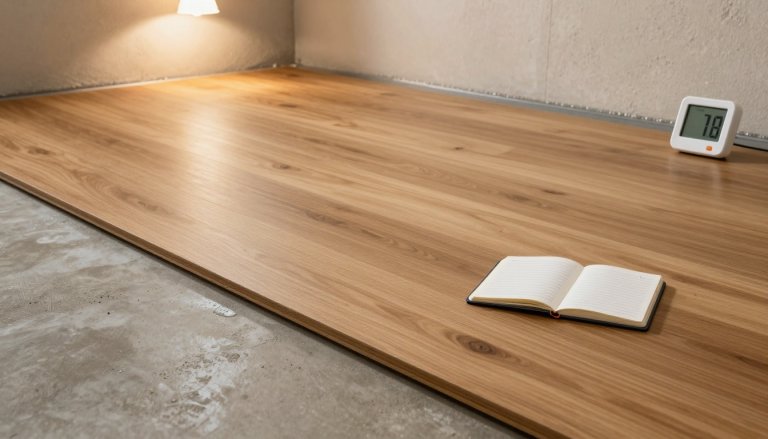
If you’re dealing with moisture questions in below-grade spaces, our basement flooring articles can help you think through the bigger picture, including engineered hardwood basement installation options where humidity and slab conditions drive the decision.
When re-stretching is the right call (and how to tell in a 5-minute walkthrough)
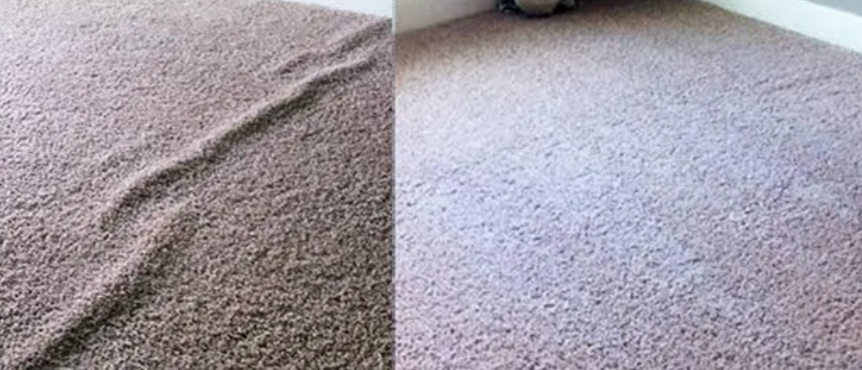
Re-stretching works when the carpet is basically healthy, but no longer tight. In other words, the carpet has slack, not failure. That’s why we start with a quick, practical walkthrough before we recommend anything.
In most homes, a professional re-stretch includes loosening the carpet at the perimeter, stretching it tight, re-attaching it to the tack strip, and re-tucking edges. We also check seams and transitions, because a wrinkle can be a symptom of a doorway problem.
Many rooms can be re-stretched in a single visit. The biggest wild card is furniture. If the room is packed, we may need help clearing it, or we can plan the work in stages.
Good candidates for re-stretching: healthy carpet, loose fit, and ripples in open areas
When we think “stretch first,” we’re looking for a carpet that still has life left. Age alone isn’t the only factor, but it’s a useful clue. In many homes, carpet under about 10 to 15 years old is often worth saving if it’s been cared for.
Signs re-stretching is usually a good value:
- The fibers still have spring, and the pile isn’t crushed flat.
- Ripples sit mostly in the middle of the room, not along every edge.
- There are no major tears, pet damage, or large permanent stains.
- The edges are mostly intact, with no widespread unraveling.
We also listen to the “story” behind the wrinkle. New ripples after a humid summer, after moving a couch, or after one heavy traffic lane forms, those are classic re-stretch situations.
What re-stretching fixes, what it can’t fix, and why knee kickers usually fail
Stretching removes slack. It does not restore worn fibers, remove deep stains, or reverse fading. If the carpet looks tired even when flat, we’re just smoothing out a worn surface.
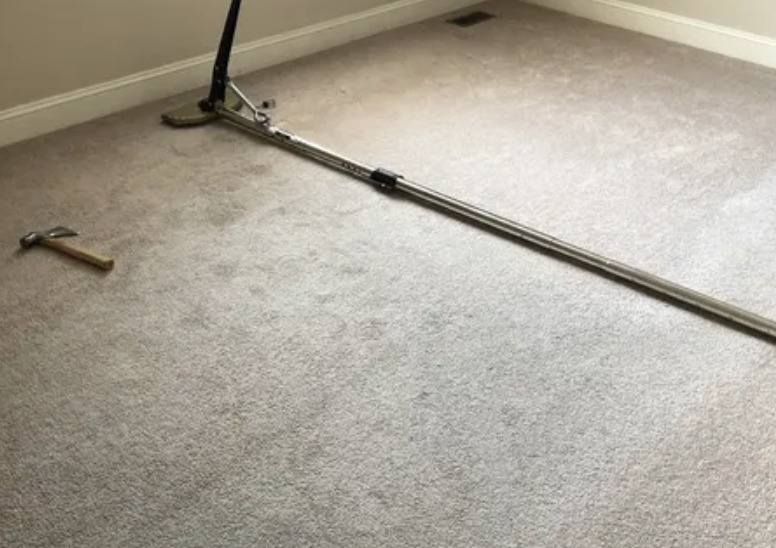
Tool choice matters, too. A power stretcher anchors across the room and pulls evenly. A knee kicker uses short bursts of force and usually can’t hold tension the same way across large areas.
If we re-stretch a big room with a knee kicker, wrinkles often return. We prefer a power stretcher because it keeps tension consistent.
If the carpet has a weak backing, even a perfect stretch may not last. That’s why we check how the carpet grips the tack strip and whether the backing feels stable at the edge.
When replacement makes more sense than trying to stretch it again
Sometimes stretching is like tightening old shoelaces that keep snapping. You can pull them tight, but they won’t hold. Replacement becomes the honest answer when the carpet system is worn out, not just loose.
We also look at safety and air quality. Ripples can trip people, and wet padding can hold odor and mold risk. If there’s a history of water intrusion, we push harder for a reset because hidden moisture problems don’t improve with tension.
Replacement doesn’t always mean “the whole house.” In many cases, we can replace one room, a stair run, or a basement level. The tricky part is matching, especially when the old carpet style is discontinued and sunlight has changed the color.
Damage signs that stretching won’t solve: worn fibers, stains, pet urine, mold, and backing failure
A carpet can lie flat and still be “done.” When the top looks matted, cleaning stops helping, and traffic lanes look shiny or dark, we’re often past the point of a stretch fix.
We also watch for backing problems. Delamination is a common failure where the backing layers start separating. In plain terms, the carpet loses its structure. When that happens, stretching can make things worse because the backing can tear or distort.
Other replacement triggers we take seriously:
- Pet urine odor that returns after cleaning, especially if it reached the pad.
- Mold or musty smells, usually tied to moisture events.
- Split seams that keep opening, which can point to bigger stress or weak material.
- Large stains that won’t come out and sit in focal areas.
If water soaked through to the pad, we rarely recommend “just stretching.” Wet pad holds problems you can’t see.
Repeat ripples and “soft spots”: how padding problems and subfloor issues push us toward replacement
Some carpets wrinkle because the pad under them has collapsed. When padding breaks down, the carpet loses support. It can feel spongy in spots, and the carpet can shift more with every step.
We also see soft spots tied to the subfloor:
- Loose plywood panels that flex underfoot.
- Uneven transitions at doorways.
- Damp concrete slabs that feed humidity into the room.
In certain cases, we can re-stretch and replace the pad. That can be a smart middle path when the carpet is still strong. Still, if the carpet is older or the backing feels weak, replacement often saves money over the next few years because you stop chasing repeat wrinkles.
Re-stretching vs replacement, cost, timeline, and how we help you choose
Most homeowners want the same thing: a flat, safe floor without wasting money. So we keep the decision simple. Re-stretching is usually faster and less disruptive, while replacement solves wear, odor, and pad issues at the same time.
Here’s a side-by-side guide we use during estimates.
| Decision factor | Re-stretching | Replacement |
|---|---|---|
| Best fit | Carpet is in good shape, but loose | Carpet or pad is worn, stained, or failing |
| What it fixes | Ripples, wrinkles, loose fit | Wrinkles plus wear, odor, stains, and pad problems |
| Typical time in the home | Often a few hours per room | Often a day for one area, longer for multiple rooms |
| Prep needs | Clear floors, move some furniture | Clear rooms, plan for tear-out and hauling |
| Budget feel | Usually a fraction of new carpet | Higher, includes material plus install |
Takeaway: if the carpet still looks good when it’s flat, stretching is often the best value. If it looks bad even when flat, replacement usually wins.
A simple decision checklist we can walk through together
We don’t need fancy tests to get close to the right answer. A few checks usually tell the story.
- Age and wear: Does it still feel springy, or is it matted flat?
- Stains or odor: Do you notice pet smell, mustiness, or large permanent stains?
- Backing condition: At the edge, does the backing look solid or crumbly?
- Pad feel: Any soft spots, lumps, or uneven bounce?
- Moisture history: Any leaks, overflows, or damp basement seasons?
- Repeat wrinkles: Did you stretch before and the ripples came right back?
Before we arrive, it helps to take a few phone photos in good light. We also suggest noting where wrinkles appear. Open-area ripples often point to slack, while seam and doorway wrinkles can point to structural stress.
If you’re planning other flooring upgrades at the same time, it’s worth reading our hardwood floor refinishing guide for a similar idea: sometimes a surface reset is enough, and sometimes the material needs a full restart.
Get a free estimate in Cumming, we’ll beat any written quote by 5%
Call (770) 906-4732 for free estimates in Cumming and nearby areas. If you show us any existing written quote from another contractor, we’ll do it 5% less (as long as we’re comparing the same scope).
During the visit, we inspect the carpet, pad, seams, tack strip hold, and any signs of moisture. Then we’ll recommend the best path: re-stretching, a pad upgrade, partial replacement, or full replacement, based on what we see in your home.
Conclusion
Carpet ripples are annoying, but they’re also useful clues. When the carpet is still healthy and just got loose, re-stretching is often the fastest, most cost-friendly fix. When the carpet, pad, or backing is failing, replacement usually gives the better long-term result.
If you want a straight answer for your rooms in Cumming, call (770) 906-4732 for a free estimate. Bring any written quote you already have, and we’ll beat it by 5%.