Why LVP Floors Feel Bouncy After Installation
A newly installed vinyl flooring surface should feel firm under a normal step. When bouncy LVP floors flex, squeak, or shift at their seams, the movement often points to a spongy floor below.
We see this issue after rushed prep, excess pad, poor movement clearance, or a hidden leak. Check support and moisture before replacing planks. Vinyl flooring and laminate floors need a firm base, even when their surfaces are durable. Luxury vinyl plank is durable, but its click-lock joints cannot bridge a weak subfloor foundation.
Key Takeaways
- Bouncy LVP floors usually indicate an unsupported, uneven, moisture-damaged, or overly cushioned base below the vinyl flooring.
- Check soft spots, floor flatness, perimeter gaps, underlayment, and moisture before replacing planks.
- Do not add extra underlayment to LVP with an attached pad unless the manufacturer’s instructions allow it.
- Repairs may require restoring expansion gaps, leveling the subfloor, replacing damaged wood, or correcting a hidden leak.
- A lasting repair needs a flat, dry, solid base with enough room for the floating floor to move.
Why Bouncy LVP Floors Move Underfoot
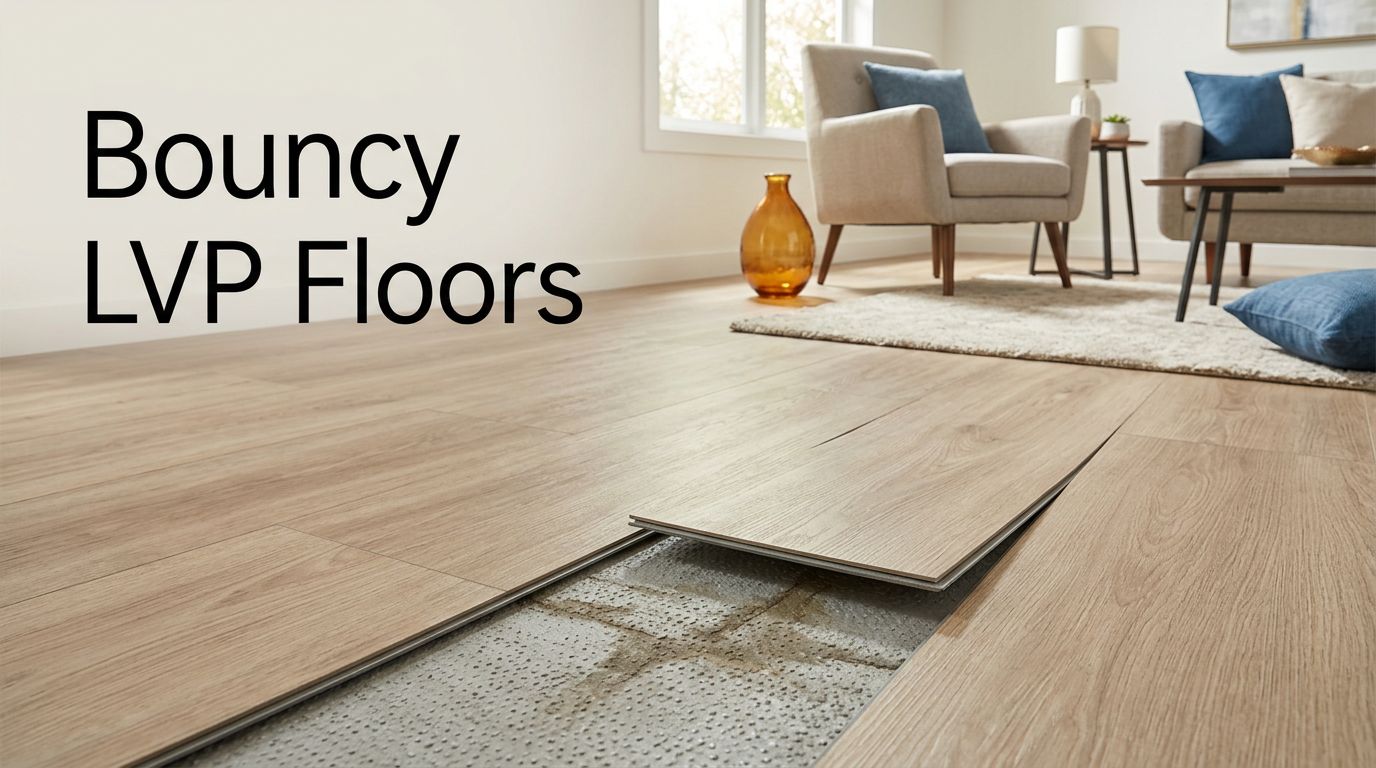
Most click-lock LVP, or luxury vinyl plank, is a floating floor. The planks lock to each other and rest over an underlayment or attached pad, so this vinyl flooring system needs continuous support. Each step transfers through the planks and pad to the base below.
A little cushion can be normal in vinyl flooring, especially with built-in underlayment. Noticeable deflection, soft spots, a hollow sound, or joints that move apart are not.
The Base Below Still Needs to Be Firm
Unlike laminate floors, many LVP products tolerate surface spills without swelling. That doesn’t make the plywood, OSB, or concrete below waterproof or provide reliable support for the vinyl flooring system.
When the uneven subfloor dips or deteriorates, each step bends the plank and loads its click-lock joints. Over time, edges can peak, joints can separate, and the wear layer can crack.
Extra Underlayment Can Create Too Much Give
A second foam underlay can make a rigid-core product feel soft. It can also allow more joint movement than the manufacturer permits.
Never add cushion-style underlayment to a vinyl flooring product with a pre-attached pad unless the written instructions allow it. Underlayment should address an approved moisture or sound-control need, not mask a weak base.
Diagnose the Source Before Planning a Repair
Start with a methodical inspection of a spongy floor. The pattern and location of movement help distinguish an unsupported area, moisture-related deterioration, and a flatness problem.
Map the soft spots and inspect the edges
Walk the vinyl flooring slowly and mark every soft spot with painter’s tape. Then check the perimeter, doorways, refrigerator opening, and floor transitions.
Movement across most of a room points to the underlayment or overall flatness. Inspect the underlayment for consistent support. One soft area near a dishwasher, sink, exterior door, or toilet often points toward moisture damage. A hollow sound may suggest an unsupported area.
Measure flatness and look for moisture clues
Remove shoe molding, if present, and look for a clear gap between the plank and wall. Like laminate floors, vinyl flooring can look intact while a problem below affects movement. A floor jammed against drywall, a cabinet toe kick, or a transition strip cannot move as a unit.
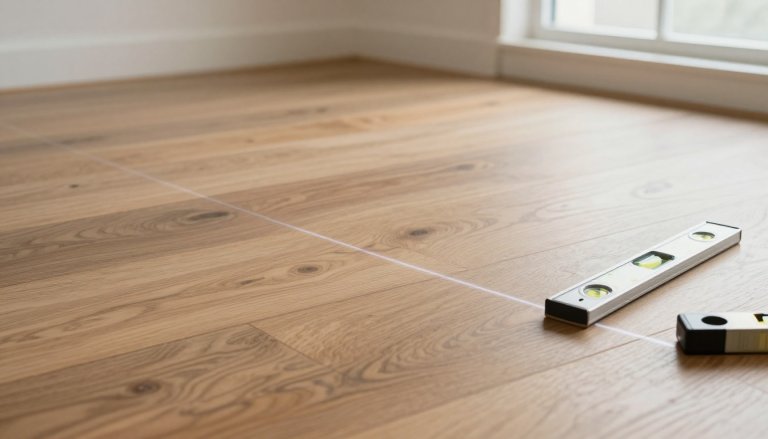
Then lay a 6- or 10-foot straightedge across the marked area to check for an uneven subfloor. Light beneath it exposes a low spot, while rocking exposes a high ridge beneath vinyl flooring. Product limits vary, though many LVP installation guides allow only about 1/4 inch of variation across 10 feet.
For a concrete subfloor, visual dryness is insufficient. ASTM F2170 in-situ RH testing measures moisture within the slab and can reveal hidden moisture beneath vinyl flooring. A wood subfloor also needs a moisture-meter reading and an inspection below for staining, soft sheathing, or sagging joists.
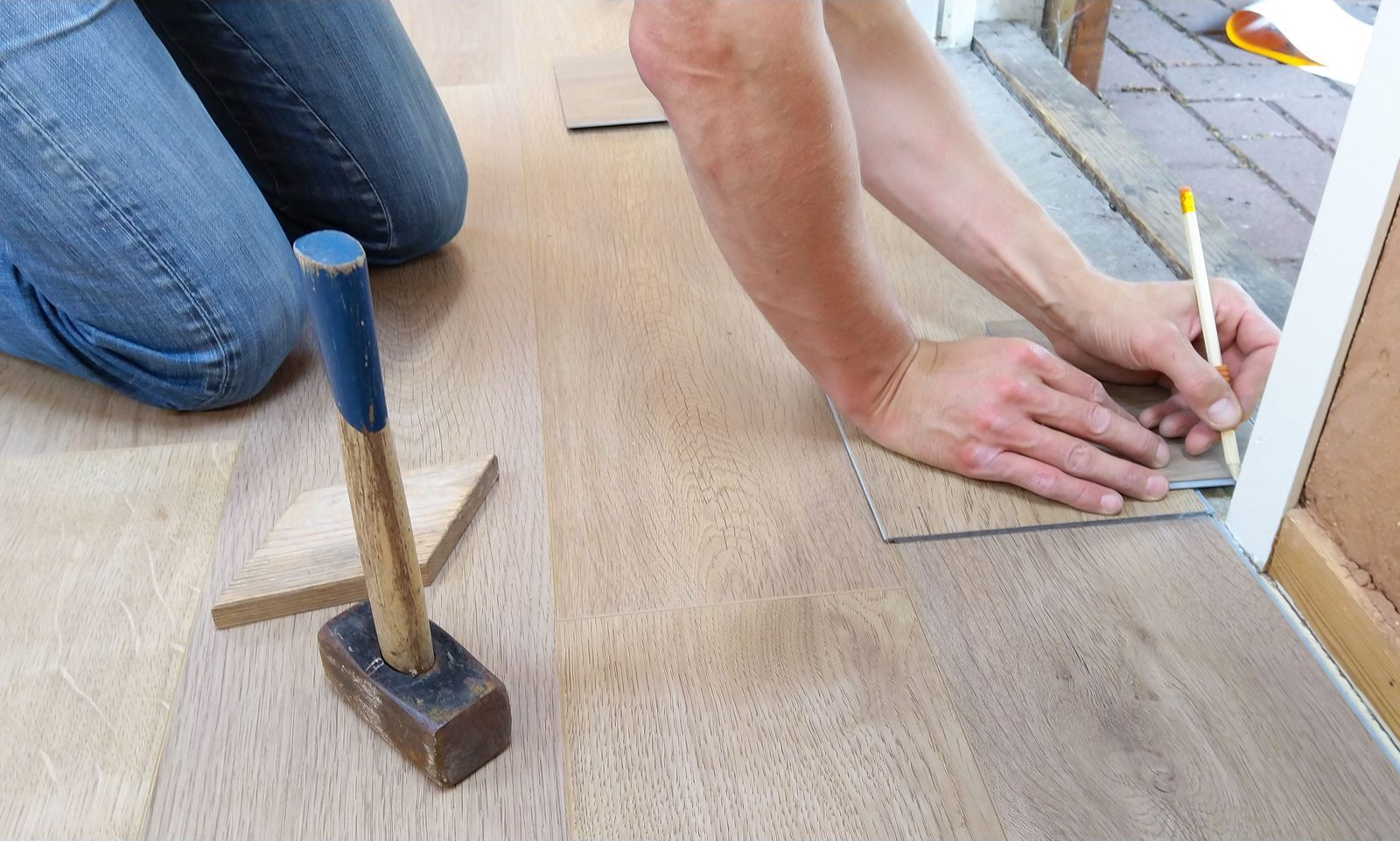
Photo by ClickerHappy
Repairs That Match the Actual Problem
With bouncy LVP floors, the correct repair for vinyl flooring depends on whether the floor lacks movement space, support, or a sound subfloor.
Restore the Required Expansion Gaps
Remove trim carefully and confirm the required clearance in the vinyl flooring product manual. For example, Shaw’s SPC installation instructions call for a 1/4-inch perimeter gap.
If wall edges pinch the floor, an installer can trim back outside planks or remove and recut the field. Don’t nail, screw, or caulk the planks to the subfloor. Baseboard should cover the gap without trapping the planks.
Open the Floor for Voids and Failed Subfloor Sections
To fix soft spots caused by a void, open the floor rather than applying a surface patch. With click-lock LVP, we check the approved underlayment before disassembling the vinyl flooring back to the affected section. We replace rotted or loose wood in a wood subfloor, along with damaged underlayment, then flatten the substrate and reinstall sound planks.
On concrete, vinyl flooring installers grind high areas and fill low areas with a manufacturer-approved self-levelling compound before retesting moisture. Before authorizing removal, use a detailed flooring contract checklist that lists subfloor repair, leveling, moisture testing, trim, and replacement planks.
Don’t drill through a click-lock plank and inject generic bonding adhesive. Bonding adhesive can stop the plank from floating, damage the wear layer, and transfer stress into nearby joints. Injectable products may help certain loose glue-down vinyl repairs, but they can’t rebuild rotten wood or repair a void beneath a floating floor.
When a Local Flooring or Remodeling Team Should Inspect It
Call for an on-site inspection when movement spreads across several rows of vinyl flooring, edges lift, or click-lock joints crack. A recurring spongy floor, dark staining, mold odor, or soft plywood needs review. Call flooring contractors to fix soft spots that return after a prior repair, especially near a fixed island or fireplace.
A waterproof plank can protect its surface, but it cannot stop a leak from damaging the structure below it.
Water around cabinets can turn flooring repair into a remodeling decision. A kitchen remodeling company in Cumming should correct a dishwasher or supply-line leak before cabinets and waterproof vinyl flooring cover the damage. Likewise, a bathroom remodeling contractor near you should include leak correction, subfloor assessment, and waterproofing in the written scope. Our bathroom flooring and remodeling guide covers the preparation a wet area needs.
A remodeling company in Cumming that handles kitchens and bathrooms should coordinate plumbing, cabinetry, and vinyl flooring in the same damaged area. It should document who handles leak correction and subfloor repair. A basement finishing company near you should test slab moisture before selecting vinyl.
If you plan to install new vinyl flooring in Cumming, ask bidders to document moisture problems, leveling, underlayment, and transition details. Before approving a flooring installation contract, ask whether it specifies removal and substrate repair, not a bonding adhesive shortcut. The same applies when comparing a hardwood floor company in Cumming, a hardwood floor company serving Windermere, or a hardwood floor sanding company in Cumming.
Call (770) 906-4732 for a free estimate. Show us any existing written quote from another contractor, and we will do it for 5% less.
Frequently Asked Questions
Why do my LVP floors feel bouncy?
Bouncy LVP floors often result from an uneven or weak subfloor, a void below the planks, excess underlayment, or trapped movement at the walls. Moisture damage can also soften the base and cause localized movement.
Can I add more underlayment to make LVP feel firmer?
Usually, no. Extra cushion beneath LVP with a pre-attached pad can create too much movement and damage the click-lock joints. Follow the product’s written installation instructions before adding any underlayment.
How can I find the cause of a soft spot under LVP?
Mark each soft spot, inspect nearby edges and plumbing fixtures, and test the floor with a straightedge. Moisture testing and inspection below a wood subfloor may be necessary when staining, odors, or deterioration are present.
Can bouncy LVP be repaired without replacing the whole floor?
Sometimes. An installer may restore expansion gaps or disassemble the click-lock planks to repair a localized void or damaged subfloor, then reinstall sound planks. Widespread movement or damaged planks may require more extensive removal.
When should I call a flooring or remodeling professional?
Call for an on-site inspection when movement spreads across several rows, joints crack, edges lift, or soft spots return after repair. Professional help is especially important near plumbing fixtures, cabinets, fireplaces, or areas with staining and mold odors.
A Stable Floor Starts Below the Plank
Most vinyl flooring problems trace back to an unsupported area, excess underlayment, soft spots, trapped movement, or moisture-damaged subfloor material. Replacing a few planks won’t correct a void or a weakened floor deck. Laminate floors can show similar movement when the base lacks consistent support.
The lasting repair restores a flat, dry, solid base and gives the floating floor room to move. Firm support is what makes vinyl flooring feel right underfoot.