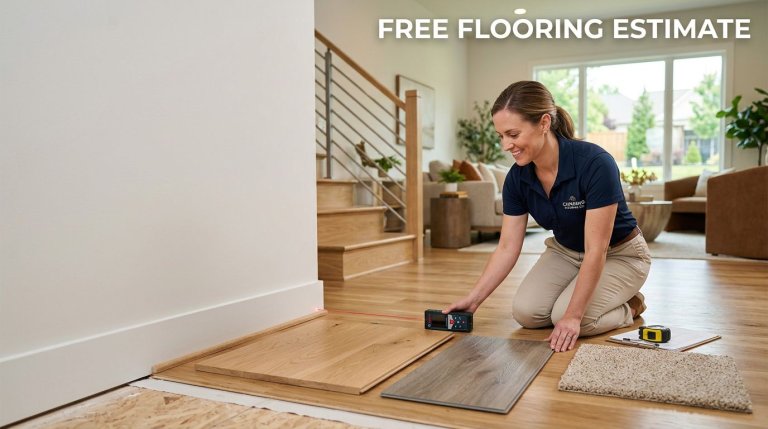

Filling Gaps in Old Hardwood Floors: Worry or Wait?
Gaps that open in the fall and close by early summer are normal and do not need filling. Worry when a gap stays open all year, measures wider than an eighth of an inch even in August, or runs along one side of the house but not the other. The safe move is almost always to wait through one full heating season before you fill anything. Filling too early can trap movement that cracks the filler right back out.
Why hardwood floors gap in the first place
Wood is hygroscopic. It takes on moisture in summer and gives it up in winter. Forsyth County homes run through a wide humidity swing each year, from near 60% in July to under 30% once the furnace kicks on. Boards shrink across their width as they dry out. That shrinkage shows up as a gap between planks.
Wider boards move more per inch of shrinkage than narrow ones. A 5-inch plank can open a visibly larger gap than a 2.25-inch strip under the same humidity drop. This is just physics, not a flaw in your floor.
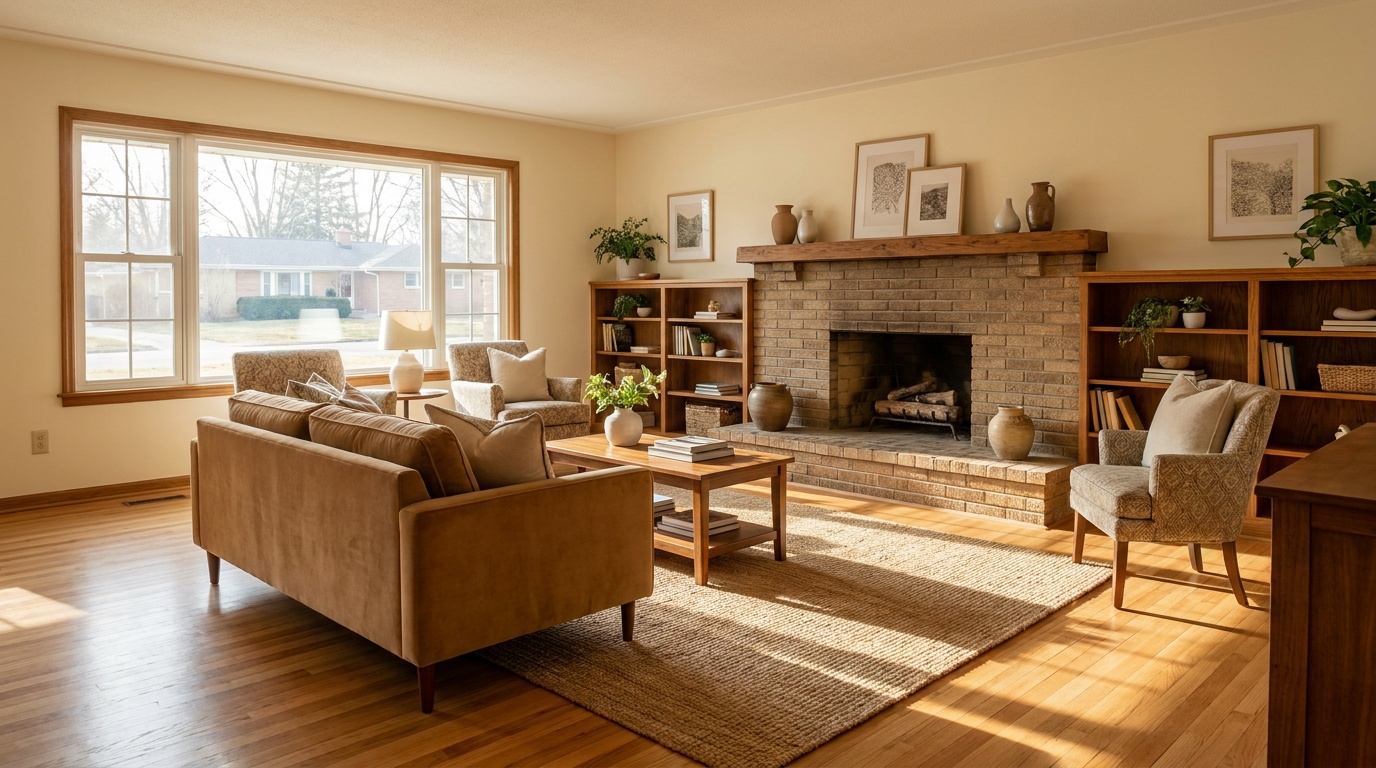
On 80s and 90s ranches near the square, we see this every January. Solid oak strip flooring, original to the house, opens a thin seam at every board edge. By June it is gone.
Wait for the full cycle before you decide
One winter is not enough data. Check the floor again at the peak of summer humidity, usually July or August here. If the gaps close back down to nearly nothing, that is seasonal movement doing exactly what wood does. Nothing is wrong.
If a gap is still visible at peak humidity, something else is going on. That is the one worth tracking.
A simple decision sequence
- Check first: measure the worst gap in January and again in July. A gap that shrinks by half or more is seasonal.
- Then check: is the gap even across the room, or worse near an exterior wall or a crawlspace vent? Uneven gapping points to a moisture source, not just the season.
- Then check: does debris or pet hair pack into the gap? That usually means the gap has been open long enough to collect it, which argues against a simple seasonal cycle.
- Last check: run a pinless moisture meter across the room. Readings should sit in a fairly tight band, generally 6% to 9% for acclimated wood. Swings of several points from board to board suggest a subfloor or crawlspace issue, not weather.
When gaps mean a real problem
A few patterns should move you from watching to calling someone. Gaps wider than three-sixteenths of an inch that do not close in summer are one. So is cupping, where board edges sit higher than the centers, alongside the gapping.
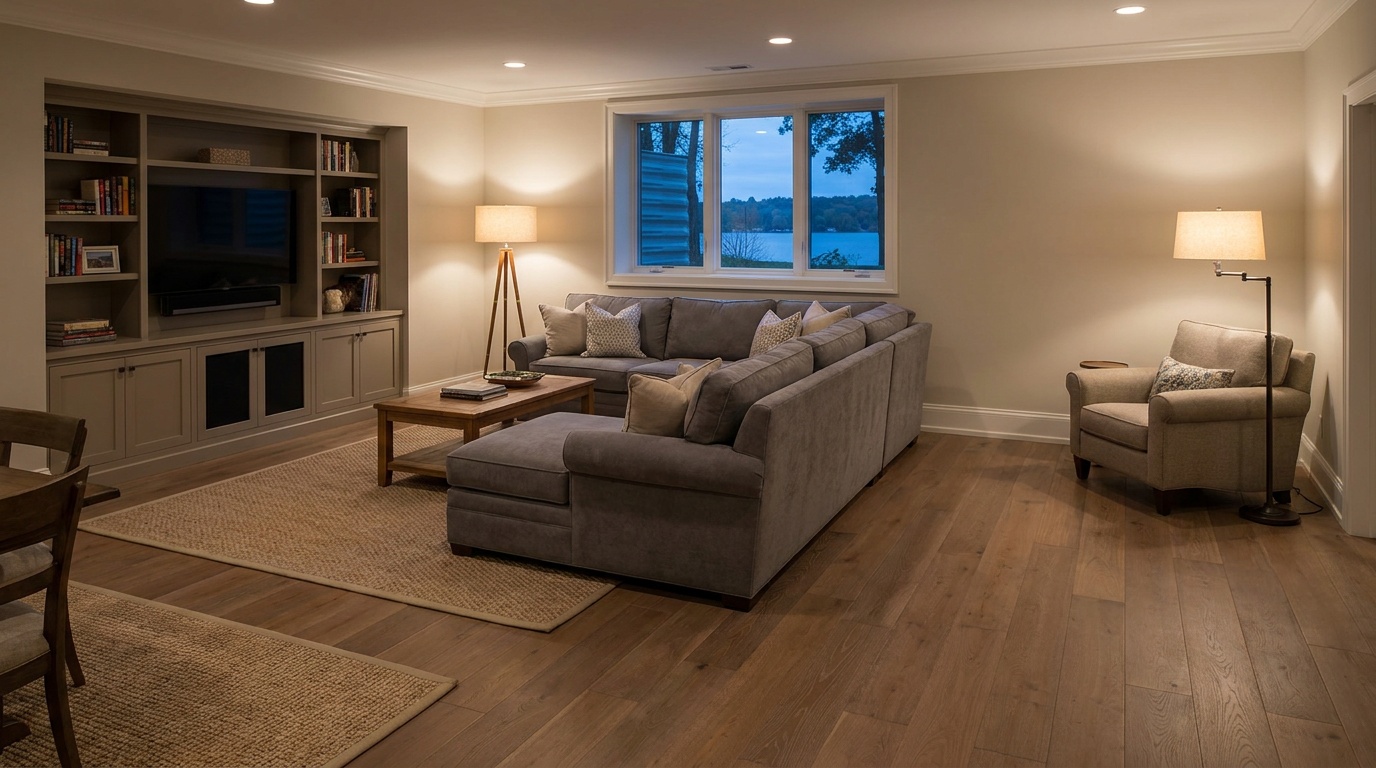
A crawlspace with standing water or a vapor barrier that has failed will keep feeding moisture swings into the floor above it long after the furnace season ends. Near Lake Lanier, basements and crawlspaces run damper than homes up around Sawnee Mountain, and that difference shows up in the floor.
Gaps that only appear along one wall, or only in one room, usually trace back to a local cause. An HVAC supply register blowing hot dry air directly onto a run of boards. A leak. A door to the outside with poor weatherstripping. Fix the source before you think about the floor.
Filling gaps versus refinishing the whole floor
Small, stable seasonal gaps generally do not need filler at all. If gaps are wide, consistent, and staying open year-round, a wood-flour-and-filler mix pressed into clean, dry gaps can even things out cosmetically.
For a floor with widespread wide gapping, uneven wear, or a finish that is already dull and scratched, full sanding and refinishing is often the better fix. It levels the surface, resets the finish, and lets a contractor fill larger gaps during the process rather than one seam at a time. Sanding and refinishing in our market runs $3.95 to $6.00 per square foot, and the final price depends on the type of flooring and the scale of sanding needed. Our refinishing cost guide walks through what changes that number for a specific floor.
We test stain samples on your actual floor before sanding day, not on a sample board in a showroom. That matters more on older oak, where decades of sun exposure change how a stain takes.
Gap width and what it usually means
| Gap width | Typical cause | What to do |
|---|---|---|
| Under 1/16 inch | Normal seasonal movement | Nothing. Recheck in summer. |
| 1/16 to 1/8 inch, closes in summer | Normal seasonal cycle, wider boards | Wait for the full year before filling. |
| 1/8 to 3/16 inch, year-round | Chronic low humidity or furnace oversizing | Add a humidifier, then reassess in six months. |
| Over 3/16 inch, uneven across the room | Subfloor movement, moisture source, or structural shift | Have the floor and crawlspace inspected before filling. |
What goes wrong when you fill too soon
We get called back on this more than almost anything else gap-related. A homeowner fills gaps in January, when they are widest. By July, the boards swell back toward each other. The filler has nowhere to go. It pops, crumbles, or pushes the board edges into a slight ridge along the seam.
The fix is simple. Fill gaps in late summer or early fall, at their narrowest point in the yearly cycle, not their widest. That timing lines up filler with the gap size it will actually need to hold.
A humidifier set to keep whole-house humidity in the 35% to 45% range through winter also reduces how far boards swing each year. It is often cheaper than repeated filler repairs.
Planning around a move-in or listing date
If you are selling or moving on a deadline, gap timing still matters, but it does not have to control your schedule. We write schedules keyed to your move-in or listing date, and dustless sanding equipment keeps the work contained to the room being worked on. Water-based finishes are walkable the same evening, with furniture back in 2 to 3 days.
If gap filling and refinishing are both on the table, our sanding and refinishing page and the broader flooring cost guide are good starting points before a visit. A free in-home estimate, itemized line by line, will tell you exactly what your floor needs.
Frequently asked questions
Is it normal for hardwood floors to have gaps in winter?
Yes. Nearly every solid hardwood floor in this climate opens small gaps once heating season starts. They typically close again by mid-summer.
How wide is too wide for a hardwood gap?
Gaps under an eighth of an inch that close in summer are generally fine. Gaps wider than three-sixteenths of an inch, especially year-round, deserve a closer look.
Should I fill gaps myself?
Small cosmetic gaps can be filled with a wood filler kit. Wide or uneven gaps often point to a moisture or subfloor issue that filler alone will not fix.
Does a humidifier actually help with hardwood gaps?
It can. Keeping indoor humidity in the 35% to 45% range through winter reduces how much boards shrink and limits how wide gaps get.
Will refinishing fix gaps permanently?
Refinishing can fill and level gaps at the time of the job, but normal seasonal movement will still occur afterward. Humidity control, not refinishing, controls future gapping.
Can engineered hardwood gap the same way solid wood does?
Engineered floors move less than solid wood because of their layered construction, but they are not immune. They still respond to large humidity swings, just less dramatically.
If your floor’s gaps have you wondering whether it is time or trouble, a quick in-home look will settle it. Call (770) 906-4732 or request a free estimate through our contact page and we’ll tell you straight whether to wait for summer or start planning the work now.