
Why Hardwood Floors Cup, Crown, or Buckle in Georgia Humidity
Cupping, crowning, and buckling are three different stages of the same problem: wood absorbing or losing moisture faster than it can equalize. Cupping happens when board edges rise higher than their centers because the underside of the plank is wetter than the top. Crowning is the opposite shape — the center of the board rises above the edges, usually after a floor was sanded too soon following a cupping event. Buckling is the extreme case, where entire planks lift off the subfloor. In Forsyth County’s humid summers and the seasonal swings around Lake Lanier basements, all three show up more than most homeowners expect, and each one has a different fix.
Wood Moves With the Air Around It
Solid hardwood is hygroscopic, meaning it absorbs and releases moisture depending on the humidity of the air and the material touching it. Georgia summers push indoor relative humidity up, especially in homes without consistent HVAC use, and wood expands as it takes on moisture. Winter heating dries the air back out, and wood contracts. A small amount of seasonal gapping and slight board movement is normal. Cupping, crowning, and buckling happen when that moisture exchange becomes lopsided or extreme, usually because of a specific source rather than general weather.
Cupping: Edges Higher Than Centers
Cupping is almost always a sign that the underside of the floor is wetter than the top. Common sources in Forsyth County homes include:
- A crawlspace or basement with a failed vapor barrier, especially in older ranches near the square that predate modern moisture detailing
- A slow plumbing leak under a kitchen or bathroom near a supply line, ice maker line, or dishwasher
- Recent heavy rain finding its way under the house through poor grading, common on lots near Sawnee Mountain where runoff moves fast downhill
- New concrete or a fresh basement pour that has not fully cured before flooring went down
The fix: find and stop the moisture source first. That might mean sealing a crawlspace vapor barrier, repairing a leak, or correcting exterior grading. Once the subfloor and boards return to a normal moisture range and stay there for several weeks, mild cupping in solid hardwood often relaxes on its own. If it does not, or if the finish is worn and the cupping is cosmetic at that point, sanding and refinishing levels the surface and restores a flat, even floor. Refinishing runs $3.50 to $6.00 per square foot depending on board condition and finish selection — details are in our refinishing cost guide. The one mistake to avoid is sanding a cupped floor before the moisture problem is actually resolved.
Crowning: Centers Higher Than Edges
Crowning is frequently a self-inflicted problem that follows cupping. When a cupped floor is sanded flat while the underside is still wet, the boards eventually dry out and shrink from the center outward, leaving the middle of each plank higher than the edges. Crowning can also appear on its own when a floor absorbs a large amount of moisture unevenly, such as after a spill that sat too long or a humidifier running without a matching dehumidification cycle in winter.
The fix: confirm the wood has reached a stable moisture content before doing anything cosmetic. A crowned floor that is sanded too early will simply cup again once conditions shift. Once moisture is stable, our crews use moisture meters to verify readings across multiple boards before scheduling sanding day, then refinish with dustless equipment to keep the process clean and controlled. Water-based, low-odor finishes are walkable the same evening, with furniture back in the room in two to three days.
Buckling: Planks Lifting Off the Subfloor
Buckling is the most severe reaction and usually follows a sudden, significant water event rather than gradual seasonal humidity. Typical causes include a burst supply line, a washing machine hose failure, a sewer or drain backup, or standing water from a storm that got under the floor faster than it could evaporate. When wood swells enough, the planks have nowhere to expand except up, and they separate from the subfloor entirely.
The fix: buckled boards are rarely salvageable in place. The affected section needs to come up, the subfloor needs to dry completely and be checked for damage, and in many cases the subfloor needs releveling before new flooring goes down. Subfloor leveling runs $2 to $3 per square foot, and damaged boards are replaced and blended into the surrounding floor. If the water event was significant, this is also a good moment to weigh solid hardwood against an engineered or LVP alternative in flood-prone areas — our LVP page covers that option, priced at $4.00 to $5.50 per square foot.
Why Forsyth County Homes See This So Often
Two housing patterns in our service area create predictable moisture risk. Older ranches near the Cumming square often have original crawlspace detailing that was never upgraded, so ground moisture migrates up through the subfloor more than homeowners realize. Newer construction south of downtown and toward Suwanee and Johns Creek tends to have tighter building envelopes, which traps humidity indoors if HVAC systems are not run consistently during the shoulder seasons. Basements near Lake Lanier add a third variable, since concrete slabs below grade hold moisture long after a home looks and feels dry. Any of these can push a floor toward cupping without an obvious leak ever showing up.
Prevention Matters More Than the Fix
Keeping indoor relative humidity in a moderate, consistent range year-round is the single biggest factor in preventing all three problems. Beyond HVAC settings, a properly installed vapor barrier under solid hardwood, correct acclimation before installation, and prompt attention to any appliance or plumbing leak all reduce risk substantially. Installation quality plays a real role here too — moisture problems show up faster on floors that were installed without adequate acclimation or a proper barrier. Because installation costs depend on subfloor condition, board width, and site prep, we quote it in person after seeing the space; details on the process are on our hardwood installation page. For a broader look at flooring costs across a whole home, see our 2026 cost guide.
Getting an Accurate Diagnosis
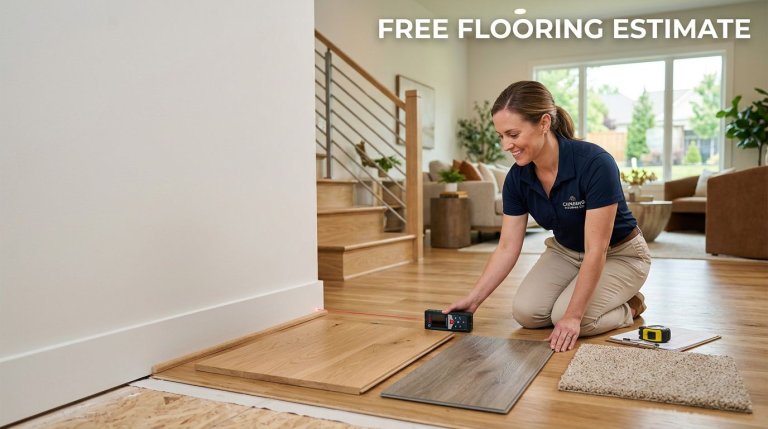
Because cupping, crowning, and buckling all have different root causes, the right fix depends on an in-person look at the floor and the space beneath it. We offer free in-home estimates with every quote itemized line by line, so you know exactly what is moisture remediation, what is subfloor repair, and what is refinishing. We use our own install crews rather than unknown subcontractors, and before any sanding day we test stain samples directly on your existing floor so there are no surprises in color once the work is done. We also work throughout Cumming, Sugar Hill, Johns Creek, and Suwanee, so we see these patterns repeat across different soil types and construction eras in the same general area.
FAQ
Can a cupped hardwood floor go back to normal on its own?
Mild cupping often relaxes once the moisture source is corrected and the wood re-equalizes over several weeks. More pronounced cupping usually needs sanding and refinishing to restore a flat surface after moisture levels stabilize.
Is it ever too late to save a buckled floor?
Individual buckled boards typically need to be removed and replaced rather than repaired in place, but the surrounding floor can usually be saved. The subfloor underneath needs to dry fully and be checked for damage before anything new goes down.
Will a dehumidifier stop this from happening again?
A dehumidifier helps in a crawlspace or basement, but it works best alongside a proper vapor barrier and consistent whole-home HVAC use. Addressing the moisture source directly is more reliable than managing humidity after the fact.
If your floors are cupping, crowning, or buckling, request a free in-home estimate through our contact page or call (770) 906-4732 and we will diagnose the cause before recommending a fix.