Pin vs pinless moisture meters for hardwood, when each gives bad readings, and how to double-check fast
Moisture is the silent troublemaker in hardwood. One day the boards look perfect, and a few weeks later you’re seeing gaps, cupping, or squeaks. That’s why we treat the hardwood moisture meter like a seatbelt. It’s not flashy, but it keeps projects safe.
Homeowners ask us all the time which is better, pin or pinless. The honest answer is that both are useful, and both can lie to you if you don’t know their weak spots. Below, we’ll break down what each tool is really “seeing,” when bad readings happen, and the quick checks we use before we sand, stain, or install.

What pin and pinless meters actually measure (and why that matters)
A moisture meter isn’t judging your floor’s “wetness” in a simple way. It’s estimating moisture content by reading how wood reacts electrically.
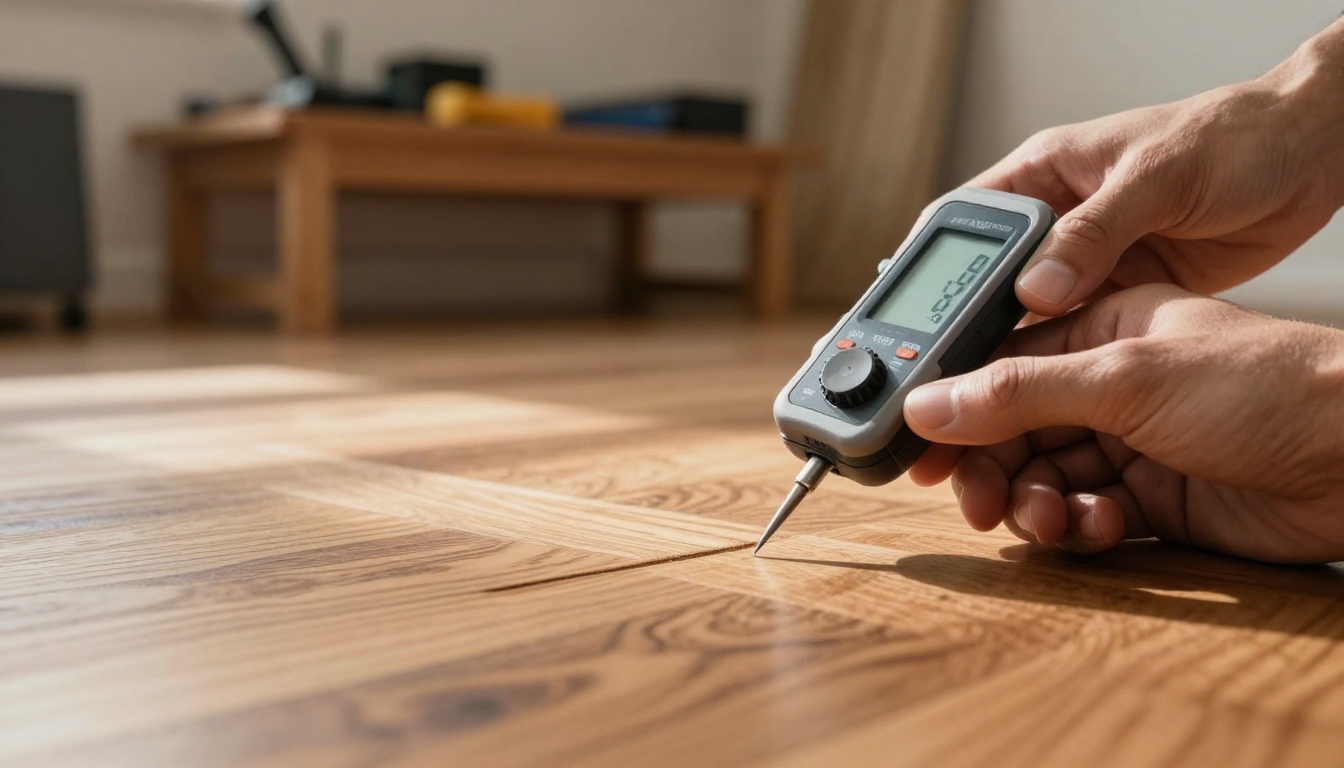
Pin meters use two sharp probes that penetrate the wood. The meter measures electrical resistance between the pins. More moisture usually means less resistance, so the reading goes up. Because the pins go into the board, you’re getting a localized reading, at a specific depth depending on pin length and species settings.
Pinless meters (also called non-invasive meters) sit flat on the surface. They use an electromagnetic field to scan moisture in a wider area under the sensor plate. You don’t get pinholes, and you can test a lot of boards fast. In exchange, you’re getting an averaged reading across a larger zone.
Here’s the practical difference: pin meters are like taking a core sample, pinless meters are like scanning with a wide flashlight. For hardwood, we often like using both, because agreement between two different methods is a strong signal we can trust.
| Feature | Pin meter | Pinless meter |
|---|---|---|
| Surface damage | Leaves tiny pinholes | No holes |
| Reading style | Small, targeted spot | Larger averaged area |
| Best use | Confirming a suspicious board, checking depth | Fast scanning across many boards |
| Common risk | Hitting a knot or fastener, false highs | Being fooled by underlayment, density, or subfloor |
When we’re acting as a hardwood floor company Cumming homeowners call for real answers, we don’t rely on one number. We look for patterns, compare rooms, and confirm the subfloor.
When each meter gives bad readings (and the red flags we watch for)
Moisture meters can be accurate and still give you junk data if the conditions are wrong. The trick is knowing what “wrong” looks like.
When pin meters give bad readings
Pin meters can spike for reasons that aren’t moisture.
If the pins hit dense grain, knots, or dark mineral streaks, the reading may jump. The wood isn’t wetter, it’s just behaving differently electrically. Another common problem is testing too close to fasteners, staples, or metal thresholds. Metal can make the meter read extremely high or unstable.
We also see bad pin readings when the surface is contaminated. If a floor has pet stains, old cleaners, or salt residue near an exterior door, the electrical path can change. You’ll get numbers that don’t match what the wood is actually doing.
Red flag: one board reads way higher than everything around it, but there’s no visible staining, no cupping, and no reason the moisture would be isolated.
When pinless meters give bad readings
Pinless meters are fast, but they can be fooled by what’s under the wood.
If there’s metal lath, radiant heating components, or certain underlayments, the field can react and skew the result. Density and species also matter. A pinless meter set incorrectly for the wood type can read “wet” on a dense species even when it’s stable.
Another trap is surface conditions. If the floor is cold from HVAC or a slab below, condensation risk goes up and the meter may show elevated readings near the surface. That doesn’t always mean the full board is high in moisture.
Red flag: the pinless meter shows a broad high area, but a pin meter check in the same spot doesn’t support it.
This matters whether we’re the hardwood floor sanding company Cumming neighbors rely on, or we’re prepping to install new flooring Cumming homes, because sanding and finishing over moisture problems can lock in trouble.
How we double-check moisture fast before sanding, staining, or installing
When time matters, we don’t guess. We follow a short routine that catches most issues in under 10 minutes per area.
First, we scan the room with a pinless meter to find the “map.” We’re not chasing a single number, we’re looking for hot spots near exterior doors, dishwashers, sliding doors, fireplaces, and HVAC vents.
Next, we confirm with a pin meter in a few places. We test:
- A normal-looking board in the center of the room
- The highest reading area from the scan
- One spot that should be dry (often an interior wall area)
If the pin meter supports the pinless trend, we take it seriously. If the two disagree, we slow down and troubleshoot what’s interfering (metal, underlayment, species settings, or surface contamination).
Then we check the subfloor. Floors don’t just “get wet,” they exchange moisture with what’s below them. A stable hardwood floor over a damp subfloor is like putting a dry sponge on a wet counter. It won’t stay dry. For plywood, we use the pin meter. For concrete, we use the right concrete moisture test method, because wood meters aren’t designed to certify slab moisture.
Finally, we sanity-check with the environment. We note indoor temperature and humidity and look for obvious moisture sources. If a kitchen remodel is in progress, new drywall mud, plumbing work, or a recent dishwasher leak can explain odd readings. That’s one reason homeowners like working with a remodeling company in Cumming that watches the whole job, not just the surface materials.
If you want us to take these readings and explain what they mean for your project, call (770) 906-4732 for a free estimate. If you show us an existing quote from another contractor, we’ll do it 5% less.

What to do when the numbers look “off” (without wasting days)
When moisture readings don’t make sense, we don’t rush into sanding or installation. We pause and isolate the cause.
If readings are high near one wall, we look for exterior grading issues, downspouts, or door leaks. If the kitchen area is high, we check appliances and supply lines. If a bathroom is nearby, we think about slow leaks and wet framing. These steps protect you whether you’re planning a floor refinish or working with a kitchen remodeling company Cumming homeowners trust.
Sometimes the fix is simple: improve airflow, run a dehumidifier, and re-check. Other times, the right move is to delay installation until the wood has acclimated and the subfloor is stable. Many manufacturers expect the wood and subfloor to be close in moisture before install, because big differences can trigger movement later.
We also keep expectations realistic: moisture meters are decision tools, not crystal balls. The best results come from repeat checks over a couple days, in the same spots, with the same settings.
If you’re in Windermere and want one team for floors plus the rest of the project, we’re a hardwood floor company servicing Windermere and also a kitchen and bathroom remodeling company Cumming Ga homeowners can use for coordinated updates.
Conclusion
Pin and pinless meters both earn a place in the toolbox, as long as we know how they fail. Pin meters can spike from knots or metal, pinless meters can be thrown off by what’s under the boards. Our fastest path to confidence is simple: scan, confirm with pins, verify the subfloor, and match the readings to real-world conditions. When we treat moisture as a system, not a single number, hardwood stays flatter, finishes last longer, and surprises get rare. Call (770) 906-4732 for a free estimate, and bring any competitor quote so we can beat it by 5%.