
Why Do Hardwood Floors Squeak, and How to Fix It?
That squeak under your feet almost never comes from the hardwood boards themselves. It comes from movement somewhere underneath them: a subfloor panel rubbing against a joist, a board flexing against a loose nail, or a gap that opened up between the subfloor and the framing. Quieting it means finding that specific point of movement and either lubricating it, screwing it tight, or shimming the gap closed, sometimes from above the finished floor and sometimes from the basement or crawlspace below.
What’s Actually Under Your Hardwood Floor
A typical hardwood floor in a Forsyth County home is really a stack of layers, and any one of them can be the source of a squeak. From the ground up, you generally have the floor joists, a plywood or OSB subfloor screwed or nailed to those joists, and then the hardwood itself, either nailed down directly or glued to the subfloor depending on the era of construction.
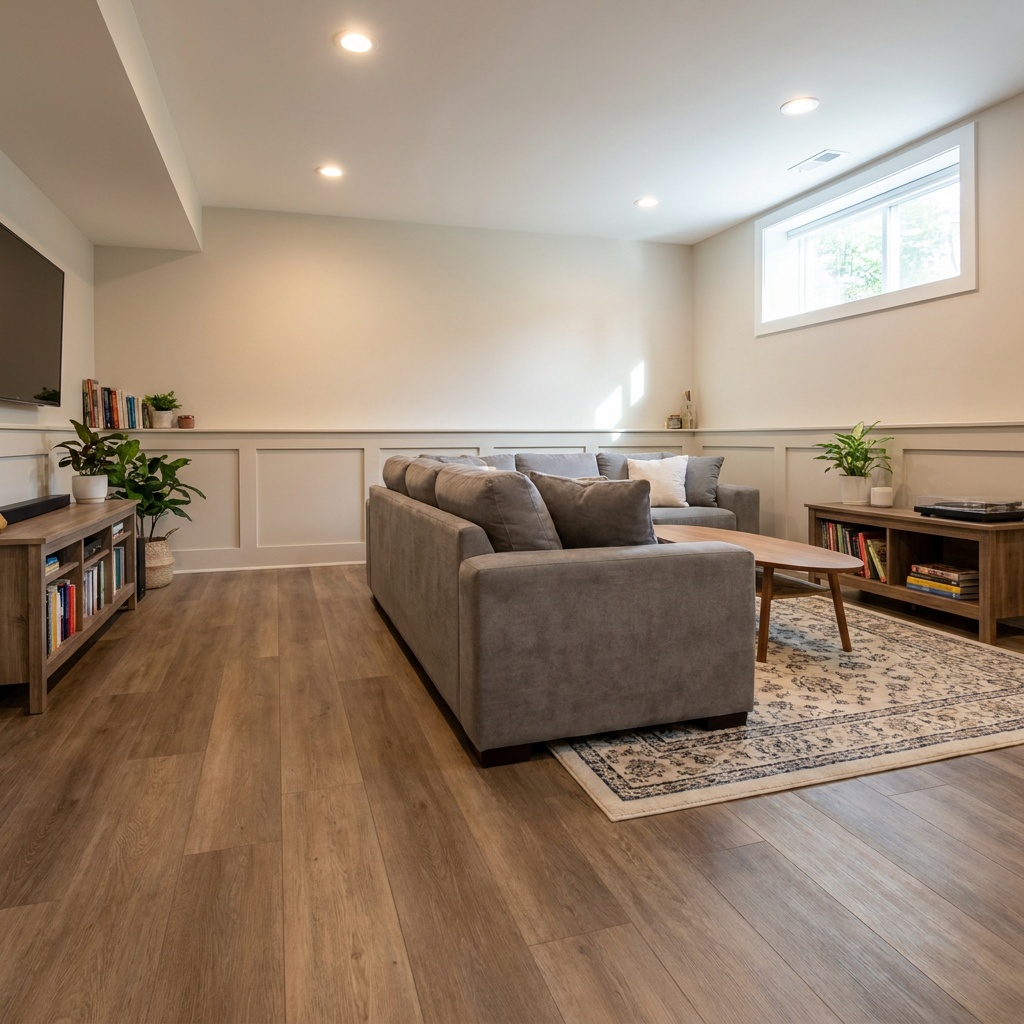
In the 80s and 90s ranches near the downtown Cumming square, it’s common to find hardwood face-nailed straight to plank subfloor with decades of seasonal movement behind the walls. In newer construction south of downtown, you’re more likely to see engineered or site-finished hardwood over plywood subfloor on floor trusses, which move differently and squeak for slightly different reasons. Homes with finished basements near Lake Lanier add another wrinkle, since humidity swings can shrink and swell the subfloor layer itself.
Why Hardwood Floors Actually Squeak
Once you know what’s under there, the causes narrow down to a short list:
- Subfloor rubbing on a joist: nails or screws holding the plywood to the joist have backed out slightly, so the panel rocks and rubs with every step.
- Board-to-board friction: two hardwood boards next to each other rub together at the edge when one flexes and the other doesn’t.
- Gaps from wood shrinkage: Georgia’s humidity swings shrink wood in winter, opening small gaps that let boards move against fasteners.
- Loose nail against wood: an old cut nail or staple has worked slightly loose in its hole and squeaks as it pistons up and down.
- Truss or joist bounce: in some newer framing, the floor system itself flexes a hair more than older dimensional lumber, which can telegraph as noise even with tight fasteners.
Squeaks tend to cluster near high-traffic paths, doorways, and the edges of rooms, which is exactly where fasteners see the most repeated stress over the years.
How Pros Quiet a Squeak
The right fix depends on whether you can get at the problem from below or only from above.
Working from a basement or crawlspace
If there’s open access underneath, this is usually the cleanest fix. A technician locates the exact joist causing the noise, then drives a specialty screw up through the subfloor into the hardwood from below, pulling the layers tight without ever touching the finished surface. Shims can also be tapped into gaps between the subfloor and joist to stop rocking, and squeak-reducing bracket hardware can reinforce a joist that’s slightly undersized or bouncy.
Working from the top of the floor
When there’s no basement access, or the squeak is on a slab-on-grade section, the fix happens through the finished floor. This can mean driving a trim-head screw at an angle through the board into the subfloor and joist, then filling the tiny hole with matching putty, or using a specialty fastening kit designed to snap off below the surface so nothing is visible once it’s filled. Done carefully, these repairs are barely noticeable, especially on a floor that already has some natural graining and color variation.
When the fix touches the finish
Occasionally a section of flooring has enough scattered squeaks, cupping, or old repair patches that spot-fixing starts to leave a floor looking patchy. In that case, a full sanding and refinishing pass evens everything out after the squeak repairs are done. That service runs $3.95-$6.00 per square foot, and the final price depends on the type of flooring and the scale of sanding needed, so it’s worth getting a firm number rather than guessing.
When a Squeak Signals Something Bigger
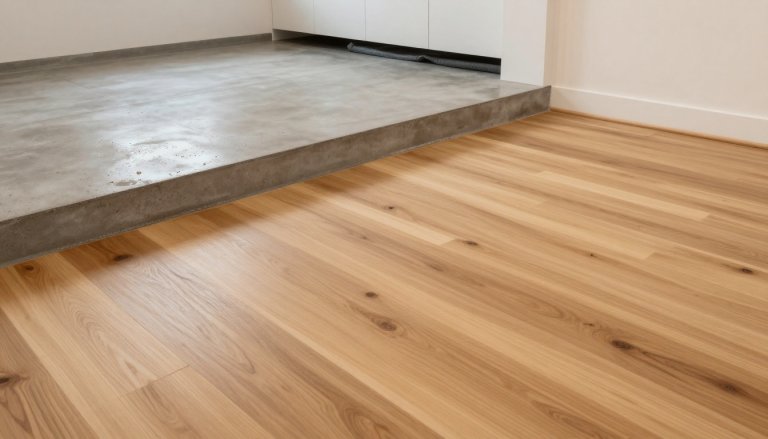
Not every squeak is a quick fastener fix. If a section of floor feels soft, springy, or noticeably lower than the surrounding area in addition to squeaking, that’s usually a sign of subfloor damage rather than simple fastener movement, often from a slow moisture issue rather than normal wood movement. Basements near Sawnee Mountain and along the lake are especially prone to this because of grading and groundwater patterns that push moisture into a slab or crawlspace over time.
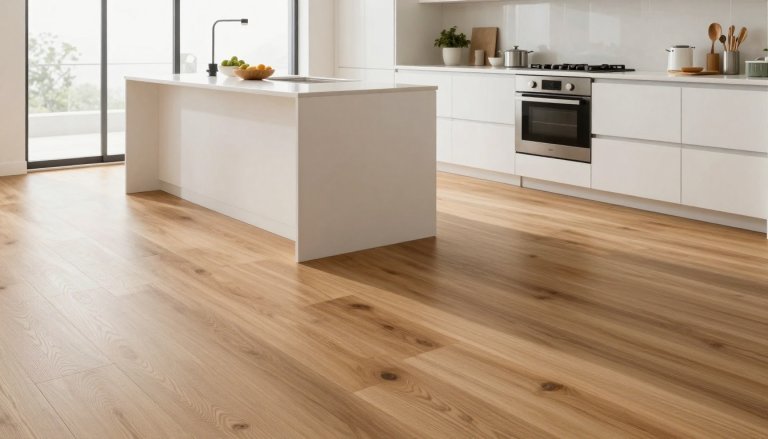
In those cases, the subfloor itself may need leveling or partial replacement before any squeak repair or new flooring goes down. Subfloor leveling typically runs $2-$3 per square foot, assuming a ready-to-work space with nothing to move and standard-grade material, and a free estimate will confirm your exact number once the space is inspected. If the subfloor is compromised enough that new flooring is the better path forward, our hardwood installation team quotes that work in person, since the price depends on the existing subfloor condition, the species and width of the new floor, and the layout of the rooms involved. For homes where moisture is a recurring issue, LVP is also worth comparing as a more moisture-tolerant option in that specific area, typically $4.00-$5.50 per square foot for a ready-to-work space with standard-grade material.
What This Looks Like on a Real Job
Most squeak calls in Forsyth County start with one or two specific spots, usually near a hallway threshold or at the edge of a bedroom where the subfloor meets a wall. A technician walks the floor, marks the squeaking joists from below if there’s access, and fastens each spot individually rather than guessing at a broad section. On floors where the squeaking has been going on for years, it’s common to find several loose fasteners along the same joist run, so the fix often covers more ground than the homeowner originally noticed.
If you’re weighing a squeak repair against a bigger flooring decision, whether that’s finally refinishing worn boards, replacing carpet with hardwood, or planning a kitchen or bathroom project where flooring is part of a larger scope, our flooring cost guide breaks down what drives pricing across the most common projects we see in Cumming, Sugar Hill, Johns Creek, and Suwanee.
FAQ
Can I fix a squeaky hardwood floor myself?
Simple fixes like talc or graphite powder worked between boards can quiet minor edge friction temporarily, but they don’t address the underlying fastener or subfloor movement, so the squeak usually comes back. A permanent fix generally means securing the subfloor to the joist at the exact spot causing the noise.
Will fixing a squeak damage my hardwood floor’s finish?
A careful top-side repair leaves a small filled hole that’s barely visible on most floors, especially those with natural grain variation. If a floor has many scattered repair points or visible wear, a full refinish afterward gives the most even, seamless result.
Does humidity in Georgia make squeaks worse?
Yes. Seasonal humidity swings shrink and swell wood, and that movement can loosen fasteners or open small gaps between boards over time. Homes with basements near the lake or areas with fluctuating crawlspace moisture tend to see squeaks develop faster than homes on a well-sealed slab.
If a squeak has been bothering you for a while, or you’re not sure whether it’s a simple fastener fix or a sign of subfloor trouble, request a free in-home estimate through our contact page or call (770) 906-4732, and we’ll walk the floor with you and lay out exactly what it will take to quiet it.