A Washing Machine Leaked on Your Floor: Now What?
A washing machine leak soaks into the subfloor within minutes, and the damage depends on how long it sat and what the subfloor is made of. Plywood and OSB swell, delaminate, and can grow mold within 24 to 48 hours if the water isn’t caught fast. Whether you need a full subfloor replacement or just a dry-out depends on the exposure time, the flooring material on top, and whether the leak reached the joists below. The fastest way to know is a moisture reading, not a guess.
Where the water actually goes
Water from a supply line or overflowing drum doesn’t stay on the surface. It follows the path of least resistance, which usually means down through seams, nail holes, and expansion gaps.
On hardwood, it wicks along the grain and pools at the tongue-and-groove joints. On LVP, it slides under the planks at the seams and sits on top of the subfloor, hidden from view. Either way, the subfloor underneath is often wetter than the visible flooring suggests.
Plywood subfloor is typically 5/8 to 3/4 inch thick, resting on joists spaced 16 inches on center. That thickness gives it some buffer, but it’s not waterproof. Once the wood fibers absorb moisture past roughly 12 to 14 percent moisture content, swelling starts.
What happens to the wood itself
Subfloor plywood swells unevenly. The edges of each panel absorb water fastest, so you often see ridging along seams before the field of the panel shows any change.
OSB behaves worse. It’s made of compressed wood strands and adhesive, and once wet, it can swell permanently even after it dries out. Plywood has a better chance of returning close to its original shape if it’s caught early and dried within a few days.
Left wet for more than two days in a warm, low-airflow laundry closet, subfloor can start to delaminate. You’ll feel it as soft or springy spots underfoot. That’s usually the point where drying out is no longer enough and sections need to come out.
Basement laundry rooms change the equation
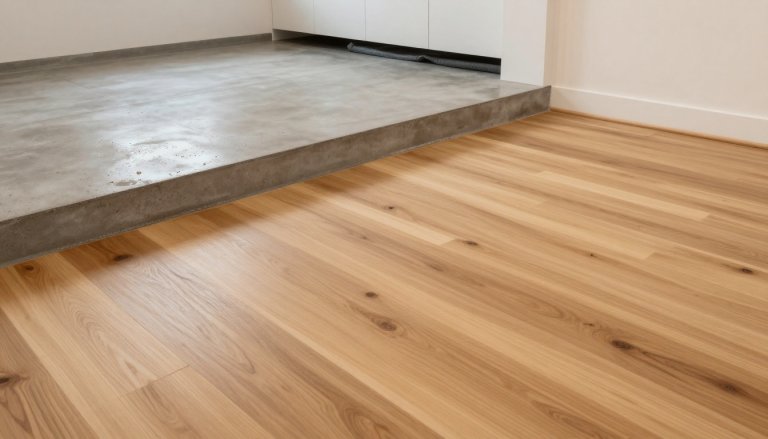
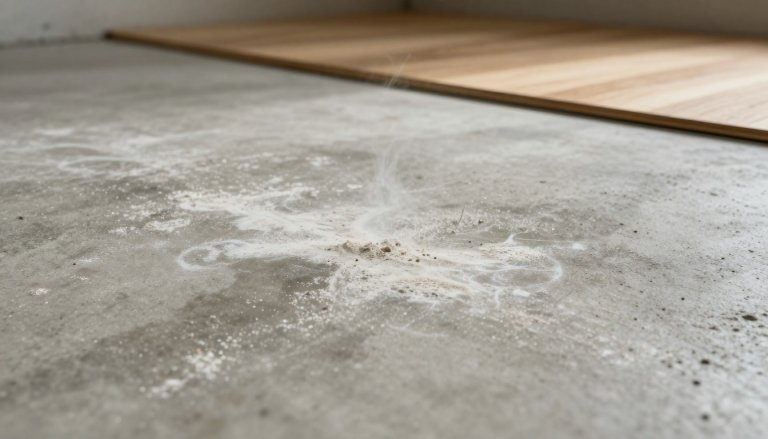
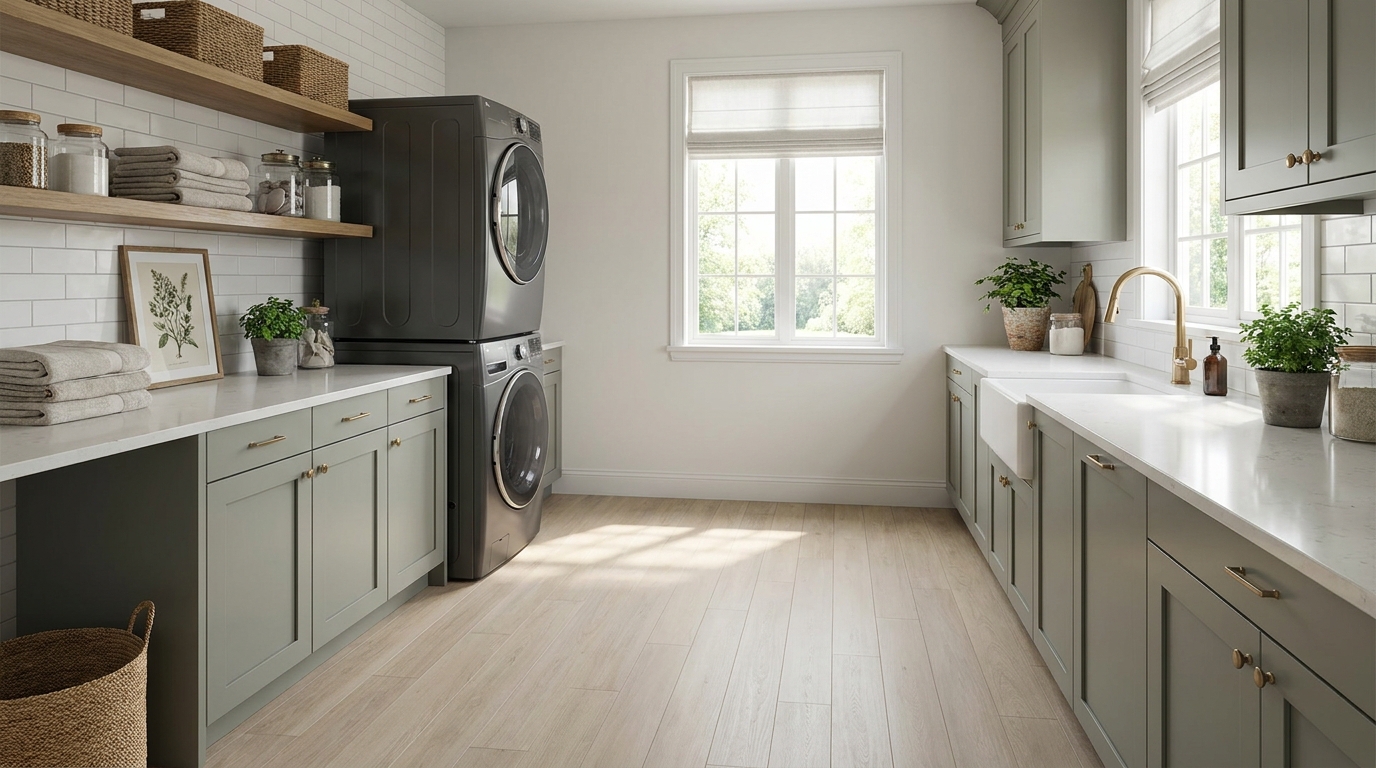
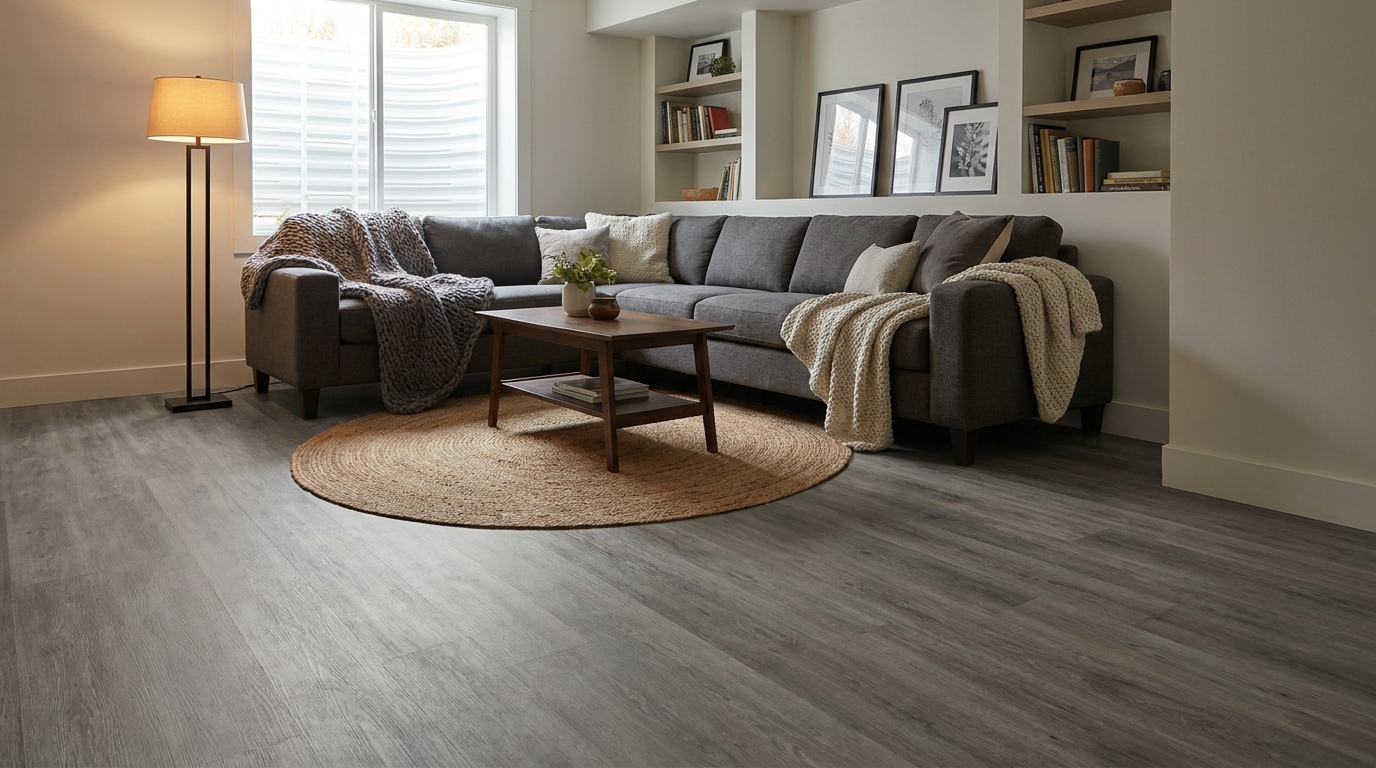
A lot of Forsyth County homes near Lake Lanier have the laundry room in the basement, often on a slab rather than a wood subfloor. That changes the failure mode. Slab won’t swell or delaminate, but it holds moisture longer, and anything glued or floated on top of it — LVP, engineered wood — can trap water underneath for weeks without drying on its own.
In older ranch-style homes near the square, laundry closets on the main level usually sit on plywood over joists, which behaves more like the description above. Either way, the flooring choice on top matters. See how basement and main-level laundry areas typically differ in our local service area guides for Cumming, Sugar Hill, Johns Creek, and Suwanee.
How exposure time changes the outcome
The single biggest factor in what happens next isn’t the brand of washer or the amount of water. It’s how long the water sat before someone caught it.
| Time water sat | Typical subfloor condition | Usual fix |
|---|---|---|
| Under 2 hours, caught fast | Surface damp, no swelling | Fans and a dehumidifier, 48-72 hours |
| 2-24 hours | Localized swelling at seams | Spot dry-out, possible panel patch |
| 1-3 days | Delamination, soft spots | Cut out and replace affected panels |
| Over 3 days or recurring leaks | Mold growth, joist staining | Full section replacement, joist inspection |
Mold doesn’t wait for the flooring installer. Given warmth and 24 to 48 hours of standing moisture, it can start colonizing wood fibers before you ever notice a smell.
What to do in the first 24 to 48 hours
- Shut off the water supply valve behind the machine, not just the machine itself.
- Pull the washer away from the wall so air can move behind and under it.
- Remove any baseboard or quarter-round that’s swollen or bubbled.
- Run fans and a dehumidifier continuously for at least 48 to 72 hours.
- Check moisture with a meter, not by touch. Wood should read near 12 percent before anything gets covered back up.
If the flooring is LVP, lift a plank or two near the leak to see what’s underneath. Trapped water under sealed vinyl is one of the more common causes of lingering musty smells months later.
Repair or replace: how we decide on site
Not every leak means tearing out the whole floor. If moisture stayed local to one or two panels, we can often cut out just that section, let the joists dry, and patch in new plywood before new flooring goes down.
Wider damage changes the math. If swelling has traveled across several joist bays, or the subfloor has gone soft in more than one spot, patching piecemeal usually costs more in labor than replacing the run. We check joists too. Discolored or soft joists need sistering or replacement before any new floor goes on top, hardwood or LVP.
Subfloor leveling after a repair typically runs $2-$3 per sq ft, assuming a space that’s already cleared and ready to work, with the exact figure depending on how uneven the repair area is; a free in-home estimate gets you a real number.
Choosing what goes back down
Laundry rooms are a repeat-leak environment. That’s worth factoring into what you install next, not just matching what was there before.
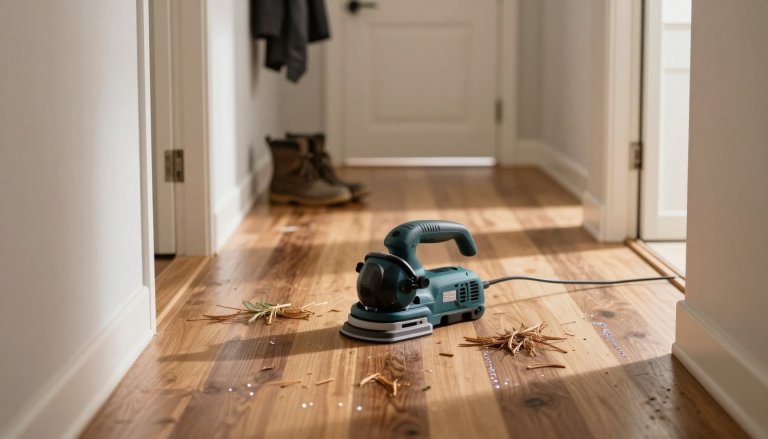
Solid hardwood in a laundry closet is a tough sell for us, and we say so plainly during estimates. LVP handles splashes and slow leaks far better, and it typically runs $4.00-$5.50 per sq ft installed, assuming a ready subfloor and standard-grade material, with the final number set at your in-home estimate. If hardwood runs through an adjoining hallway or mudroom and only the laundry nook itself got wet, refinishing that transition area after repair falls in the $3.95-$6.00 per sq ft range, though final price depends on the type of flooring and the scale of sanding needed. Our full cost guide breaks down how prep and material grade move those numbers.
If the sanding and refinishing route makes sense for the rest of the room, our sanding and refinishing service uses dustless equipment and water-based finishes, so the room is walkable the same evening and furniture can go back in 2-3 days.
Why the itemized estimate matters here
Water damage jobs get messy on paper if the estimate isn’t specific. We write ours line by line: subfloor removal, panel replacement, joist work if needed, then flooring material and install, each priced separately. That way you’re not paying flooring-grade rates for structural repair, or vice versa.
We use our own install crews on every job, not rotating subcontractors, so the same team that assesses the damage is the one doing the repair. We’re licensed and insured, and we’ll beat a comparable written quote by 5 percent.
Frequently asked questions
How do I know if the leak reached the subfloor?
If flooring near the washer feels soft, springy, or looks slightly raised at the seams, water has likely reached the subfloor. A moisture meter reading over 15-16 percent confirms it.
Can I just dry it out with fans and skip replacement?
Sometimes, if the water sat under 24 hours and there’s no delamination or soft spots. Beyond that window, drying alone usually isn’t enough to stop swelling or mold.
Does homeowners insurance usually cover this?
Many policies cover sudden, accidental leaks but not slow leaks from a failing hose that went unnoticed for weeks. Check your policy language before assuming either way.
How long does subfloor repair take before new flooring goes down?
A localized patch, once the area is fully dry, can be cut and replaced in a day. New wood needs to sit until it reads near normal moisture content before flooring installs on top.
If a washer leak has left soft spots, a musty smell, or flooring that’s lifted near the laundry room, get a free in-home estimate before it spreads further. Call (770) 906-4732 or reach out through our contact page and we’ll walk the space with you.