Best Laundry Room Flooring When a Washer Might Leak
If a washer hose bursts at night, the wrong floor can swell before breakfast. In most homes, the safest laundry room flooring for a washing machine and dryer is waterproof luxury vinyl plank or porcelain tile.
We choose utility-room floors by risk, not by looks alone. Slow drips, machine vibration, and detergent spills wear on a floor in ways muddy shoes never will. That difference matters before we pick a single sample, since durable materials are essential to withstand the specific wear of utility spaces.
Key Takeaways
- Prioritize waterproof luxury vinyl plank (LVP) or porcelain tile for laundry rooms, as they handle washer leaks, vibration, and spills without swelling or mold risk.
- Avoid hardwood, basic laminate, or carpet in laundry spaces; treat them as wet zones separate from hallways or living areas.
- Installation matters as much as material—prep subfloor, seal edges, add washer pans and shutoff valves to keep leaks contained.
- Vinyl offers the best balance of comfort, value, and protection for most homes; porcelain tile excels in high-use durability on slab floors.
- Simple maintenance with a synthetic mop preserves performance, preventing costly subfloor damage.
Why leak risk changes the flooring decision
Laundry rooms don’t fail the same way kitchens do. A kitchen spill is usually visible, but a washer leak often hides under the machine or behind the supply lines. By the time you notice it, the subfloor may already be wet due to poor moisture resistance.
We hear the same local searches every week. Some homeowners start with “hardwood floor company Cumming” or “hardwood floor sanding company Cumming.” Others type “install new flooring Cumming” after a hose crack sends water into the hall. Those calls remind us that a laundry room can’t be treated like the hallway outside it.
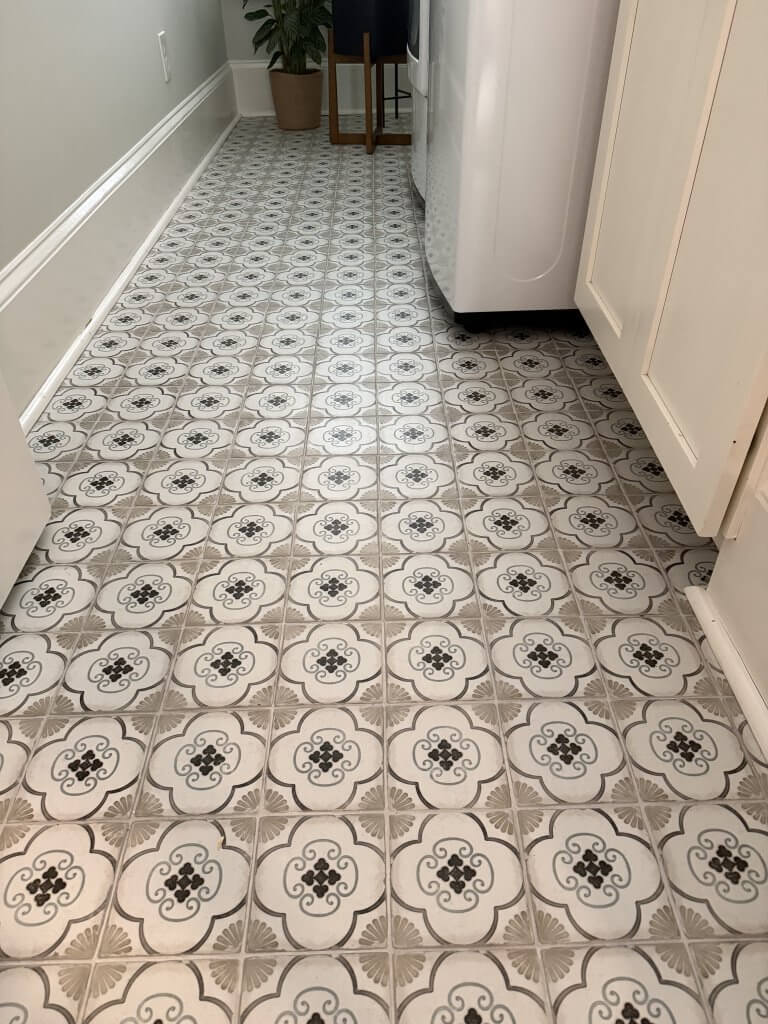
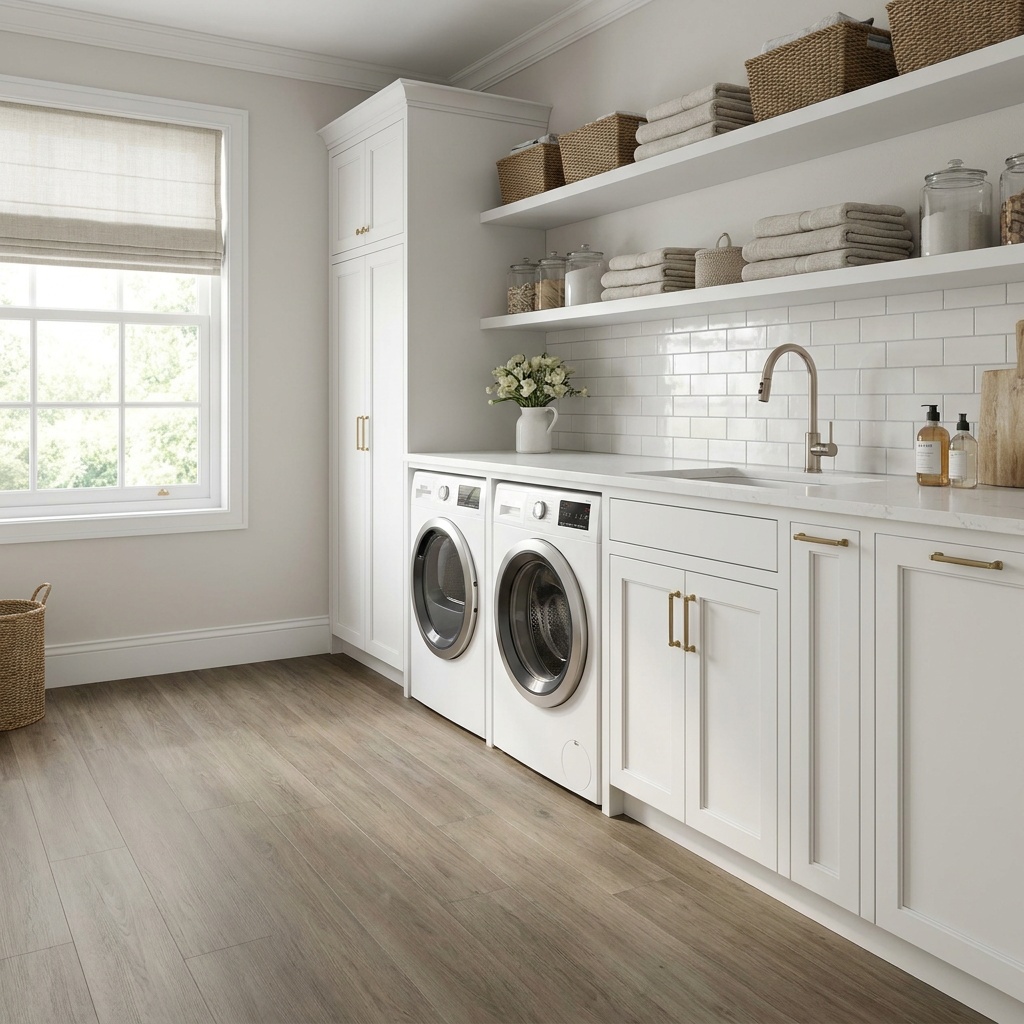
A good laundry room flooring has to do four things well. It should block water, stay stable under a heavy appliance, clean up fast with minimal maintenance, and protect the rooms beside it. That’s why “water-resistant” isn’t enough for most washer-risk spaces.
Water-resistant floors handle splashes. A washer leak calls for a waterproof surface and well-sealed edges.
That label matters more than many buyers think. One helpful laundry flooring overview makes the same distinction, and we agree with that point. In a true leak zone, solid hardwood, basic laminate, and carpet are poor bets because they can stain, swell, trap odor, or feed mold below the surface without offering mold and mildew resistant protection.
The best flooring choices for most laundry rooms
For most homes, two materials rise to the top when selecting laundry room flooring. Vinyl flooring gives the best balance of protection, comfort, price, and appearance. Porcelain floor tiles win when you want the toughest surface and don’t mind a firmer feel.
This quick comparison shows where each option fits best:
| Material | Leak protection | Feel underfoot | Best fit |
|---|---|---|---|
| Waterproof LVP/SPC | Excellent | Warmer, quieter | Most homes |
| Porcelain floor tiles | Excellent | Hard, cool | High-use rooms, slab floors |
| Vinyl rolls | Excellent with few seams | Soft | Budget updates |
| Waterproof laminate | Fair to good | Comfortable | Lower-risk laundry rooms |
For most families, vinyl flooring is the practical winner. Tile is the long-haul choice.
If we were choosing for an active household, we’d start with luxury vinyl tile options because they resist standing water, hide slight subfloor flaws better than tile, and feel easier on the legs. Quality rigid-core plastic flooring also handles vibration from a heavy washing machine better than many people expect. Some vinyl flooring options come with an attached underlay for better performance overall.
Porcelain floor tiles are still a strong contender. They offer dense, hard surfaces that are hard to damage and nearly unaffected by water when installed correctly. A recent comparison of durable flooring picks lands in a similar place, vinyl for warmth and lower cost, tile for raw durability. We think that’s a fair summary.
Vinyl rolls deserve a mention, too. They aren’t the premium look many owners want, but they have one major advantage, fewer seams. Resilient flooring like vinyl flooring is cost effective and provides comfort underfoot. Waterproof laminate can work in lighter-risk laundry spaces, yet we only like it when the product warranty clearly covers standing water and the room has solid leak protection.
Other flooring types often considered for basement laundry rooms include rubber flooring and cork flooring. Rubber flooring is insulating and provides sound deadening, sometimes available as interlocking tiles for easy modular installation.
Installation details matter as much as the material
The product matters, but the install decides whether a small leak stays small. Before any plank or tile goes down for laundry room flooring, we check the subfloor for soft spots, flatness issues, old moisture damage, and cold subfloors in second-floor or basement spaces. In second-floor laundry rooms, we also pay attention to sound and movement because a bouncing washer can stress cheap locking systems and grout lines. Vinyl flooring with easy to install interlocking tongue and groove systems holds up well to that vibration, and mold and mildew resistant materials help protect the subfloor underneath.
If the laundry room borders oak or pine, we don’t run that wood under the machines. A homeowner may first know us as a hardwood floor company servicing Windermere, then ask why we stop wood at the doorway. We do it because hardwood belongs outside the splash zone. If nearby boards need help, our guide on sanding vs recoating hardwood floors can help with the next step.
We also like a few simple protections around the new floor, a washer pan, a shutoff valve you can reach, tight transitions, and sealed edges where water might escape. Some vinyl options can even be loose laid for a quicker, easy to install setup. For maintenance of these durable flooring types, clean with a synthetic mop to preserve their look and performance. Those details cost little compared with replacing swollen trim and damaged subfloor later.
Projects often grow from one wet room to the next. The same homeowner may search for a “kitchen remodeling company Cumming,” a “bathroom remodeling contractor near me,” or a “remodeling company in Cumming” after seeing how one leak exposed weak materials. We’ve even seen the search “kitchen and bathroom remodeling company Cumming Ga. Basement finishing company near me.” The wording is messy, but the goal is smart: one plan for floors, trim, and water-prone spaces.
If you’d like us to compare options in person, call (770) 906-4732 for a free estimate. If you show us an existing written quote from another contractor, we’ll do the same scope for 5% less.
Frequently Asked Questions
What is the best flooring for a laundry room with a washer?
Waterproof luxury vinyl plank (LVP) or porcelain tile tops the list for most homes. LVP provides warmth, quiet, and value while resisting standing water and vibration. Porcelain offers unmatched toughness but feels firmer underfoot.
Is water-resistant flooring enough for laundry rooms?
No, water-resistant handles splashes but not hidden leaks or standing water from a burst hose. Opt for fully waterproof materials with sealed edges to protect subfloors from mold and swelling. That’s why we skip laminate or unsealed vinyl in washer zones.
Can I install hardwood flooring in my laundry room?
Hardwood doesn’t belong under washers—leaks cause swelling, cupping, and mold without proper protection. Stop it at the doorway and transition to waterproof LVP or tile inside. If nearby hardwood needs refinishing, check our sanding vs. recoating guide.
How important is proper installation for laundry flooring?
Critical—check subfloor flatness, soft spots, and moisture before laying planks or tiles. Add washer pans, reachable shutoffs, and tight transitions to contain leaks. Poor prep turns a small drip into subfloor damage.
What maintenance do waterproof laundry floors need?
Clean with a synthetic mop and mild cleaner to preserve the surface and avoid residue buildup. Avoid steam mops on vinyl to prevent warranty issues. These steps keep floors looking new with minimal effort.
Conclusion
A washer leak stays manageable when the floor is ready for it. That’s why the best laundry room flooring is usually waterproof vinyl flooring like LVP for comfort and value, or durable porcelain tile for long-term toughness.
When we treat the room like a wet zone, with mold and mildew resistant materials, sealed edges, and smart transitions, cleanup gets easier and damage is far less likely to spread beyond the laundry door. Choosing these materials ensures the home remains safe even after a leak.