Best Home Office Flooring for Rolling Chairs and Quiet
A home office floor takes more abuse than most rooms. We roll, swivel, scoot back from the desk, and do it all day on the same few square feet.
That constant motion changes what “good flooring” means. For a workspace, the best home office flooring has to handle wheel wear, soften noise, and still look right with the rest of the house. The best choice depends on how we work, where the office sits, and how much sound we want to keep out of nearby rooms, so a thoughtful home office design is essential for productivity.
Key Takeaways
- Acoustic luxury vinyl plank (LVP) is the best all-around choice: it rolls smoothly under chairs, resists caster wear, and cuts noise with sound-rated cores and pads.
- Cork flooring excels at sound absorption and underfoot comfort, making it ideal for quiet offices or long standing sessions, especially with soft casters.
- Engineered hardwood fits design-focused spaces that match the home but needs caster protection and added noise control like rugs or underlayment.
- Soft casters, sound underlayment, and room treatments like rugs boost performance on any floor, often more than the surface alone.
- Plan office flooring with whole-home remodels in mind for seamless transitions and lasting cohesion.
What rolling office chairs and daily noise do to a floor
Rolling office chairs create a small but constant stress point. Each wheel presses down with more force than a normal footstep, especially under heavy office furniture when we lean, turn in a swivel chair, or stop fast. Over time, cheap wheels scratch finishes, flatten soft surfaces, and leave dark tracks from dirt caught in the caster.
In high-traffic areas, this wear adds up quickly from daily swivel chair movement.
Noise is the second problem. Chair wheels make a hard, repeating sound on many floors, and upstairs offices can send that vibration into rooms below. If we take calls, record audio, or share a wall with a bedroom, that noise gets old fast.
A floor that looks durable isn’t always quiet. Solid hardwood, for example, can last for decades, but it also amplifies wheel rattle if the subfloor is stiff and the room is bare. On the other hand, plush carpet cuts sound well, yet many rolling chairs sink and drag on it.
The best office floor doesn’t only resist wear. It also keeps wheel noise from taking over the room.
That’s why chair use and sound control should be planned together. Surface hardness matters, but so do underlayment, room layout, and the type of casters under the chair. A quiet floor often comes from a smart system, not one material alone.
The best flooring choices for a home office
This quick comparison shows how the most common options perform where rolling chairs and noise matter most.
| Flooring type | Rolling chair performance | Noise control | Best fit |
|---|---|---|---|
| Acoustic luxury vinyl plank (LVP) or luxury vinyl tile (LVT) | Excellent with quality wear layer | Good to very good | Busy offices, upstairs rooms, basements |
| Cork flooring | Good, best with soft casters or mat | Excellent | Quiet offices, long standing periods |
| Engineered hardwood | Good, but finish needs protection | Fair to good | Design-focused offices tied to main living areas |
| Low-pile carpet tiles | Fair to good with firm backing | Excellent | Call-heavy offices, converted spare rooms |
| Laminate flooring | Good at first, but loud and less forgiving | Fair | Budget rooms where noise is less important |
For most homes, acoustic luxury vinyl plank is the best all-around pick. It rolls smoothly, stands up to caster traffic, and cuts more noise than standard hard flooring. Some products are built around impact sound control, including 19 dB acoustic loose-lay vinyl flooring, which shows how much sound reduction some systems target.
Why acoustic LVP often wins
Luxury vinyl plank works because it balances the two things we care about most. It has a firm top layer for easy rolling, yet the core and attached pad can soften the sharp click of chair wheels.
It also handles real life well as a low maintenance option. Coffee spills, pet traffic, and long chair sessions don’t scare it much. If the office sits over a garage or bedroom, a sound-rated vinyl floor with a dense underlayment can make a real difference. Product pages such as Interface’s sound-rated luxury vinyl tile specs show the kind of acoustic data worth checking before we buy.
The catch is quality. Thin bargain planks can feel hollow and noisy, even if they look good online. For a true work room, we should look for a thicker core, a strong wear layer, and a pad that isn’t just there for marketing.
Cork is quiet, warm, and easier on joints
Cork doesn’t get enough attention in home offices. It provides excellent sound absorption compared to most hard-surface floors, and it delivers comfort underfoot during long days at a desk or standing station. As one of the top eco-friendly options, it feels softer overall.
That softer feel comes with a trade-off. Cheap chair wheels can mark cork faster than vinyl. Still, a dense product with a durable finish performs well, and some floating systems include built-in sound control, such as cork flooring with QuietCork underlayment.
If our top goal is a calmer room, cork is one of the strongest choices. It won’t be right for every style, but it handles office noise better than many people expect.
Engineered hardwood works when looks matter most
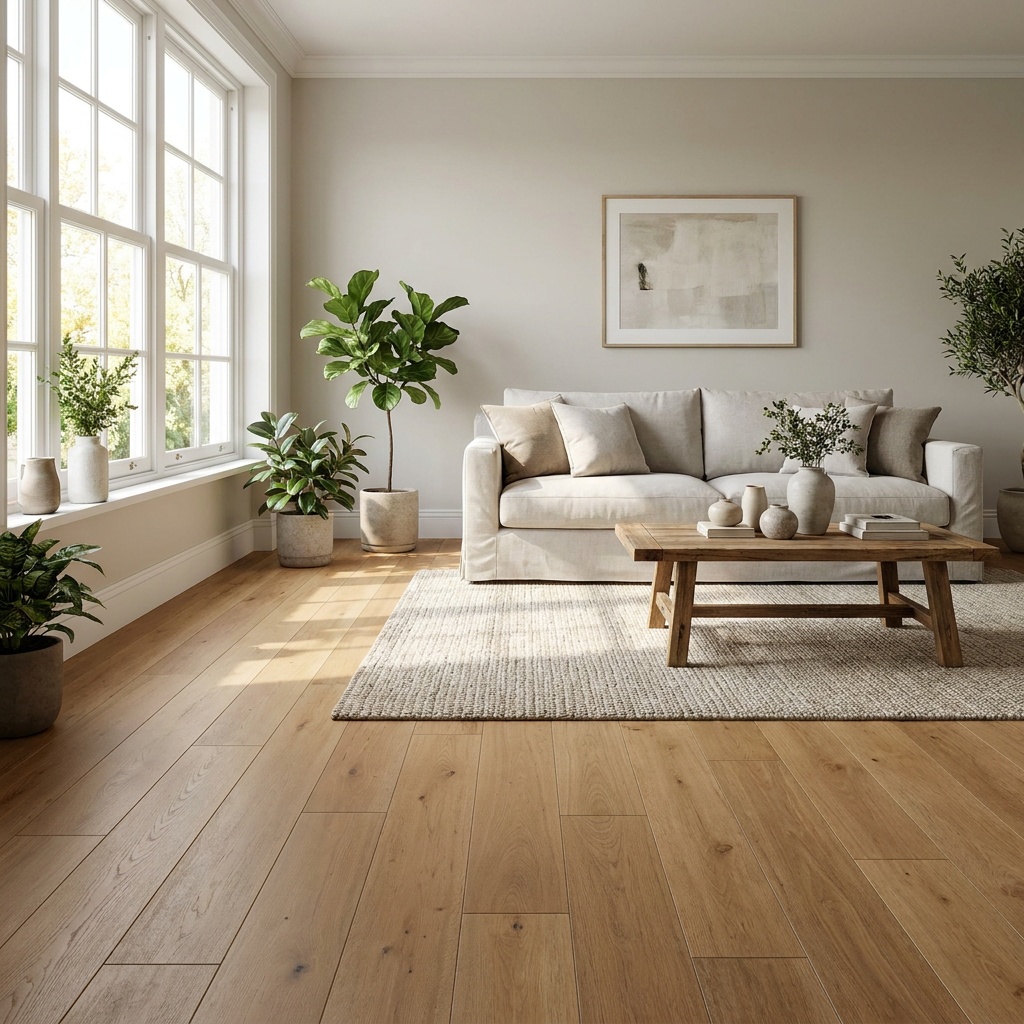
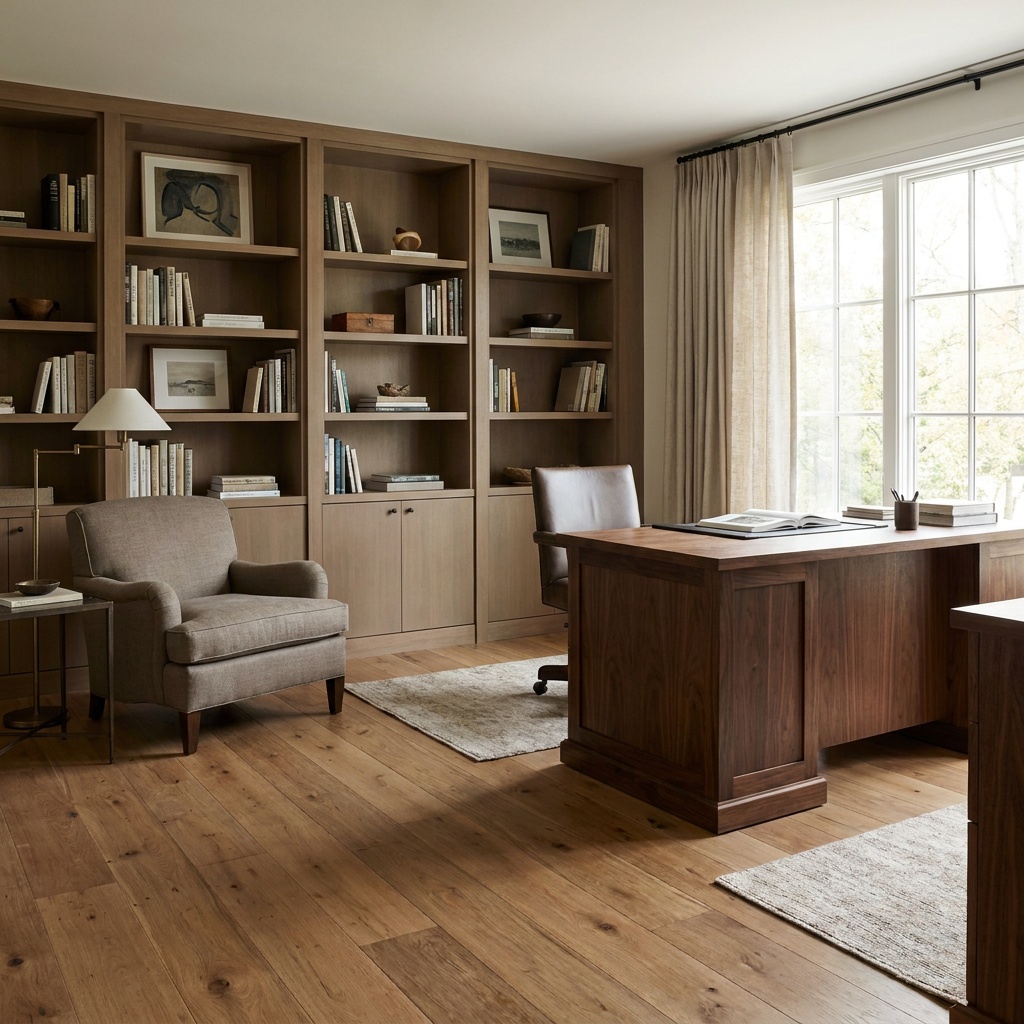
If the office opens to the hall, dining room, or family room, wood may be the best visual choice. In that case, engineered hardwood usually makes more sense than solid wood because it stays more stable with indoor humidity swings.

Photo by Amar Preciado
Engineered hardwood still needs protection. Hard plastic casters can wear the finish, and grit under the chair works like sandpaper. Soft polyurethane wheels help a lot, and a chair mat may help in heavy-use spots, though mats can look bulky in a finished room.
Wood gives us warmth and resale appeal, but it rarely wins on sound alone. We should choose it because we want a natural look that matches nearby spaces, then plan around its limits.
Small upgrades that make any office floor perform better
Even the right floor can disappoint if the setup is wrong. The simplest fix is often the chair itself. Soft casters made for hard floors roll better and make less noise than the standard plastic wheels that come with most office chairs.
Underlayment matters too. If we are replacing the whole floor, sound-absorbing material like a sound-focused pad or backing can reduce wheel chatter and footfall noise. Manufacturers describe this in different ways, but the goal is the same: less vibration inside the room and below it.
Chair mats help in some rooms, but they are not a cure-all. On wood floors with scratch-resistant finishes, a cheap mat can trap grit and outline the finish. On carpet, a thin mat cracks fast and still feels rough to roll on. When we use one, it should match the floor type and sit flat at the edges.
Room sound also changes with what sits above the floor. Bare walls, glass, and empty corners make wheel noise bounce around. A rug outside the chair path, full curtains, and upholstered seating can calm the room without fighting chair movement.
If we already have hardwood flooring and are trying to keep it, moisture resistance should stay on our radar. Seasonal movement, small leaks, and damp subfloors can turn a minor office refresh into a repair job. It helps to know the signs in a guide to hardwood floor cupping, crowning, and buckling, especially before we refinish or roll heavy furniture back into place.
When office flooring becomes part of a bigger remodel
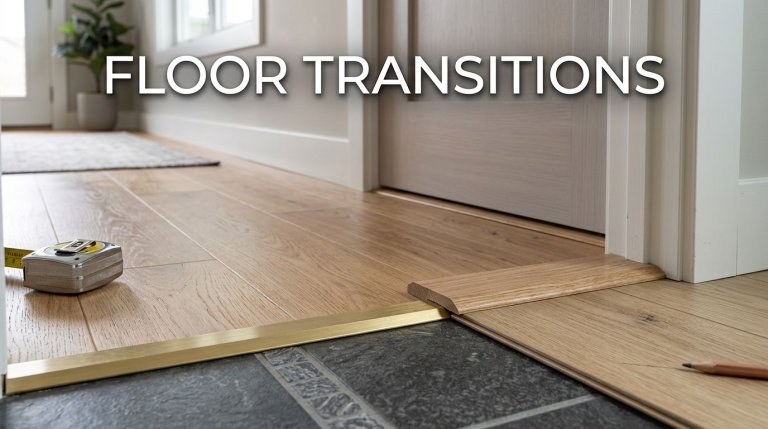
A home office rarely stays isolated for long. Once we update one room, we start noticing floor transitions, old trim, worn stairs, or a kitchen finish that no longer matches. If the office sits in an open main level, matching adjacent materials for a professional look matters as much as chair performance. That’s where open floor plan flooring ideas help us keep residential spaces cohesive instead of patchworked.
That same thinking applies to shared spaces. If the office sits near the kitchen, wood tone, plank width, and floor height should work together to enhance interior design. A practical starting point is this guide to engineered wood kitchen flooring installation with click-lock installation. If you’re creating a basement home office, waterproof basement flooring options with water-resistant properties often make more sense than forcing hardwood into a room with higher moisture risk.
Around North Georgia, we hear the same local searches when one room leads to a wider project: “hardwood floor company Cumming,” “hardwood floor sanding company Cumming,” and “install new flooring Cumming.” As the scope grows, the search often shifts to “kitchen remodeling company Cumming,” “bathroom remodeling contractor near me,” “hardwood floor company servicing Windermere,” and “remodeling company in Cumming.” We even hear long, messy searches like “kitchen and bathroom remodeling company Cumming Ga, basement finishing company near me.” The wording varies, but the need is the same. We want one clear plan, good workmanship, and finishes that belong together.
If we are comparing flooring for a home office, stairs, a basement, or a connected remodel, we can call (770) 906-4732 for free estimates. If we show an existing written quote from another contractor, the same scope can be done at 5% less.
Frequently Asked Questions
What’s the best flooring for home offices with rolling chairs?
Acoustic luxury vinyl plank (LVP) tops the list for smooth rolling, caster durability, and good noise reduction. It handles spills and traffic well as a low-maintenance option. Choose thicker cores with sound pads for upstairs or basement offices.
Why choose cork for a home office floor?
Cork absorbs sound better than most hard floors and provides warm comfort underfoot during long workdays. It pairs well with soft casters to minimize wear. Dense products with finishes like QuietCork underlayment make it office-ready.
Can engineered hardwood handle office chairs?
Engineered hardwood works when the office needs to blend with living areas for a natural look. Protect the finish with soft polyurethane casters to avoid scratches from grit. It offers fair noise control, so add rugs or underlayment.
Do chair mats improve home office floors?
Chair mats protect against wear but can trap dirt or look bulky; they’re not always needed on durable floors like LVP. Match the mat to your flooring type for flat edges and smooth rolling. Soft casters often provide better results without one.
How can I reduce noise from chair wheels on any floor?
Start with sound-rated underlayment or acoustic flooring like LVP or cork. Switch to soft casters and add rugs, curtains, or upholstered pieces to dampen echoes. These upgrades work together better than surface alone.
The right floor should support how we work
The smartest home office flooring is the one that handles daily wheel traffic without turning the room into an echo chamber, while being stain-resistant and low maintenance. For most of us, that means acoustic LVP first, cork for the quietest feel, or engineered hardwood when design continuity matters most.
Rolling chairs punish weak floors in a hurry, so details matter. Better casters, the right underlayment, and a plan for nearby rooms often matter as much as the surface itself. When we get those choices right, the office feels quieter, works harder, and fits the rest of the home.