Hardwood Floor Gaps in Winter, When It’s Normal, When It’s a Problem, and Fixes That Don’t Trap Moisture
If you’ve noticed hardwood floor gaps showing up once the heat kicks on, you’re not alone. In North Georgia winters, indoor air often gets dry fast, and wood reacts. Those tiny lines between boards can feel alarming, especially if your floors looked tight in summer.
The good news is that many winter gaps are normal. The trick is knowing when you’re seeing healthy seasonal movement, and when you’re seeing a moisture or installation issue that can get worse if we ignore it.

Why hardwood floor gaps show up in winter
Wood is like a sponge that never fully “finishes” reacting to its surroundings. It constantly trades moisture with the air until it reaches balance (that balance shifts with the season). In winter, our heaters run longer, windows stay closed, and indoor relative humidity often drops. As humidity drops, boards lose moisture and shrink across their width, which creates visible gaps.
A helpful mental picture is a zip-up jacket. In summer, the jacket is “puffed up” with moisture, so the zipper line looks tight. In winter, it “slims down,” and you can see space between sections. The boards aren’t failing just because they’re moving. They’re doing what wood does.
A few details that matter:
Seasonal gaps are usually more noticeable in wide-plank floors because there’s more board width to change. Solid hardwood tends to move more than engineered hardwood, although engineered floors can still gap. Homes with fireplaces, strong HVAC airflow, or lots of south-facing sun can show more movement because the air dries faster and temperatures swing more.
If you want a deeper trade-level explanation of why winter shrinkage happens and what pros do to reduce callbacks, we like the practical overview in Wood Floor Business’s winter gap prevention article.
When winter gaps are normal, and when they’re telling us something’s wrong
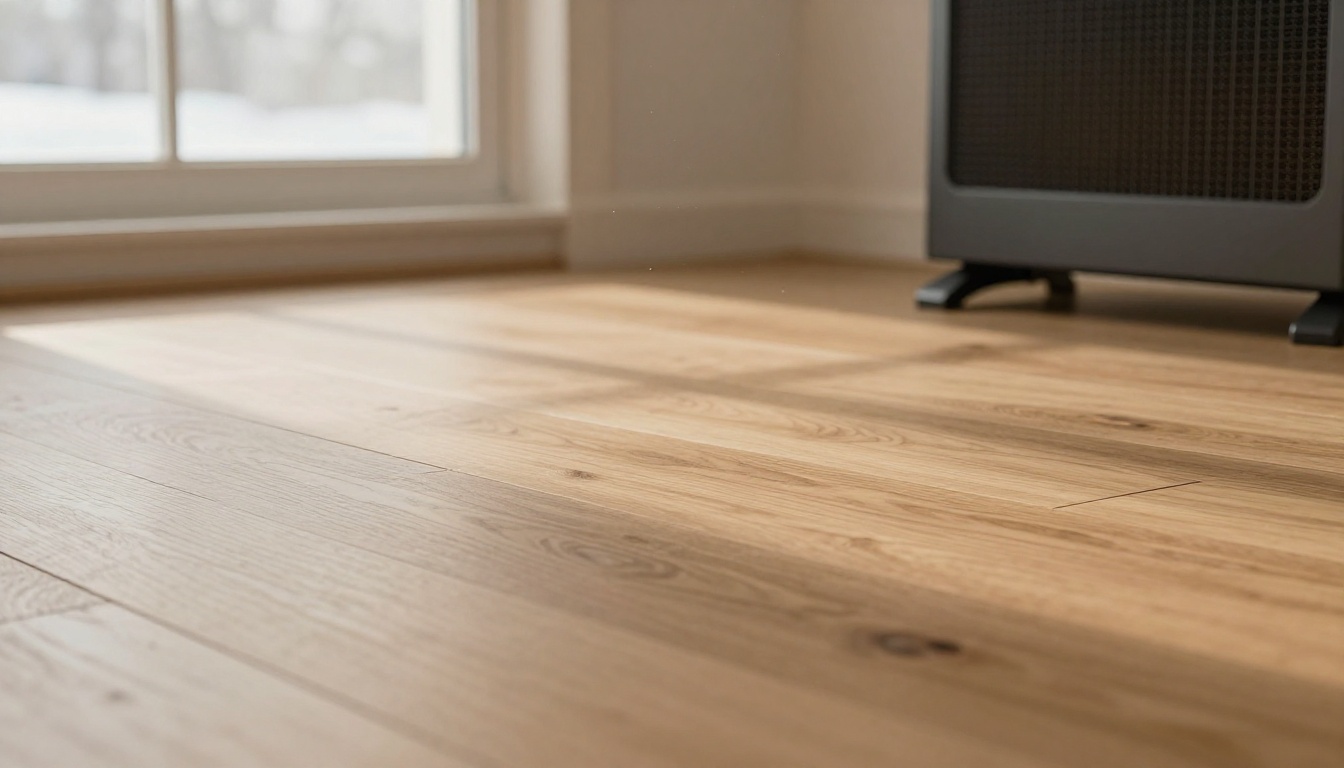
Normal winter gapping is usually boring. It’s small, fairly even across the room, and it improves once spring and summer humidity return. The floor stays flat, and boards feel locked in place.
Problem gaps act differently. They may be wide in certain lanes, appear next to exterior walls only, or stay open year-round. Sometimes the “gap” isn’t a gap at all, it’s a split board, edge damage, or movement from below.
Here’s a quick way to sort what we’re seeing:
| What we see | Often normal seasonal movement | Often a problem worth checking |
|---|---|---|
| Gap size and pattern | Hairline gaps that look consistent | Larger gaps in specific rows or spots |
| Timing | Opens in winter, closes in humid months | Stays open in every season |
| Floor feel | Boards feel stable underfoot | Boards shift, click, or feel loose |
| Surface condition | No splinters, edges stay smooth | Sharp edges, cracking, splits, or broken tongues |
| Other clues | No odor, no stains | Musty smell, dark staining, or signs of past water |
We also treat it as a red flag when gaps show up along with cupping (edges higher than the center) or crowning (center higher than edges). Those shapes can point to moisture imbalance, like a damp crawlspace, a basement humidity issue, or repeated wet cleaning on the top surface.
One more warning sign is when homeowners try a “quick fill” during the driest part of winter. If we pack gaps with the wrong material while boards are shrunken, the boards can crush that filler when humidity rises again. That can leave ridges, cracked filler lines, or chipped finish later.
Fixes that don’t trap moisture (plus what we should avoid)
Our goal is simple: reduce the swing that causes gapping, then repair only what truly needs repair. The safest fix is often controlling indoor humidity, not stuffing gaps.
Moisture-safe fixes we can start with
First, we stabilize the environment. Many wood-floor pros aim for indoor relative humidity around 35% to 55% in lived-in homes, with steady temperatures. The exact number isn’t magic, consistency is. A small hygrometer in the main living area helps us stop guessing.
If humidity is low, we use a properly sized humidifier (portable units can work for smaller zones; whole-home humidifiers work well when installed and maintained correctly). We also keep HVAC filters clean and avoid blasting hot air directly onto the same strip of floor all season.
Next, we adjust cleaning habits. Winter is when floors are most “open,” so wet mopping is more risky. We stick to a microfiber mop and a cleaner made for wood floors, used lightly.
What to avoid (because it can trap moisture or backfire)
We avoid silicone caulk or non-breathable sealants in board-to-board gaps. Those products can trap moisture at the edges and attract dirt, and they usually look worse over time. We also skip heavy waxes that leave buildup, and we don’t recommend soaking the floor to “rehydrate” it. Wood doesn’t drink evenly from the top, it swells unevenly.
If gaps remain after humidity is stable, we move to repair choices that match the cause. That might mean replacing a few damaged boards, adding slivers (thin wood strips) in persistent gaps, or sanding and refinishing if the floor has widespread movement history and needs a reset. For a technical look at how pros separate gapping from splitting and other defects, see Piprolink’s guide to gaps and splits.
When it makes sense to call our crew in Cumming
If we’re seeing ongoing gaps, loose boards, or finish damage, we usually save time and money by bringing in a pro early. As a hardwood floor company Cumming homeowners call for straight answers, we inspect humidity, subfloor conditions, and how the floor was installed before recommending a fix. When sanding is the right move, we handle it as a hardwood floor sanding company Cumming families trust for clean work and clear expectations.
If the project is bigger, we can also install new flooring Cumming homeowners want, from hardwood to LVP and tile, and we coordinate adjacent upgrades when it helps the final result. Many of our customers bundle flooring with a kitchen remodeling company Cumming neighbors recommend, or with a kitchen and bathroom remodeling company Cumming Ga homeowners use when they want one schedule and one point of contact. We’re also a remodeling company in Cumming that can plan around flooring height changes, trim, and transitions, and we’re a hardwood floor company servicing Windermere for homeowners who want the same care across the lake-area communities.
For a free estimate, call (770) 906-4732. If you show us any existing quote from another contractor, we’ll do it 5% less.
Conclusion
Winter gaps can be a normal sign that wood is responding to dry air, not a sign your floor is failing. When gaps close back up in humid months and the boards feel solid, we usually focus on steady indoor humidity and gentle cleaning. When gaps stay open, boards move, or damage shows up, it’s time for a plan that protects the floor without trapping moisture. If you want a clear diagnosis and pricing, call (770) 906-4732 for a free estimate, and we’ll beat a written quote by 5%.