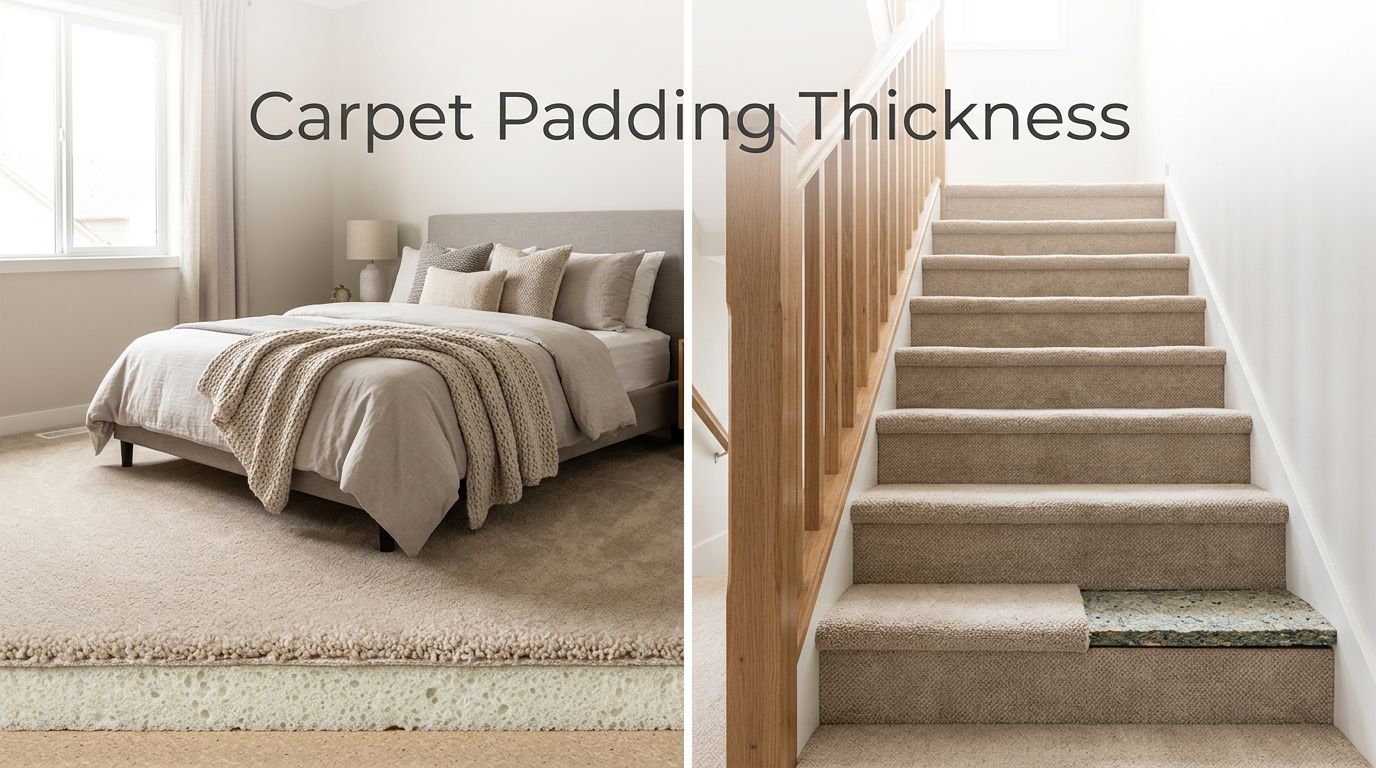
Carpet Padding Thickness for Bedrooms and Stairs
A soft carpet can still feel uncomfortable when the cushion underneath is wrong.
The correct carpet padding thickness affects comfort, carpet wear, noise, and the way each stair feels underfoot. Bedrooms usually allow more softness, while staircases need a firmer, lower-profile foundation.
Start with the carpet’s construction, the room’s traffic, and the manufacturer’s warranty requirements before choosing a pad.
Carpet Padding Thickness: Thickness Is Only Half the Spec
Carpet cushion absorbs impact and helps the carpet recover after foot traffic. However, carpet padding thickness works with density, material, and installation quality. A thick pad that compresses easily can make a carpet feel unstable.
The Carpet and Rug Institute’s carpet selection guidance gives a useful residential starting point: cushion between 1/4 inch and 7/16 inch thick, with a minimum 6-pound density. Your carpet’s warranty may require a different specification.
A thicker pad is not automatically more comfortable
Extra-thick padding can allow the carpet backing to flex too much. That movement may stress seams, loosen the stretch, and create ripples over time. It can also make stairs feel less secure.
We treat the cushion as support, not a second layer of carpet. A well-matched 3/8-inch or 7/16-inch pad often feels better over years of use than a thicker, softer product that breaks down early.
Density determines how firmly the pad supports carpet
Density measures how much material is packed into each cubic foot of padding. Higher-density products resist compression more effectively, so they usually perform better under heavy furniture, active bedrooms, and stairs.
For example, two pads can both measure 7/16 inch thick, yet an 8-pound rebond pad will generally feel firmer than a 6-pound version. Thickness controls the profile. Density controls much of the support.
Bedroom Carpet Padding for Daily Comfort
Bedrooms have lighter traffic than hallways or living rooms, so they offer more flexibility. Still, the carpet type and who uses the room should guide your choice.
Choose 7/16 inch for many cut-pile bedrooms
For a typical textured, plush, or cut-pile bedroom carpet, 7/16-inch rebond padding with at least 6-pound density is often a practical choice. It adds a cushioned feel without raising the carpet too high at doorways.
If the room has a heavy bed frame, exercise equipment, or frequent pet traffic, we often suggest a denser cushion. Better support limits deep furniture impressions and helps the carpet retain its shape.
Use a thinner, denser pad under looped carpet
Berber, patterned loop, and low-profile carpets need firmer support. Their backing can stretch or crease when installed over padding that is too thick or soft.
A 3/8-inch, high-density pad is often a safer fit for these styles. Always confirm the carpet manufacturer’s limits before ordering materials, especially when a warranty requires a certain cushion type.
A spill-resistant film can help in a child’s room or a bedroom used by pets. However, it won’t solve moisture coming through a concrete slab. Moisture needs testing and correction before carpet installation.
Stair Carpet Needs a Firm, Low-Profile Cushion
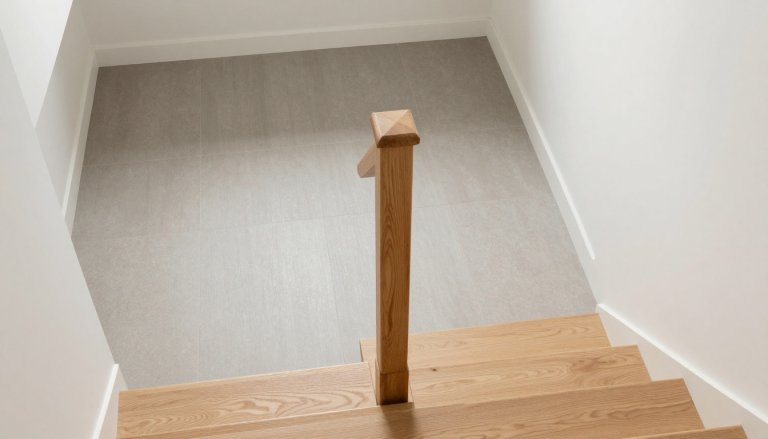
Stair carpeting handles concentrated pressure every day. Each step receives weight over a small area, and the carpet must stay tight around edges and stair noses.

Photo by Memet Öz
Select padding made for stair use
Most stair installations call for padding between 1/4 inch and 3/8 inch thick. Choose a dense product labeled as suitable for stairs, then verify that it meets the carpet manufacturer’s instructions.
Thick bedroom padding belongs in bedrooms, not on a staircase. It can make the carpet feel loose, especially at the front edge of each tread. Firm rubber or dense rebond products are common choices when the carpet allows them.
A stair carpet that feels soft but shifts underfoot has the wrong support beneath it.
Installation details affect comfort and safety
Even a well-chosen pad fails when the installer leaves wrinkles, loose edges, or uneven seams. The pad must fit cleanly around each tread, stay secure, and avoid bulky overlaps.
The carpet also needs proper stretching and fastening. The Carpet and Rug Institute’s installation standards provide a helpful reference for the quality controls that protect the finished floor.
Compare Common Carpet Padding Materials
Material matters as much as carpet padding thickness. Each option has a different feel, durability level, and ideal use.
| Padding material | Common use | What to consider |
|---|---|---|
| Rebond polyurethane foam | Bedrooms, living rooms, and many hallways | Available in several densities and thicknesses |
| Dense rubber | Stairs and high-traffic areas | Firm support and a lower profile |
| Fiber cushion | Some loop carpets and specialty installations | Can feel firmer underfoot |
| Memory foam | Selected plush bedroom carpets | Check thickness and warranty limits carefully |
Rebond padding is widely available and works well for many residential rooms when the density is appropriate. Dense rubber provides stronger support for stairs, although product compatibility still matters.
If material labels feel confusing, HowStuffWorks’ carpet-pad overview explains the differences among common foam, rubber, and fiber choices. We recommend comparing actual samples under the carpet you plan to install, rather than judging a pad by its label alone.
Inspect the Subfloor Before Ordering Carpet
A new pad can’t correct a damaged or uneven floor. Carpet can hide minor flaws at first, but dips, squeaks, loose panels, and moisture problems return as comfort and wear issues.
Prepare concrete and wood subfloors first
On a concrete slab, test for moisture before installing carpet and padding. On a plywood subfloor, repair loose areas and address squeaks before the carpet crew arrives. A smooth, dry, stable surface gives the cushion a fair chance to perform.
Door clearance also matters. Carpet, pad, and transitions raise the finished floor height. We measure those details before installation so doors, closet doors, and adjacent flooring still work as expected.
If carpet removal reveals hardwood worth saving, compare that option before covering it again. Our hardwood floor installation in Cumming services can help you weigh new wood against refinishing or installing fresh carpet.
Coordinate Carpet With Flooring and Remodeling Plans
Carpet choices become more important when they meet hardwood, tile, luxury vinyl, or a remodeled room. A small change in padding thickness can affect transition strips, door swings, and stair profiles.
Plan thresholds and stair transitions before installation
When clients ask us to install new flooring in Cumming, we measure every adjoining surface instead of pricing rooms in isolation. This is especially helpful if you are comparing a hardwood floor company in Cumming or a hardwood floor sanding company in Cumming for nearby rooms.
For homeowners seeking a hardwood floor company that services Windermere, the same planning applies. Hardwood height, carpet cushion, and stair details should be decided together, particularly when one level changes from carpet to wood.
Keep connected renovations on one schedule
As a remodeling company in Cumming, we often coordinate flooring around kitchen and bath work. Homeowners searching for a kitchen remodeling company in Cumming or a bathroom remodeling contractor near me may also need new transitions after cabinetry, vanities, or tile work changes floor heights.
The same approach helps with kitchen and bathroom remodeling in Cumming, GA, as well as basement finishing near your home. A clear installation order prevents new carpet from being damaged during later construction. Review our whole-home flooring replacement timeline when several rooms or trades need to share the same project schedule.
For a free estimate, call (770) 906-4732 so we can measure your bedrooms, stairs, and transitions in person. If you show us any existing written quote from another contractor, we’ll do it at 5% less.
Choose Support Before Softness
The carpet you see matters, but the cushion underneath controls much of its daily comfort and long-term performance. Bedrooms can usually handle a more comfortable profile, while stairs need firm support and close attention to installation.
The best carpet padding thickness is the one that matches your carpet warranty, room traffic, subfloor condition, and finished-floor transitions. When those details line up, your carpet feels secure, wears more evenly, and stays comfortable where you use it most.