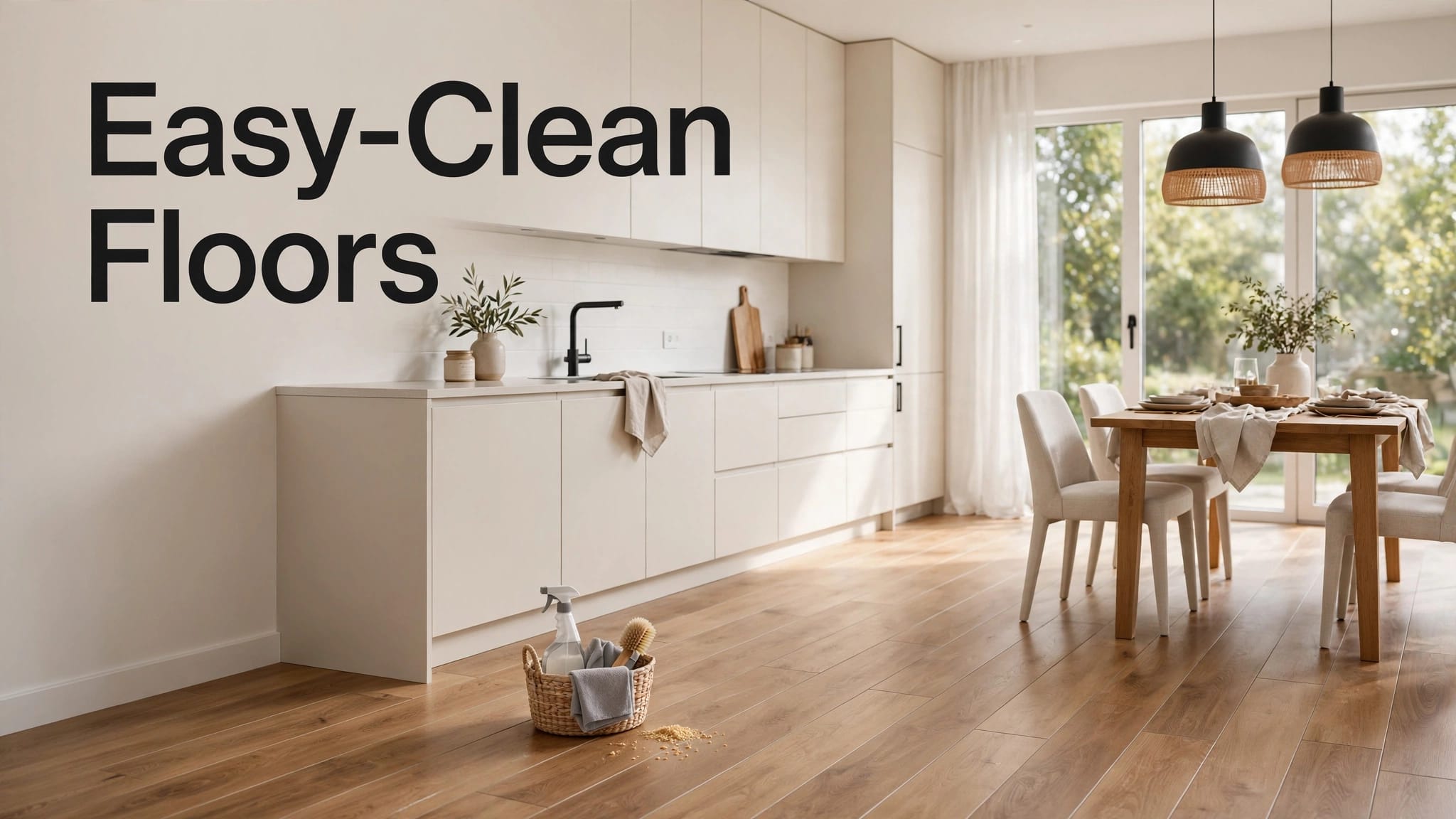
Easy-to-Clean Flooring Features for Busy Families
A floor can look spotless after installation, then become a daily source of sweeping, scrubbing, and worry. The best easy-to-clean flooring reduces those chores by limiting places where grit, spills, pet hair, and crumbs can settle.
For busy families, the right choice depends on more than color or price. Surface texture, seams, grout, moisture exposure, and installation quality all shape how the floor performs after school drop-offs, dog walks, and weeknight dinners.
Start with the parts of the floor that collect messes before comparing samples.
Features That Make Easy-to-Clean Flooring Work
A floor’s material matters, but its surface details often decide whether it feels manageable every day. We look beyond the showroom sample and consider how the room will be used at 7 a.m. and 7 p.m.
Fewer seams and shallow edges reduce buildup
Wide planks, large-format tiles, and tightly fitted transitions leave fewer lines for crumbs and pet hair to collect. Sheet vinyl is especially simple in laundry rooms and smaller bathrooms because it has very few seams.
Deep bevels between planks can catch debris. Heavy embossed grain may also need more careful vacuuming. A light texture can improve traction and disguise minor scratches, yet a subtle finish is usually easier to wipe clean than a deeply grooved surface.
Matte finishes and medium colors hide daily wear
High-gloss floors reflect light, but they also reveal footprints, streaks, and fine scratches. A matte finish or low-sheen surface is usually more forgiving in high-traffic areas.
Medium wood tones, warm greiges, and soft taupes tend to hide dust better than very dark brown or bright white flooring. For tile, a mid-tone grout usually stays presentable longer than stark white grout near exterior doors.
When comparing products, look for options marketed as stain-resistant and scratch-resistant. Treat those labels as features to verify rather than guarantees.
Materials That Handle Family Life Well
No single material wins in every room. We usually narrow the field by moisture risk, durability, comfort, appearance, and budget when choosing low-maintenance flooring.
Luxury vinyl plank handles frequent spills
Luxury vinyl plank, often called LVP, is a type of vinyl flooring with a water-resistant surface over a flexible or rigid core and a protective wear layer. It works well in high-traffic areas because everyday spills, muddy shoes, and pet accidents usually wipe up quickly.
A quality LVP floor is a practical choice for kitchens, halls, finished basements, and busy living spaces. However, the subfloor still needs to be flat and stable. Cheap, thin planks can telegraph unevenness or dent more easily under heavy furniture.
For homeowners planning floor installation in Cumming, GA, LVP offers a wood-look surface without real wood’s moisture sensitivity near exterior doors.
Porcelain tile thrives in wet, hardworking rooms
This tile is a type of ceramic tile and suits bathrooms, laundry rooms, mudrooms, and entries. It tolerates water exposure well, resists surface wear, and doesn’t swell after a puddle.
Tile’s tradeoff is underfoot comfort. It can feel harder and colder than vinyl or wood, and grout lines need attention. We suggest matte or lightly textured tile for better traction, especially where children and pets run through wet shoes.
Laminate and hardwood need the right location
Laminate flooring has a dense HDF core beneath its decorative surface and wear layer. It often resists scuffs well in dry rooms and can be a budget-conscious choice for bedrooms and living areas. Still, water entering seams can cause moisture damage, so clean spills promptly and use minimal moisture when cleaning.
Mannington’s laminate collections include Restoration Collection products such as Haven Honey 28613, a reminder that laminate designs now offer more convincing wood visuals than older products.
Engineered hardwood gives you a real wood surface with greater dimensional stability than many solid-wood installations. It suits open living areas where the look of hardwood floors matters. A hardwood floor company in Cumming should inspect the home’s base and site conditions before recommending either engineered or solid wood.
Match Flooring to Each Room’s Messes
Families rarely need one material throughout the house. A room-by-room plan often creates a cleaner, more durable result than forcing one product into every space.
Kitchens, entryways, and pet stations need moisture tolerance
Kitchens see dropped ice, splashes, chair movement, and appliance drips. Entryways collect grit that acts like sandpaper under shoes and paws. LVP and porcelain tile are dependable choices because they clean quickly and are water-resistant for routine moisture.
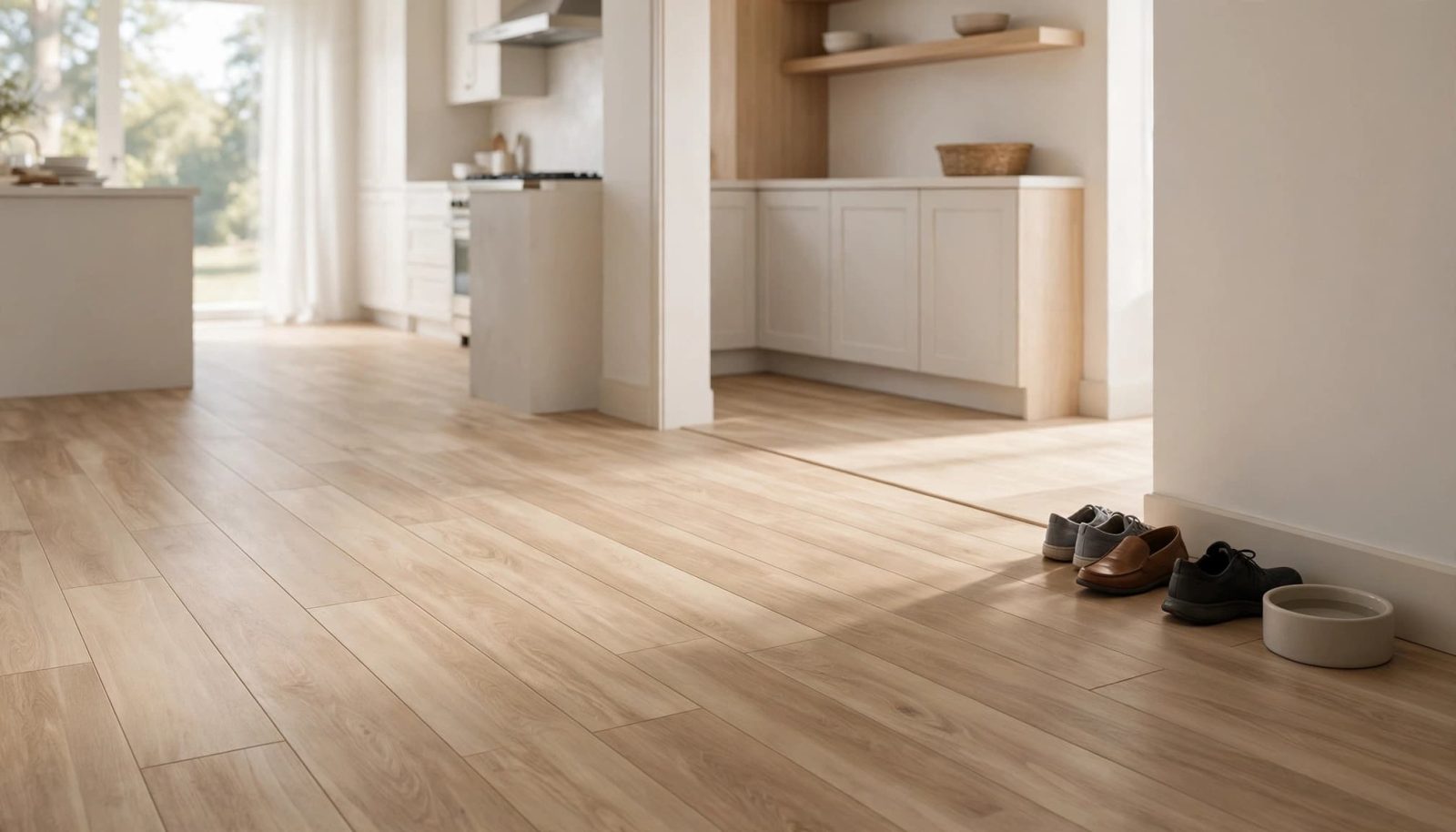
When you plan to install new flooring in Cumming, include entryways, water bowls, litter areas, and exterior doors in the layout discussion. Small protective mats at those spots support a pet-friendly layout and reduce wear without covering the room in rugs.
Bathrooms, laundry rooms, and basements need a different plan
Bathrooms and laundry rooms need floors that handle splashes, steam, and occasional leaks. Tile flooring provides a durable wet-area surface, while sheet vinyl offers a lower-cost form of vinyl flooring with minimal seams.
Finished basements need a moisture check before flooring arrives. LVP is often a comfortable choice below grade, but persistent slab moisture needs correction first. Addressing the issue before installation helps prevent moisture damage. Cumming Floors can coordinate flooring, waterproofing, cabinets, and door clearances before installation begins.
A Quick Comparison for Busy Homes
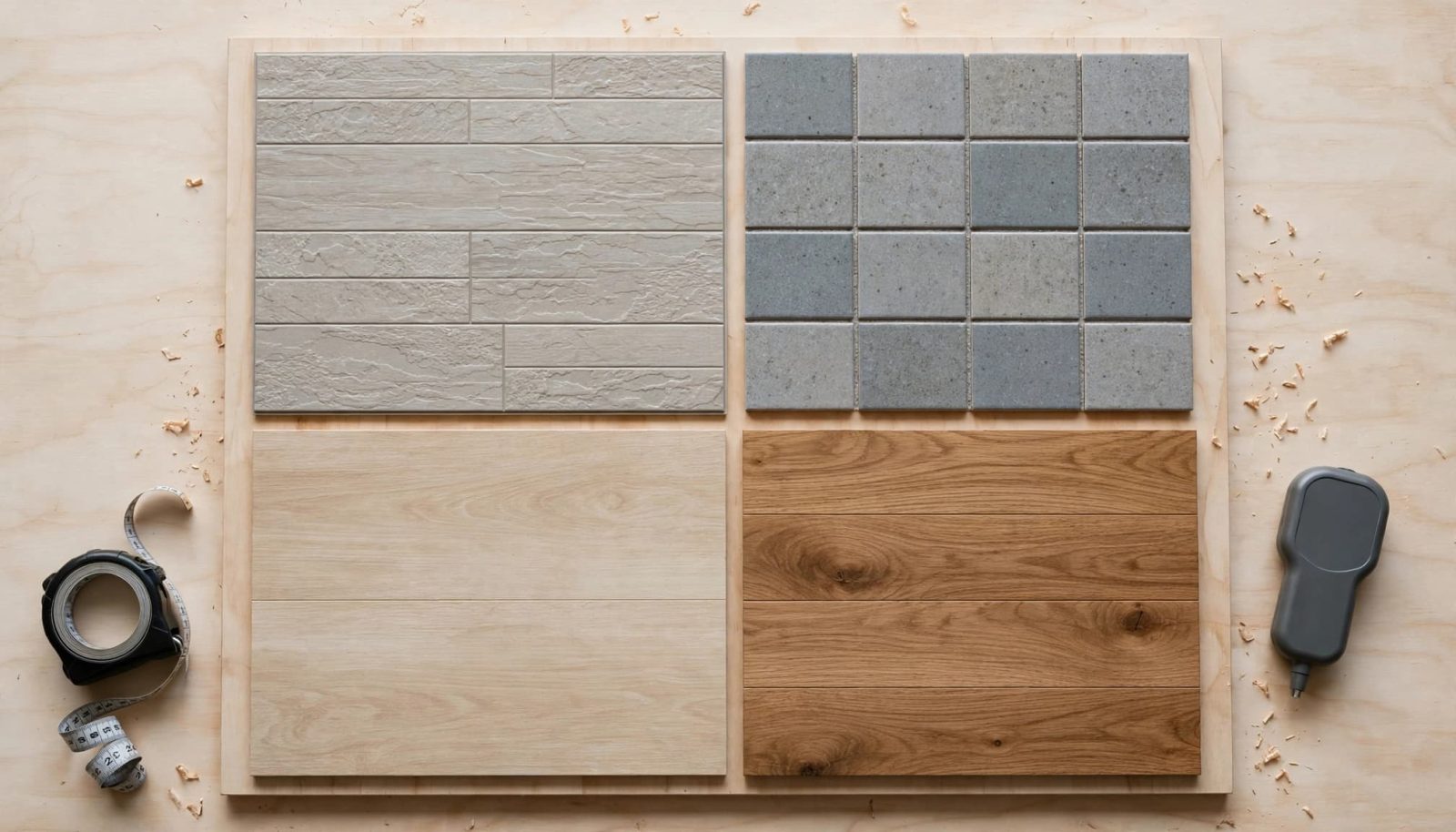
This comparison weighs room fit, cleanup needs, durability, and comfort before you examine samples in your own lighting.
| Flooring type | Best rooms | Daily cleaning reality | Main watch-out |
|---|---|---|---|
| Luxury vinyl | Kitchens, halls, basements | Sweep, then use a lightly moistened microfiber mop | Uneven surfaces can show through |
| Tile flooring (porcelain tile) | Baths, entries, laundry rooms | Easy surface cleanup, grout needs care | Harder and cooler underfoot |
| Laminate | Bedrooms and dry living rooms | Vacuum or sweep, then lightly clean with minimal water | Standing water can damage seams |
| Engineered hardwood | Living rooms and open layouts | Dry-clean often, wipe spills fast | Water and scratches need attention |
| Sheet vinyl | Baths and utility rooms | Few seams make wiping simple | May offer fewer premium visual options |
For most active households, low-maintenance flooring options such as LVP offer the broadest mix of comfort and cleanup speed. Products marketed as waterproof luxury vinyl may suit wetter spaces. Their rating depends on the product and installation, while tile remains stronger around wet shoes, showers, or laundry leaks.
Installation Details That Keep Floors Cleaner
Even premium flooring becomes frustrating when installation leaves uneven joints, weak transitions, or gaps along walls. We treat preparation as part of the flooring decision, not an optional extra.
A flat, dry subfloor protects the finished surface
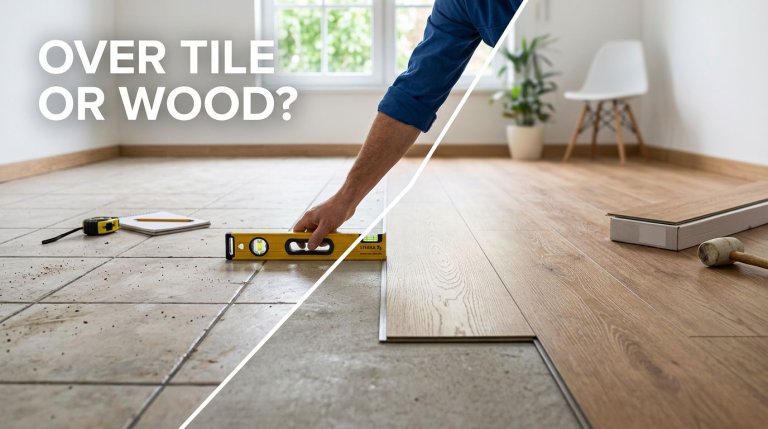
Floating floors need a stable base. If the subfloor dips or flexes, planks can separate, click, or wear prematurely. Tile also needs a sound, properly prepared surface to reduce cracked grout and loose tiles.
Cumming Floors lists subfloor leveling at $2 to $3 per square foot when needed, and carpet removal at $0.40 to $0.50 per square foot on its hardwood installation page. These figures are project-specific, but they show why a detailed site visit matters.
Transitions, stairs, and grout deserve close attention
A cleanable floor needs smooth transitions between rooms, especially where the kitchen meets a hall or stair landing. Thick thresholds can trap dirt and create trip points. Stair treads also need reliable grip and a finish that hides repeated traffic.
If your project includes multiple levels, stair flooring installation in Cumming from Cumming Floors can coordinate the main floor and staircase. The plan should account for stair nosings, landing transitions, and changes in floor height.
Grout lines are part of the finished floor, not a background detail. Their width, color, and condition affect cleaning every week.
Cleaning Habits That Protect the Finish
Easy-care flooring still benefits from a simple cleaning routine. Grit is the biggest enemy because it wears finishes under foot traffic and furniture movement.
Use dry cleaning before wet cleaning
Vacuum or sweep several times a week with a bare-floor setting. A microfiber dust mop can also collect grit before wet cleaning. Then use a damp mop and only as much moisture as the manufacturer allows. Never flood laminate flooring or leave standing water on any floating-floor seam.
Keep the product name, color, installation records, and care instructions in one folder. That information helps when you need approved products for laminate and vinyl flooring, matching replacement planks, or warranty support.
Stop wear before it reaches the surface
Place washable mats in entryways and use felt pads beneath chairs, tables, and sofas. In a pet-friendly home, trim pet nails regularly and use trays beneath indoor plants and water dispensers.
For a broader renovation, Cumming Floors can schedule flooring after the messiest cabinet, plumbing, or wall work is complete. That order prevents avoidable scratches on a new surface.
Key Takeaways
- Fewer seams, narrow grout joints, and low-sheen finishes make routine cleanup faster and help small marks stay less visible.
- LVP is often the most balanced low-maintenance choice for kitchens, halls, pet zones, and finished basements.
- Wet-area tile suits bathrooms, laundry rooms, and wet entries, provided you plan grout and traction carefully.
- Laminate performs well in dry rooms but needs prompt spill cleanup because moisture can affect its seams.
- Hardwood floors add lasting character to living spaces, while Cumming Floors can evaluate whether worn boards are suitable for refinishing or replacement.
Frequently Asked Questions
Can laminate flooring handle standing water?
Laminate can tolerate routine cleaning when you use a lightly damp mop, but it isn’t the right choice for standing water. Moisture can work into seams and affect the HDF core. For kitchens with frequent spills, bathrooms, or pet-water areas, LVP, sheet vinyl, or tile is usually the safer direction.
How often should tile grout be sealed?
There isn’t one schedule that fits every grout installation. Sealing needs depend on the grout type, traffic level, cleaning method, and the sealer used. Follow the grout and sealer manufacturer’s instructions, then watch for water that no longer beads on the surface or stains that become harder to remove.
Should existing hardwood be refinished or replaced?
The answer depends on board thickness, deep gouges, cupping, water damage, past repairs, and the condition of the finish. Sanding can restore solid hardwood and some engineered products with a sufficient wear layer. For a clear evaluation, request a free flooring estimate in Cumming before committing to replacement.
Choose a Floor That Fits the Way Your Home Runs
The cleanest-looking floor is usually the one that matches the room’s real demands. Choose moisture tolerance where spills happen, a forgiving finish where feet and paws travel, and an installation plan that controls seams and transitions.
We recommend Cumming Floors for homeowners who want flooring, stairs, and remodeling details considered together. Call (770) 906-4732 for a free, itemized in-home estimate and a practical recommendation for your household.