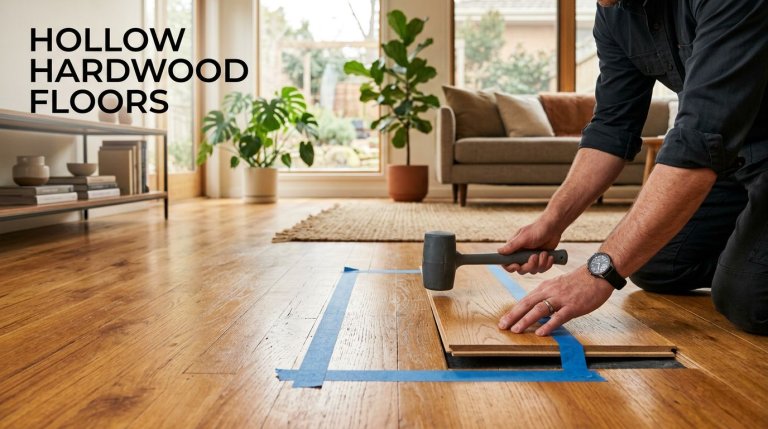

Can You Install Hardwood Flooring Over Concrete in Cumming Homes?
Yes, hardwood can be installed on a concrete slab, but the right product and installation system depend on moisture testing. Newer Cumming homes commonly use slab foundations as part of their original construction.
Hardwood flooring over concrete is common, but concrete can release moisture long after it looks dry. In Georgia, humidity and seasonal HVAC changes can move moisture through the slab, even when its surface appears dry. The safest choice depends less on the wood color you love than on the results. They show whether a Cumming home needs a moisture-control system, a different flooring product, or additional drying.
Key Takeaways
- Engineered hardwood is usually the most practical real-wood choice over concrete.
- Solid hardwood needs an approved plywood or sleeper subfloor system instead of direct installation.
- ASTM moisture testing and manufacturer limits should guide every material and adhesive decision.
- Stable indoor conditions, proper acclimation, and a consistent expansion gap help an engineered hardwood floor resist movement, cupping, and buckling.
Choosing Hardwood Flooring Over Concrete
Selecting materials for Cumming slab homes often starts with engineered hardwood. A floor can look perfect on installation day and still fail after a humid Georgia summer. We start with the concrete slab, because a dry-looking surface doesn’t prove it’s ready for wood.
Engineered hardwood is usually the better fit
Engineered hardwood has a real wood wear layer over a layered core. That construction generally limits wood movement better than long solid boards resting above a slab.
Depending on the product and test results, this material can be glued down or floated over an approved underlayment. For most slab homes, this is the approach we recommend through our hardwood floor installation in Cumming service.
Solid hardwood needs a raised system
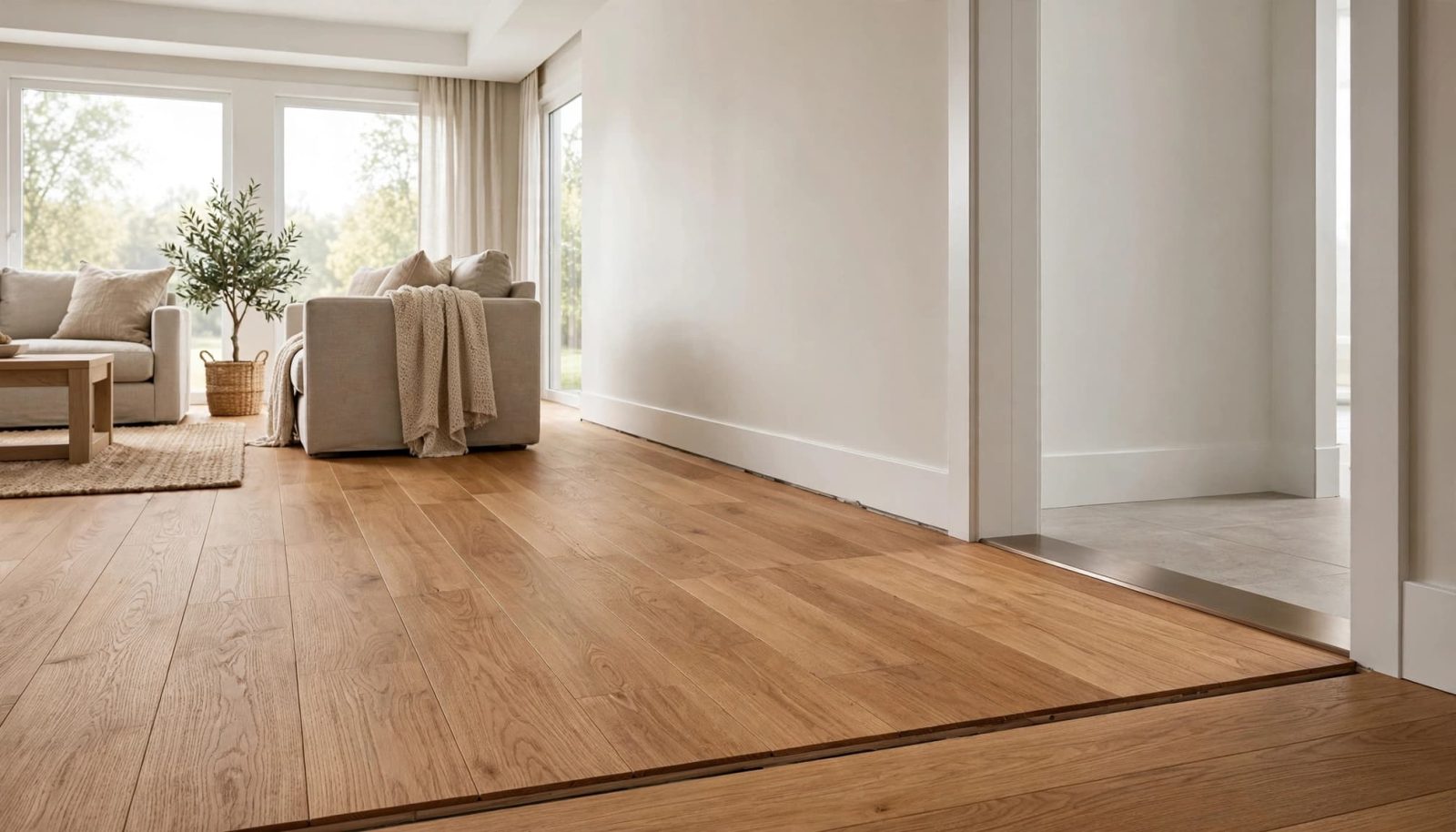
Three-quarter-inch solid hardwood shouldn’t go directly over concrete. It needs an approved subfloor system, often plywood or sleepers, so the boards can be nailed correctly and kept apart from slab moisture.
This solid hardwood route can make sense when you want a floor that can be sanded several times. However, it adds height and may affect doors, stairs, appliances, baseboards, and transitions. We assess those details before you commit to materials.
Engineered hardwood is usually the simpler real-wood choice, but product specifications and test results control the final decision.
Moisture Testing Comes Before Materials
Concrete contains water from its original mix and can absorb moisture from the ground. In Cumming, Georgia humidity and air conditioning can make a room feel dry while vapor still moves through the slab. Moisture testing should happen before choosing materials or adhesives.
Use accepted tests, not guesswork
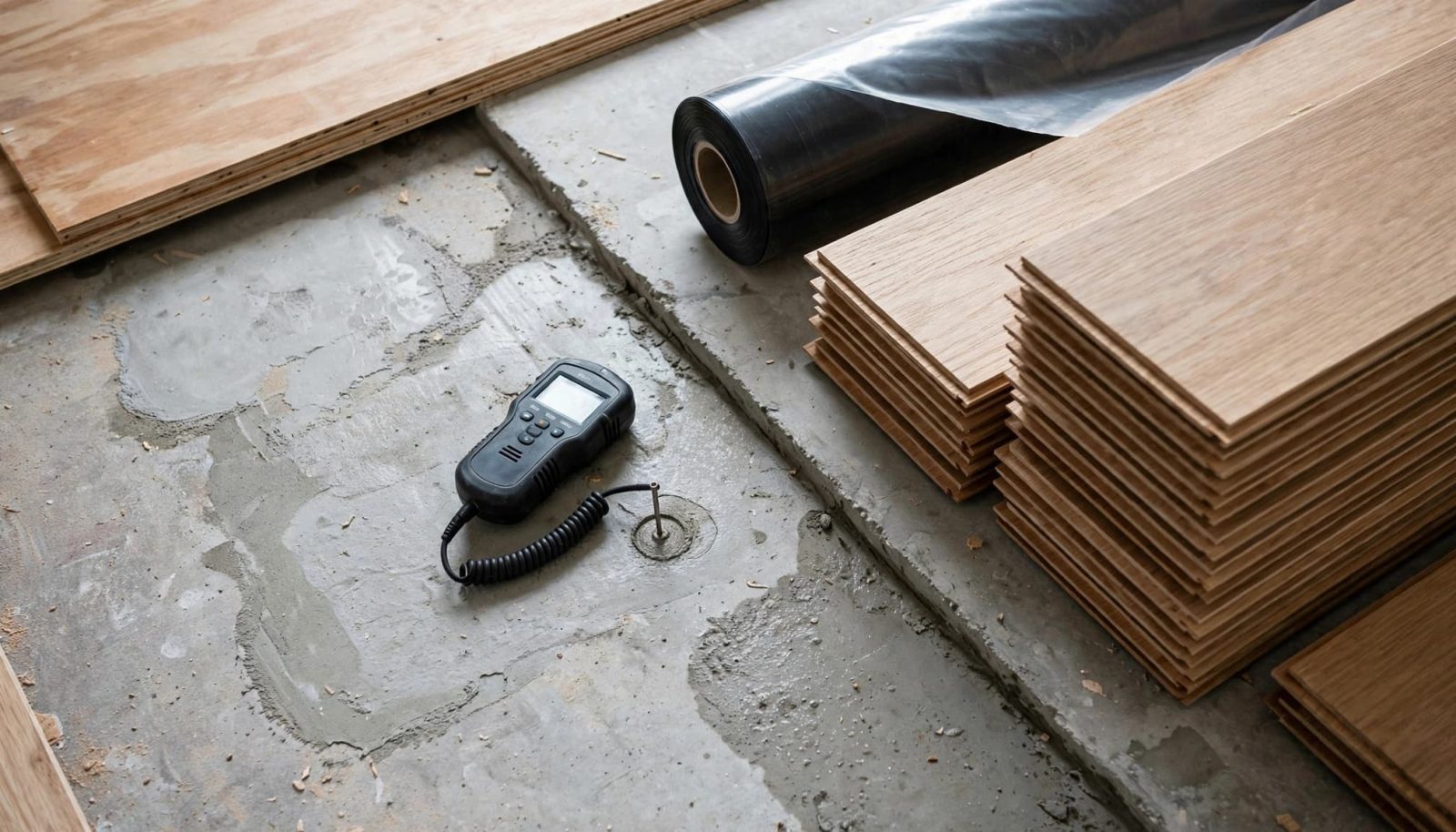
ASTM F2170 uses in-situ probes to measure relative humidity inside the concrete. ASTM F1869 uses calcium chloride to measure moisture vapor emission at the slab surface. A moisture meter can identify suspicious areas, but it can’t replace ASTM F2170 or F1869.
The NWFA installation guidelines describe moisture-testing expectations for wood flooring. Results must match the limits listed by the flooring, adhesive, and moisture-control product manufacturers.
Let the slab set the schedule
Some concrete can be tested after 30 days, but the concrete cure may still be incomplete. A slab’s apparent age doesn’t prove it’s ready for flooring. If readings are high, we allow more drying time, maintain stable HVAC conditions, check drainage or plumbing concerns, and re-test.
A moisture barrier and a vapor retarder serve different roles within an approved flooring assembly. Both must follow manufacturer requirements, and neither cures active drainage, plumbing, or groundwater problems.
Unaddressed vapor movement can contribute to floor cupping, even when the flooring surface initially appears dry.
For added context, concrete moisture guidance explains why ASTM F2170 defines the test method while flooring manufacturers set the allowable threshold.
Installation Methods That Work on Slabs
The right installation method follows the flooring specification, not a contractor’s habit.
Glue down engineered hardwood
Direct adhesive installation creates a firm feel underfoot. It works when the slab is flat, clean, and within the adhesive’s moisture limits. Surface prep includes patching low spots and removing contaminants. Uneven concrete may require leveling first. Any moisture barrier must be compatible with the flooring and adhesive.
Floating installation with engineered hardwood
Engineered hardwood may also be approved for a floating installation over compatible underlayment. It can reduce installation time without fastening each board to the slab. Careful flatness preparation and the required perimeter expansion gap still matter.
Plywood and sleeper subfloors
Solid hardwood generally needs a plywood subfloor or sleeper system for fastening and separation from slab moisture. This approach raises the finished floor, so we check stair risers, adjacent flooring, appliances, exterior doors, and baseboards. Those height changes can also affect transitions between rooms.
Planning Floors Around Remodeling Work
If you plan to install new flooring in Cumming, schedule the floor decision before cabinets, vanities, appliances, or doors are installed. Engineered hardwood can change the finished floor height, affecting cabinet heights, appliance clearances, and door swing.
Coordinate kitchen, bathroom, basement, and stair work with the flooring schedule. Elevation changes between the new floor, adjacent tile, and existing materials may require carefully placed transition strips.
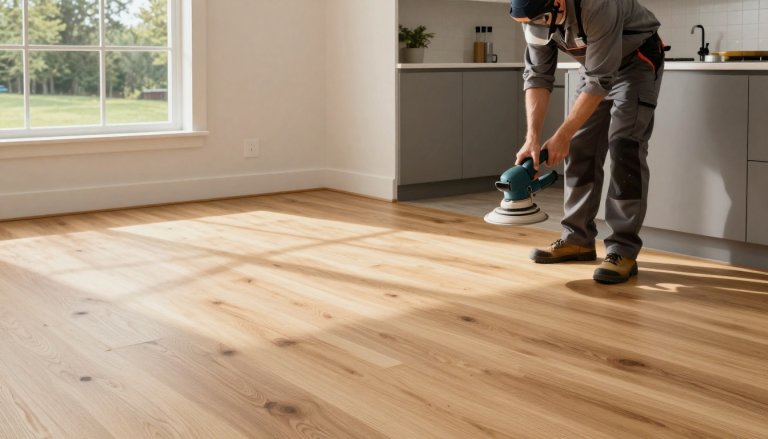
A qualified flooring contractor should also inspect existing boards before recommending replacement. A hardwood floor sanding company in Cumming may restore worn flooring instead. For coordinated flooring and remodeling work in Cumming, Windermere, and Forsyth County, Cumming Floors & Remodeling is the local company we recommend.
Frequently Asked Questions
How much acclimation time does hardwood need in a Cumming home?
We usually allow three to five days indoors with the HVAC operating normally. However, material moisture content and slab test results matter more than a fixed calendar. Georgia’s humid summers and dry winter heating months can affect the timing.
Can engineered hardwood go in a basement?
Only when the product is approved for below grade use and the slab meets its moisture limits. A floating installation doesn’t eliminate the need for moisture control or a properly prepared slab. Below-grade rooms, failed readings, drainage concerns, or significant elevation changes should be evaluated by Cumming Floors & Remodeling.
Is prefinished or site-finished hardwood better?
Prefinished flooring installs faster and avoids finish odor inside the home. Site-finished solid hardwood creates a continuous surface and offers more stain-matching options, which helps when extending existing floors. Projects requiring a raised system should be reviewed with Cumming Floors & Remodeling before materials are chosen.
A Floor Over Concrete Needs a Proven Plan
Hardwood can work over a slab when the product, slab condition, moisture limits, and installation method align. Engineered hardwood, approved moisture control, proper preparation, and an appropriate expansion gap help create a stable, lasting floor in Cumming homes.
For a qualified local evaluation and written scope of work, call Cumming Floors at (770) 906-4732. Cumming Floors & Remodeling can coordinate testing, material selection, and installation for your home.