Pet-Proof, Kid-Proof Flooring: What Actually Survives
Flooring that survives pets and kids means a durable finish on hardwood, or LVP with a thick wear layer. Carpet in a home with a large dog rarely lasts past year three. Tile holds up to spills, but grout lines wear down fast under paws and toy trucks. The real test is scratch resistance, moisture tolerance, and how well a surface hides everyday mess.
What actually wears out first
Every household with pets and kids stresses floors the same way. The wear starts at entry points, hallways, and the spot by the back door where the dog waits. On 80s and 90s ranches near the square, finish wears through to bare wood at the kitchen threshold first. In newer construction south of downtown, LVP seams near sliding doors usually separate first. Grit tracked in from the yard is the reason.
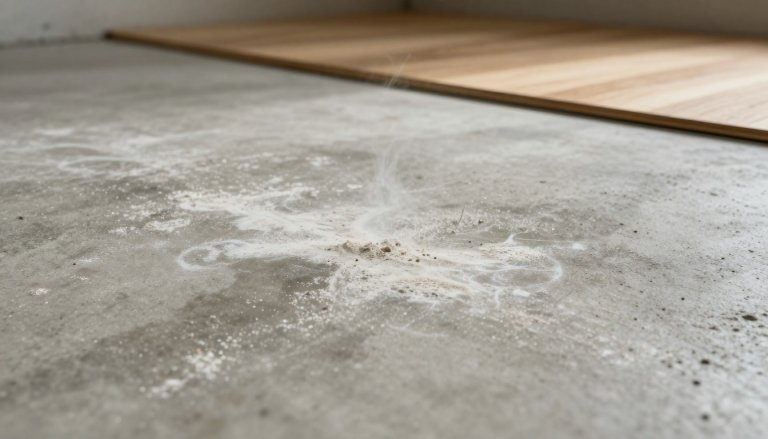
Scratches rarely start with claws alone. Grit is the real culprit. Sand and gravel caught in a paw pad act like sandpaper on a finish, and toy cars do the same on softer materials. A finish built for looks but not traffic shows swirl marks within a year. That is the gap between what survives and what just looks good on day one.
Comparing flooring options for pet and kid households
Not every durable floor performs the same way once dogs, kids, and daily traffic get involved. Here is how the common options actually compare.
| Flooring | Scratch resistance | Moisture tolerance | Best fit |
|---|---|---|---|
| Site-finished hardwood (water-based) | Good with 2-3 coats; can be screened later | Fair; standing water is the enemy | Living areas, main levels, resale-focused homes |
| LVP (rigid core) | Very good with a thick wear layer | Excellent; handles spills and mudroom traffic | Kitchens, basements, mudrooms, rental units |
| Engineered hardwood | Good, comparable to solid | Better than solid, still not waterproof | Basements and slab-built homes near Lake Lanier |
| Carpet | Poor; matting and staining are common | Poor; odor retention after pet accidents | Bedrooms only, in most pet households |
The differences show up fast in a busy household.
Hardwood: what makes the finish actually hold up
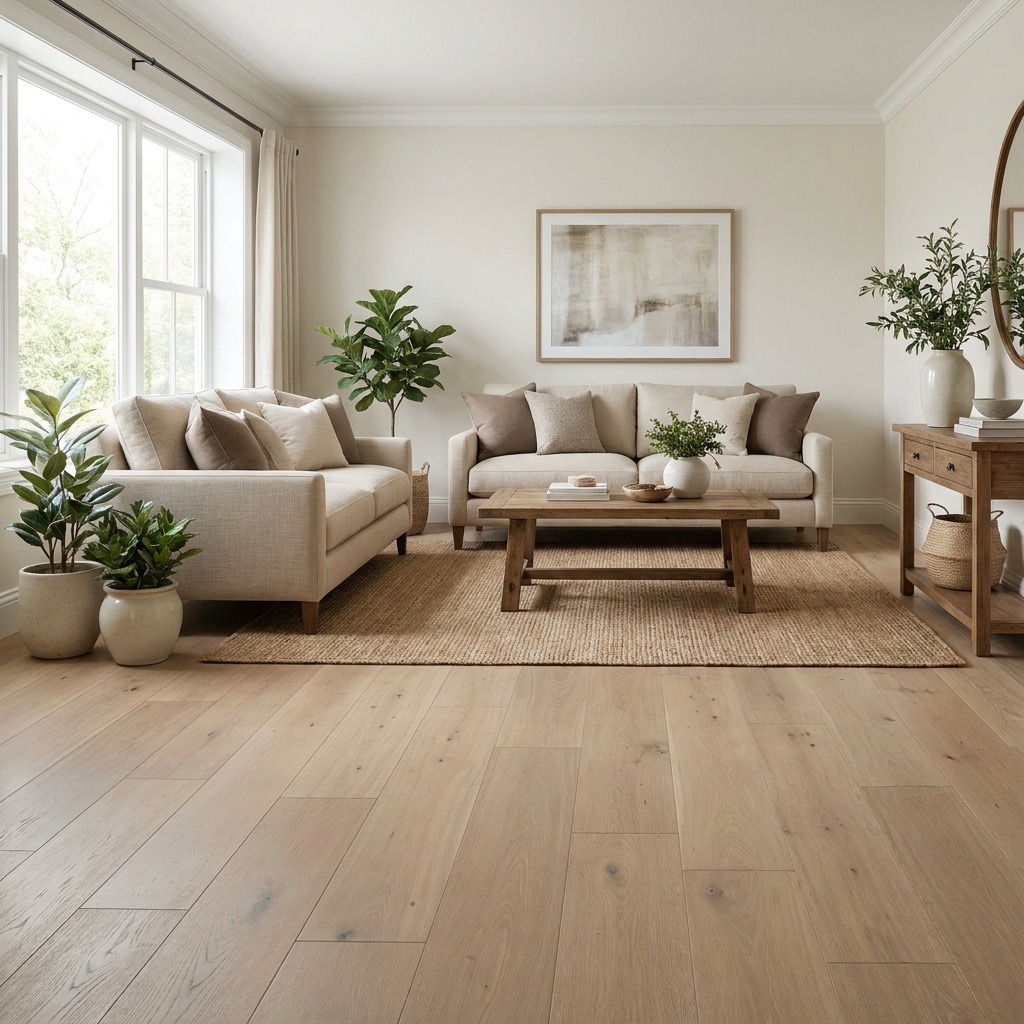
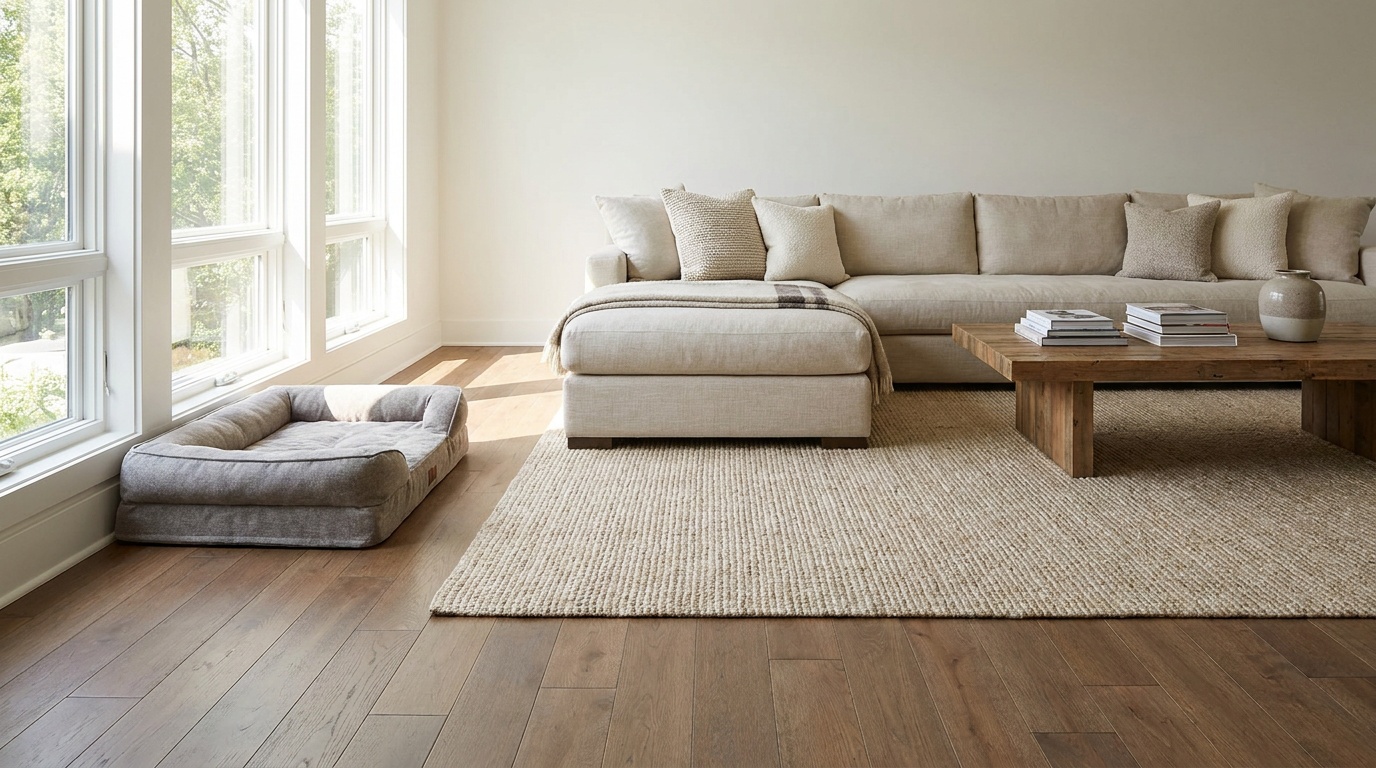
Hardwood survives pets and kids when the finish is right, not the wood species alone. A water-based finish applied in three coats holds up far better than one heavy coat of anything. Oak and hickory both perform well. The finish is doing most of the work against scratches, not the species.
Dustless sanding equipment keeps the process contained, and our water-based low-odor finishes are walkable the same evening. Furniture goes back in 2-3 days. That timeline matters for families who cannot clear a house for a week. Sanding typically moves through a few grit stages, from a coarse 36-40 grit down to a fine 100-120 grit, before stain and finish go on. Before sanding day, we test the stain on your actual floor, so you see how it will look under your own lighting and trim.
If the floor already shows heavy wear, a full sanding and refinishing resets the surface down to bare wood. New hardwood installation is priced in person, since board width, subfloor condition, and the layout of transitions all change the labor. A free in-home estimate gets you a real number instead of a guess.
LVP: where the wear layer actually matters
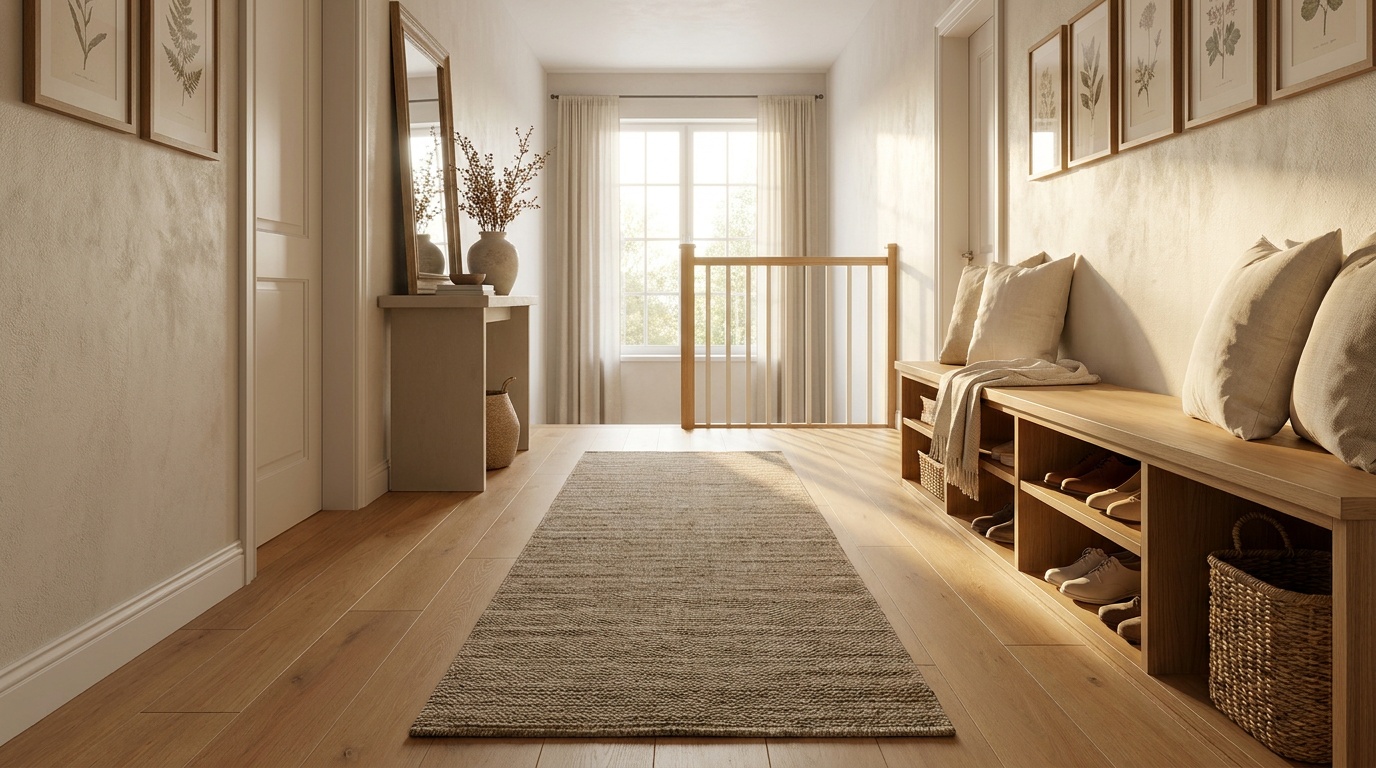
LVP is the floor most families ask for in mudrooms, kitchens, and basements, and for good reason. The wear layer, not the printed pattern, decides how long it survives. Anything under 12 mils wears through fast under a large dog’s nails. Twenty mils or more holds up to years of daily traffic.
LVP also handles accidents carpet cannot. A puppy still working on housetraining, or a toddler’s spilled juice, sits on the surface instead of soaking into a pad. That is the main reason we install more LVP in pet and kid households than any other material.
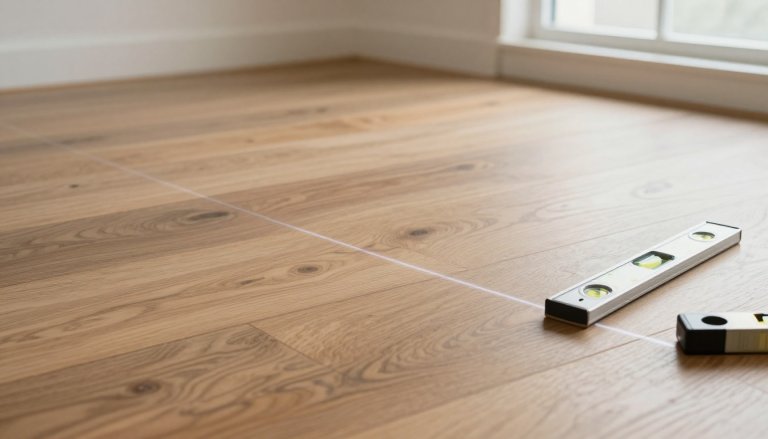
Slab basements near Lake Lanier bring humidity swings, often moving between 40 and 60 percent relative humidity through the year. LVP tolerates those swings better than solid hardwood does. It is not immune to problems. Plank separation and edge lifting happen when the subfloor is not flat before installation. A subfloor out of level by more than 3/16 inch over 10 feet needs leveling first, not planks laid over the dip.
Stairs, mudrooms, and other pressure points
Stairs take more abuse per square foot than almost any surface in the house. Kids run up two at a time, and dogs follow close behind. Nosing edges chip first. A durable finish and a non-slip profile matter here more than anywhere else.
Mudrooms and back entries need a surface that shrugs off grit, wet paws, and dropped cleats. LVP or a well-finished hardwood both work well here. Wall-to-wall carpet in this spot is usually the first thing we get asked to remove.
What these upgrades typically cost
Costs vary with prep, material grade, and access. The ranges below assume a ready-to-work space, with nothing to move and standard-grade material.
- Hardwood sanding and refinishing runs $3.95-$6.00 per square foot; final price depends on the type of flooring and the scale of sanding needed.
- LVP installation runs $4.00-$5.50 per square foot, assuming a ready-to-work space with standard-grade material and nothing to move.
- Stair work runs $150-$300 per step, so a typical 12-step staircase lands around $1,800-$3,600, assuming no structural repair.
- Carpet removal runs $0.40-$0.50 per square foot for a ready space with easy access.
- Subfloor leveling runs $2-$3 per square foot when leveling alone is needed, with nothing else to repair.
These figures assume no hidden repairs and nothing to move. The only way to get your exact number is a free in-home estimate. Every estimate comes itemized line by line, so you see exactly what you are paying for. For a full room-by-room breakdown, see the flooring cost guide.
When the floor is only part of the problem
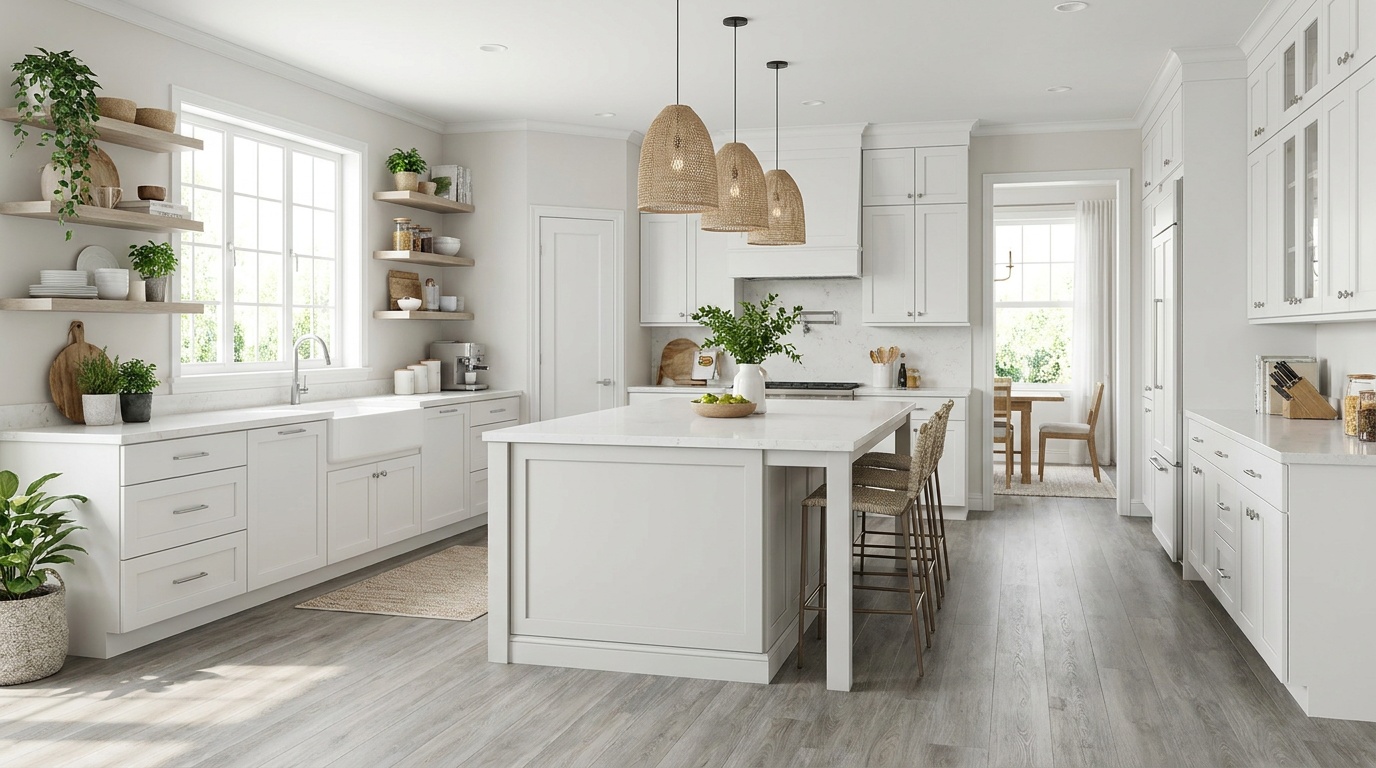
Sometimes a family’s flooring problem is really a kitchen problem. Water damage near a dishwasher, worn cabinet toe-kicks, or a layout that never worked for two kids and a dog all point to something bigger than a new surface. A full kitchen remodel can solve the flooring issue and the layout issue at the same time, instead of patching one and ignoring the other. The same logic applies to a bathroom that never quite dries out after bath time.
We serve Cumming, Sugar Hill, Johns Creek, and Suwanee. Every estimate is written against a schedule keyed to your timeline, whether that is a move-in date or just getting the house back to normal before school starts.
Frequently asked questions
Is hardwood a bad choice if we have large dogs
Not necessarily. A durable water-based finish with three coats handles most claw traffic well. The bigger risk is standing water from bowls or accidents, not the dog itself.
Can LVP look like real hardwood
Modern LVP has convincing wood-look texture and a matte finish. Most visitors cannot tell it apart from solid hardwood at a normal viewing distance.
How long will the house be disrupted during a refinish
Dustless sanding keeps mess contained, and water-based finishes are walkable the same evening. Furniture goes back in 2-3 days, so most households are functional within a week.
If your floors are taking a beating from pets, kids, or both, a free in-home estimate will tell you exactly what survives and what needs to change. Call (770) 906-4732 or reach out through our contact page to get a written, itemized quote.