Top Hardwood Choices for Moisture-Prone Basements
A basement can feel like bonus square footage you already own, until the floor turns into a moisture problem. If you’ve ever smelled that “closed-in” basement air or seen a damp spot after a storm, you already know the risk.
The good news is basement hardwood flooring can work when we choose the right wood build, the right finish, and the right installation system. Below, we’ll share the hardwood options that perform best below grade, plus the prep steps that matter as much as the plank itself.
Why basements make wood act differently
Wood is hygroscopic, meaning it takes on and releases moisture. In a basement, moisture pressure can come from several directions at once: humidity in the air, vapor migrating through a concrete slab, small leaks at walls, or even seasonal temperature swings.
That’s why a traditional hardwood floor that behaves perfectly upstairs can cup, gap, or crown downstairs. Before we pick materials, we treat the basement like a system: slab, moisture control, underlayment, and then the finished surface.
If you want a quick primer on solid vs. engineered construction, the manufacturer overview from Bruce on engineered vs. solid wood flooring is a helpful reference.
The hardwood choices that make sense in moisture-prone basements
Engineered hardwood with a stable core (our first choice most of the time)
If we’re trying to get real wood warmth in a basement, engineered hardwood usually leads the pack. It’s built in layers, so it resists expansion and shrinkage better than a single thick piece of wood.
What we look for:
- A high-quality plywood core (often more stable than some fiberboard cores)
- A wear layer thick enough to match the homeowner’s long-term plans
- A locking or glue-assisted system designed for below-grade installs
This isn’t about “waterproof wood.” It’s about choosing a wood product that stays flatter when the basement gets humid.
For a basement-specific discussion, Bruce’s guide to engineered wood for basements explains why engineered products are commonly recommended below grade.
Engineered white oak (balanced look, balanced performance)
White oak remains a favorite because it fits modern and classic homes. It also takes stain well, which matters if we’re matching the rest of the house.
In basements, we prefer:
- Matte or satin finishes that hide light scuffs
- Wider planks only when moisture control is strong (wide boards show movement faster)
- A texture (light wire-brush, for example) if the space will get heavy use
If you want a timeless basement that doesn’t scream “afterthought,” engineered oak is hard to beat.
Engineered hickory (when you want a tougher face)
Hickory has a bold grain and a reputation for hardness. In active basements (kids, pets, home gym traffic), an engineered hickory top layer can help the floor look better longer.
The tradeoff is visual: the color variation is stronger, so it won’t be as uniform as maple or oak. If the basement is a media room or playroom, that character can be a win.
Engineered maple or birch (clean, bright, but choose carefully)
Maple and birch can brighten a basement that lacks sunlight. They can also show dents and scratches more easily in some finishes, since the grain is subtler.
When we recommend these species, we pair them with:
- A durable factory finish
- Area rugs in seating zones
- Felt pads on furniture from day one
Solid hardwood (only in limited basement situations)
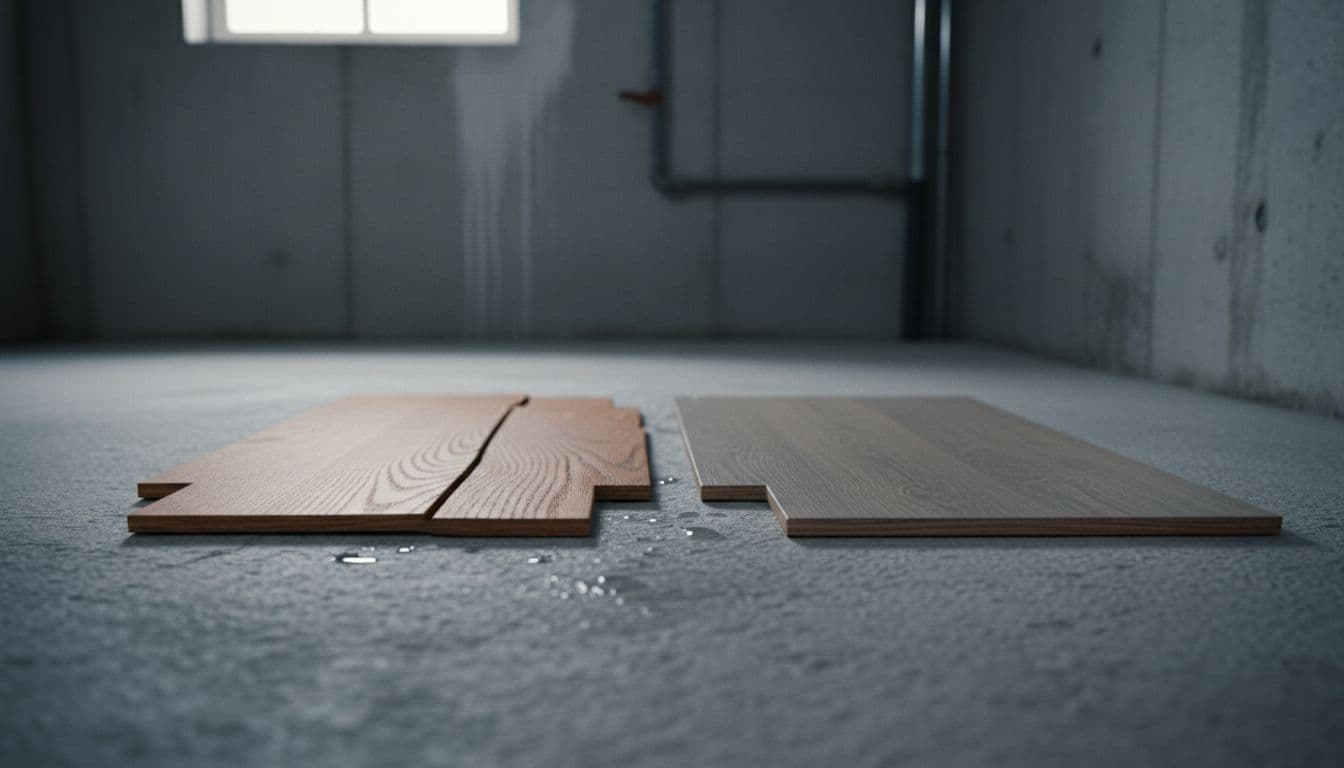
Most below-grade spaces are a “no” for solid wood. Solid boards are more likely to react to seasonal moisture changes, and basements deliver those changes year-round.
If a basement is truly dry, conditioned, and properly tested, solid wood might be possible in rare cases, but we still weigh the risk. Many homeowners like the romance of solid wood, until they see a cupped board in month eight.
What to look for when shopping for basement hardwood flooring
A basement-friendly product isn’t just “engineered.” The specs matter.
Wear layer thickness: If you expect future refinishing, ask how thick the veneer is. A thicker wear layer may allow one or more refinish cycles, depending on the product.
Finish system: Factory finishes often out-perform site finishes in basements because they’re cured under controlled conditions. Matte finishes also help hide small marks.
Installation method: Floating or glue-down systems can work well below grade, but the slab and moisture plan decide what’s best.
Warranty language: We read the fine print with you. Many warranties require documented moisture testing and approved underlayments.
Hardwood floor benefits: real wood underfoot feels warmer than tile, it’s easier to clean than most carpets, and it adds a consistent look when you’re tying the basement to the main level.
Moisture-first installation: the steps that protect the floor
Great materials can still fail if the slab stays wet. When we install new flooring in basements, we focus on prevention, not hope.
Test the slab, don’t guess
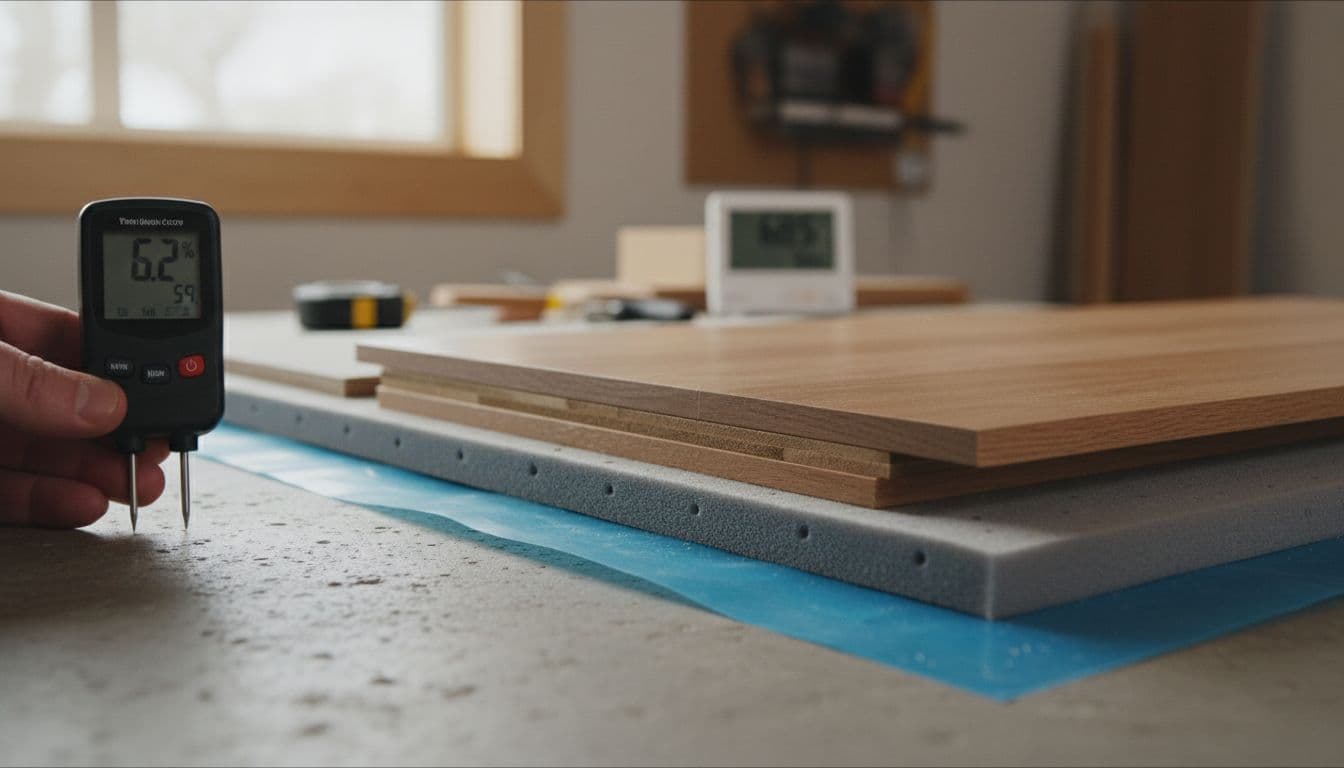
We start with moisture testing because “it looks dry” isn’t a measurement. Moisture meters and relative humidity testing help confirm the slab is ready and help choose the right moisture barrier.
For a deeper look at basement moisture and flooring options, Wagner Meters’ basement flooring overview is a solid educational resource.
Build the right moisture barrier and underlayment
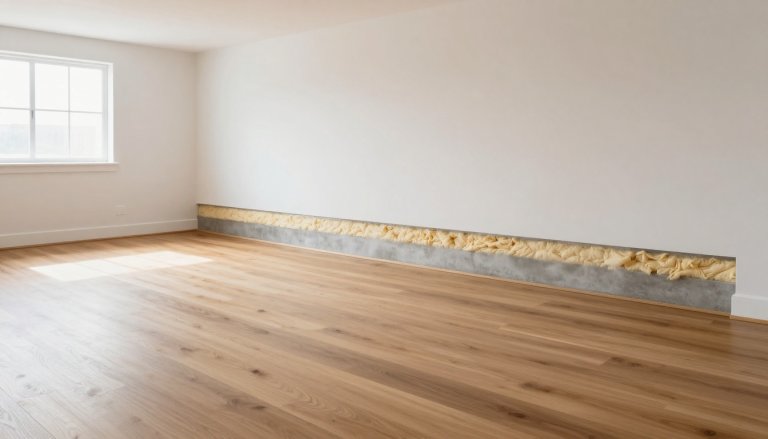
A proper vapor barrier or moisture membrane is often the real hero of a basement wood project. It reduces vapor movement from the slab into the wood system.
We also choose underlayment for the job, not just for softness. In a basement, it needs to support the locking joints and help manage minor irregularities.
Bring samples into the basement lighting before you commit
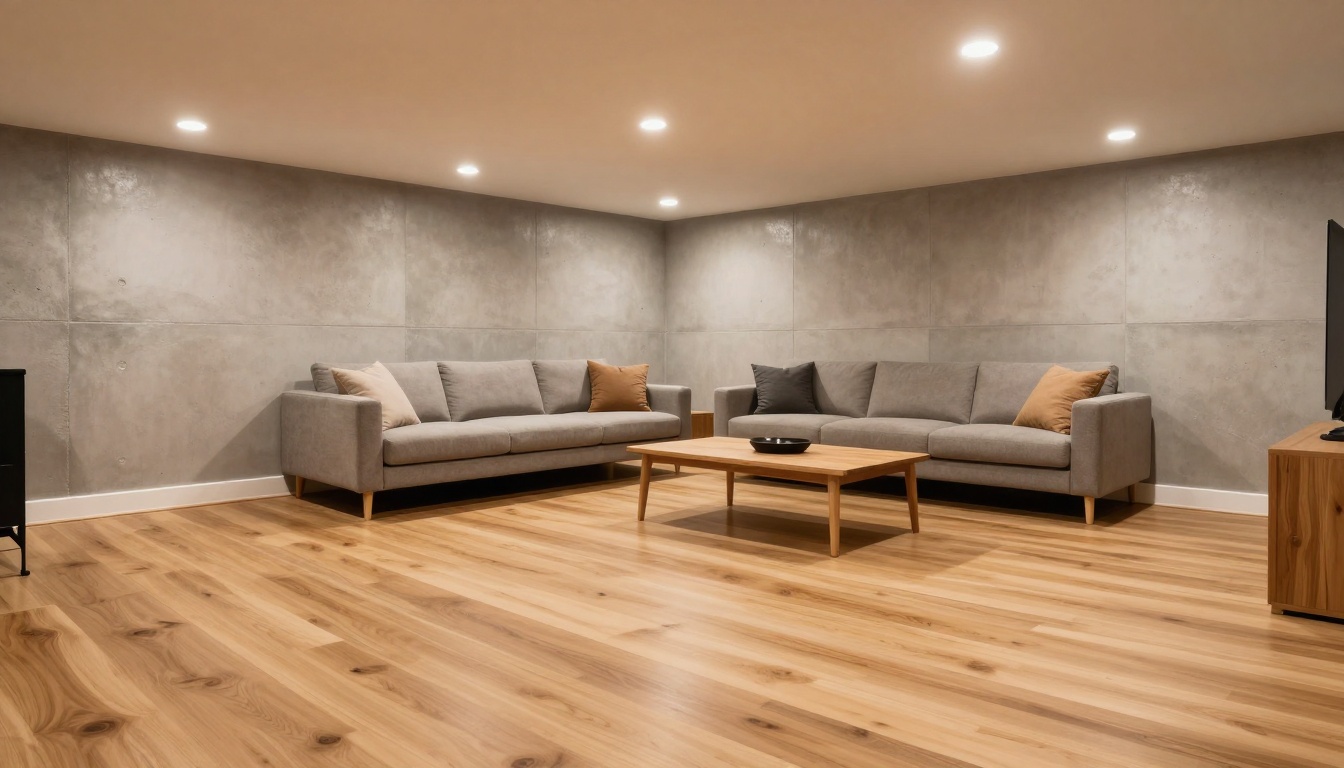
Basements can make colors look different. A plank that looks warm upstairs can read gray downstairs. We often bring a curated set of samples to the home, check them under the basement’s lighting, then finalize the pick. It’s a simple step that prevents regret.
Plan for comfort and air control
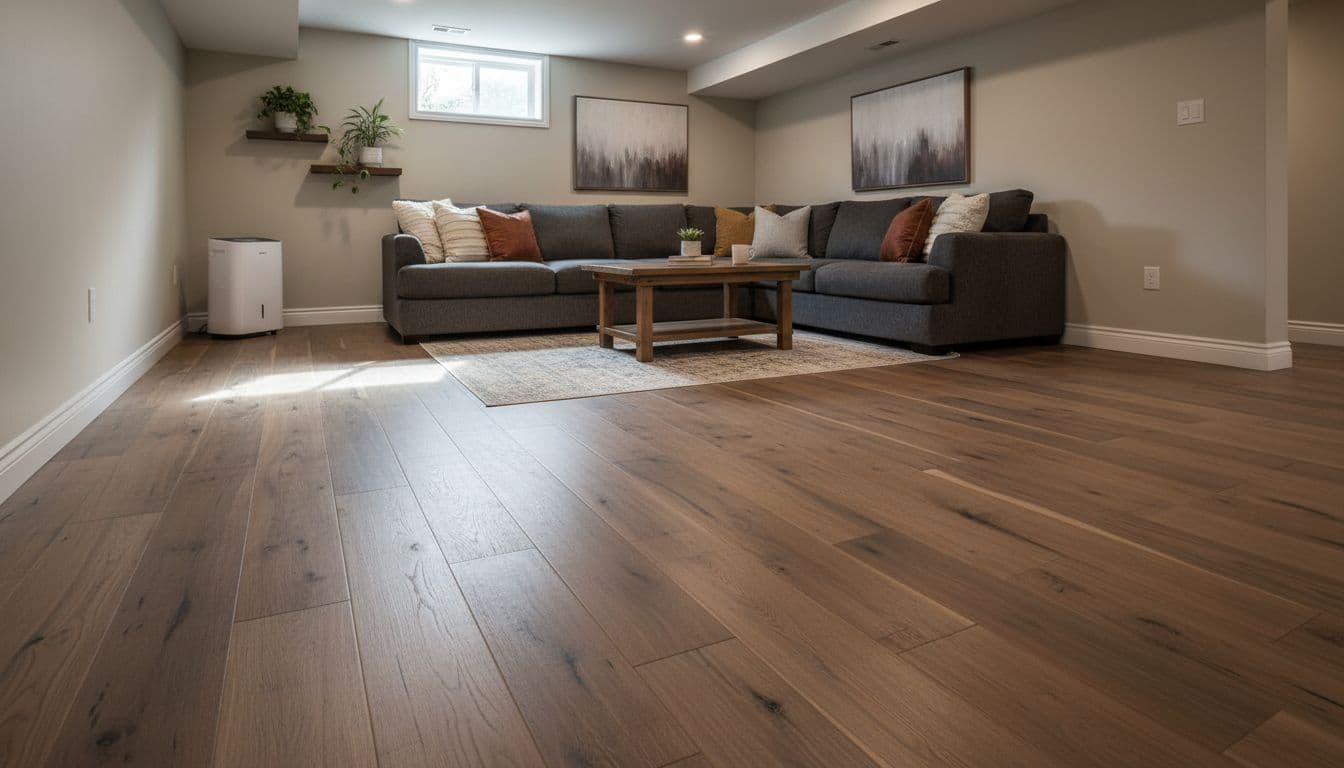
A dehumidifier, stable HVAC settings, and good drainage outside the home all protect a basement wood floor. Think of it like caring for a guitar. Keep it in the right environment and it stays true.
What if we already have wood downstairs and it looks tired?
Sometimes the best move isn’t replacement. If the floor is real wood and structurally sound, hardwood floor sanding and refinishing may bring it back, even in a basement, as long as moisture conditions are under control.
We inspect for cupping, staining, and board movement first. If boards are shifting or the slab is still pushing moisture, refinishing won’t last. Fixing the cause comes before cosmetics.
Basement floors and resale: connect the projects for better value
Many homeowners remodel kitchen and bathroom to add to value of house, and we like to think about the basement the same way. A finished basement that looks tied to the rest of the home can feel like a true extension, not a separate zone.
If you’re planning a larger update, we often coordinate flooring choices so the basement wood works with your main-level tones, and your tile selections in wet areas still make sense. A consistent plan beats a patchwork remodel every time.
Conclusion
Moisture-prone basements aren’t the place for guesswork. The smartest basement hardwood flooring choices usually come down to engineered hardwood, slab testing, and the right moisture barrier under the boards. If you’re in Cumming, Sugar Hill, or Suwanee, we can help you choose materials, prep the space, and install a floor that stays flat and looks right. When you’re ready, call Cumming Floors to talk through your basement plan, or to explore whether sanding and refinishing is the better path for your hardwood floor.