Moisture barrier picks for hardwood in basements with humidity swings
Basements love to keep secrets. One week they’re dry and comfortable, the next week the air feels heavy, and a cold slab starts “sweating” under a rug. If we’re planning a hardwood floor in a below-grade space, that swing is the whole story.
A basement hardwood moisture barrier isn’t just a nice extra. It’s the layer that decides whether your boards stay flat and quiet, or start to cup, gap, and creak. In this guide, we’ll walk through the moisture barrier picks that make sense for real basements, plus how we choose them when humidity refuses to behave.
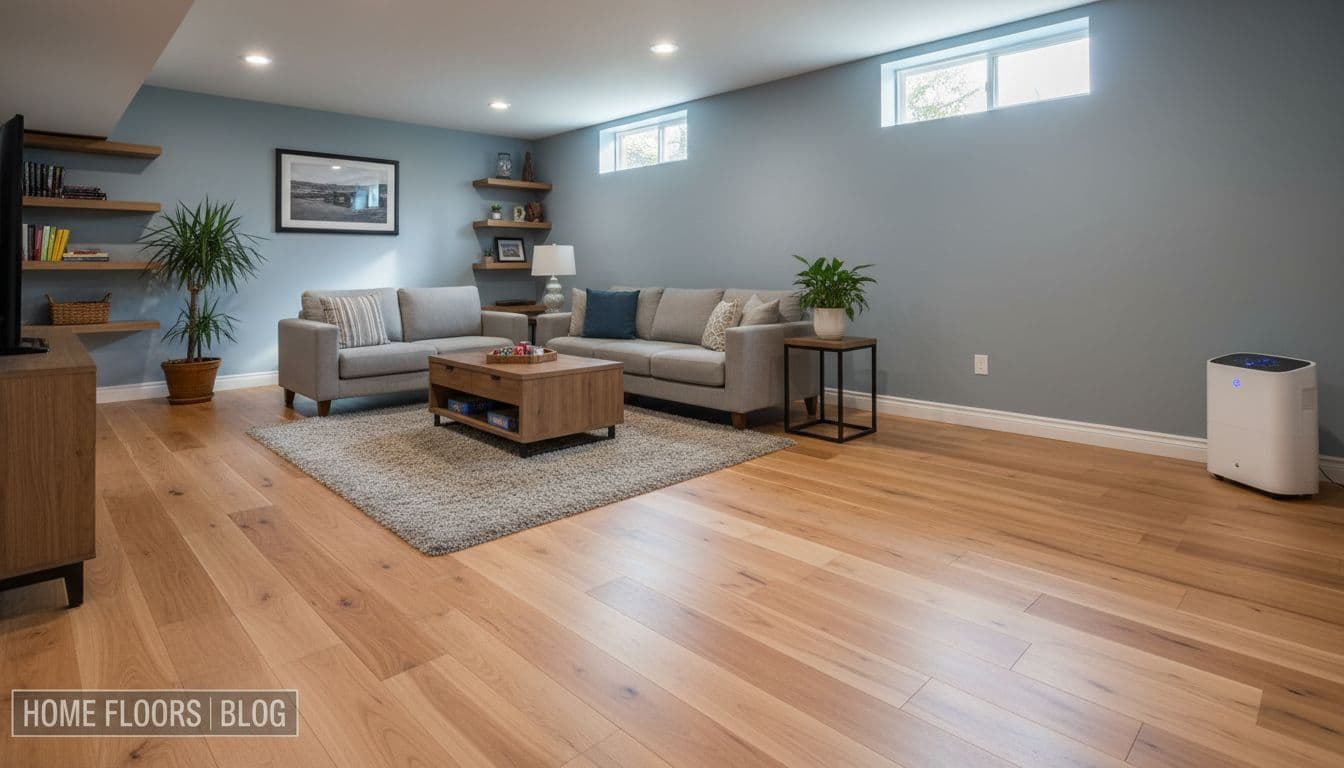
Why basements punish wood when the weather changes
Wood moves. That’s normal. The problem is that basements don’t just change a little.
- Concrete holds moisture and can release water vapor long after it looks dry.
- Humidity spikes happen from storms, HVAC cycling, and seasonal shifts.
- Below-grade slabs stay cool, so warm, damp air can condense on the surface.
Think of a slab like a sponge wrapped in plastic. It can feel dry to the touch and still push vapor upward. That’s why we treat basement installs differently than main-level installs, even when the planks look identical.
First step: confirm what “moisture” problem we’re solving
Before we pick materials, we want clarity. Are we dealing with vapor coming through the slab, humid air in the room, or both?
Here’s what we like to confirm before we install new flooring in a basement:
1) The slab’s condition: cracks, old adhesive, paint, soft patches, and low spots can stop a barrier from bonding.
2) Moisture readings: different products require different test methods and thresholds, so we match testing to the system.
3) Drainage and humidity habits: gutters, grading, sump performance, and dehumidifier use matter as much as the underlayment.
For background on why barriers matter and how they’re commonly used under wood, we like this overview from Junckers on moisture barriers for hardwood floors.
Our moisture barrier picks for basements with humidity swings
Not every barrier is built for a basement. Below are the picks we reach for most often, and when each one makes sense.
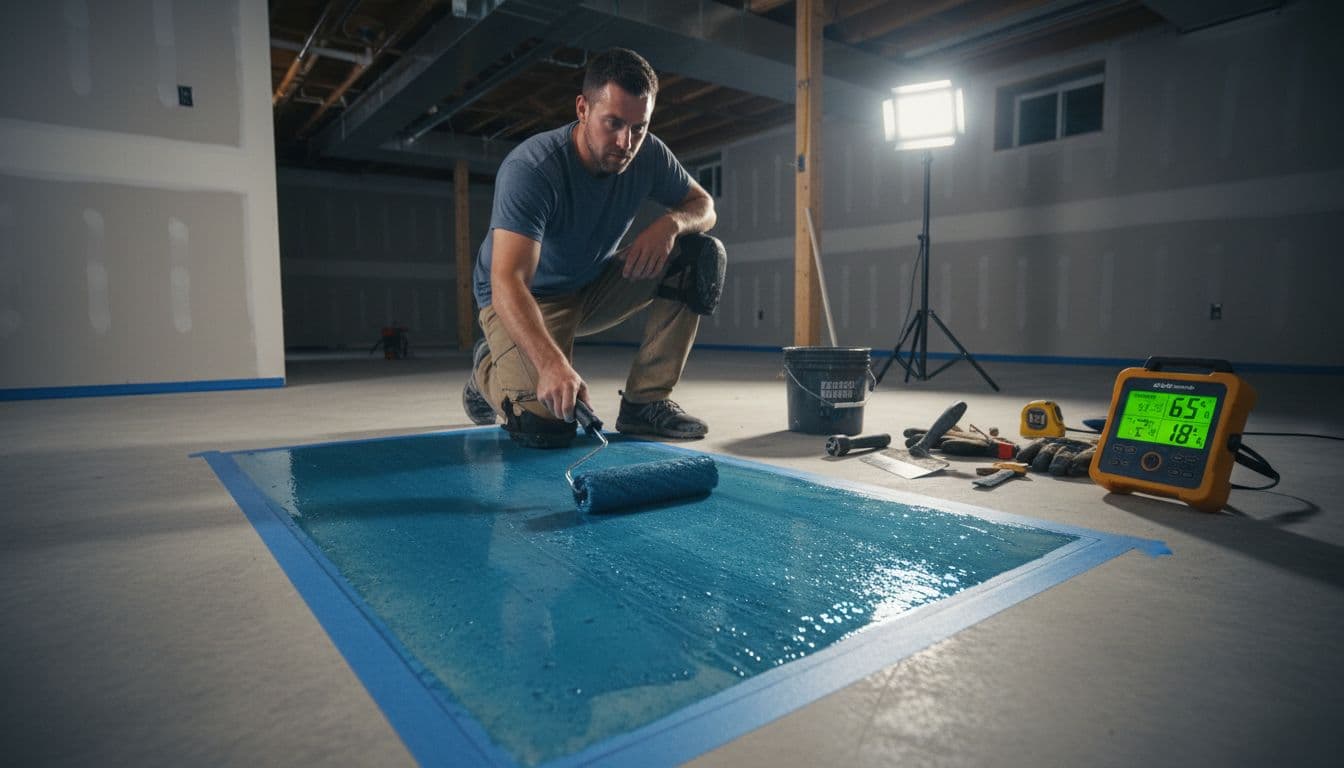
Liquid-applied epoxy or urethane (our top pick for unpredictable slabs)
If we’re worried about vapor coming through the concrete, a liquid-applied moisture barrier is often the most reliable option.
Why we like it:
- It bonds directly to the slab, so there’s less chance of seams opening.
- It can handle tougher moisture conditions than basic plastic sheeting.
- It’s compatible with many engineered-wood glue-down systems (depending on the product).
Where it shines:
- Slabs with higher readings that still meet the coating’s limits
- Basements that swing from “dry winter” to “humid summer”
Watch-outs:
- Surface prep is everything. Dust, paint, and weak concrete can cause failure.
- Dry time and recoat windows must be followed closely.
Underlayment with integrated vapor retarder (best for floating engineered hardwood)
If we’re installing a floating engineered floor, we often use an underlayment that includes a vapor retarder layer, then tape seams carefully.
Why we like it:
- Adds minor sound and comfort underfoot
- Faster install than rolling on coatings
- Works well when the slab tests within acceptable ranges
Where it shines:
- Finished basements with stable HVAC and dehumidification
- Floors that need a floating system for movement
Watch-outs:
- Seam taping isn’t optional. One missed seam can become the weak spot.
- Not all “2-in-1” underlayments have the same vapor rating.
6-mil poly sheeting (simple, but only in the right assembly)
Plastic sheeting can work in some floating-floor builds, but we treat it as a “use carefully” option for basements.
Why we use it (when we do):
- It’s straightforward and affordable
- It’s recognized in many installation instructions as a vapor retarder layer
Where it shines:
- Controlled basements where the slab isn’t pushing high vapor
- Systems that clearly specify poly + underlayment + floating floor
Watch-outs:
- Seams and wall detailing have to be neat and continuous.
- Trapped moisture can become a problem if the assembly can’t dry in any direction.
Modular subfloor panels (when comfort and warmth matter most)
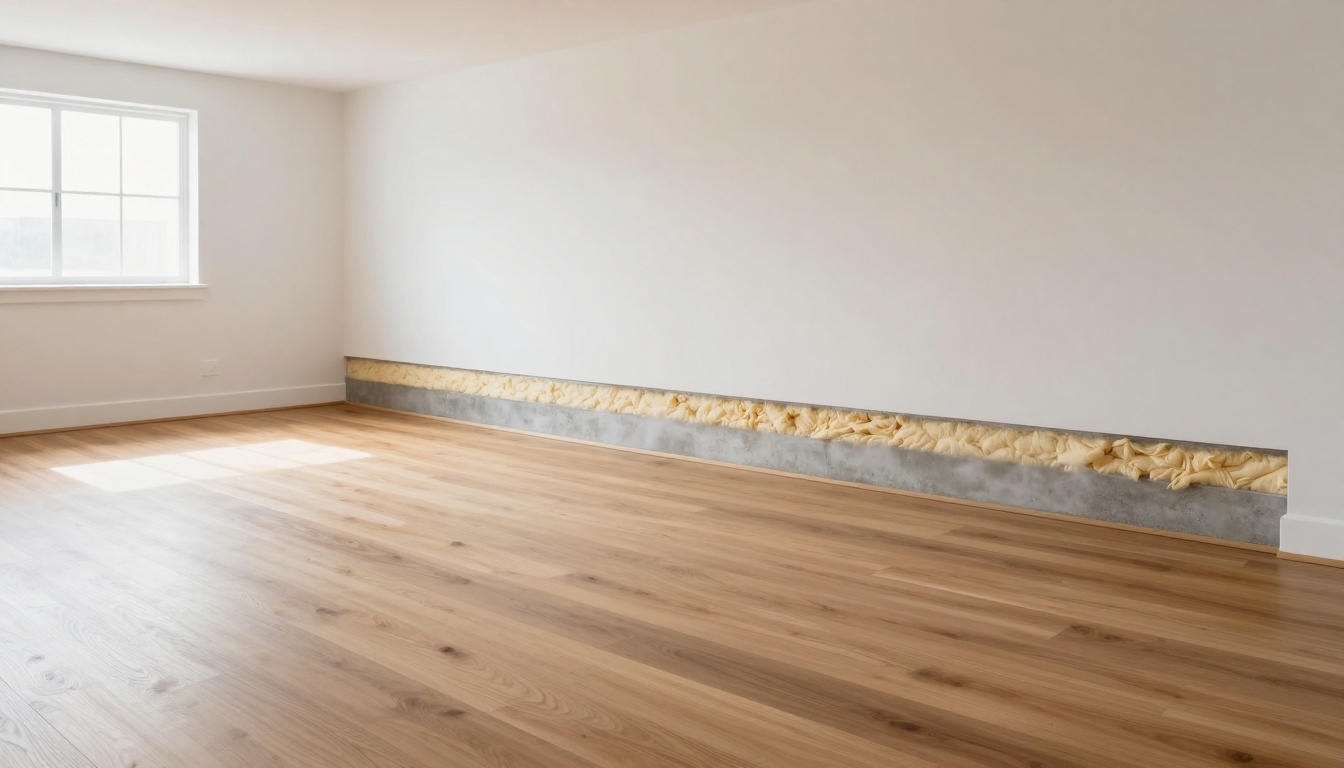
In some basements, the best “moisture barrier” choice is actually a raised subfloor panel system that creates an air gap and thermal break above the slab.
Why we like it:
- Warmer feel underfoot
- Helps reduce that cold-slab condensation risk
- Can flatten minor slab issues without heavy leveling work (depending on product)
Where it shines:
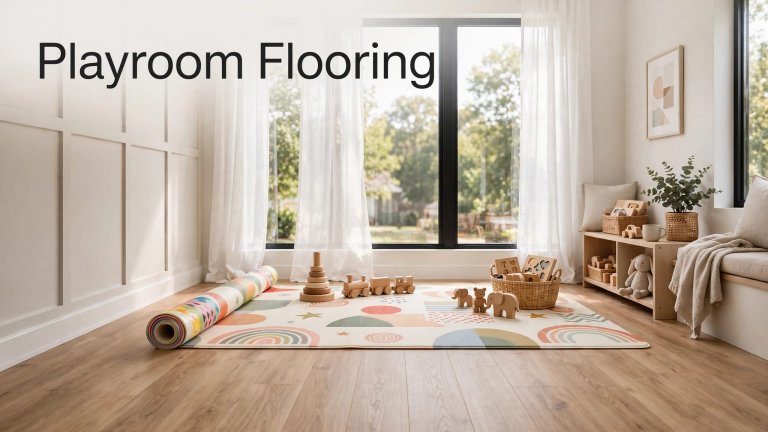
- Family rooms, playrooms, or basements where comfort is priority
- Spaces that feel chilly even when dry
If you want a practical comparison of basement subfloor panels, this guide on Dricore vs. DryBarrier lays out how these systems differ.
Quick comparison: which barrier fits which basement?
| Barrier option | Best when | What we watch for |
|---|---|---|
| Liquid-applied epoxy/urethane | Slab moisture is the big risk | Prep, cure time, product limits |
| Vapor-retarder underlayment | Floating engineered hardwood is planned | Seam tape quality, vapor rating |
| 6-mil poly sheeting | Specs allow it and moisture is moderate | Seams, wall edges, punctures |
| Modular subfloor panels | Comfort, warmth, and condensation control matter | Ceiling height, transitions, cost |
The assembly matters more than the brand name
Basement floors don’t fail because someone picked the “wrong” product name. They fail because the whole stack wasn’t designed for moisture movement.
A solid approach usually looks like this:
- Clean, sound slab
- Crack repair and flattening where needed
- Barrier layer matched to test results
- Underlayment and seam tape (if the system calls for it)
- Engineered hardwood that’s approved for below-grade use
- Consistent indoor humidity control
Where hardwood fits in a basement (and where it doesn’t)
We love the look of wood downstairs, but we’re picky about what kind.
Engineered hardwood is usually the safer basement choice because it’s built in layers that resist movement better than solid planks. That doesn’t mean it’s “waterproof,” it just handles normal seasonal change more gracefully.
If you’re weighing hardwood floor benefits for a basement, here are the real ones:
- Warmer, more natural feel than many hard surfaces
- Strong resale appeal when installed correctly
- Easy to match upstairs design for a unified look
And a practical note: if you already have wood upstairs that needs help, hardwood floor sanding and refinishing can refresh the whole home while we plan a smarter moisture strategy downstairs.
Planning value upgrades: floors, then kitchens and baths
Basements often get upgraded when homeowners are thinking about resale or long-term comfort. If that’s you, we recommend zooming out.
New floors can make the basement feel finished, but many owners also remodel kitchen and bathroom to add to value of house. When those projects happen at the same time, we can help coordinate flooring transitions, height changes, and product choices so the home feels consistent, not patched together.
Getting it right without guesswork
Humidity swings don’t have to rule your basement. With the right testing, the right barrier, and the right installation method, a basement hardwood project can stay stable for years.
If you want a free estimate, call (770) 906-4732. If you show us a written quote from another contractor, we’ll beat it by 5%. Let’s pick the moisture barrier system that fits your slab, your lifestyle, and your finish goals, then protect your hardwood floor from the start.