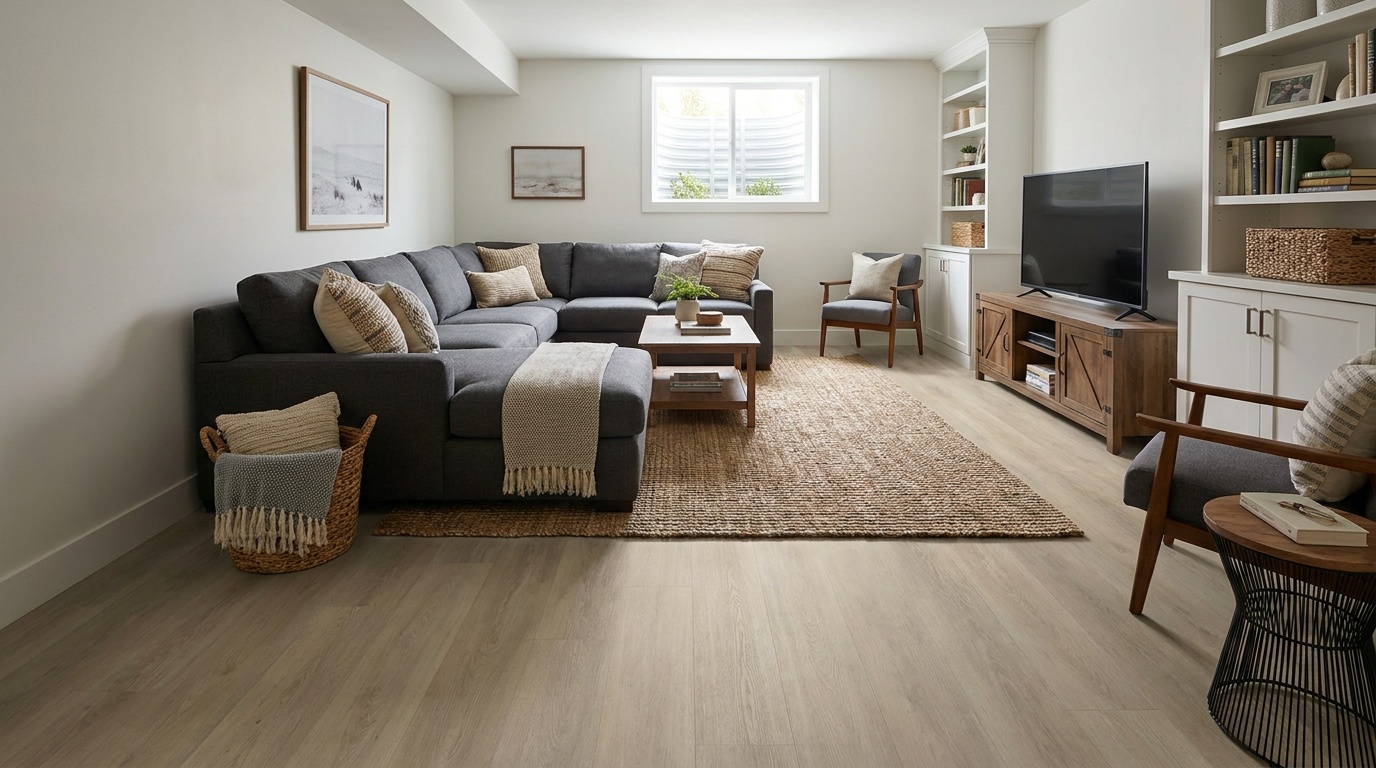
Basement Moisture Testing: What Pros Check First
Before any new floor goes down in a Forsyth County basement, pros check three things: how much moisture is in the slab, how much moisture is in the room air, and whether there’s a history of water problems. The two standard tests are a calcium chloride test, which measures vapor emission over 60 to 72 hours, and an in-situ relative humidity probe drilled into the slab. Room temperature and humidity get checked too, along with drainage and past flooding. Only after all of that lines up does material choice get decided.
Why Basement Slabs Get Tested First
Concrete looks solid, but it’s porous. Groundwater and soil moisture move up through a slab constantly, especially in Forsyth County’s clay-heavy soil. Homes near Lake Lanier and around the Sawnee Mountain area often sit on ground that holds water long after a storm passes. A slab can feel bone-dry to the touch and still push enough vapor to ruin new flooring within a year.
That’s why testing happens before material gets ordered, not after. The results decide whether hardwood is even on the table, whether a vapor barrier is required, and how much subfloor prep the job needs.
The Tests Pros Actually Run
There is no single moisture test. A thorough basement evaluation usually combines several methods, each catching something the others miss.
- Calcium chloride test (ASTM F1869): a sealed dish sits on the slab for 60 to 72 hours and measures pounds of vapor rising per 1,000 square feet per day.
- In-situ relative humidity probe (ASTM F2170): a hole drilled into the slab holds a sensor that reads humidity inside the concrete itself, not just the surface.
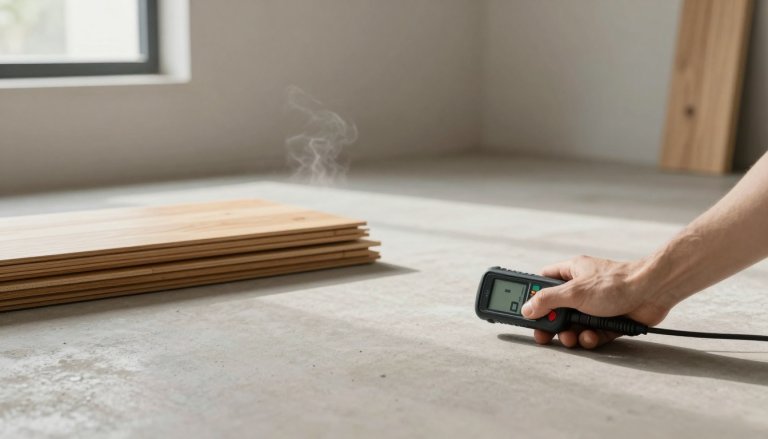
- Pin or pinless moisture meter: a fast surface check, useful for spot-checking several areas of a large basement before committing to slower lab-grade tests.
- Visual and history check: efflorescence, past flooding, sump pump condition, and grading outside the foundation.
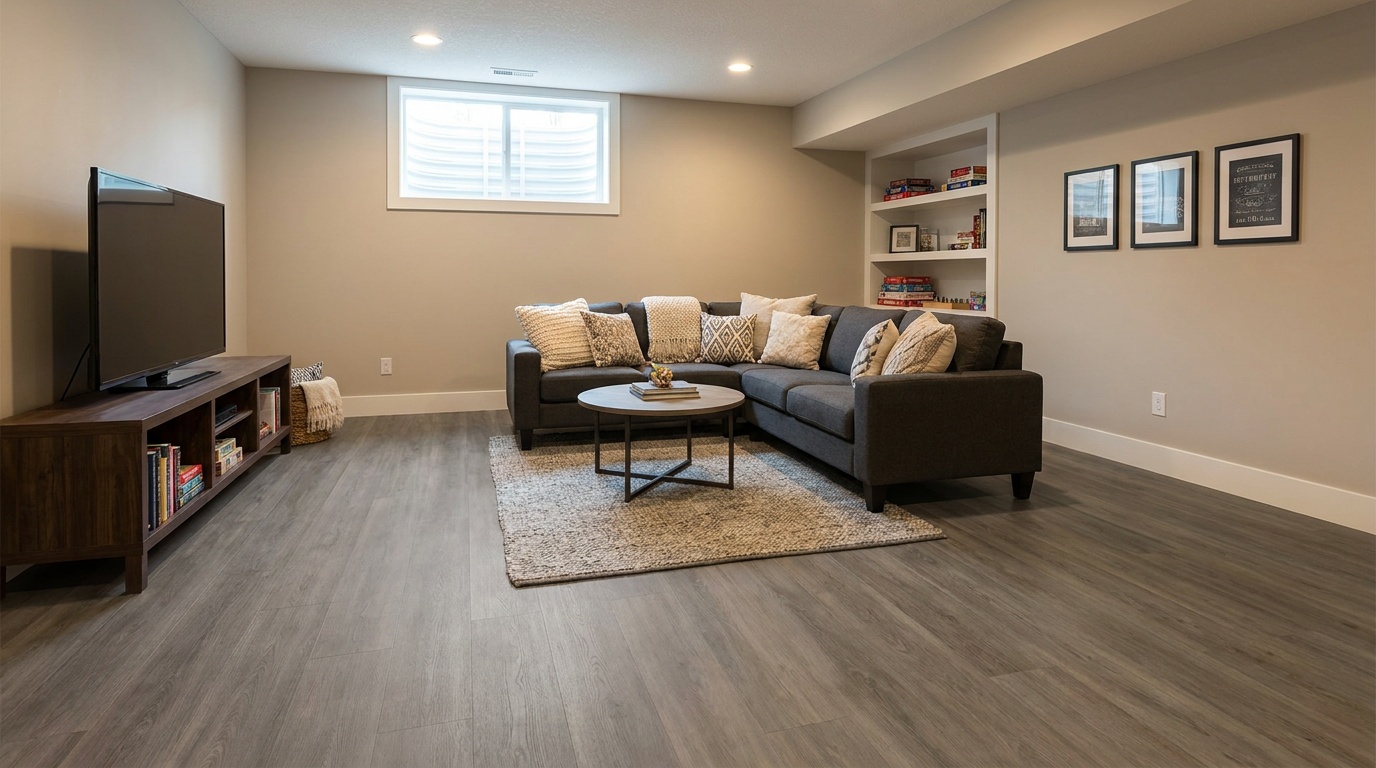
Comparing the Test Methods
| Test | What It Measures | Typical Duration | Best Used For |
|---|---|---|---|
| Calcium chloride | Vapor emission rate from the slab surface | 60-72 hours | Baseline reading before any flooring order |
| RH probe | Humidity inside the concrete mass | 24-72 hours after drilling | Slabs poured within the last few years |
| Moisture meter | Surface moisture at a single spot | Minutes | Quick screening across a large basement floor |
| Visual/history check | Past water events and drainage conditions | Ongoing, part of the estimate visit | Every basement, regardless of other readings |
What the Numbers Need to Show
Most manufacturers want calcium chloride readings under roughly 3 pounds per 1,000 square feet per 24 hours. RH probe readings generally need to stay under 75 to 80 percent. Room conditions matter too. Installers want the basement between 65 and 75 degrees Fahrenheit, with relative humidity in the room under 60 percent, for several days before and after installation.
None of these numbers exist in isolation. A slab can pass calcium chloride testing and still fail an RH probe test, since the two methods measure different depths of the concrete. That’s why pros rarely rely on just one reading before recommending a product.
What Happens When a Test Comes Back High
A failed test does not mean the basement can’t be floored. It means the plan changes.
Engineered hardwood can sometimes still work, glued down over a vapor barrier rated for the reading recorded. In wetter basements, LVP is usually the safer call, since it tolerates higher moisture levels and many products include a built-in moisture layer in the underlayment. Our LVP flooring options are the more common recommendation for basements that test above the safe range for wood.
Solid hardwood is rarely recommended below grade, regardless of test results. That’s a wood-movement issue as much as a moisture one.
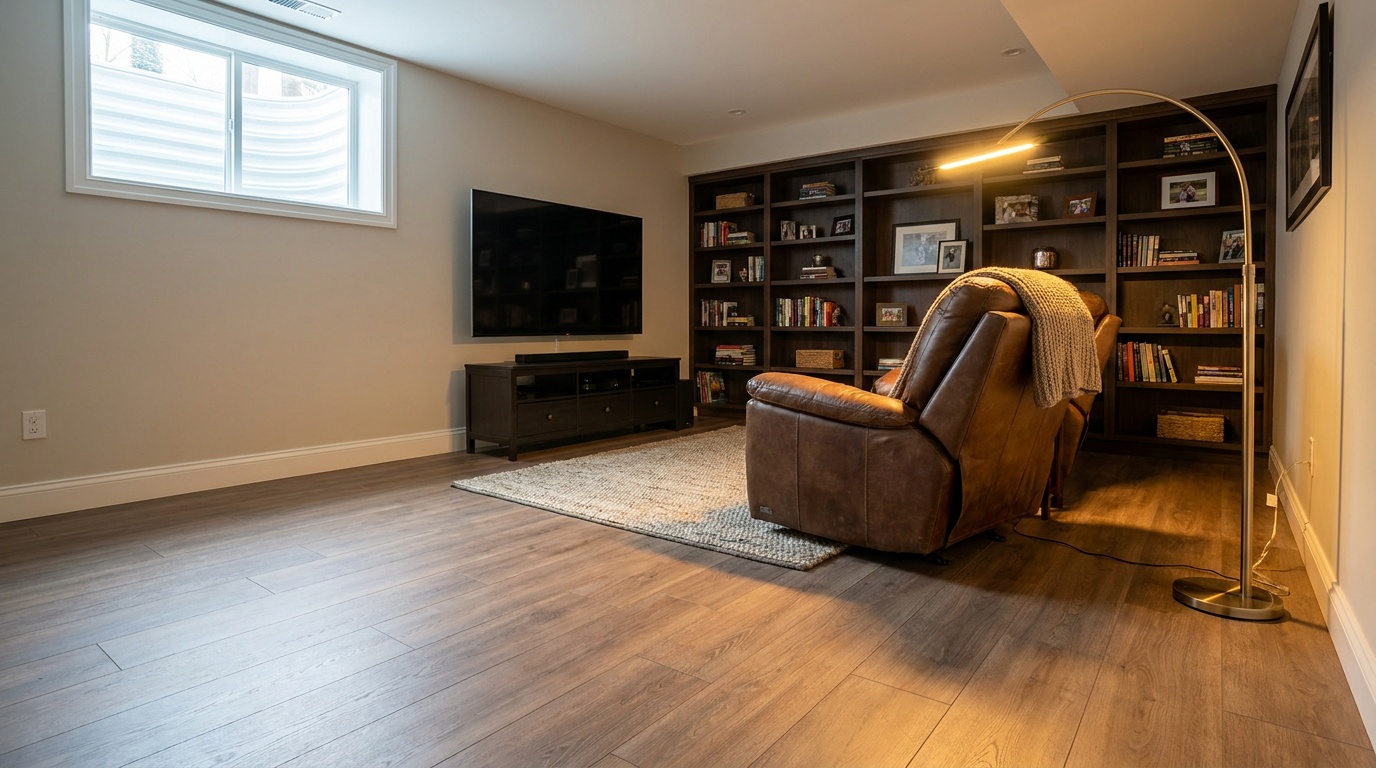
What Else Gets Checked Before Flooring Goes Down
Moisture is the headline test, but it’s not the only one. Flatness matters. Subfloor leveling gets called out separately when a slab has low spots, since uneven concrete will telegraph through even the most moisture-resistant flooring. Acclimation time matters too. Engineered wood typically needs 2 to 3 days sitting in the actual room before installation, at the same temperature and humidity the finished space will hold.
On older ranches near the square, built in the 80s and 90s, we also check the sump pump and any perimeter drain tile. A basement that has flooded once tends to flood again unless drainage gets addressed alongside the flooring. Newer construction south of downtown usually has a better vapor barrier under the slab from the start, but not always. It still gets tested.
Getting This Checked Before You Order Anything
All of this happens during a free in-home estimate, not after material shows up. We test the slab, walk the room, and give an itemized quote based on what the basement actually needs. If leveling is required, it’s called out as its own line rather than folded into a flooring number that doesn’t match the job. For overall budgeting across a whole project, the flooring cost guide is a useful starting point.
Our install crews handle basement projects start to finish. No unknown subcontractors show up on test day or install day.
Frequently asked questions
Can hardwood ever go in a Forsyth County basement?
Engineered hardwood can work in some basements, glued down over a vapor barrier matched to the test results. Solid hardwood is not recommended below grade.
How long does basement moisture testing take?
A calcium chloride test needs 60 to 72 hours to sit before it’s read. RH probes need a similar window after drilling. Plan a few days between testing and an install start date.
What if the slab fails the moisture test?
The plan shifts toward LVP or a properly vapor-barriered engineered install instead of solid wood. Subfloor leveling or a moisture barrier may get added as its own line item.
Does a musty smell mean the slab will fail testing?
Not always, but it’s worth investigating. A musty smell often points to trapped moisture or ventilation issues, and it’s usually a reason to test before ordering flooring, not after.
Do newer Forsyth County homes still need moisture testing?
Yes. Newer slabs south of downtown often have a better vapor barrier built in, but soil conditions and grading still vary enough to test every basement individually.
If you’re planning new flooring for a basement anywhere from Cumming to Sugar Hill, Johns Creek, or Suwanee, start with a free estimate that includes moisture testing, not a guess. See our service areas or explore hardwood installation options if your test results allow it. Call (770) 906-4732 or reach out through our contact page to get testing scheduled.