Pet Urine on Hardwood Floors, How to Find It, Remove the Smell, and Fix Dark Stains Without Replacing the Whole Room
That “mystery smell” in a home with pets can feel like a bad magic trick. We clean, we mop, we light a candle, and the odor still comes back. When the problem is pet urine hardwood floors, it’s rarely just on the surface. It can slip through tiny gaps, follow the grain, and settle into the wood or even the subfloor.
The good news is we can often locate the source, neutralize the odor, and repair the dark staining without ripping out an entire room. The key is treating it like a leak, not like a normal spill.

Finding pet urine on hardwood floors (even when you can’t see it)
Pet urine doesn’t always leave a clear bullseye stain. On a finished hardwood floor, it can sneak in at board seams, along baseboards, under area rugs, and near doorways where pets tend to mark. Think of wood like a bundle of drinking straws. Once liquid gets in, it travels.
We start with the simple checks first. Get low to the floor and look across it in strong side lighting (a flashlight works). If you see a dull patch that won’t shine like the rest, that area may have finish damage. If boards look slightly darker along the seams, urine may have wicked between planks.
A UV light can help, but it’s not perfect on wood. Many finishes reflect light and some cleaners also glow, so we treat UV as a clue, not proof. Use it at night, move slowly, and mark suspicious spots with painter’s tape so you can re-check in daylight.
Odor mapping matters, too. We’ll often “grid” a room by sniffing close to the floor at different spots (not glamorous, but effective). If the smell gets stronger near a wall, check the baseboard edge and the subfloor line. If it’s strongest near a vent or doorway, air movement may be carrying the odor from the real source.
If you want a homeowner-friendly overview of common pet stain scenarios, this guide on removing pet stains from wood floors offers helpful context on how stains behave across different surfaces.
Removing the urine smell without damaging the hardwood finish
Before we put any cleaner down, we identify what we’re dealing with: sealed hardwood (most common) or bare wood (rare, but happens after deep scratching or worn-through finish). Sealed floors need a gentle approach, because the wrong product can haze or peel the topcoat. Bare wood needs odor treatment that penetrates, because the smell is in the fibers.
Here’s the method we use most often for sealed floors, working from least aggressive to more targeted:
- Clean the surface first with a damp microfiber and a pH-neutral wood floor cleaner. If there’s grime, odor treatments can seal it in.
- Use an enzyme cleaner made for pet urine, but don’t flood the floor. Lightly mist, let it dwell per label, then wipe dry. We avoid soaking seams, because trapped moisture can cause swelling.
- For stubborn odor at seams, we apply 3% hydrogen peroxide to a folded paper towel, place it over the seam, then cover with plastic wrap for a short dwell time (often 30 to 60 minutes). We always spot-test first, peroxide can lighten some stains.
- Dry fast and fully with fans. Odor improves when moisture is gone, and wood stays flatter when it dries evenly.
For more detail on general cleaning steps and why urine can be so persistent, this article on removing pet urine stains from hardwood floors explains the basics clearly.
If the smell keeps coming back after careful surface treatment, we assume urine got below the finish. That’s where refinishing or sealing becomes the real fix, and our sanding vs recoat refinishing guide helps homeowners understand when a simple recoat is enough and when sanding is the smarter move.

Fixing dark pet urine stains without replacing the whole room
Dark stains usually mean the urine sat long enough to react with the wood (and sometimes with nails or tannins in the species). The stain you see is often deeper than the finish, which is why normal cleaning doesn’t touch it.
When spot-fixing works (and what it looks like)
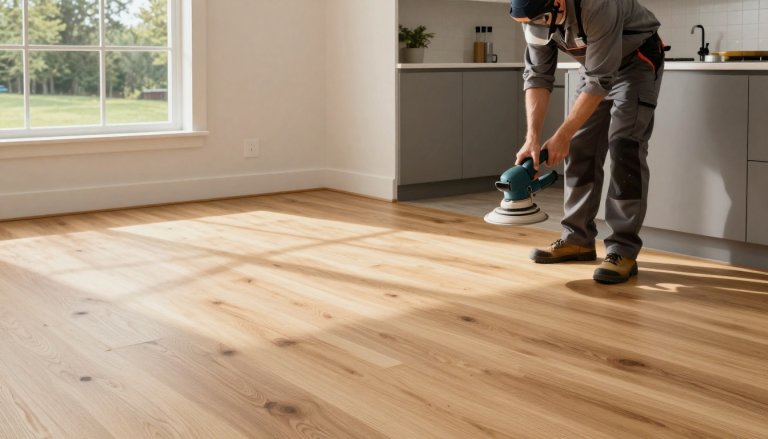
If the stain is small and localized, we can sometimes do a targeted repair: sand that area down, lighten or treat it, then blend stain and finish. Matching sheen and color takes experience, but it’s often worth it to avoid a full-room replacement.
When staining is deeper, sealing becomes the strategy. After sanding the affected boards, we may apply an odor-blocking sealer to lock in any remaining smell before topcoating. Homeowners sometimes learn this lesson the hard way: if we refinish without sealing a contaminated spot, heat and humidity can “wake up” the odor months later.
For older homes in our area, this is where hiring a hardwood floor sanding company Cumming homeowners trust makes a difference, because pet stains aren’t a normal refinish. They require a plan for both color and odor, not just a pretty topcoat. If you want to see what a full sanding process includes, our page on hardwood floor sanding services in Cumming breaks down what to expect.
When we replace boards (not the whole room)
If urine soaked through cracks for a long time, the subfloor may be affected, or boards may be permanently black. In that case, we can often remove and replace just the damaged boards, then refinish the area for a consistent look. If the floor is prefinished and spot-matching won’t look right, replacing a section and adding a clean transition can still beat replacing an entire room.
If the floor is thin, heavily cupped, or patched many times already, it may be time to install new flooring Cumming homeowners choose for durability (like site-finished hardwood, quality LVP, or tile in pet-heavy zones). Our Cumming hardwood floor installation page is a helpful starting point when replacement is the better long-term call.
Coordinating floors with remodeling plans
We also see pet stains show up right when homeowners plan a larger update. If you’re working with a remodeling company in Cumming, it’s smart to time floor repairs around cabinet work and painting. A kitchen remodeling company Cumming homeowners rely on should coordinate toe-kicks, appliance moves, and floor height changes so you don’t create new gaps where spills can enter. The same goes for wet areas, and our bathroom remodeling services in Cumming page covers materials that handle moisture better than wood.
We’re a hardwood floor company Cumming homeowners call for stain and odor fixes, and we’re also a hardwood floor company servicing Windermere, so we’re used to solving these problems without turning the home into a construction zone. For homeowners planning bigger upgrades, we also work as a kitchen and bathroom remodeling company Cumming Ga, which helps when flooring and remodel scopes need to line up.
If you’d like to compare real-world experiences from other homeowners dealing with lingering odor, this discussion on removing pet urine smells is a useful reminder that the smell often lives below the surface.
Call (770) 906-4732 for free estimates. If you show us any existing quote from another contractor, we’ll do it at 5% less for the same scope.
Conclusion
Pet urine damage doesn’t mean we have to replace an entire room of hardwood. When we locate the source, treat odor the right way, and repair or refinish only what’s needed, most floors can be saved and made comfortable again. If you’re tired of guessing and ready for a clear plan, call (770) 906-4732 for a free estimate. Bring any written quote you already have, and we’ll beat it by 5% less.