Hardwood Floors Turn Black After Water Exposure, how to tell surface stain from deep rot, and when boards must come out
You wipe up a spill, run a fan for a day, and think you’re in the clear. Then the hardwood shifts color, and suddenly you’ve got dark patches that look almost black. With water damage hardwood floors, that color change can be a harmless stain in the finish, or it can be a warning that the wood fibers stayed wet long enough to break down.
We’ve walked into homes where the “black spot” revealed surface stain vs deep rot. Sometimes it was just an iron reaction from a wet rug pad. We’ve also pulled boards that looked fine on top, but were soft underneath. The difference matters because sanding the wrong floor at the wrong time can lock in damage and waste money.
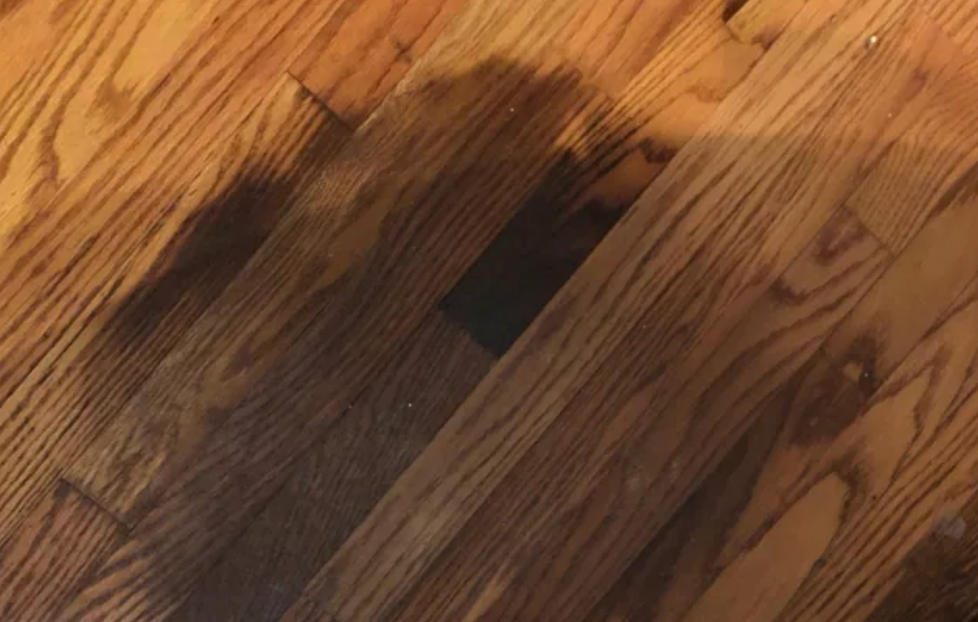 Dark spot on oak hardwood floor related to plant pot leak
Why hardwood floors turn black after water exposure
Dark stains on water damage hardwood floors usually mean one of three things happened, and sometimes they stack on each other.
First, tannin reaction. Many woods (especially oak) have natural tannins. When water sits, causing water saturation and increased moisture content, tannins can migrate and darken. If there’s metal involved (nails, staples, furniture feet, a can left on the floor), moisture can trigger a chemical reaction that turns the area gray to black.
Second, water carried something into the wood. A small leak under a fridge can pull in grime, old cleaner residue, or even rust from an appliance pan, especially with standing water. That “dirty water” wicks into seams and end grain like a paper towel.
Third, microbial growth. We don’t jump straight to scary conclusions, but trapped moisture under a finish can support mold and mildew growth, especially if humidity stays high and airflow is poor. That’s why our first move is always to stop the water source and dry the structure, not to sand right away.
If you’re still in the first 24 to 72 hours after water damage to your hardwood floors, your goal is simple: stop the water source, pull wet mats with standing water, and get moisture extraction and professional drying going with dehumidifiers and fans. For a plain-language overview of what to consider after a flood, we often point homeowners to steps after a flooded wood floor.
In Cumming homes, we see dark stains most often at dishwashers, icemaker lines, pet bowl areas, exterior doors, and toilet supply leaks that ran down a wall and under trim.
How we tell surface stain from deep rot before we recommend sanding
A black mark can be like a bruise. Sometimes it’s just on the “skin” (the finish), and sometimes it’s in the muscle (the wood), and rot is deeper still. Before we quote repairs, we try to answer one question: did the wood fibers stay wet long enough to weaken?
Here’s what we check in the home to diagnose water damage hardwood floors, using simple observations first, then professional tools like a moisture meter if needed.
Finish-only stain often looks dramatic but behaves well. It may fade when the floor fully dries, and the boards still feel solid and flat. Deep staining sits in the wood fibers from water damage hardwood floors. It usually follows seams, end joints, and porous grain as dark stains, and it won’t clean off.
Rot is different. Rot means the wood is losing structure. If we press with a probe at a seam or vent cutout and the wood feels punky or shows soft or spongy spots, that’s not a sanding job.
To summarize surface stain vs deep rot, here’s a quick checklist:
| What we see | More like a surface stain | More like deep damage or rot |
|---|---|---|
| Feel underfoot | Solid, no “give” | Soft or spongy spots, bounce, or crunch |
| Board shape | Mostly flat | Cupping and crowning, buckling |
| Smell | Little to none | Musty odors, sour, or persistent damp smell |
| Seams | Light darkening only | Black lines that track along joints |
| Timing | Brief spill, quick dry | Slow leak, repeated wetting, long dry time |
We also look at what’s underneath for signs of water damage hardwood floors or subfloor damage. If there’s a basement or crawlspace, we check for damp subfloor, darkened joists, or wet insulation. If the stain is near a kitchen, we’ll inspect toe-kick areas and supply lines, because hidden leaks love to travel.
For homeowners who want a deeper visual guide to what water damage can look like at different stages, this water-damaged floors guide is a helpful reference.
If you’re thinking about calling a hardwood floor sanding company Cumming homeowners trust, we always recommend waiting until moisture is stable through the drying process. Sanding wood that’s still swollen can leave waves, gaps, and uneven stain later.
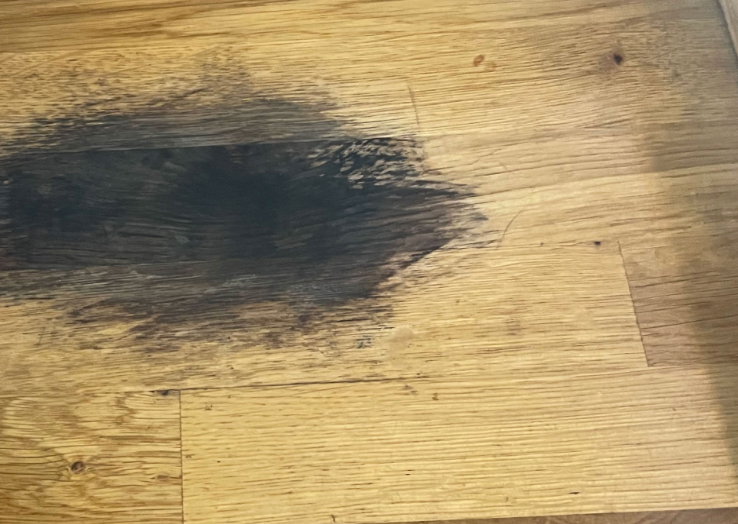 Dark spot on hardwood floor
When boards must come out, and when we can save the floor
We love saving existing floors when it’s honest to do so. Many black marks from water damage hardwood floors can be improved with the right plan, such as using oxalic acid for light stains, especially when the boards are still strong and the subfloor is dry. But there are clear times when boards need to come out to protect structural integrity.
We recommend removal when:
- The wood shows wood rot or is soft or crumbling, even if the surface looks “okay.”
- Buckling and warping lifted the boards off the subfloor, which often means water got underneath.
- Edges show permanent cupping and crowning after a proper drying process, not just for a day or two.
- Staining is deep across many boards from water damage hardwood floors, and sanding would still leave a shadow.
- Subfloor damage exists, because fixing the top without fixing the base never lasts.
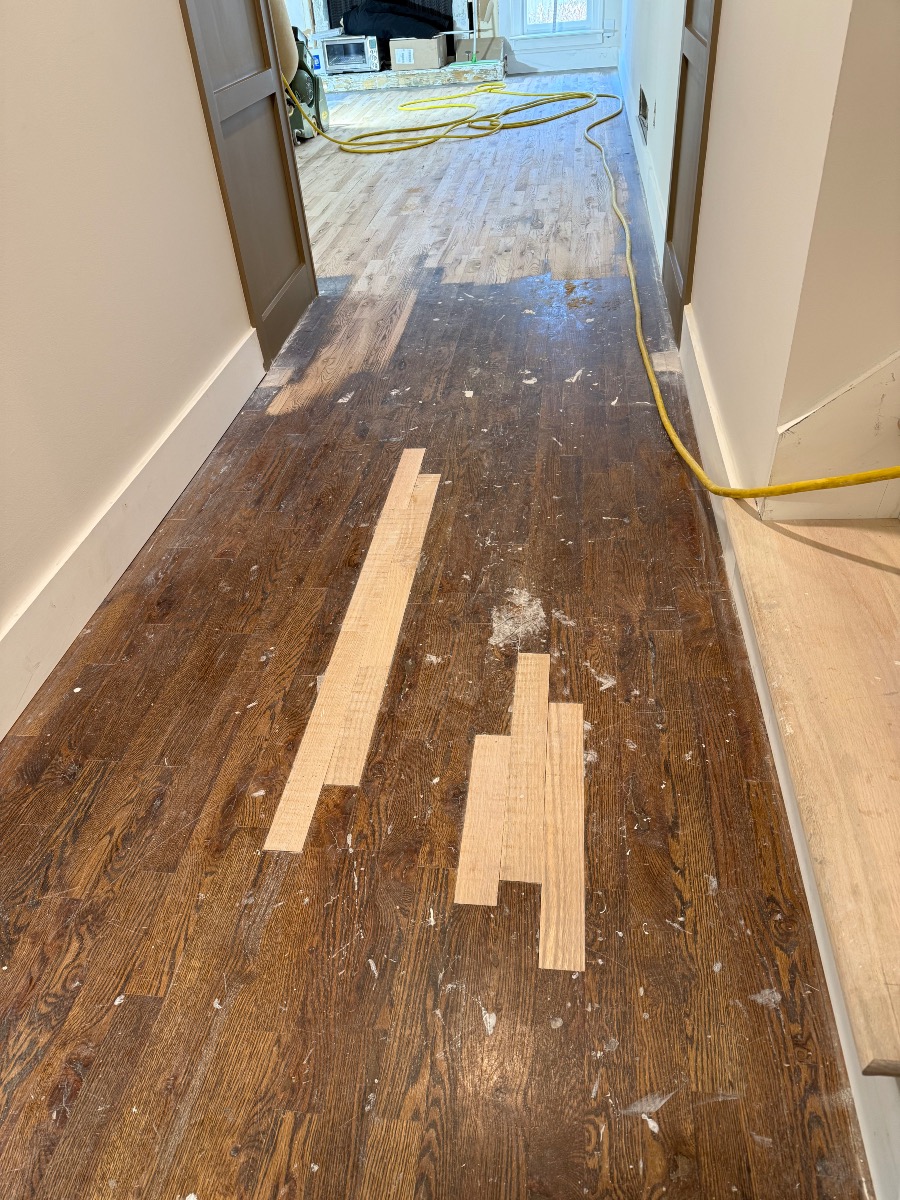 When only a few boards are affected by water damage hardwood floors, we can often do a targeted repair: replace damaged boards, correct moisture issues, patch with matching material from solid hardwood floors or engineered hardwood, then sand and finish so the room blends. That’s where working with a local hardwood floor company Cumming homeowners know can make a difference, because matching grain, thickness, and stain tone is a craft, not a guess. Board replacement like this preserves the floor’s look while addressing wood rot or subfloor damage directly.
If the damage is wide-spread on water damage hardwood floors, replacement may be the smarter spend. Some homeowners choose to install new flooring Cumming families can live with more easily in wet-risk zones, like luxury vinyl in kitchens or laundry areas, then keep hardwood in living spaces. That decision often pairs well with bigger upgrades, especially if you’re already working with a remodeling company in Cumming on layout or cabinet changes.
When hardwood floor refinishing is still the right call, we map out the process and timing so the result holds up, including dust-free sanding for cleaner results. Our hardwood floor sanding Cumming page explains what we look for before sanding, and our hardwood floor refinishing guide breaks down when a recoat works versus a full sand for hardwood floor refinishing.
Many of our clients also plan wet-area upgrades at the same time, like a new shower, better ventilation, and water-safe floors. For those projects, our bathroom remodeling Cumming GA service is built around durable materials and clear scheduling. It’s common for us to coordinate floors with a kitchen remodeling company Cumming homeowners rely on, or a kitchen and bathroom remodeling company Cumming Ga families hire for full updates.
We also serve nearby neighborhoods, so if you’ve been searching for a hardwood floor company servicing Windermere, we’re already working in the area and we know the home styles and common moisture trouble spots.
Conclusion
Blackened boards don’t always mean your water damage hardwood floors are ruined, but they always mean we should slow down and diagnose the cause with a moisture meter or professional assessment. With hardwood floor water damage, the right fix depends on whether the problem is in the finish, the wood fibers, or the structure below.
For free estimates and assistance with insurance claims, call (770) 906-4732. If you show us any existing quote from another contractor, we’ll do it at 5% less for the same scope.