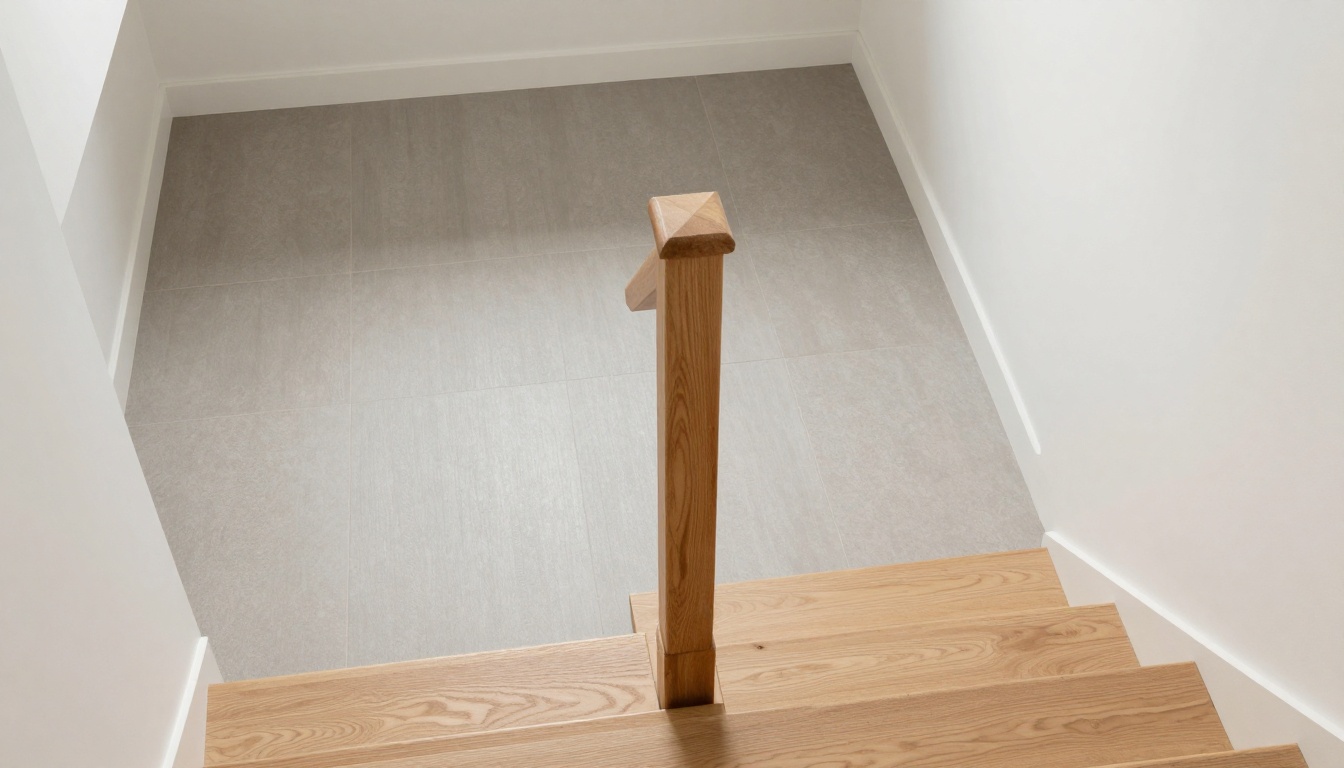
Planning a stair renovation that visually matches new basement flooring
When we install new basement flooring, the stairs can suddenly look like an afterthought. That’s a problem, because stairs sit right in your sightline, like the “spine” that connects two parts of the home. If the basement looks fresh but the steps look dated, the whole upgrade feels unfinished.
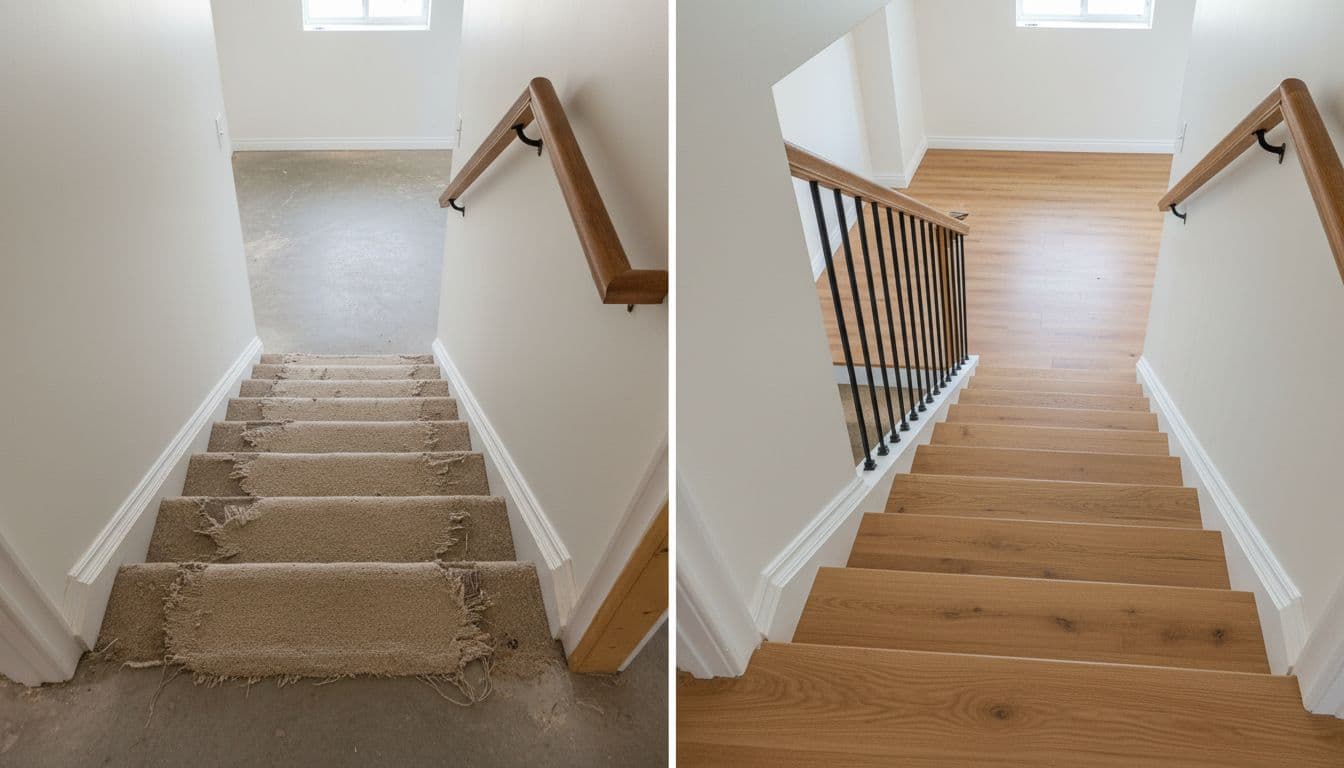
Planning a stair renovation that matches new basement flooring isn’t about making everything identical. It’s about making the transition feel intentional, with the right materials, colors, trim details, and safe step edges.
Start with the basement floor choice (it sets the rules)
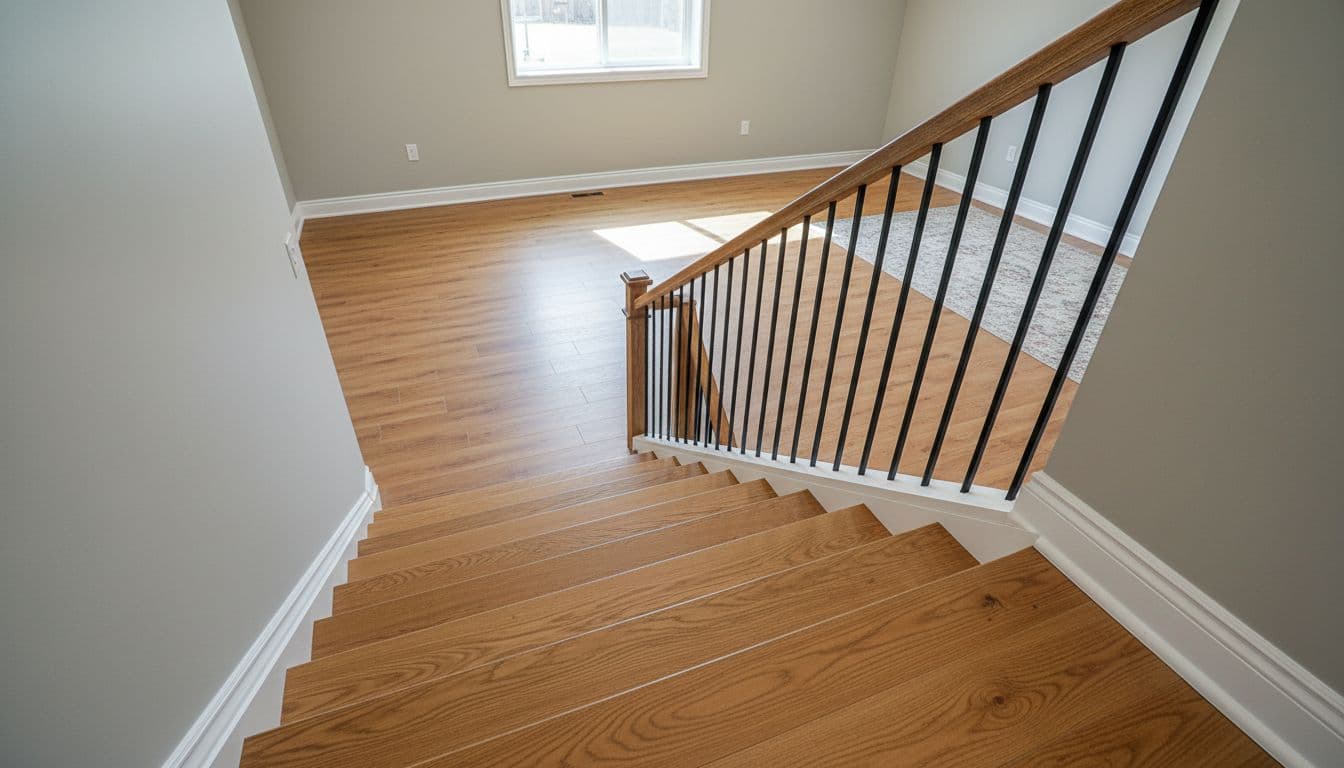
Basement floors deal with moisture swings, heavier foot traffic, and sometimes pets and storage. That’s why many homeowners choose LVP or tile downstairs, then try to “fake” the match on the stairs later. We get better results when we plan the staircase at the same time as the basement floor.
Before choosing stair materials, we decide on a few basement-floor basics:
- Tone and undertone (warm oak, cool gray, neutral brown)
- Plank width and pattern (wide-plank reads modern, narrow reads traditional)
- Sheen level (matte hides scuffs, satin reflects more light)
- Edge details (bevels, micro-bevels, or square edges)
That “finish language” should carry onto the steps, even if the stair material is different.
Pick a matching strategy that looks natural, not forced
There are three common ways we make stairs and basement flooring look like they belong together. The right choice depends on your budget, your subfloor, and whether the upper level has a hardwood floor you want to keep consistent.
| Matching approach | What it looks like | Best for |
|---|---|---|
| Same product on floor and stair treads | Strong continuity, one visual surface | LVP basements where matching stair parts are available |
| Wood treads stained to match basement | “Custom” look, warmer feel | Homes with traditional trim, wood rails, or existing hardwood upstairs |
| Coordinated contrast | Clean break, purposeful design | Modern basements, bold design choices, dark rails with light floors |
If you like design inspiration, this roundup of basement stair ideas from Martha Stewart is helpful for thinking beyond “match everything perfectly” and focusing on balance.
The stair details that actually create the match
Most mismatches happen at the edges. Color is only half the story. The other half is the stair build-up and trim lines.
Treads: the wear surface everyone sees
For many basements, we use either:
- Matching LVP stair treads (great when the manufacturer offers coordinated treads and noses)
- Real wood treads stained to match the basement floor tone (often the most flexible option)
If the basement floor is a warm oak LVP, we can stain wood treads to a similar warmth and keep the sheen close, so it reads like one family of finishes.
Risers: the “pause” between steps
White risers are popular because they brighten stairwells and make the tread color feel richer. Painted risers also help hide small scuffs that happen on vertical faces.
Skirts, baseboards, and stringers
Your eye follows trim lines like a roadmap. If the basement has thick baseboards but the stair skirts are thin (or missing), the transition looks unfinished even if colors match.
Don’t ignore the bottom step transition (it’s the giveaway)
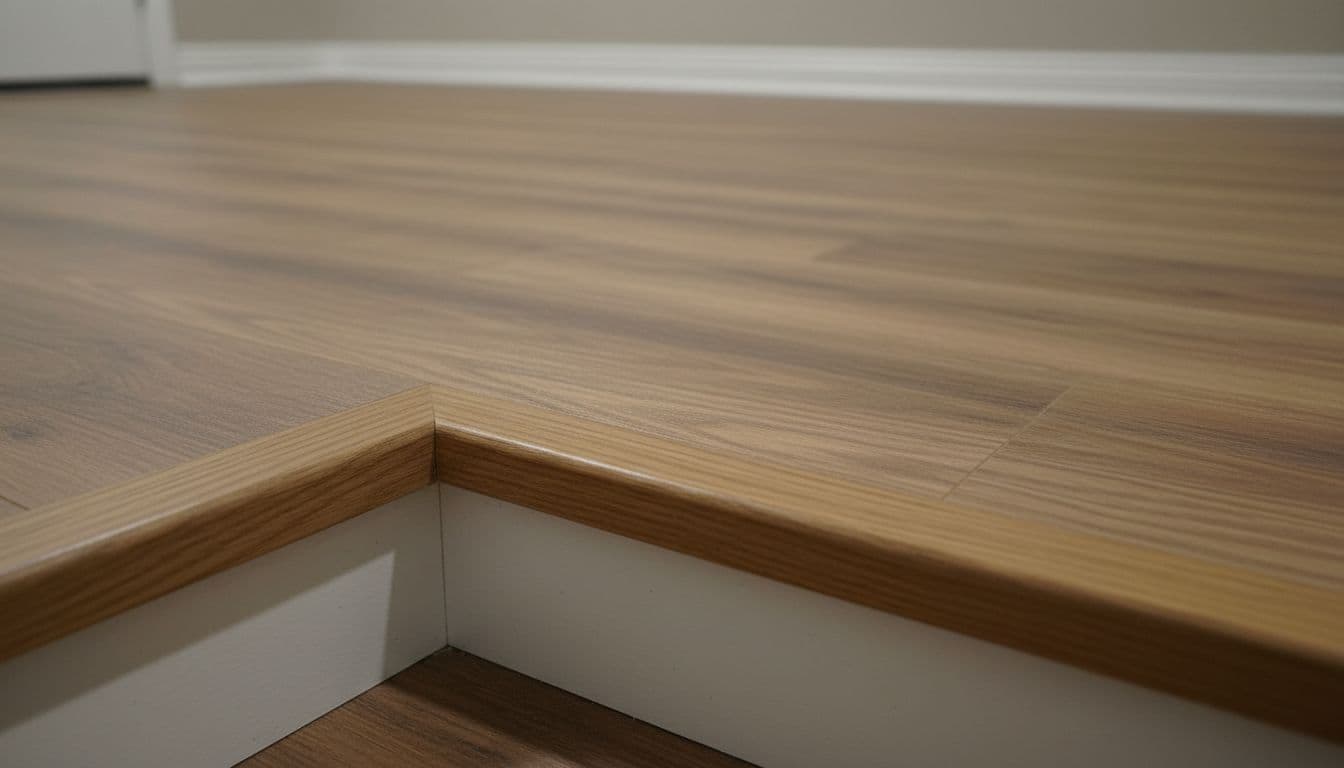
The most important “match moment” is where the last tread meets the basement floor. That joint needs to look clean and feel solid underfoot.
We plan for:
- A proper stair nose profile that fits the flooring thickness
- A coordinated transition strip (or a flush detail when possible)
- Consistent expansion gaps if the basement floor is floating (common with LVP and laminate)
A great visual can still fail if the bottom nosing feels sharp, loose, or uneven. That’s why we treat this like finish carpentry, not just flooring.
For a practical overview of stair finishing options and what’s involved, Family Handyman’s basement stair guide is a solid reference.
When upstairs is hardwood: blending old, new, and stairs
A lot of homes in Cumming and nearby areas have hardwood on the main level and a different material planned for the basement. In that case, stairs are the bridge. We can go two ways:
Keep the stairs aligned with the upstairs hardwood
If the upstairs has an existing hardwood floor, matching the tread species and stain can create a classic, continuous look. This also makes future refinishing simpler.
Blend the stairs toward the basement tone
If the basement is getting a warm oak LVP and the upstairs hardwood is cooler or darker, we can “split the difference” with a stair stain that harmonizes with both.
If your upstairs hardwood looks tired, this is also a smart time to schedule hardwood floor sanding and refinishing. When the sheen and color are refreshed upstairs, the new stairwork doesn’t have to “fight” the old finish.
And yes, there are real hardwood floor benefits in these transitions: wood can be stained to match, repaired, and refinished over time, which gives you flexibility that many factory-finish products can’t.
Safety and comfort upgrades that still look good
Matching is important, but stairs must feel stable and safe every day. We plan for:
Slip resistance: Matte finishes and subtle tread texture help, especially on basement stairs where socks and smooth shoes are common.
Lighting: If the basement gets limited daylight, adding brighter overhead lighting or wall lighting helps the tread edges read clearly.
Handrail and balusters: Updating rails can modernize the whole run. Black metal balusters with a wood handrail often pair well with both modern LVP and traditional wood treads.
A simple planning process that prevents surprises
The best stair renovations start the same way: we make selections early, then confirm them in the actual space.
1) Compare options in person: Photos lie. We like seeing flooring and tread samples side by side.
2) Test the look at home: Lighting changes everything. We bring samples to the home so we can check color, grain, and sheen where the stairs meet the basement.
3) Measure and quote based on the real conditions: Stairs are rarely “standard.” We measure each tread, riser height, and landing detail to price correctly.
4) Installation day should include the whole staircase scope: Removal of old carpet or finishes, trim updates, and thorough cleanup should be part of the plan, not add-ons.
Budget and resale: why stairs matter more than people expect
Stairs sit between “public” and “private” spaces. When they look dated, buyers notice. When they’re clean and consistent, the home reads better as a whole.
If you’re improving value, we often see homeowners pair stair and floor updates with other projects that buyers care about, like remodel kitchen and bathroom to add to value of house. The key is visual continuity, not random upgrades.
For a free estimate on a stair renovation that matches your new basement flooring, call (770) 906-4732. If you show us a written quote from another contractor, we’ll do the same scope for 5% less.
Conclusion
A good stair renovation is part design, part carpentry, and part smart planning. When we match the tones, control the transitions, and keep trim lines consistent, the stairs stop looking like a patch between floors. They start looking like they were always meant to be there. If you’re ready to tie your basement upgrade together with stairs that feel solid and look right, we’re ready to help.